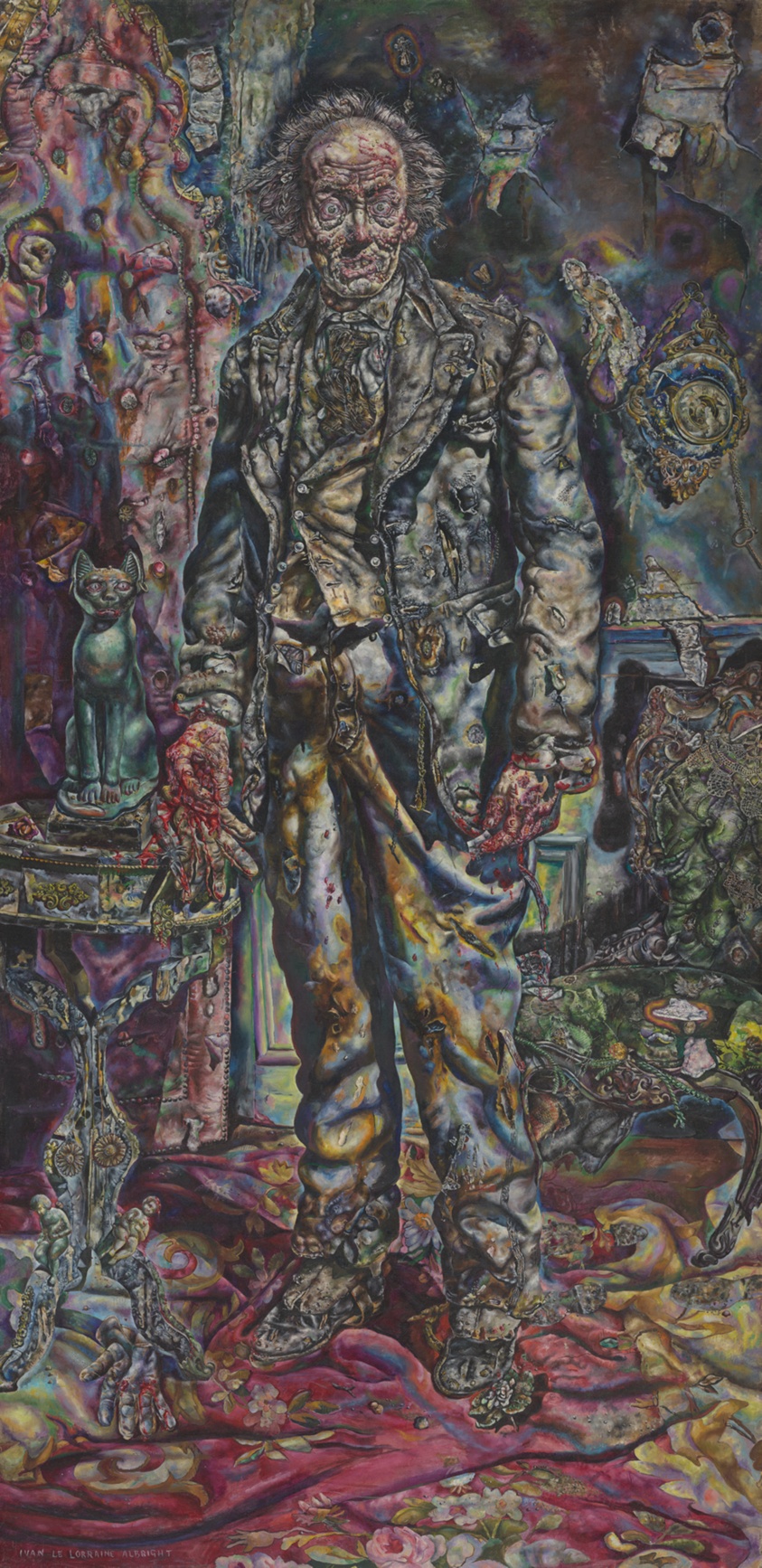
Dorian Gray
Appears In
The Picture of Dorian Gray
Species
Human
First Appearance
July 1890 (Lippincott's Monthly Magazine)
Occupation
Aristocrat, Heir
Creator
Oscar Wilde
Overview
Origin Story
Dorian Gray was born into the English upper class during the late Victorian era. His life changed forever when he sat for a portrait painted by Basil Hallward, an artist who admired his extraordinary beauty and innocence. Enthralled by his own reflection, Dorian listened to the cynical philosophy of Lord Henry Wotton, who convinced him that youth and beauty were the only things worth pursuing in life.
Driven by vanity and a desire to escape the inevitable decay of age, Dorian made a Faustian wish: that he would remain eternally young while the painting he commissioned would bear the marks of his aging and sins. The supernatural bargain took hold immediately. Dorian stepped out into the world untouched by time, while the canvas behind him began to rot with every moral failing he committed.
Personality
At the start of his journey, Dorian is naive, innocent, and deeply impressionable. He possesses a natural charm that draws people to him, but this mask hides a growing capacity for cruelty and selfishness. As the story progresses, his personality shifts from a sheltered youth to a detached hedonist who views other people as mere instruments for his pleasure.
He becomes increasingly cold and calculating, willing to murder without hesitation to protect his secret. Despite his outward perfection, he lives in constant fear of discovery, leading to a life defined by paranoia and isolation. His descent shows how unchecked vanity can erode empathy until nothing remains but a hollow shell of a man.
Story Arc
The narrative follows Dorian's rapid transformation from a pure boy into a corrupt monster. After making his wish, he pursues a life of endless sensation, experimenting with drugs and sadism. His relationship with the actress Sibyl Vane ends in tragedy when he rejects her after she loses her acting talent due to falling in love, causing her to commit suicide.
Dorian murders Basil Hallward when the artist tries to stop the corruption, hiding the body in the attic where the portrait hangs. He spends decades evading justice, including a narrow escape from the revenge of Sibyl's brother, James Vane. In the final chapter, unable to bear the grotesque image of his soul on the canvas, Dorian stabs the painting. The act kills him instantly, leaving his body withered and aged while the portrait returns to its original state of youthful perfection.
Powers & Abilities
Eternal Youth
Immunity to Physical Decay
Psychological Manipulation
Criminal Evasion
Equipment & Signature Items
The Portrait of Dorian Gray
Jewelry and Fine Clothing
Relationships
Basil Hallward
EnemyThe painter who loves Dorian; murdered by Dorian out of fear his art will reveal the truth.
Lord Henry Wotton
MentorA cynical philosopher whose hedonistic views catalyzed Dorian's moral corruption.
Sibyl Vane
Love InterestAn actress Dorian loved and then cruelly discarded, leading to her suicide.
James Vane
RivalSibyl's brother who hunted Dorian for years seeking revenge for his sister's death.
Memorable Quotes
“I am jealous of everything whose beauty does not die.”
“The only way to get rid of a temptation is to yield to it.”
“Now I know what you mean. Love is a more wonderful thing than art.”
“I want to sell my soul!”
“There is no such thing as a good effect upon a work of art.”
Portrayed By
Key Appearances
The Picture of Dorian Gray (Novel)
The Picture of Dorian Gray (1945 Film)
Portrait of Dorian Gray (1970 Film)
Dorian Gray (2004 Film)
Dorian Gray (2009 Film)
The Picture of Dorian Gray (2011 Musical)
Reception & Legacy
Fans have long debated whether Dorian is a villain or a victim of circumstance. His story resonates because it tackles the universal fear of aging and the cost of living purely for pleasure. Critics often cite him as one of the most complex anti-heroes in Victorian literature.
Adaptations continue to reinterpret his character for modern audiences, highlighting different aspects of his psychology. From silent films to stage musicals, the figure of Dorian Gray remains a potent symbol of aestheticism and moral decay.
Interesting Facts and Legends
The character first appeared in a shortened version in Lippincott's Monthly Magazine before the full novel was published later in 1890.
Oscar Wilde faced legal trouble over the book, which was cited as evidence of his 'gross indecency' during his trials.
The 1945 film adaptation starring Hurd Hatfield was the first major Hollywood movie based on the novel.
Helmut Berger played the title role in the 1970 Italian film *Salò*, though some sources confuse this with his actual portrayal in *Portrait of Dorian Gray*.
Ben Barnes portrayed Dorian in the 2009 Oliver Parker film, which expanded on the LGBTQ+ subtext of the original text.
Reeve Carney starred as Dorian in the 2011 Broadway musical adaptation.
The painting serves as a physical manifestation of the duality of human nature, a central theme in Gothic horror literature.
Frequently Asked Questions
Who is Dorian Gray?
Does Dorian Gray die?
Who plays Dorian Gray in the movies?
Is Dorian Gray a villain?
What happens to the painting?
Keywords
Sources
Character Info
- Creator
- Oscar Wilde
- First Appearance
- July 1890
- Status
- Deceased
Join the community
fans discussing