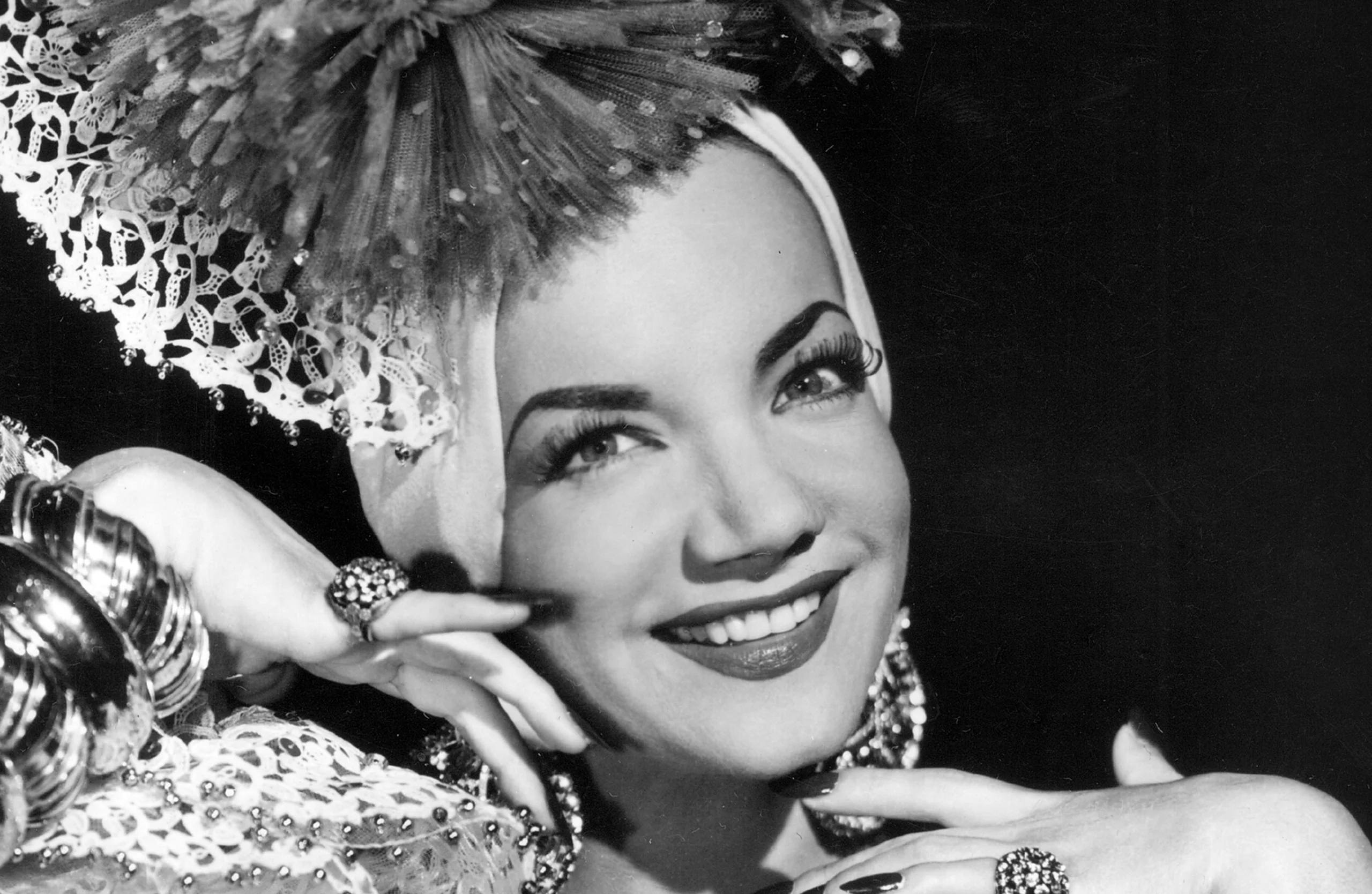
Carmen Miranda
 Brazil
Also known as: The Brazilian Bombshell, Queen of Carnival, Maria do Carmo Miranda da Cunha
Birthday
February 9, 1909
Birth Sign
Aquarius
Birthplace
Várzea da Ovelha e Aliviada, Portugal
Age
Died at 46
Height
5 ft 2 in (157 cm)
About
Maria do Carmo Miranda da Cunha was a Portuguese-born Brazilian singer, dancer, and actress who became one of the most iconic figures of 20th-century entertainment. Known globally as "The Brazilian Bombshell," she achieved international stardom through her vibrant performances in Hollywood musicals and her distinctive style featuring fruit-laden headdresses. By 1945, she was the highest-paid woman entertainer in the world, earning over $100,000 per film. Her legacy endures as a cultural ambassador who bridged gaps between the United States and Latin America during World War II.
Despite being born in Portugal, her family immigrated to Brazil when she was an infant, and she grew up in Rio de Janeiro where she developed the musical foundation that defined her career. She began as a hat designer before transitioning to music, recording her first hit in 1930. Throughout the 1930s, she starred in Brazilian films known as chanchadas, establishing herself as a premier samba interpreter before her breakthrough to American cinema in 1940.
Early Life & Background
Maria do Carmo Miranda da Cunha entered the world on February 9, 1909, in the village of Várzea da Ovelha e Aliviada near Marco de Canaveses, Portugal. Her father, José Maria Pinto da Cunha, was an opera singer, and her mother, Carolina Augusta da Silva Miranda, sang fado. The family moved to Brazil in 1910, settling in Rio de Janeiro where Carmen spent her formative years. Although surrounded by music, she did not immediately pursue it professionally. Instead, she worked as a fashion designer, creating hats for a boutique in Rio de Janeiro. This creative spark in millinery eventually led her to incorporate tropical fruits into her designs, foreshadowing her later signature look.
By 1929, she began recording with composer Josué de Barros. Her 1930 rendition of "Taí (Pra Você Gostar de Mim)" became a massive hit, establishing her as Brazil's premier samba interpreter. Throughout the 1930s, she graced Brazilian radio waves and starred in five vibrant films known as chanchadas (Brazilian musical comedies). A standout among these was the 1939 film Banana da Terra, which introduced her iconic "Baiana" persona, a character inspired by the Afro-Brazilian heritage of Bahia, characterized by a long skirt, shawl, and fruit-adorned hat. This period solidified her reputation in South America before she ever set foot in the United States.
Career Growth
Miranda's breakthrough to international fame occurred in 1939 when Broadway producer Lee Shubert saw her perform in New York during a visit by the Brazilian troupe Orquestra Baccarat. He invited her to star in his production, leading to her Hollywood debut the following year. In 1940, she made her American film debut in Down Argentine Way, where her exotic flair, distinct accent, and fruit-laden headdress immediately captivated audiences. She quickly rose to prominence, being voted the third most popular personality in the United States in 1940 and performing for President Franklin D. Roosevelt.
Her career milestones include receiving handprints and footprints at Grauman's Chinese Theatre in 1941, becoming the first Latin American star to receive this honor. She starred in Week-End in Havana that same year. In 1943, she appeared in The Gang's All Here, directed by Busby Berkeley. The film featured her most famous performance of "The Lady in the Tutti-Frutti Hat," a spectacle of choreography and costume that cemented her global image. By 1944–1945, she became the highest-paid woman entertainer in the world, earning over $100,000 per film. She continued starring in films like That Lady in Ermine and Copacabana until her death in 1955. Her work broke barriers for Latin American actors in Hollywood and served as a key component of the "Good Neighbor Policy.".
Career Timeline
Public Image & Style
Carmen Miranda's public image is defined by her vibrant, colorful costumes, particularly the fruit-laden hats, and her infectious energy. Media portrayal often highlights her as the "Brazilian Bombshell," though recent analyses have critiqued the stereotyping she faced. Her content's tone is celebratory and energetic, reflecting the spirit of carnival and samba. While she was celebrated for breaking barriers for Latin American actors, Hollywood often reduced her to a caricature of the "exotic" stereotype, ignoring her versatility as a serious performer. Her style influenced fashion trends globally, with fans attempting to replicate her look.
Fame & Fandom (iFAMOUS Rankings)
In the contemporary landscape of global attention tracked across media coverage, search trends, and consumption signals worldwide, Carmen Miranda maintains a significant presence. She is currently ranked as the 86th most famous person in Brazil, a position up from the previous cycle. Within the specific sphere of Latin Music, she holds steady at the 60th rank, recognized at the 60th most famous person in Latin Music. These placements reflect her status in the iFANN Global Fame Rankings, confirming her continued relevance as a historical figure whose influence transcends her lifetime.
Carmen Miranda does not possess a formalized collective fandom name akin to modern pop culture phenomena, nor are there documented instances of organized fan clubs with specific titles or fan-funded campaigns dedicated solely to her. Her legacy is sustained by a highly influential cultural audience within Brazil, the LGBTQ+ community, and academic circles, which treats her as a foundational icon rather than a celebrity with a traditional following. This enduring reverence manifests through merchandise, theatrical productions, and annual cultural events that serve as the primary vehicle for engagement seventy years after her death. While her mythos includes complex narratives regarding her decline and the pressures of Hollywood, the community surrounding her work focuses on re-evaluations of her impact on colonialism and racial representation.
Interesting Facts and Legends
Before becoming a singer, Miranda designed hats, which is how she incorporated fruits into her headwear. She spoke very little English when she arrived in the U.S., relying on translators and lip-reading for many of her roles. Her sister, Aurora Miranda, often served as her interpreter and manager. Despite her conservative upbringing, her flamboyant style established her as an enduring figure in LGBTQ+ culture, often cited as a precursor to the drag queen movement. The most universally recognized symbol associated with her is the "fruit hat," a towering headdress adorned with tropical fruits that transformed her into a global ambassador for Latin culture in Hollywood. During the 1940s, this persona made her the highest-paid woman entertainer in the world. A key verified incident involves her performance of "The Lady in the Tutti-Frutti Hat" in the 1943 film The Gang's All Here, characterized by vibrant choreography and spectacle.
Notable Quotes
“I am a Brazilian, and I love my country.”
“Music is the language of the soul.”
“I want to bring the beauty of Brazil to the world.”
Family & Personal Life
Carmen Miranda was born to José Maria Pinto da Cunha, a Portuguese opera singer, and Carolina Augusta da Silva Miranda, a fado singer. Her family immigrated to Brazil in 1910. She had a younger sister named Aurora Miranda, who became a frequent collaborator, serving as her interpreter and manager. Aurora also pursued a career in acting and singing. Carmen lived with her sister in the Hollywood Hills at the time of her death. There are no public records of children from her marriage to David Sebastian.
Notable Connections
Relationships & Dating History
Carmen Miranda was married once. She wed David Sebastian, a Brazilian businessman, in 1944. Their marriage lasted until her death in 1955. They met through mutual connections in the Brazilian expatriate community in Hollywood. There are no public records of children from this union. Prior to her marriage, there were rumors of relationships with various Hollywood stars, but none were confirmed as serious romantic engagements. Her personal life was largely overshadowed by her intense work schedule and the pressures of fame. As of 2026, she is deceased, having been widowed since 1955.
- MarriedDavid Sebastian1944 - 1955Met through mutual connections in the Brazilian expatriate community in Hollywood. No children.
Death & Aftermath
Died
August 5, 1955 (aged 46)
Death Place
Hollywood Hills, Los Angeles, California
Cause of Death
Coronary thrombosis
Carmen Miranda passed away on August 5, 1955, at her sister Aurora's residence in the Hollywood Hills. Her final days were marked by a rapid decline following an illness initially diagnosed as pneumonia while she was filming That Lady in Ermine. She had been admitted to Cedars of Lebanon Hospital three days earlier complaining of chest pain, but medical intervention could not stop the progression of coronary thrombosis, which was confirmed by autopsy.
The public reaction was immediate and profound. President Harry S. Truman sent a message of condolence acknowledging her role as a cultural ambassador who strengthened ties between the United States and Latin America during World War II. In Brazil, radio stations played her music continuously, and newspapers ran front-page obituaries. The Smithsonian Institution later highlighted her impact as a symbol of Pan-American unity.
A private funeral service took place on August 8, 1955, at Forest Lawn Memorial Park in Glendale, California. Notable attendees included her sister Aurora Miranda, fellow stars such as Bob Hope and Betty Hutton, and representatives from the Brazilian government. She was interred in the Great Mausoleum at Forest Lawn. Posthumously, several films she had completed prior to her illness were released, including That Lady in Ermine and The Loves of Carmen. She received a star on the Hollywood Walk of Fame in 1960. In 1995, a musical titled Carmen Miranda: O Grande Musical was produced in Lisbon, celebrating her life and career. Her estate continues to generate revenue through licensing of her likeness and music.
Net Worth (Estate Value)
$12 Million
iFANN Editorial Team estimate
As a deceased individual, Carmen Miranda's net worth refers to the value of her estate. Research by the iFANN Editorial Team puts her fortune at around $12 million as of 2026, driven primarily by ongoing licensing deals, merchandise sales, and royalties from her extensive catalog of music and film. Celebrity Net Worth estimates the estate value at $5 million, while Forbes suggests the estate could be worth up to $10 million due to the enduring popularity of her likeness. Industry analysts note that her estate continues to generate significant revenue from theatrical productions, such as the musical Carmen Miranda: Samba in Technicolor, and merchandise sales.
Major revenue streams include royalties from music recordings, film residuals, licensing of her image for products (especially fruit-themed items), and rights to her name and likeness for biographical works. The estate has maintained a steady financial trajectory over the decades, with renewed interest in the 2020s driving higher valuations. No major estate disputes have been publicly reported, and the assets remain managed effectively to preserve her legacy.
Awards Won (3)
Carmen Miranda did not win major competitive awards such as Oscars, Golden Globes, or Grammys during her lifetime. However, she received a star on the Hollywood Walk of Fame posthumously in 1960. She was inducted into the Latin Grammy Hall of Fame and received the Order of the Southern Cross from the Brazilian government. She also received honorary degrees from several universities, including the University of São Paulo.
1995 · Hall of Fame
Body of Work
1960 · Posthumous Honor
Career Achievement
Known For
The Gang's All Here
1943 · Carmen Miranda
Down Argentine Way
1940 · Carmen Miranda
Week-End in Havana
1941 · Carmen Miranda
Banana da Terra
1939 · Carmen Miranda
Keywords
Sources
Quick Facts
- Profession
- actor, singer, dancer
- Born
- February 9, 1909
- Birthplace
- Várzea da Ovelha e Aliviada, Portugal
- Died
- August 5, 1955
- Death Place
- Hollywood Hills, Los Angeles, California
- Gender
- Female
- Spouse
- David Sebastian
- Birth Sign
- Aquarius
Personal Details
- Full Name
- Maria do Carmo Miranda da Cunha
- Height
- 5 ft 2 in (157 cm)
- Spouse
- David Sebastian
- Children
- Education
- Attended local schools in Rio de Janeiro after immigrating from Portugal; studied fashion design briefly before focusing on music.
Filmography
14
Total
14
Film
0
TV
Frequently Asked Questions
What was Carmen Miranda's real name?
How did Carmen Miranda die?
What was Carmen Miranda famous for?
Was Carmen Miranda married?
Does Carmen Miranda have a fan club?
Similar People
Join the community
fans discussing