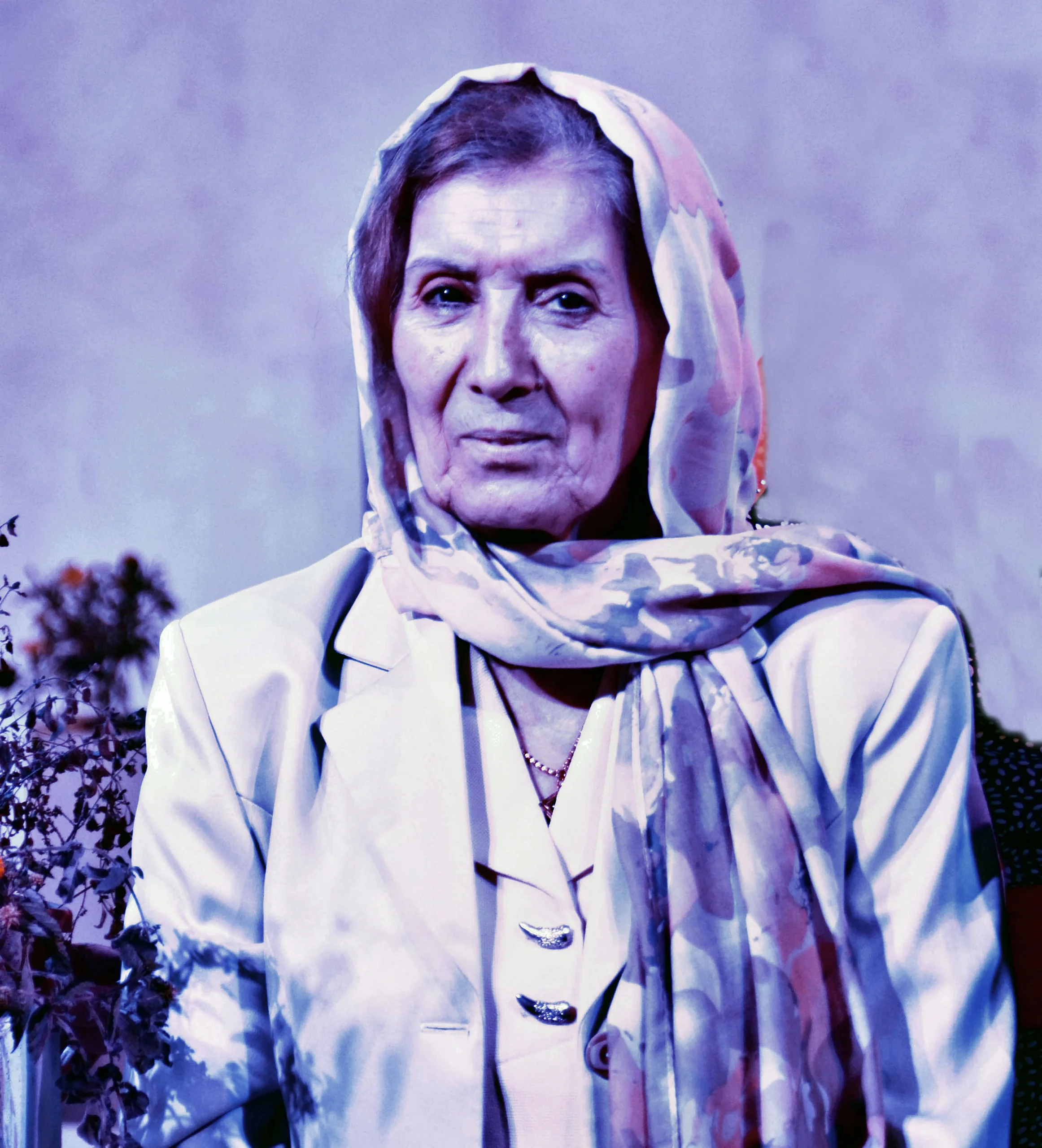
Djamila Boupacha
 Algeria
Also known as: Jamila Boubacha
Birthday
February 9, 1938
Birth Sign
Aquarius
Birthplace
Bologhine, Algeria
Age
88 years old
About
Djamila Boupacha is an Algerian independence activist and former National Liberation Front (FLN) militant. Born on February 9, 1938, in Bologhine, she became a symbol of resistance against French colonial rule when her arrest and torture in 1960 sparked international outrage. Her case, championed by Simone de Beauvoir and Gisèle Halimi, exposed the brutality of French military tactics and helped shift public opinion in France.
Boupacha was sentenced to death in 1961 but released in 1962 under the Evian Accords amnesty. She has since lived quietly in Algeria, and in 2022, at age 84, she refused an appointment to the Algerian Senate, reaffirming her lifelong commitment to revolutionary principles over personal gain. Today, she is revered as a mujahida and a powerful reminder of the human cost of the Algerian War. As of 2026, she is believed to be alive at approximately 88 years old, and her legacy continues to inspire discussions on colonial violence and women's resistance.
Early Life & Background
Djamila Boupacha was born on February 9, 1938, in Bologhine, a commune in Algiers Province. Growing up under French colonial rule, she was, in the words of Encyclopedia.com, "more French than Algerian in her earliest years," reflecting the cultural assimilation that many urban Algerians experienced. Details of her childhood and schooling are sparse, but she was in her early twenties when she joined the National Liberation Front (FLN), the principal nationalist organization fighting for independence.
Her decision to join the FLN marked a radical break from her colonial upbringing. The exact date and circumstances of her recruitment are not documented, but by 1960 she was an active militant. Her involvement placed her at the heart of the struggle, and it was during this period that she was arrested and accused of attempting to plant a bomb at the Brasserie des Facultés, a café near the University of Algiers. This accusation led to her capture and subsequent torture, which would define her public life.
Career Growth
Boupacha's arrest in 1960 turned her into a cause célèbre. While in French military custody, she was subjected to torture and rape, and her confession was extracted under duress. Simone de Beauvoir and Gisèle Halimi took up her case, launching a public campaign that forced French society to confront the army's conduct in Algeria. Their efforts culminated in the 1962 book Djamila Boupacha, which became a landmark text on colonial violence.
On June 29, 1961, she was sentenced to death, but the Evian Accords of March 1962 brought amnesty. She was released on April 21, 1962. After independence, Boupacha largely withdrew from public life. In 2011, a French film about her case, Pour Djamila, reportedly strained diplomatic relations between France and Algeria. In February 2022, she declined a seat in the Algerian Senate, a move that underscored her enduring humility and revolutionary spirit. Her legacy has been honored in Algeria as a mujahida, and President Abdelmadjid Tebboune's 2026 International Women's Day message paid tribute to female revolutionaries like her.
Career Timeline
Public Image & Style
Djamila Boupacha is remembered as a stoic and principled revolutionary. Her public image is defined by her refusal to seek personal advancement, most notably when she declined a senatorial appointment in 2022. In Algeria, she is honored as a mujahida, a female independence fighter, and her story is a touchstone in discussions of colonial violence and women's resistance. Internationally, she is often invoked as a symbol of the human cost of the Algerian War, thanks largely to the efforts of de Beauvoir and Halimi. Her case has been cited in academic scholarship on sexual violence during the war, and she has inspired women's activism in Algeria and beyond.
Fame & Fandom
Djamila Boupacha's fame is not the kind that fills stadiums or trends on social media. It is a quieter, more profound renown, etched into the annals of history by her courage and the movement that rallied around her. As of August 2026, iFANN's Global Fame Engine has evaluated her, but she currently holds no placement in the published rankings, neither in the Global Top 1,000 nor in any Top-100 scope list. This absence is telling; her celebrity is not measured in clicks or chart positions but in the enduring weight of her story, which continues to resonate in feminist and anti-colonial circles worldwide.
Her fanbase, if it can be called that, is not a formal fandom with a name or fan clubs. There are no birthday billboards, no fan-funded projects, no streaming pushes. Instead, her 'fans' are historians, activists, and scholars who honor her through academic work, memorials, and political recognition. They are united not by a shared pop-culture obsession but by a shared commitment to the principles she embodies. This is a legacy of solidarity, not celebrity.
What Boupacha lacks in contemporary fame metrics, she makes up for in symbolic power. Her name is invoked in discussions of colonial violence and women's resistance, her case a touchstone for debates on wartime sexual abuse. The 2011 film controversy, the 2022 Senate refusal, these moments keep her in the public eye, not as a star but as a beacon. Her fame is not ranked; it is felt.
Interesting Facts and Legends
Boupacha's case inspired the 1962 book by Simone de Beauvoir and Gisèle Halimi, translated into English as Djamila Boupacha: The Story of the Torture of a Young Algerian Girl Which Shocked Liberal French Opinion. The title itself became a rallying cry. In 2011, the French film Pour Djamila was reported to have caused an expected diplomatic crisis between Algeria and France, with actresses Marina Hands, Emmanuelle Béart, and Hafsia Herzi attached. The film's fate remains unconfirmed, but the controversy was real.
Despite her significance, no official awards or honors have been documented for Boupacha. Her refusal of a Senate seat in 2022 was widely seen as consistent with her lifelong character. She is often confused with other Algerian female militants like Djamila Bouhired and Djamila Amrane-Minne, but her case is distinct for its role in exposing sexual violence during the war. The famous quote from de Beauvoir and Halimi: 'To protest in the name of morality against "excesses" or "abuses" is to make oneself an accomplice of the system that gave rise to them.'
One legend that persists is the story of her arrest and torture, a documented event that became a cause célèbre. Another is the international campaign led by Halimi and Beauvoir, which forced France to confront its colonial brutality. More recently, her 2022 Senate refusal added to her legend as a principled revolutionary. Her birth date is disputed, some say 1938, others 1942, a minor inconsistency that adds to her mystique.
Family & Personal Life
No public information exists about Djamila Boupacha's family, romantic relationships, or children. The historical record focuses almost exclusively on her activism and trial, leaving her personal life undocumented. She has lived a private life in Algeria, and as of 2026, no credible source has reported on her household or family members. Her family background remains unknown, and she has no known siblings or parents mentioned in available sources.
Notable Connections
Djamila Boupacha is closely associated with Simone de Beauvoir and Gisèle Halimi, who led the campaign for her defense and co-authored the 1962 book that brought her case to international attention. Her torturers, unnamed French military personnel, are also part of her story, as is Algerian President Abdelmadjid Tebboune, whose 2026 International Women's Day message honored female revolutionaries like Boupacha.
Relationships & Dating History
No public information exists regarding Djamila Boupacha's romantic relationships, marriages, or children. The historical record is silent on this aspect of her life, and no credible sources have reported on her dating history or family status. As of 2026, her relationship status remains unknown. She has no documented spouse or partner, and her personal life has remained private throughout her life.
Salary, Net Worth In 2026
No net worth information is available for Djamila Boupacha. As a historical activist who lived modestly in Algeria and reportedly declined state positions, she has never been the subject of celebrity net worth reporting. She had no known commercial ventures or business interests, and her income sources are not documented. No financial data, salary information, or wealth breakdowns exist in the public record.
Awards & Accolades
View 1 records, honours and achievementsKnown For
Algerian independence activism
1950s-1960s · FLN militant
Torture and trial case
1960-1962 · Victim and symbol
Keywords
Sources
Quick Facts
- Profession
- activist
- Born
- February 9, 1938
- Birthplace
- Bologhine, Algeria
- Gender
- Female
- Birth Sign
- Aquarius
- Nationality
- Algerian
Frequently Asked Questions
Who was Djamila Boupacha?
Was Djamila Boupacha tortured?
What happened to Djamila Boupacha?
Is Djamila Boupacha still alive?
What book did Simone de Beauvoir write about Djamila Boupacha?
Similar People
Join the community
fans discussing