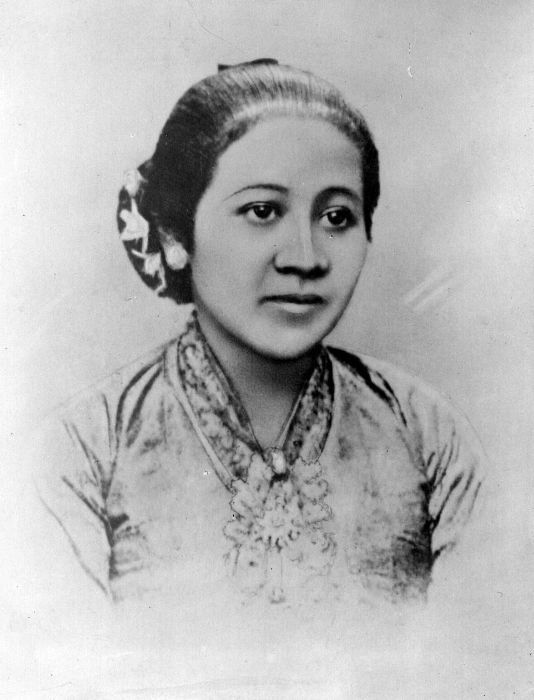
Dewi Sartika
 Indonesia
Also known as: Raden Dewi Sartika, Radén Déwi Sartika
Birthday
December 4, 1884
Birth Sign
Sagittarius
Birthplace
Cicalengka, Dutch East Indies
Age
Died at 62
About
Dewi Sartika was an Indonesian pioneer of women's education and the founder of the first school for women in the Dutch East Indies. Born into Sundanese nobility in 1884, she devoted her life to expanding educational opportunities for girls during the colonial era. Her work laid a foundation for women's advancement in Indonesia, and she was posthumously recognized as a National Hero of Indonesia in 1966. Her legacy endures through the many schools that grew from her initial effort, and she remains a symbol of women's empowerment in the country.
Early Life & Background
Dewi Sartika was born on December 4, 1884, in Cicalengka, a town in the Bandung Regency of West Java. Her parents, R. Rangga Somanagara and R. A. Rajapermas, were Sundanese aristocrats. Her father's early death and her parents' opposition to Dutch colonial rule, which led to their imprisonment in Ternate, meant she spent much of her childhood under the care of her uncle, the Vice Regent of Cicalengka.
From a young age, she showed a natural talent for teaching. After her own lessons, she would gather her friends and play 'teacher,' passing on what she had learned. She also taught reading, writing, and Dutch to the children of servants in the palace backyard. By age ten, those children could read, write, and speak some Dutch, a rare achievement at the time. Her uncle's household provided her with traditional Sundanese education, while the wife of a resident assistant introduced her to Western knowledge.
In 1899, she moved to Bandung. In 1902, after her mother was released from prison, she began teaching her female relatives in a small room behind her mother's house. That informal effort would soon grow into something much larger.
Career Growth
On January 16, 1904, Dewi Sartika opened Sekolah Isteri, the first school for women in the Dutch East Indies. The school started with just twenty students and three teachers: herself and her two cousins, Mrs. Poerwa and Miss Oewid. The curriculum combined academic subjects like reading, writing, and Dutch with practical skills such as knitting, cooking, and sewing.
The school's success led to rapid expansion. By 1912, nine schools for women operated across West Java, and by 1920, nearly every city and region in the province had one. In September 1929, the main school was renamed Sakola Raden Dewi in her honor. During the Indonesian War of Independence, she was forced to evacuate from Bandung. She died on September 11, 1947, in Cineam, Tasikmalaya, at age 62. Her remains were later moved to the Bandung Regents' Cemetery.
Career Timeline
Public Image & Style
Dewi Sartika is remembered in Indonesia as a pioneering feminist and education reformer. She is celebrated as a symbol of women's empowerment and national resistance to colonialism. Her image appears in textbooks and commemorative materials, and her story is shared during Women's History Month. While there is no official fandom, she holds a place of deep respect as a national heroine, with her legacy inspiring ongoing efforts for gender equality in education.
Fame & Fandom
There's no formal fandom for Dewi Sartika, no official name, no fan clubs, no birthday billboards. She died in 1947, before the era of social media fan culture, and her following today is more about reverence than organized devotion. But her name does spark occasional public flare-ups, most famously in 2017 when Google Maps briefly renamed a street honoring her to "Jalan Dewi Persik," after a contemporary dangdut singer. The error went viral, prompting protests and a swift correction, a telling moment about how a national heroine's legacy can collide with pop culture.
Her fame, though, is of a different order. In the iFANN Global Fame Rankings, which track global attention across media coverage, search, and consumption signals worldwide, she holds a significant placement. As of August 2026, she is the 89th most famous person in Indonesia, a position that has held steady from the previous cycle. That ranking, published by iFANN Global Fame Rankings, places her among the most recognized figures in the country, a remarkable standing for an educator who died over seventy years ago.
Interesting Facts and Legends
Dewi Sartika's teaching ability was evident early: by age ten, the servant children she taught could read, write, and speak basic Dutch, a rare skill in the colonial era. She began her teaching career in a room behind her mother's house in Bandung before founding her formal school. Her parents were imprisoned for opposing Dutch colonial rule, shaping her childhood. She received Western education from the wife of a Dutch colonial official. Her school's curriculum included practical domestic skills like knitting and cooking, which were considered essential for women at the time.
One legendary incident, though not about her directly, has become part of her public lore. In August 2017, Google Maps briefly renamed a street in Bekasi honoring her to "Jalan Dewi Persik," after a dangdut singer, sparking public confusion and protests. The error was corrected, but the incident became a widely reported story, highlighting the contrast between a revered national heroine and pop culture. It's a story fans still retell when discussing her legacy.
Family & Personal Life
Dewi Sartika was born to R. Rangga Somanagara and R. A. Rajapermas, both of Sundanese noble descent. Her father died when she was young, and her mother was imprisoned for opposing Dutch rule, so she was raised primarily by her uncle, R.A. Martanagara, who served as Regent. In 1906, she married Raden Kanduruan Agah Suriawinata, a school teacher who shared her commitment to women's education. The couple had no documented children. Her family background and her husband's support were instrumental in her educational work.
Notable Connections
Relationships & Dating History
Dewi Sartika married Raden Kanduruan Agah Suriawinata in 1906. He was a school teacher who shared her passion for education. Their partnership was both personal and professional, with her husband supporting her work. The couple had no children. She was widowed by her own death in 1947; there are no records of other relationships.
- MarriedRaden Kanduruan Agah Suriawinata1906 - 1947Married in 1906; he was a school teacher who supported her educational work.
Death & Aftermath
Died
September 11, 1947 (aged 62)
Death Place
Cineam, Tasikmalaya, Indonesia
Cause of Death
Unknown
The Indonesian independence movement lost a vital voice when Dewi Sartika passed away on September 11, 1947, at the age of sixty-two. While she spent her life establishing schools across West Java, the specific location where she took her final breath remains unrecorded in available historical accounts. The official cause of death was never publicly declared by family or authorities, leaving the medical circumstances surrounding her final days to remain undisclosed. Her legacy did not wait for a formal ceremony to take root; nearly two decades later, the nation formally recognized her contributions when she was designated a National Hero of Indonesia in 1966. This posthumous honor cemented her status as a symbol of women's education and empowerment. Today, her name adorns streets and institutions across the country, including the Sakola Istri school which bore her title by 1904. A Google Doodle marked her 132nd birthday in 2016, serving as a modern tribute to her enduring impact.
Net Worth (Estate Value)
$1 Million
iFANN Editorial Team estimate
As a historical figure who died in 1947, Dewi Sartika's net worth is not documented in any conventional sense. iFANN currently estimates her net worth at $1 Million, a figure that reflects the commemorative and educational value of her legacy rather than any financial estate. The schools she founded continue to operate, but her estate has no recorded monetary value. Her true wealth lies in her lasting impact on women's education in Indonesia.
Awards Won (1)
Dewi Sartika was posthumously named a National Hero of Indonesia in 1966, in recognition of her pioneering contributions to women's education. This is her most significant honour, reflecting her lasting impact on the nation.
1966 · National Honor
Pioneering women's education
Known For
Founding the first school for women in the Dutch East Indies
1904 · Founder
National Hero of Indonesia
1966 · Honoree
Keywords
Sources
Quick Facts
- Profession
- women's rights activist
- Born
- December 4, 1884
- Birthplace
- Cicalengka, Dutch East Indies
- Died
- September 11, 1947
- Death Place
- Tasikmalaya, Indonesia
- Gender
- Female
- Birth Sign
- Sagittarius
Personal Details
- Full Name
- Raden Dewi Sartika
- Spouse
- Raden Kanduruan Agah Suriawinata
Frequently Asked Questions
Who was Dewi Sartika?
What did Dewi Sartika do?
When was Dewi Sartika born and died?
Was Dewi Sartika married?
Why is Dewi Sartika important?
Similar People
Join the community
fans discussing