 Israel
About
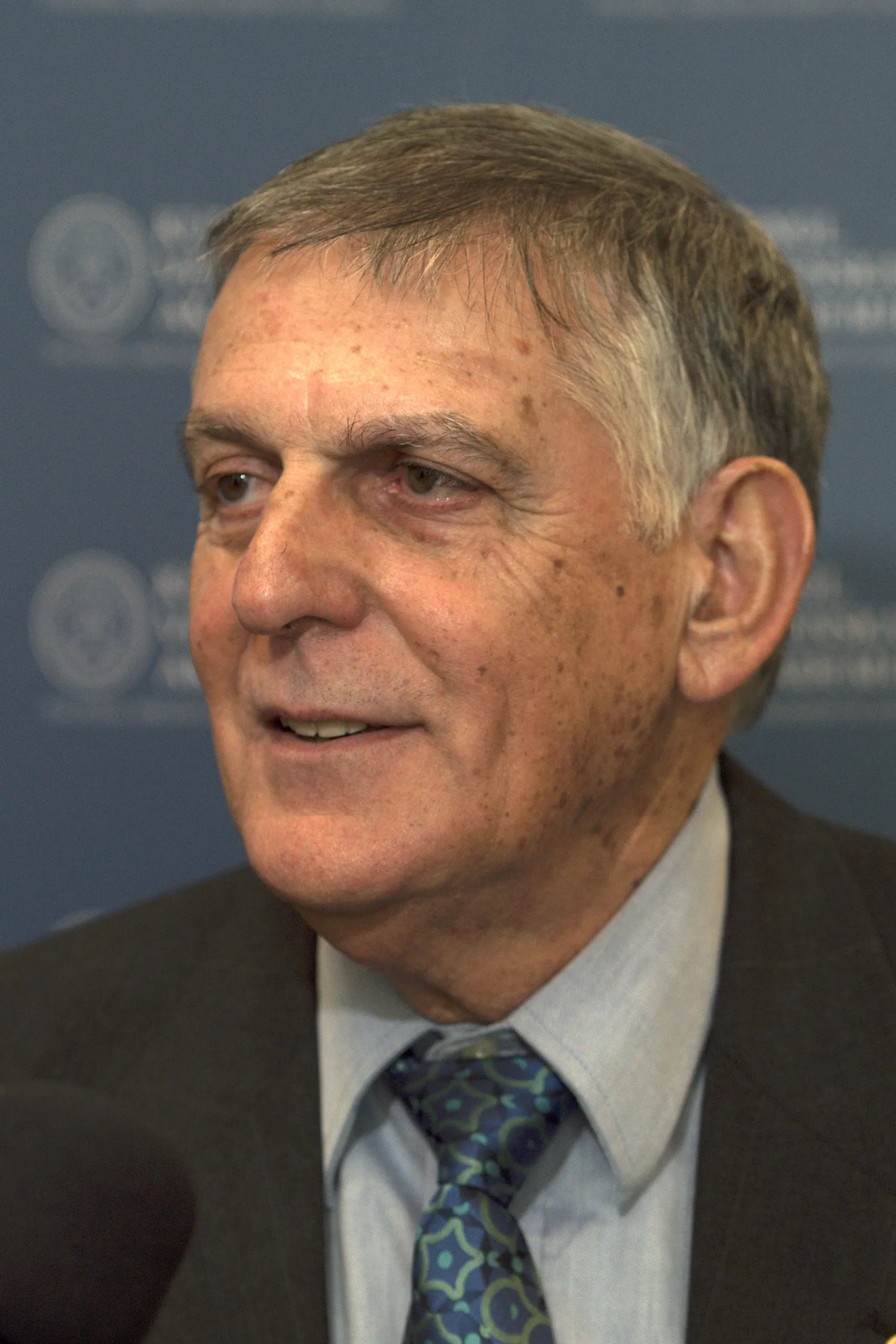
Dan Shechtman is an Israeli chemist and materials scientist who won the 2011 Nobel Prize in Chemistry for discovering quasicrystals, a new class of solid matter with ordered but non-periodic atomic structures. He holds the Philip Tobias Professorship of Materials Science at the Technion – Israel Institute of Technology, where he is a Distinguished Professor Emeritus, and he also teaches at Iowa State University, where he is affiliated with the Ames National Laboratory. His discovery, made in 1982, was initially dismissed by the scientific establishment, including two-time Nobel laureate Linus Pauling, but Shechtman's persistence eventually overturned a fundamental rule of crystallography.
Today, Shechtman is celebrated not only for his scientific breakthrough but also as a symbol of scientific integrity and the power of empirical evidence. His work has practical applications in everyday items like non-stick frying pans and surgical needles. As of 2026, he remains active in academia, advocating for science education and entrepreneurship, and his legacy continues to inspire researchers to challenge established paradigms.
Early Life & Background
Dan Shechtman was born on January 24, 1941, in Tel Aviv, then part of the British Mandate for Palestine. Growing up in the city that would become a cornerstone of the new State of Israel, he developed an early interest in science and engineering. He pursued his entire formal education at the Technion – Israel Institute of Technology in Haifa, earning his bachelor's, master's, and doctoral degrees there, with a PhD in materials science completed in 1972.
After finishing his doctorate, Shechtman joined the faculty at the Technion, where he began his academic career. In the late 1970s, he took a sabbatical at the U.S. National Bureau of Standards (now NIST) in Washington, D.C., a move that would prove pivotal. It was during this period, on April 8, 1982, that he made the observation that would define his career. While examining a rapidly cooled alloy of aluminum and manganese under a transmission electron microscope, he noticed a diffraction pattern with a ten-fold symmetry, a pattern that crystallography theory said could not exist. His lab notebook from that day records the first glimpse of what would later be called quasicrystals, a discovery that initially brought ridicule from colleagues who believed he was misreading the data.
Career Growth
Shechtman's breakthrough came in 1982, but it took years for the scientific community to accept his findings. The discovery of the icosahedral phase, as he called it, directly contradicted the established rule that crystals could only have two-, three-, four-, or six-fold rotational symmetry. Linus Pauling, a two-time Nobel laureate, dismissed Shechtman's work as nonsense, and Shechtman was even asked to leave his research group at the National Bureau of Standards. Despite this, Shechtman persisted, publishing his results and defending them through rigorous experimentation.
The tide turned in the late 1980s as other scientists confirmed his observations, and quasicrystals became a recognized new class of materials. In 2011, the Nobel Prize in Chemistry was awarded to Shechtman for this discovery, making him one of only a handful of Israeli scientists to receive the honor. Beyond the Nobel, Shechtman has continued to contribute to materials science, holding professorships at both the Technion and Iowa State University. In 2014, he even launched a campaign to run for President of Israel, though he did not succeed. He remains a vocal advocate for science education and entrepreneurship, giving public lectures worldwide.
Career Timeline
Public Image & Style
Dan Shechtman is widely portrayed as a symbol of scientific persistence. The story of his discovery, ridiculed by the establishment, then vindicated by the Nobel Prize, has made him a folk hero in the scientific community. He is known for his calm, methodical approach and his willingness to stand by his data even when powerful figures like Linus Pauling dismissed him. In public lectures, Shechtman emphasizes the importance of entrepreneurship and innovation, arguing that science can drive peace and prosperity. His image is that of a dedicated researcher who values evidence over authority, and he is often cited as an example for young scientists facing skepticism.
Fame & Fandom (iFAMOUS Rankings)
Dan Shechtman commands a following defined not by organized campaigns or ritualistic gatherings, but by the quiet reverence of the scientific community for his unwavering adherence to empirical truth. While he lacks a formalized fanbase with specific names or street-level adoration, his story serves as an enduring archetype for intellectual independence, drawing admiration from students and researchers who view his 1982 defiance of Linus Pauling as a foundational lesson in academic courage. This unique form of fandom celebrates the man behind the quasicrystals rather than seeking celebrity status, creating a legacy built on respect rather than applause.
His standing in global metrics reflects this specialized yet profound influence. According to the iFANN Global Fame Rankings, Shechtman is currently recognized as the 88th most famous person from Israel, a position holding steady from the previous cycle. Within the specific domain of artificial intelligence and computational materials science, he ranks as the 41st most famous person in AI, also maintaining his placement from prior assessments. These figures represent a snapshot of his visibility across digital ecosystems that track media coverage and scholarly consumption worldwide, placing him firmly among the most significant figures in his fields of origin and application.
Interesting Facts and Legends
Shechtman's 1982 laboratory notebook, containing the initial sketch of the quasicrystal diffraction pattern, remains preserved at NIST as a historical scientific document. He was once asked to leave his research group at the National Bureau of Standards due to the controversial nature of his findings regarding non-periodic structures. The materials he discovered are now utilized in everyday items such as non-stick frying pans and surgical needles. Shechtman has publicly advocated for integrating entrepreneurship into traditional science curricula, arguing that such training fosters necessary innovation. In 2014, he launched a bid for the presidency of Israel, though he did not win the election. He stands as one of the few Israeli scientists to have received a Nobel Prize.
The defining moment of his career occurred in 1982 when he observed electron diffraction patterns from an aluminum-manganese alloy displaying 10-fold symmetry. This observation contradicted established laws of crystallography, leading to professional friction with prominent scientists who initially dismissed his results as experimental errors. Despite the ridicule, Shechtman persisted, eventually proposing the "Blech Model" to explain how these icosahedral structures could physically exist. His persistence culminated in the 2011 Nobel Prize in Chemistry, awarded for discovering crystal structures previously unknown to science.
Notable Quotes
“Linus Pauling said I was talking nonsense.”
“A good scientist is a curious person who asks questions and is not afraid to challenge the status quo.”
“Science is a way of thinking much more than it is a body of knowledge.”
Family & Personal Life
Dan Shechtman is married to Tzipora Shechtman (also spelled Zipora). The couple has been together for many decades, though they keep their personal life largely out of the public eye. They have children, but details about their names and number are not widely documented. The family has lived in Israel, where Shechtman has spent most of his career. Despite his international fame, Shechtman has maintained a private family life, focusing public attention on his scientific work rather than his household.
Notable Connections
Dan Shechtman is associated with the Technion – Israel Institute of Technology, where he holds the Philip Tobias Professorship, and Iowa State University's Ames National Laboratory. His work is also linked to NIST, where he made his discovery. Among his notable contemporaries, Linus Pauling is perhaps the most famous figure connected to his story, having publicly opposed Shechtman's findings. The Philip Tobias Professorship is named after the South African anatomist, reflecting the chair's prestige.
Relationships & Dating History
Dan Shechtman is married to Tzipora Shechtman (also spelled Zipora). The couple has been together for many decades, though the exact date of their marriage is not publicly documented. They have children together, but details about their family life are kept private. There are no public records of any other romantic relationships, divorces, or separations. As of 2026, Shechtman remains married to Tzipora, and the pair is known to be a stable, long-term couple.
- MarriedTzipora ShechtmanCurrentLong-term marriage, with children; details kept private.
Salary, Net Worth In 2026
$1 Million
iFANN Editorial Team estimate
iFANN currently estimates Dan Shechtman's net worth at $1 Million as of 2026. This financial profile is derived primarily from his extensive academic career, including salaries earned during his tenure at the Technion – Israel Institute of Technology and Iowa State University. The Nobel Prize in Chemistry awarded in 2011 provided a monetary award of approximately $1.5 million, which was split among the winners; Shechtman received roughly half of this sum, contributing significantly to his current assets. He has not engaged in major commercial ventures, although his discovery has facilitated practical applications that generate revenue for other entities. His financial standing remains modest compared to public celebrities, reflecting a lifelong focus on research and teaching rather than wealth accumulation.
Awards Won (1)
Dan Shechtman's most prestigious award is the 2011 Nobel Prize in Chemistry, which he received for the discovery of quasicrystals. This honor recognized his groundbreaking work that overturned long-held beliefs in crystallography. He has also received various academic honors and positions, including the Philip Tobias Professorship at the Technion and affiliation with the Ames National Laboratory. His awards reflect his significant contributions to materials science.
2011 · Chemistry
Discovery of Quasicrystals
Known For
Discovery of Quasicrystals
1982 · Discoverer
Nobel Prize in Chemistry
2011 · Laureate
Keywords
Sources
Quick Facts
- Profession
- physicist, chemist, engineer
- Born
- January 24, 1941
- Birthplace
- Tel Aviv, British Mandate for Palestine
- Gender
- Male
- Spouse
- Tzipora Shechtman
- Birth Sign
- Aquarius
- Education
- Technion – Israel Institute of Technology (BSc, MSc, PhD)
- Nobel Prize
- 2011, Chemistry
Personal Details
- Full Name
- Dan Shechtman
- Spouse
- Tzipora Shechtman
- Education
- Technion – Israel Institute of Technology (BSc, MSc, PhD)
Frequently Asked Questions
What did Dan Shechtman discover?
How old is Dan Shechtman in 2026?
Is Dan Shechtman married?
What is Dan Shechtman's net worth in 2026?
Why was Dan Shechtman's discovery controversial?
Similar People

Join the community
fans discussing