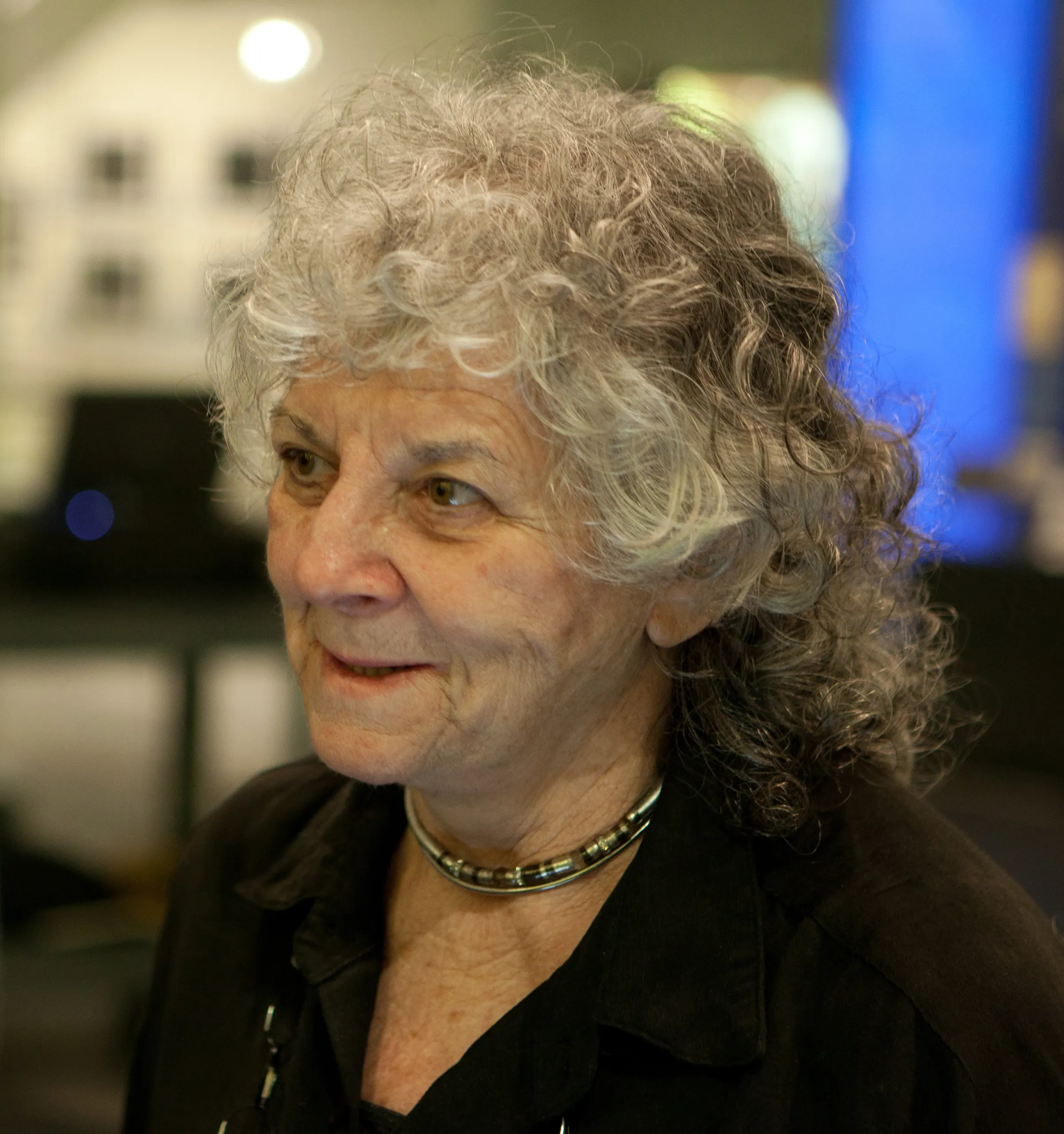
Ada Yonath
 Israel
molecular biologist•chemist•university teacher
Birthday
June 22, 1939
Birth Sign
Cancer
Birthplace
Jerusalem, Israel
Age
87 years old
Height
5 ft 2 in (157 cm)
About
Ada E. Yonath is an Israeli crystallographer whose pioneering work on ribosomes transformed molecular biology. She directs the Helen and Milton A. Kimmelman Center for Biomolecular Structure and Assembly at the Weizmann Institute of Science in Rehovot. In 2009, Yonath shared the Nobel Prize in Chemistry with Venkatraman Ramakrishnan and Thomas A. Steitz for mapping the structure and function of the ribosome, the cell's protein factory. That achievement made her the first Israeli woman to win a Nobel, the first woman from the Middle East to win in the sciences, and the first woman in 45 years to take the Chemistry prize.
Yonath's breakthrough came from defying convention: she crystallized ribosomes, a feat many deemed impossible, using cryo-crystallography, a technique she developed to flash-freeze the samples. Her perseverance through decades of skepticism turned a seemingly impossible goal into a landmark achievement. Today, she remains an active researcher and a vocal advocate for women in science, proving that curiosity and tenacity can break barriers.
Early Life & Background
Ada Yonath was born on June 22, 1939, in Jerusalem, then under British Mandate Palestine, to parents who had emigrated from Poland. Her father was a rabbi, and the family ran a small grocery store to make ends meet. Growing up in a poor neighborhood, Yonath experienced significant economic hardship. When she was 11, her father passed away, leaving the family semi-orphaned. She helped support them while excelling in her studies. She attended a secular high school in Jerusalem's Beit Hakerem neighborhood, while also receiving religious instruction from her family's tradition.
Her academic promise was evident early. She earned a bachelor's degree in chemistry from the Hebrew University of Jerusalem in 1962, followed by a master's in biochemistry in 1964. She completed her PhD at the Weizmann Institute of Science in 1968, focusing on the structure of collagen. Postdoctoral work at Carnegie Mellon University and MIT followed, where she worked under Nobel laureate Alexander Rich. It was at MIT that she became fascinated with ribosomes, the cellular machines that synthesize proteins, setting the stage for her life's work.
Career Growth
In 1970, Yonath returned to Israel and established the first biological crystallography laboratory at the Weizmann Institute. She later split her time between Israel and Germany, serving as a senior research scientist at the Max Planck Institute for Molecular Genetics in Berlin for more than two decades. Her decision to determine the three-dimensional structure of the ribosome was considered audacious and nearly impossible. Ribosomes are enormous and unstable, making them extraordinarily difficult to crystallize. For over two decades, she faced skepticism and repeated failures, but she persisted.
Her breakthrough came through cryo-crystallography, a technique that involves flash-freezing ribosome crystals at extremely low temperatures to stabilize them for X-ray analysis. In 2000, she published the complete high-resolution structure of the large ribosomal subunit from Haloarcula marismortui, followed by the small subunit in 2001. These maps revealed how antibiotics bind to bacterial ribosomes, providing critical insights for drug development and antibiotic resistance. In 2009, she shared the Nobel Prize in Chemistry. She continues to lead her research group and mentor young scientists.
Career Timeline
Public Image & Style
Ada Yonath is widely regarded as a trailblazer in structural biology. Known for her persistence and unconventional thinking, she has become a symbol of scientific perseverance. Her public persona is that of a humble yet determined researcher, often emphasizing the importance of curiosity. She is a vocal advocate for women in science, frequently speaking at international forums and mentoring young researchers. Her Nobel win brought her international recognition, and she has been featured in Nobel Prize–sponsored storytelling initiatives about women who changed science. Despite her fame, she maintains a low-key personal life, rarely appearing in social media.
Fame & Fandom
Ada Yonath stands as a towering figure in the scientific community, her name synonymous with the relentless pursuit of structural clarity. In the global consciousness, she is recognized not merely for her discoveries but for shattering glass ceilings that had held firm for decades. Her cultural footprint extends well beyond the laboratory, placing her as the 77th most famous person from Israel according to the iFANN Global Fame Rankings, a position that marks a slight ascent from the previous cycle. This recognition places her among the nation's most influential citizens, a status tracked by a system that monitors global attention across media coverage, search trends, and consumption signals worldwide. While pop culture fans might rally behind celebrities with organized movements, Yonath's influence operates on a different frequency. She commands no formal fanbase, nor does she have a specific name attached to her admirers. There are no billboards demanding her return or subway ads celebrating her birthday. Instead, her following consists of students, researchers, and advocates who view her work as a beacon of perseverance. The narrative surrounding her life is one of quiet determination rather than viral spectacle. Stories of her climbing Mount Everest to solve the ribosome puzzle resonate deeply, yet these remain academic legends rather than mass-market folklore. Her legacy is defined by the tangible impact of her research on medicine and biology, serving as a foundational pillar for modern pharmacology. Even without a dedicated fandom, her presence at international forums draws crowds eager to hear from a woman who proved that curiosity could overcome skepticism. The absence of a named fan club underscores the seriousness of her field; her supporters are those who study the very molecules she mapped.
Interesting Facts and Legends
Ada Yonath has often remarked that she never initially desired to become a scientist, though an insatiable curiosity eventually drove her path. She characterizes science as a luxury, urging others to follow their questions above all else. Her groundbreaking research depended heavily on data gathered at U.S. Department of Energy facilities. During her Nobel interview, she revealed that a bicycle accident once caused her a brain concussion, adding a layer of physical resilience to her intellectual achievements. For over two decades, she maintained an association with the Max Planck Society. Yonath frequently compares the daunting challenges of her field to climbing Mount Everest. Beyond these personal anecdotes, her career is anchored by the widely retold story of her nearly thirty-year struggle to decipher the ribosome's structure. This saga of persistence against technical limitations and skepticism culminated in her successful mapping of the molecule in 1998. That achievement revolutionized the understanding of protein synthesis and directly facilitated the development of more than twenty antibiotics. Her identity as the first woman from Israel to win a Nobel Prize remains a central part of her lore, often cited in discussions regarding gender parity in STEM fields.
Notable Quotes
“I consider science a luxury. Curiosity. Go after your curiosity. More curiosity. Even more curiosity.”
“The challenge of science is like climbing Mount Everest.”
“Learning in school or at home was never difficult. The difficulties arose from our deprived economic situation.”
“I never wanted to be a scientist.”
Family & Personal Life
Yonath married a fellow scientist, and the couple had one daughter, Hagit, who was born in the 1960s. Hagit later became a physician at Sheba Medical Center in Israel. Yonath's husband was also a researcher, though details about their relationship timeline and any subsequent separation have not been publicly documented. Her granddaughter, Noa, has been mentioned in interviews. As of 2026, no public records indicate that Yonath is currently in a romantic relationship; her focus remains on her research and mentorship at the Weizmann Institute.
Notable Connections
Ada Yonath is associated with the Weizmann Institute of Science, where she has spent most of her career. She collaborated with and was mentored by Alexander Rich at MIT. She shared the 2009 Nobel Prize with Venkatraman Ramakrishnan and Thomas A. Steitz. She also shared the 2006 Wolf Prize with George Feher. Her work has been supported by the Max Planck Society and the U.S. Department of Energy.
Relationships & Dating History
Ada Yonath has been notably private about her personal life. She married a fellow scientist, and the couple had one daughter, Hagit, who was born in the 1960s. Hagit later became a physician at Sheba Medical Center in Israel. Yonath's husband was also a researcher, though details about their relationship timeline and any subsequent separation have not been publicly documented. As of 2026, she is widowed and has not publicly remarried or been linked to any romantic partners in media reports.
- MarriedUnnamed husband1960 - presentMarried a fellow scientist; details of their marriage are private.
Salary, Net Worth In 2026
$2 Million
iFANN Editorial Team estimate
iFANN currently estimates Ada Yonath's net worth at $2 Million as of 2026. Her financial standing stems primarily from her professorship at the Weizmann Institute, various research grants, and the Nobel Prize prize money she received in 2009, which amounted to about $200,000 after conversion. She maintains no known commercial ventures or endorsements. Her wealth reflects a lifetime dedicated to academic research rather than the accumulation of fortune.
Awards Won (5)
Ada Yonath has received numerous prestigious awards, including the Nobel Prize in Chemistry (2009), the Israel Prize (2002), the Wolf Prize (2006), the Albert Einstein World Award of Science (2008), and the UNESCO L'Oréal Award for Women in Science (2010). She is a member of several national academies and holds honorary doctorates from many universities.
2009 · Chemistry
Structure and function of the ribosome
2008 · Science
Ribosome crystallography
Known For
Ribosome structure determination
2000 · Lead researcher
Nobel Prize in Chemistry
2009 · Co-recipient
Keywords
Sources
Quick Facts
- Profession
- molecular biologist, chemist, university teacher
- Born
- June 22, 1939
- Birthplace
- Jerusalem, Israel
- Gender
- Female
- Birth Sign
- Cancer
- Nationality
- Israeli
- Awards
- Nobel Prize in Chemistry (2009), Israel Prize (2002), Wolf Prize (2006)
Personal Details
- Full Name
- Ada E. Yonath
- Height
- 5 ft 2 in (157 cm)
- Children
- 1 daughter (Hagit)
- Education
- PhD in Biochemistry, Weizmann Institute of Science (1968); MSc in Biochemistry, Hebrew University of Jerusalem (1964); BSc in Chemistry, Hebrew University of Jerusalem (1962)
Frequently Asked Questions
How old is Ada Yonath?
What did Ada Yonath win the Nobel Prize for?
Is Ada Yonath still alive?
Where does Ada Yonath work?
Was Ada Yonath the first woman to win the Nobel Prize in Chemistry?
Similar People
Join the community
fans discussing