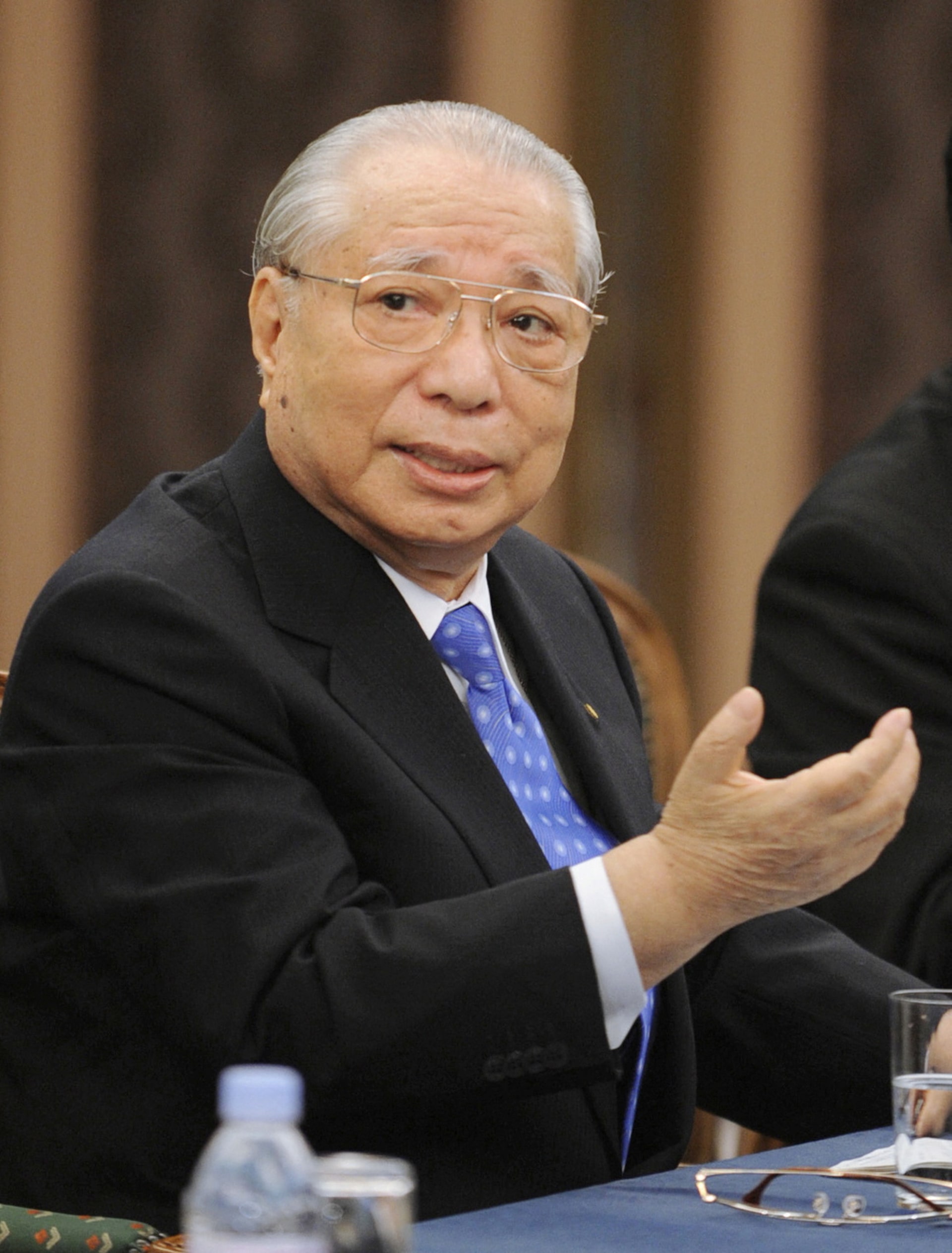
Daisaku Ikeda
 Japan
Japanreligious leader•author•educator•poet
Also known as: Ikeda Daisaku, Ta-tso Chʻih-tʻien, Dazuo Chitian
Birthday
January 2, 1928
Birth Sign
Capricorn
Birthplace
Tsukishima, Tokyo, Japan
Age
Died at 95
Height
5 ft 7 in (170 cm)
About
Daisaku Ikeda was a Japanese Buddhist philosopher, peacebuilder, educator, author, and poet who served as the third president of the Soka Gakkai and its international affiliate, Soka Gakkai International. Born in Tokyo to a family of seaweed farmers, he became the youngest president in the organization's history at age 32 in 1960. His leadership transformed Soka Gakkai from a domestic movement into a global network with members in over 190 countries. He is widely recognized for his extensive dialogues with world leaders, intellectuals, and artists, including Arnold Toynbee, Mikhail Gorbachev, and Herbie Hancock, and for founding numerous educational institutions, cultural centers, and museums.
Early Life & Background
Daisaku Ikeda was born on January 2, 1928, in Tsukishima, Tokyo, Japan, to Kanjiro and Tomiko Ikeda. The family operated a small seaweed farming business, which provided their livelihood but also subjected them to the hardships of the era. During his childhood, Japan entered World War II in 1941, plunging the country into a period of intense militarization and rationing. Ikeda attended elementary and middle school during this time, where he experienced the strict indoctrination system of the wartime government.
A pivotal moment in his early life occurred when his older brother, who was conscripted into the army, died in combat in Burma during the war. This personal loss deeply influenced Ikeda's lifelong commitment to pacifism and nuclear disarmament, themes that would dominate his later writings and diplomatic efforts. Following the war, Ikeda continued his education despite the economic devastation in post-war Japan. He enrolled in the evening course of Waseda University's Faculty of Literature, eventually earning a degree in philosophy and literature. He completed his undergraduate studies in 1952 and later earned a doctorate in literature from Waseda University in 1970.
Before rising to prominence, Ikeda worked as a part-time teacher and engaged in self-study while balancing his responsibilities to the Soka Kyoiku Gakkai. In 1947, at the age of 19, he joined the Soka Kyoiku Gakkai, a lay Buddhist movement based on the teachings of Nichiren Buddhism, inspired by the mentorship of Josei Toda, the second president of the organization. Toda recognized Ikeda's potential and mentored him closely, shaping his intellectual and spiritual development. In 1952, Ikeda began working full-time for the Soka Kyoiku Gakkai, serving as a secretary and editor. He was instrumental in organizing the youth division and expanding the movement's reach. Despite opposition from the mainstream Buddhist establishment and legal battles against the organization, Ikeda's dedication allowed him to grow the membership base significantly. By 1960, at the age of 32, he succeeded Josei Toda as the third president of the Soka Gakkai.
Career Growth
Ikeda's tenure as president of the Soka Gakkai marked a transformative era for the organization. Under his leadership, the group expanded globally, establishing the Soka Gakkai International (SGI) in 1975 to coordinate activities outside Japan. By the early 2000s, the SGI had grown to include millions of members across 192 countries and territories. Key milestones in his career include the election as the third president of the Soka Gakkai in 1960 and the authoring of the multi-volume novel The Human Revolution, which chronicles the history of the Soka Gakkai and serves as a foundational text for its members.
In 1975, he established the Min-On Concert Association to promote international cultural exchange through music and founded the Fuji Art Museum in Tokyo, showcasing art from around the world. Throughout the 1980s, he engaged in high-profile dialogues with world leaders, including Mikhail Gorbachev, which contributed to the easing of Cold War tensions. In 1994, he received the UNESCO Peace Education Award for his contributions to peace education. He continued to publish extensively throughout the 2000s, releasing hundreds of books on philosophy, peace, and culture. In 2007, he resigned as president of the Soka Gakkai but remained as honorary president, continuing his work as an author and peace advocate until his health declined in the 2010s.
Career Timeline
Public Image & Style
Daisaku Ikeda maintained a dignified and approachable public image, often dressed in traditional Japanese attire or Western-style suits. He stood approximately 170 cm (5 feet 7 inches) tall. He was known for his gentle demeanor and his ability to engage in deep philosophical conversations with leaders from diverse backgrounds. His writings emphasized humanistic values and the power of individual transformation. As a religious leader, he was viewed with both reverence by his followers and scrutiny by critics who sometimes labeled his organization controversial. His public persona was defined by a commitment to peace, education, and cultural exchange, distinguishing him from typical political or religious figures of his time. He utilized official social media accounts on platforms like Instagram, X, and Facebook to share quotes and messages of peace directly with a global audience.
Fame & Fandom
Daisaku Ikeda's following defies the chaotic energy of modern celebrity culture, rooted instead in a disciplined, global religious infrastructure. His adherents, known simply as members of the Soka Gakkai or Soka Gakkai International, operate with an institutional precision that transforms devotion into organized action. They do not stream his content to boost charts; they chant daily, publish translations of his works, and fund universities and peace research centers across 192 countries. Within this sphere, he is revered as Sensei, a title of profound respect rather than a fandom moniker. The community's rituals are spiritual: reciting the daimoku, studying his essays on human revolution, and engaging in dialogues that bridge cultural divides. Stories of his mentorship endure, from personal meetings with thousands of followers to transformative conversations with figures like Herbie Hancock. Even after his passing in 2023, his words circulate as motivational pillars, shared widely in digital spaces without the fanfare of a typical pop star campaign. This legacy of peacebuilding and education anchors a movement that has grown organically yet remains tightly structured. His influence extends far beyond religious boundaries, recognized by major global institutions and media outlets that chronicled his life and death. In the broader landscape of public recognition, his standing reflects this unique blend of spiritual leadership and global advocacy. He holds the position of the 92nd most famous person in Religious Leaders, a status confirmed by the iFANN Global Fame Rankings.
Interesting Facts and Legends
Daisaku Ikeda became the youngest president in the history of the Soka Gakkai at age 32 in 1960, marking the start of what followers call the Human Revolution. This narrative serves as foundational lore for millions of practitioners worldwide. His diplomatic efforts during the Cold War remain significant, particularly his meeting with Soviet leader Leonid Brezhnev and his extensive dialogues with British historian Arnold Toynbee published as Choose Life. These encounters established him as a bridge between ideological divides long before such cross-cultural diplomacy was common. A deeply personal story of loss shaped his lifelong pacifism: his eldest brother died in combat in Burma during World War II, an event that fueled his later advocacy for nuclear disarmament. Upon his death in 2023, the reaction was immediate and global, with major outlets like the New York Times and the BBC publishing extensive obituaries highlighting his impact.
Notable Quotes
“Even if things don't unfold the way you expected, don't be disheartened or give up. One who continues to advance will win.”
“Peace is not just the absence of war; it is the presence of justice.”
“The power to change oneself is the power to change the world.”
Family & Personal Life
Daisaku Ikeda was the eldest son of Kanjiro and Tomiko Ikeda. The family lived in Tsukishima, Tokyo, where they ran a small seaweed farming business that defined their daily existence during the pre-war and wartime years. He grew up alongside siblings, including an older brother who would tragically die in service. The household faced significant financial strain due to the economic hardships of the era, yet it remained a place of close familial bonds. Ikeda's parents instilled in him a strong sense of resilience and community responsibility, values that would later underpin his global humanitarian work. His father, Kanjiro, managed the family enterprise with diligence, while his mother, Tomiko, supported the children through the difficult times of rationing and uncertainty. The family unit was central to his formative years before he dedicated himself fully to religious and social activism.
Notable Connections
Relationships & Dating History
Daisaku Ikeda was married to Kaneko Ikeda, whom he met during his early involvement with the Soka Kyoiku Gakkai. They were married in 1951 and remained together until his death in 2023. There is no public record of any other romantic relationships or marriages prior to or during his marriage to Kaneko. The couple did not have biological children; however, they are often referred to as parents to the "children" of the Soka Gakkai movement, a metaphorical reference to the many young people they mentored and supported throughout their lives. At the time of his death on November 15, 2023, Daisaku Ikeda was married to Kaneko Ikeda.
- MarriedKaneko Ikeda1951 - 2023Married until his death; no biological children.
Death & Aftermath
Died
November 15, 2023 (aged 95)
Death Place
Shinjuku, Tokyo, Japan
Cause of Death
Heart failure
Daisaku Ikeda passed away on November 15, 2023, at the age of 95 due to heart failure at his residence in Shinjuku, Tokyo. The Soka Gakkai organization announced his death three days later on November 18, confirming that he had been in declining health. Tributes arrived from a wide spectrum of global figures, including jazz musician Herbie Hancock and various political leaders who acknowledged his decades of work in peace advocacy. His funeral and memorial services were conducted privately in accordance with traditional Japanese Buddhist rites, with no large-scale public ceremony attended by world leaders held immediately.
In the aftermath of his passing, the Soka Gakkai International assumed management of his legacy to ensure the continuation of his educational and peace-building initiatives. New editions of his extensive library of over one hundred books continue to be published and studied globally. The documentary series A Great Human Revolution remains a central piece of media reflecting his teachings on human empowerment. Public vigils and moments of silence were organized through the SGI network worldwide, honoring his contributions to nuclear disarmament and interfaith dialogue. The Japanese newspaper Japan Forward noted that his death reignited debates regarding the separation of politics and religion in Japan, referencing the broader political climate following the assassination of former Prime Minister Shinzo Abe.
Net Worth (Estate Value)
$0
iFANN Editorial Team estimate
As a religious leader and philanthropist, Daisaku Ikeda did not accumulate personal wealth in the traditional sense. His assets were primarily held within the Soka Gakkai and its affiliated organizations, which he used to fund educational, cultural, and peace-building initiatives. Estimates of his personal net worth are not publicly available, as he lived a modest lifestyle and dedicated his resources to the movement. Upon his death, his estate was managed by the Soka Gakkai International, which continues to uphold his vision and legacy. The value of the Soka Gakkai's assets, including real estate, educational institutions, and cultural centers, is substantial but not quantified in terms of personal net worth. iFANN currently estimates his net worth at approximately $0.
Awards Won (26)
Daisaku Ikeda received numerous awards and honors throughout his life, recognizing his contributions to peace, education, and culture. Notable accolades include the Order of Cultural Merit from the Government of Japan in 1983, the UNESCO Peace Education Award in 1994, and the Gandhi Peace Prize from the Government of India in 1996 and 2012. He was honored with the Templeton Prize for Progress in Religion in 2000 and received the John F. Kennedy Profile in Courage Award in 2007. In 2017, he received the Martin Luther King Jr. Nonviolent Peace Prize. He was also nominated for the Nobel Peace Prize in 2004.
1983 · Cultural Achievement
1994 · Peace Education
Known For
The Human Revolution
1960 · Author
Soka Gakkai International
1975 · Founder
Min-On Concert Association
1975 · Founder
Keywords
Sources
Quick Facts
- Profession
- religious person, writer, pedagogue
- Born
- January 2, 1928
- Birthplace
- Tokyo
- Died
- November 15, 2023
- Death Place
- Shinjuku
- Gender
- Male
- Spouse
- Kaneko Ikeda
- Birth Sign
- Capricorn
Personal Details
- Full Name
- Daisaku Ikeda
- Height
- 5 ft 7 in (170 cm)
- Spouse
- Kaneko Ikeda
- Children
- Education
- Waseda University (BA, PhD)
Frequently Asked Questions
Who was Daisaku Ikeda?
When did Daisaku Ikeda die?
What was Daisaku Ikeda's main contribution to peace?
Did Daisaku Ikeda have children?
What is the Soka Gakkai?
Similar People
Join the community
fans discussing