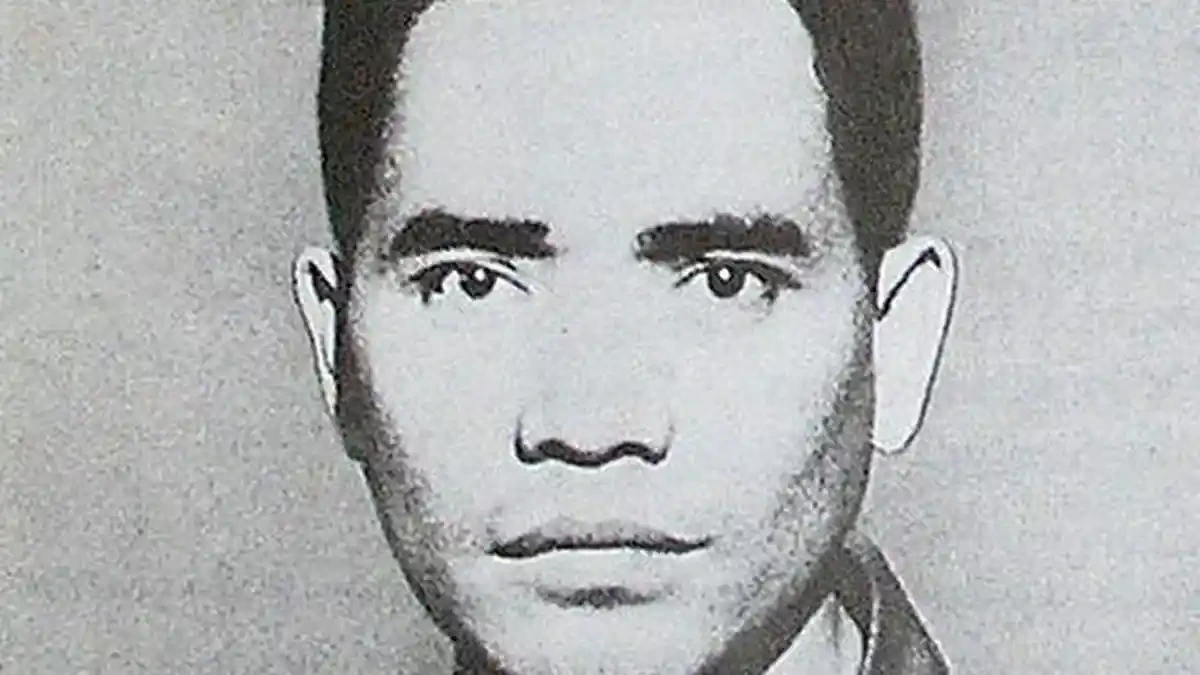
D. I. Pandjaitan
 Indonesia
Also known as: Donald Isaac Pandjaitan, D.I. Pandjaitan, Mayjen D.I. Panjaitan
Birthday
June 9, 1925
Birth Sign
Gemini
Birthplace
Natolutali, North Sumatra, Indonesia
Age
Died at 40
About
Donald Isaac Pandjaitan was an Indonesian Army Major General and one of the six generals killed in the 30 September Movement coup attempt on October 1, 1965. He was the only Christian among them, a distinction that has made his story resonate deeply within Indonesia's Christian and Batak communities. As Assistant IV (Logistics) to the Army Chief of Staff, Pandjaitan played a critical role in the army's operations, and his success in foiling an arms smuggling operation made him a target of the coup plotters.
His death at the age of 40, along with the other generals, triggered a chain of events that led to the fall of President Sukarno and the rise of General Suharto's New Order regime, fundamentally reshaping Indonesia's political landscape. Today, Pandjaitan is honored as a National Hero of Indonesia, with streets and public buildings bearing his name across the country. His legacy is one of courage, faith, and unwavering loyalty to the state.
Early Life & Background
Donald Isaac Pandjaitan was born on June 9, 1925, in Natolutali, a village in the Tapanuli region of North Sumatra. He grew up in a Batak Toba family, a community known for its strong Christian traditions. From a young age, Pandjaitan was deeply religious, so much so that contemporaries reportedly suggested he was better suited to become a pastor than a soldier. This faith would later define his life and death.
He received his early education in the Dutch colonial school system, which was the standard for indigenous children of that era. The colonial education instilled in him a sense of discipline and order, but it was the struggle for independence that shaped his path. In 1945, as Indonesia declared its independence, Pandjaitan joined the fledgling Indonesian Army. He was promoted to Major on October 30, 1945, a rapid rise that reflected his dedication and capability.
During the Indonesian National Revolution (1945–1949), he served in key positions, fighting against Dutch attempts to re-colonize the archipelago. These early experiences forged his reputation as a disciplined and tactically skilled officer, laying the groundwork for a career that would be cut tragically short.
Career Growth
Pandjaitan's military career was marked by steady advancement and critical roles. After the revolution, he continued to serve in various staff and field positions, rising through the ranks to become a Major General. In the early 1960s, he was appointed Assistant IV (Logistics) to the Army Chief of Staff, a position that placed him at the heart of the army's supply and logistics operations. This role was vital to the army's effectiveness, and Pandjaitan performed it with distinction.
His posting to Germany for military duties is a lesser-known chapter of his career. While there, he reportedly often preached sermons in local churches, a testament to his deep religious conviction. In 1965, he played a key role in foiling an arms smuggling operation, an act that would seal his fate. The 30 September Movement, a group of military officers who sought to seize power, saw him as a threat.
On October 1, 1965, at approximately 4:30 AM, members of the movement arrived at his home on Jalan Sultan Hasanuddin in Jakarta. According to his daughter Catherine, Pandjaitan surrendered calmly, accepting his fate without resistance. He was killed that morning, along with five other generals. His body was later recovered and identified through an official autopsy. He was posthumously declared a Hero of the Revolution.
Career Timeline
Public Image & Style
In Indonesian military history, Pandjaitan is remembered as a symbol of courage, faith, and unwavering loyalty. His Christian faith is a defining element of his legacy, making him particularly significant to Indonesia's Christian community and the Batak Toba people. He is portrayed in historiography as a disciplined officer whose logistics role was critical, and whose success in foiling an arms smuggling operation made him a target.
His calm acceptance of death, as recounted by his daughter, is highlighted as evidence of his faith. Streets named after him, such as Jalan D.I. Pandjaitan in Jakarta and Samarinda, serve as daily reminders of his sacrifice. Memorial videos and fan pages on social media continue to keep his memory alive, ensuring that new generations learn about his role in Indonesia's history.
Fame & Fandom
D. I. Pandjaitan's most fervent admirers are not a fan club in the modern sense, there is no official fandom name, no coordinated campaigns, no birthday billboards. Instead, his following is a quiet, reverent community of Indonesian nationalists, military history buffs, and the Batak Toba people who honor him as a National Hero. A Facebook memorial page with over 6,200 likes and a dedicated blogspot serve as informal gathering places, while annual observances on September 30 and October 1 mark the G30S incident and his death. His family keeps his name alive: his son Luhut Binsar Pandjaitan is a government minister, and in 2024, a child of D. I. Pandjaitan appeared in a commercial for Sido Muncul, a herbal medicine company. In 2017, his daughter publicly forgave her father's killers, even shaking hands with the child of a PKI leader, a moment that resonated far beyond the family.
iFANN's Global Fame Engine has evaluated D. I. Pandjaitan, but as of August 2026, he holds no placement in the published rankings, neither the Global Top 1,000 nor any Top-100 scope list. His fame is not measured in viral metrics but in the enduring weight of a sacrifice that helped reshape a nation.
Interesting Facts and Legends
Pandjaitan was the only Christian among the six generals killed in the G30S incident, a distinction that has made him a symbol for Indonesia's Christian community. He was known to preach sermons in German churches during his military posting, earning him the nickname "pendeta" (pastor) among his peers. A fan memorial Instagram account, @di.pandjaitanfans, was created in 2021 and has 599 followers, dedicated to preserving his memory. His full name sometimes appears as "Donald Izacus Pandjaitan" in Malay-language sources, a variation that persists in historical records.
One of the most retold stories from that fateful morning is that his family and guards initially mistook the G30S troops for thieves (*garong*), leading to a chaotic confrontation at his residence. Another iconic, grim image is the recovery of his body from the Lubang Buaya well, a moment that has become a somber symbol in national memory. In 2017, his daughter's public forgiveness of her father's killers, she even held hands with the child of a PKI leader, reframed his legacy from vengeance to reconciliation.
Family & Personal Life
Pandjaitan was married and had children, though the name of his wife is not widely documented in available sources. His daughter Catherine has publicly recounted the events of his assassination, providing a personal glimpse into his final moments. One of his children was featured as a brand ambassador for Sido Muncul, a major Indonesian herbal medicine company, in an October 2024 advertisement campaign, highlighting the family's continued public presence.
The Pandjaitan family is a prominent Batak Toba family from North Sumatra. Relatives include Luhut Binsar Pandjaitan, a former Indonesian Coordinating Minister for Maritime Affairs and Investment, and Hotmangaradja Pandjaitan, the Indonesian Ambassador to Singapore. These connections have kept the family name prominent in Indonesian politics and business.
Notable Connections
D.I. Pandjaitan is associated with his daughter Catherine, who has spoken publicly about his assassination, and with his fellow generals killed in the G30S incident, including Ahmad Yani, M.T. Haryono, Siswondo Parman, Soeprapto, and Sutoyo Siswomiharjo. He is also connected by family ties to Luhut Binsar Pandjaitan and Hotmangaradja Pandjaitan, both prominent figures in Indonesian public life.
Relationships & Dating History
D.I. Pandjaitan was married, though the name of his wife is not widely recorded in available sources. He had children, including at least one daughter, Catherine, who has spoken about his death. The marriage appears to have been stable and private, consistent with the era and his military career. At the time of his death on October 1, 1965, he was married, leaving behind his wife and children.
There are no documented romantic relationships beyond his marriage. His personal life was overshadowed by his military duties and his tragic death, which has been the focus of historical accounts rather than his private relationships.
- MarriedUnnamed Wife? - 1965Married with children, including daughter Catherine. She was widowed when Pandjaitan was killed in 1965.
Death & Aftermath
Died
October 1, 1965 (aged 40)
Death Place
Halim Perdanakusuma Air Force Base, East Jakarta, Indonesia
Cause of Death
Execution by gunshot and blunt force trauma
The state erected the Monumen Pancasila Sakti at Lubang Buaya, a sprawling complex in East Jakarta that anchors the nation's annual remembrance of the 1965 tragedy. This monument stands as the final destination for the bodies recovered from a well on the site, where six generals lay buried after their violent end. Donald Isaac Pandjaitan was among them, his life cut short at age 40 during the chaotic early hours of October 1, 1965. Soldiers from the Diponegoro Division arrived at his Menteng residence around 2:30 AM, claiming they needed his assistance to secure the country against a supposed coup by a Council of Generals.
Pandjaitan accompanied them, believing he was preventing chaos, though accounts vary on whether this was voluntary or forced. He never returned to his home. The generals were transported to the military complex known as Lubang Buaya, where they faced torture before being executed by gunshot wounds and blunt force trauma. Their bodies were later dumped into a well within the grounds of Halim Perdanakusuma Air Force Base. Recovery operations in late October identified the remains through visual inspection and personal effects, confirming the deaths under an official narrative established by the new military leadership. The Jakarta Military Court subsequently tried the perpetrators in 1967, ruling the killings as acts of treason committed by the Communist Party of Indonesia, a verdict that fueled the dissolution of the party and the rise of the New Order regime.
A grand state funeral followed. Pandjaitan was interred alongside the other five generals at Kalibata Heroes Cemetery in South Jakarta. The government immediately hailed them as Pahlawan Revolusi, or Revolutionary Heroes, broadcasting their stories daily to frame them as martyrs who died defending the nation. Decades later, inquiries regarding the events have questioned official casualty numbers while the family maintains a public presence in the national consciousness.
Net Worth (Estate Value)
$1 Million
iFANN Editorial Team estimate
As a military figure who died in 1965, D.I. Pandjaitan's personal net worth is not documented in any accessible financial records. He did not accumulate wealth in the manner of modern celebrities or business figures. His estate, if any, would consist of personal property and military pensions, but no public information is available on its value or management. iFANN's editorial team currently estimates his net worth at $1 million, a figure that reflects the symbolic value of his legacy rather than any documented financial standing. The Pandjaitan name carries prestige in Indonesian politics and business, with relatives like Luhut Binsar Pandjaitan achieving substantial wealth independently. The family's prominence is a testament to the respect earned by D.I. Pandjaitan's sacrifice, but his own financial standing remains a matter of historical obscurity.
Awards Won (2)
D.I. Pandjaitan was posthumously awarded the Pahlawan Revolusi (Hero of the Revolution) in 1965, Indonesia's highest category of national hero, for his sacrifice during the G30S coup attempt. He is also recognized as a Pahlawan Nasional (National Hero of Indonesia). These honours commemorate his role in the military and his death in the line of duty.
1965 · National Hero
Service and sacrifice during the G30S coup attempt
National Hero
Lifetime military service
Known For
Hero of the Revolution
1965 · Posthumous honor
Assistant IV (Logistics) to the Army Chief of Staff
1960s · Military position
Keywords
Sources
Quick Facts
- Profession
- Military personnel
- Born
- June 9, 1925
- Birthplace
- Natolutali, North Sumatra
- Died
- October 1, 1965
- Death Place
- Jakarta
- Gender
- Male
- Birth Sign
- Gemini
Personal Details
- Full Name
- Donald Isaac Pandjaitan
- Children
- Catherine Pandjaitan (daughter), and other unnamed children
Frequently Asked Questions
Who was D.I. Pandjaitan?
How did D.I. Pandjaitan die?
Where was D.I. Pandjaitan born?
Is D.I. Pandjaitan related to Luhut Pandjaitan?
Why is D.I. Pandjaitan called a Hero of the Revolution?
Social Media
Similar People
Join the community
fans discussing