“A gorgeous, ambitious revival that makes science feel like an adventure.”
James Poniewozik
Time
 United States
"The universe is within us."
User Score
45000 votes
Neil deGrasse Tyson hosts Cosmos: A Spacetime Odyssey, a 13-part science documentary that updates Carl Sagan's 1980 series for the CGI age. Ann Druyan, Sagan's widow and co-creator of the original, developed the show with Steven Soter; Seth MacFarlane came on as executive producer and helped get it on Fox. The series aired on Fox and National Geographic from March 9 to June 8, 2014.
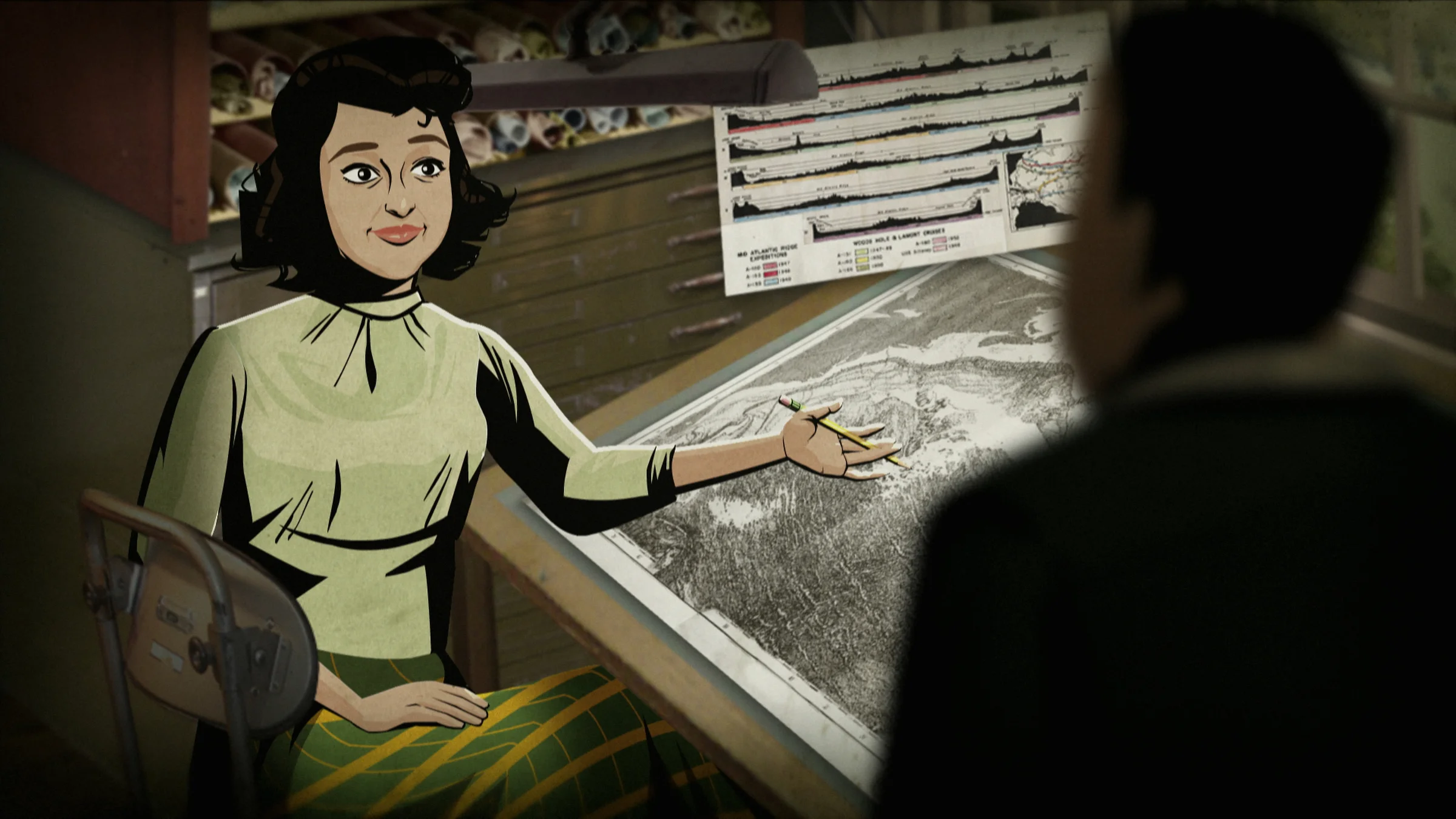
Tyson walks viewers through the universe's history, from the Big Bang to the possibility of life beyond Earth, using a virtual Ship of the Imagination and a Cosmic Calendar that compresses 13.8 billion years into a single year. The tone is earnest and wonder-struck but never preachy, with animation sequences that dramatize the lives of scientists like Giordano Bruno and Isaac Newton. Alan Silvestri composed the score.
Critics responded warmly, and the show won a Peabody Award among other honors. It arrived at a moment when science programming was scarce on broadcast TV, and its mix of clear explanation and visual ambition made it a rare thing: a primetime series that treated viewers like adults curious about the world.
Availability and pricing can change. Confirm on the provider's site before purchasing.
A comet falls toward the Sun for a million years. That's the first thing you see in Cosmos: A Spacetime Odyssey, and it sets the method for everything that follows: pick one thread and follow it across impossible scales of time and distance. Neil deGrasse Tyson stands in the same spot Carl Sagan occupied in 1980, hosting a guided tour of the universe that is part lecture, part visual effects showcase, and part history lesson about the people who figured things out.
The show's recurring vehicle is the Ship of Imagination, a virtual vessel that carries Tyson from the moments after the Big Bang to the formation of stars and planets, from the origins of life to the speculative far future. There is no fictional plot, no cast of characters in conflict. The drama comes from the material itself and from the animated segments that bring historical scientists to life. Giordano Bruno, the 16th-century friar who imagined an infinite universe of countless worlds, gets a full segment in the premiere, and his condemnation by the Inquisition gives the series its moral center. Later episodes dramatize Isaac Newton, the early investigators of electricity, and others who advanced knowledge at personal cost.
The organizing metaphor is the Cosmic Calendar, which squeezes the 13.8-billion-year history of the universe into a single year. On that calendar, all of recorded human history occupies the final seconds of December 31. It's a simple trick, but it does real work: it makes the scale of deep time feel intuitive rather than abstract.
Episodes are largely self-contained, each built around a broad theme. Light and cosmic distance. The origins of life. Evolution by natural selection. The structure of the atom. The search for life elsewhere. The future of humanity. Tyson explains directly to camera, CGI recreates phenomena that no camera could capture, and the animated vignettes supply the emotional spine. The season's arc is thematic rather than narrative: it moves outward from the smallest scales and nearest history to the largest cosmic questions and the long-term fate of intelligence.
What holds it together is a tone of accessible awe. The show is earnest, sometimes didactic, and unafraid of big ideas. It treats science as a human endeavor, often advanced against superstition and entrenched authority, and it treats the viewer as someone capable of following the argument. The result is less a story than an invitation: to look up, to ask how, and to understand that the answer is within reach.
Official Trailer
Critical Consensus
Reviewers praised the series as a visually spectacular, intellectually generous update of Sagan's original. Tyson's warm, authoritative hosting and the animated historical vignettes were singled out as highlights. Some critics noted occasional didacticism and the sheer density of information, but the overwhelming response was admiration for its ambition and its rare prime-time commitment to science.
“A gorgeous, ambitious revival that makes science feel like an adventure.”
James Poniewozik
Time
“Seven amazing things we learned from watching Cosmos, praising its ability to make complex cosmology accessible to general audiences.”
Staff
The Christian Science Monitor
“Tyson's mission to explain why the iconic TV series returns, framing it as a generational handoff from Sagan.”
Mike Wall
Space.com
“A feast for the eyes and the mind, with a Blu-ray visual transfer that is demo-worthy.”
DVD Talk Staff
DVD Talk
“A worthy successor carrying Sagan's torch of scientific wonder.”
Bill Moyers
BillMoyers.com
Directors
Brannon Braga, Bill Pope, Ann Druyan
Writers
Ann Druyan, Steven Soter
Composer
Alan Silvestri
Cinematographer
Bill Pope
Producers
National Geographic, Fuzzy Door Productions, Six Point Harness
Peabody Award (2014)
Television: Won
Primetime Emmy Award (2014)
Outstanding Documentary or Nonfiction Series: Nominated
Join the community
fans discussing