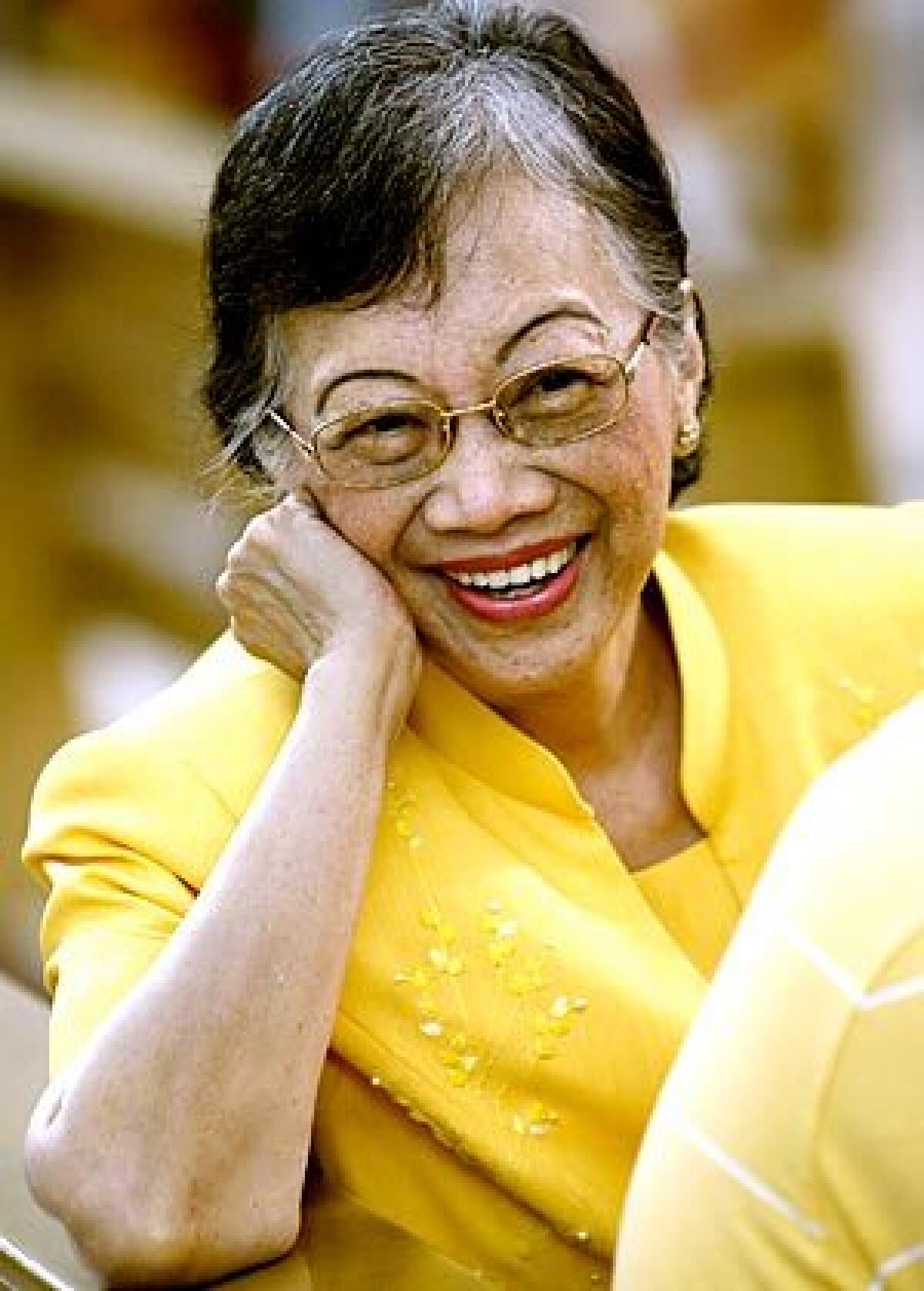
Corazon Aquino
 Philippines
politician•human rights defender
Also known as: Cory Aquino, María Corazón Cojuangco-Aquino
Birthday
January 25, 1933
Birth Sign
Aquarius
Birthplace
Paniqui, Tarlac, Philippines
Age
Died at 76
About
María Corazón "Cory" Sumulong Cojuangco-Aquino was the 11th president of the Philippines and the first woman to hold that office in Asia. She took power in 1986 after the People Power Revolution, a non-violent uprising that ended Ferdinand Marcos's two-decade rule. Her presidency restored democratic institutions and inspired pro-democracy movements across the globe.
Aquino's public life began with tragedy. After her husband, Senator Benigno "Ninoy" Aquino Jr., was assassinated in 1983, she became the reluctant leader of the opposition. Running against Marcos in a snap election, she refused to accept the fraudulent result and called for civil disobedience, igniting a revolution that forced Marcos into exile. Sworn in on February 25, 1986, she spent her six-year term drafting a new constitution, dismantling crony monopolies, and navigating coup attempts and natural disasters.
After leaving office in 1992, she remained a moral voice for democracy and human rights until her death from colorectal cancer in 2009. Her yellow-clad image and legacy as the "Mother of Democracy" endure in the Philippines, where she is honored with monuments and an enduring place in the nation's memory.
Early Life & Background
Born on January 25, 1933, in Paniqui, Tarlac, Corazon was the sixth of eight children in one of the province's wealthiest families. Her father, Jose Cojuangco, owned a 15,000-acre sugar plantation and served three terms in Congress; her mother, Demetria Sumulong, was a pharmacist and the daughter of a senator. The family's mixed Chinese, Filipino, and Spanish heritage shaped their prominent social standing.
She attended St. Scholastica's College in Manila, graduating valedictorian of her elementary class. When World War II forced the school to close, she continued at Assumption College, where she had to learn Japanese during the occupation. After the war, her parents sent her to the United States for high school, first at Ravenhill Academy in Philadelphia and then at Notre Dame Convent School in New York. She earned a Bachelor of Arts in French with a minor in mathematics from the College of Mount Saint Vincent in 1953, becoming fluent in French alongside English, Tagalog, and Kapampangan.
Returning to the Philippines, she enrolled in law school at Far Eastern University, where she met Benigno "Ninoy" Aquino Jr., a fellow student from another powerful political family. They married in 1954, and she left law school after a year to focus on raising their family. For the next three decades, she stayed in the background, supporting Ninoy's meteoric political career while caring for their five children at home.
Career Growth
Corazon Aquino's political career began in grief. After Ninoy's assassination on August 21, 1983, she emerged as the figurehead of the opposition. When Marcos called a snap election in February 1986, she ran as the unified candidate of the opposition. Though Marcos was declared the winner amid widespread fraud, she rejected the result and called for civil disobedience, leading to the People Power Revolution. With key military defections and support from the Catholic Church, the revolution succeeded, and she was sworn in as president on February 25, 1986.
Her administration drafted a new constitution, ratified by landslide vote in February 1987, which restored the bicameral Congress and limited presidential powers. She broke up Marcos-era monopolies and held local elections in 1988. Her tenure faced multiple coup attempts, the 1990 Luzon earthquake, the 1991 Mount Pinatubo eruption, and the tragic Mendiola Massacre in 1987, where security forces killed at least 12 protesters. She pursued peace talks that led to the creation of the Autonomous Region in Muslim Mindanao. In 1992, she peacefully transferred power to her elected successor, Fidel V. Ramos.
After leaving office, she co-presided over the Forum of Democratic Leaders with Oscar Arias of Costa Rica, advocating for democracy worldwide.
Career Timeline
Public Image & Style
Corazon Aquino's public image was that of a modest housewife thrust onto the world stage, symbolized by her simple yellow dresses and devout Catholic faith. Media dubbed her the "Mother of Democracy" for her non-violent resistance and moral authority. She was seen as a stark contrast to the authoritarian Marcos regime, embodying honesty and humility.
Her leadership style was marked by a quiet determination and a reliance on moral suasion rather than political maneuvering. Filipinos affectionately called her "Cory," and her image became synonymous with the People Power Revolution. Internationally, she was celebrated as a symbol of peaceful democratic change, inspiring movements in South Korea, Taiwan, and beyond.
Fame & Fandom
Corazon Aquino stands as the 34th most famous person in Philippines and the 13th most famous person from Philippines, holding steady in her place within the iFANN Global Fame Rankings. These placements reflect a legacy that transcends her time in office, anchoring her name in global consciousness alongside other transformative leaders. While she never cultivated a fanbase in the manner of pop stars or athletes, her supporters formed a massive, spontaneous coalition during the People Power Revolution. This movement was not an organized club with a specific name but rather the Filipino people themselves, united by a shared desire for democracy. Her influence extended far beyond borders, culminating in historic moments like her address to the U.S. Congress, where she spoke as a symbol of freedom. Today, her memory is kept alive through educational scholarships and annual tributes by her family, particularly her daughter Kris Aquino, who shares personal reflections on her mother's life. These gatherings serve as the modern equivalent of fan rituals, drawing crowds to honor the woman who restored their nation without bloodshed.
Interesting Facts and Legends
Aquino's signature yellow clothing became a symbol of the People Power Revolution, inspired by the song "Tie a Yellow Ribbon" that was popular in the Philippines at the time. She was the second woman ever named TIME's Person of the Year, following Queen Elizabeth II in 1952. Despite being born in January, some sources list her birth sign as Sagittarius, an error that persists in certain records. She was known for her sense of humor, often joking that she was "just a housewife" when asked about her qualifications. Her son, Benigno "Noynoy" Aquino III, became the 15th president of the Philippines in 2010, continuing the family's political legacy. A widely retold story from her presidency involves the EDSA People Power Revolution, where millions of Filipinos lined the streets to protect her from a military coup, turning a simple avenue into a river of faith and resolve. Another defining legend is her address to the U.S. Congress in 1986, where she became the first Asian woman to speak before a joint session, detailing the struggles under martial law and inspiring hope for a new democratic era. Even after her passing, the scale of national mourning mirrored the original revolution, with millions lining the streets to pay their respects, cementing her status as the Mother of Philippine Democracy.
Notable Quotes
“I would rather die a meaningful death than to live a meaningless life.”
“It is not the number of years that count, but the quality of life.”
“We must be the change we want to see in our country.”
“I am just a simple housewife who became president.”
“The People Power Revolution proved that the power of the people is stronger than the power of the dictator.”
Family & Personal Life
Corazon Aquino married Benigno "Ninoy" Aquino Jr. in 1954, and they had five children: Maria Elena (b. 1955), Aurora Corazon (b. 1957), Benigno III "Noynoy" (b. 1960), Victoria Elisa (b. 1961), and Kristina Bernadette (b. 1971). The family endured Ninoy's imprisonment under martial law from 1972 to 1980 and subsequent exile in the United States. After his assassination, Corazon remained a widow for the rest of her life.
Her parents, Jose Cojuangco and Demetria Sumulong, were prominent in Tarlac, and her siblings included influential figures in business and politics. In later years, her children pursued their own careers; Noynoy entered politics and became president, while her daughters were involved in various civic and business activities.
Notable Connections
Corazon Aquino's life was intertwined with key figures in Philippine history. Her husband, Senator Benigno "Ninoy" Aquino Jr., was the opposition leader whose assassination galvanized the movement. President Ferdinand Marcos was her political rival, and Fidel V. Ramos and Juan Ponce Enrile were the military leaders whose defections helped the revolution succeed. She co-presided over the Forum of Democratic Leaders with Oscar Arias of Costa Rica. Her son, Benigno "Noynoy" Aquino III, followed her into politics and became president in 2010.
Relationships & Dating History
Corazon Aquino's personal life was defined by a single, lifelong marriage. She met Benigno "Ninoy" Aquino Jr. while both were students at Far Eastern University law school in Manila. They married in 1954 and remained together until his assassination on August 21, 1983. Their marriage lasted 29 years and produced five children.
Ninoy was imprisoned under martial law from 1972 to 1980, and the family went into exile in the United States in 1980. When he returned to the Philippines, he was shot at the airport. Corazon was widowed at age 50 and never remarried. She remained a widow until her death in 2009, and no other romantic relationships were ever documented.
- MarriedBenigno "Ninoy" Aquino Jr.1954 - 1983Married for 29 years until his assassination in 1983.
Death & Aftermath
Died
August 1, 2009 (aged 76)
Death Place
Quezon City, Metro Manila, Philippines
Cause of Death
Complications from colon cancer
Corazon Aquino spent her final months in quiet seclusion at St. Luke's Medical Center in Quezon City, having not made a major public appearance since her health declined from the colon cancer that had plagued her for years. The nation immediately entered a ten-day period of mourning as flags flew at half-mast and millions gathered spontaneously outside the hospital and at Baclaran Church to pay their respects. International leaders joined the outpouring of grief, including U.S. President Barack Obama, who called her a beacon of hope for democracy, while Pope Benedict XVI sent a personal message of condolence. The funeral proceedings began on August 5, 2009, with a state funeral service held at the Manila Cathedral attended by thousands of mourners, former presidents, and foreign dignitaries such as then-President Gloria Macapagal Arroyo and US Secretary of State Hillary Clinton.
Following the mass, her body traveled to Tarlac City for a second service at the Our Lady of Mount Carmel Shrine before being laid to rest next to her husband, Senator Benigno Ninoy Aquino Jr., at the Manila Memorial Park, Sucat in Parañaque. Her legacy endures through the active Aquino Foundation and the annual Benigno and Corazon Aquino Scholarship, which recently honored its 30th winner in 2026, while her children continue to manage the family estate and advocate for democratic values.
Net Worth (Estate Value)
$10 Million
iFANN Editorial Team estimate
Corazon Aquino came from a wealthy political family, but her personal net worth was never a public focus. As a public servant, she did not accumulate significant personal wealth from her presidency. After her death in 2009, her estate's value was not widely documented, though her family's business interests and properties in Tarlac and Manila contributed to their financial standing. Her legacy, however, has generated ongoing economic value through tourism, memorials, and institutional honors. The Cory Aquino Foundation and other commemorative efforts continue to manage her memory and charitable works. Per iFANN's editorial analysis, the estimated net worth for her estate as of 2026 is $10 Million, reflecting the enduring value of her family's assets and the historical significance of her holdings.
Awards Won (3)
Corazon Aquino received numerous honors for her role in restoring democracy. She was named TIME magazine's Woman of the Year in 1986. She received the Ramon Magsaysay Award and the Order of the Precious Crown, as well as honorary degrees from 16 universities worldwide, including the University of Oregon in 1995.
1986 · International Understanding
Leadership in the People Power Revolution
1986 · State Honor
Service to the Philippines
Known For
President of the Philippines
1986 · 11th President
People Power Revolution
1986 · Leader of the opposition
TIME Woman of the Year
1986 · Honoree
Keywords
Sources
Quick Facts
- Profession
- politician, human rights defender
- Born
- +1933-01-25
- Birthplace
- Paniqui, Tarlac, Philippines
- Died
- +2009-08-01
- Death Place
- Makati, Philippines
- Gender
- Female
- Spouse
- Benigno "Ninoy" Aquino Jr.
- Children
- 5
- Education
- College of Mount Saint Vincent
- Birth Sign
- Aquarius
Personal Details
- Full Name
- María Corazón Sumulong Cojuangco-Aquino
- Spouse
- Benigno "Ninoy" Aquino Jr.
- Children
- 5
- Education
- College of Mount Saint Vincent (BA, French), Far Eastern University (law, incomplete)
Frequently Asked Questions
How did Corazon Aquino become president?
Was Corazon Aquino the first female president in Asia?
How many children did Corazon Aquino have?
What happened to Corazon Aquino's husband?
What is Corazon Aquino's legacy?
Similar People
Join the community
fans discussing