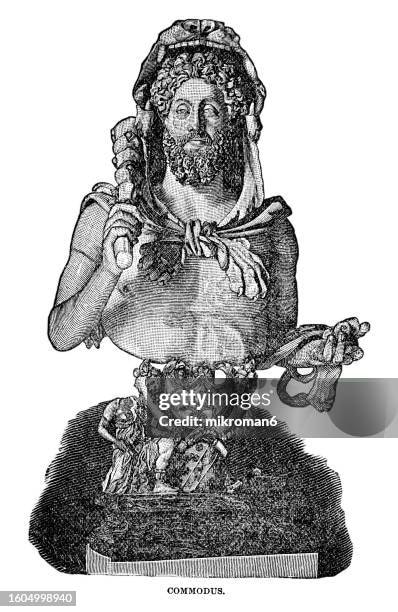
Commodus
 Italy
ItalyAlso known as: Lucius Aurelius Commodus, Marcus Aurelius Commodus Antoninus
Birthday
August 31, 161
Birth Sign
Virgo
Birthplace
Lanuvium, Italy
Age
Died at 31
About
Commodus was a Roman emperor who ruled from 177 to 192 AD, first as co-emperor with his father Marcus Aurelius and then as sole emperor. His reign is widely considered the beginning of the decline of the Roman Empire, marking the end of the Pax Romana. Unlike the philosopher-emperor he succeeded, Commodus prioritized personal spectacle over governance, famously fighting as a gladiator in the Colosseum and demanding divine honors as the reincarnation of Hercules. His autocratic style and reliance on unpopular favorites alienated the Senate and military, leading to his assassination in 192. Today he is remembered as one of Rome's most controversial and decadent rulers, a figure whose excesses have been dramatized in films and popular culture.
Early Life & Background
Born in Lanuvium, Italy, Commodus was the first emperor to be born during his father's reign, making him the heir apparent from infancy. His mother was Faustina the Younger, and he had a twin brother, Titus Aurelius Fulvus Antoninus, who died young. Commodus received a thorough education befitting an imperial prince, studying rhetoric, philosophy, and law under prominent tutors. He also underwent military training, accompanying his father on campaigns during the Marcomannic Wars in 172 and touring the Eastern provinces in 176. In 177, at just 16 years old, he was elevated to co-emperor, becoming the youngest emperor and consul in Roman history up to that point. His early exposure to power and adulation likely shaped his later sense of entitlement and grandeur.
Career Growth
Commodus assumed sole rule in 180 upon Marcus Aurelius's death, immediately ending the costly wars on the Danube frontier and returning to Rome. He delegated administration to a series of powerful favorites: first the chamberlain Saoterus, then the Praetorian Prefect Perennis, and later the freedman Cleander. His reign saw several conspiracies, including one led by his sister Lucilla in 182, which he crushed brutally. From the late 180s, Commodus increasingly appeared in the arena as a gladiator, fighting animals and disabled opponents, and charging the state treasury for his appearances. He renamed Rome Colonia Commodiana and the months after his own titles. His erratic behavior and neglect of state affairs created widespread resentment, culminating in his assassination on December 31, 192, by the wrestler Narcissus. His death triggered the Year of the Five Emperors, a period of civil war and instability.
Career Timeline
Public Image & Style
Commodus cultivated an image of divine strength, styling himself as Hercules Romanus and appearing in public dressed as the hero with a lion's skin and club. He commissioned statues of himself as Hercules and demanded that the Senate address him as such. To the Roman elite, he was a tyrant who debased the imperial office by fighting as a gladiator, an activity considered dishonorable for a Roman citizen, let alone an emperor. The common people, however, were reportedly entertained by his spectacles. Modern portrayals, like Joaquin Phoenix's performance in Gladiator, have cemented his reputation as a mad, cruel ruler.
Fame & Fandom (iFAMOUS Rankings)
Commodus, the Roman emperor who turned the imperial office into a spectacle, commands a peculiar kind of posthumous attention. He has no formal fandom name, and no organized fanbase exists in the modern sense, no conventions, no coordinated campaigns, no fan-funded projects. Instead, his following is an informal community of ancient history enthusiasts, particularly on platforms like Reddit, where threads debate his historical reputation, often referencing YouTube channels such as Kings and Generals. This is not a fandom with rituals or inside jokes, but a loose network of curiosity about a ruler whose excesses have become legend.
In the realm of global fame measurement, iFANN's Global Fame Engine has evaluated Commodus but currently assigns him no placement in the published rankings, neither in the Global Top 1,000 nor in any Top-100 scope list. This absence is notable for a figure whose name remains synonymous with imperial decadence, yet it reflects the engine's focus on contemporary cultural impact rather than historical legacy. His fame endures, however, through the 2000 film Gladiator, where Joaquin Phoenix's portrayal cemented his image in modern memory, and through the 2025 opening of the 'Passage of Commodus' in the Colosseum, a restored corridor he used to enter the arena. These cultural touchstones keep his story alive, even if the metrics of modern fame do not register him.
Interesting Facts and Legends
Commodus holds the distinction of being the first emperor born after his father's accession to the throne. In the arena, he reportedly killed over 1,000 lions and countless other animals, and he fought as a secutor gladiator, a heavily armed type. He was passionate about chariot racing and often drove chariots himself. His assassination came at the hands of his wrestling partner, Narcissus, who strangled him in the bath on December 31, 192 CE. After his death, the Senate declared him a public enemy, though later Emperor Septimius Severus had him deified.
One of the most retold legends is his gladiatorial self-performance, where he fought hundreds of times, always victorious, though his 'opponents' were often disabled people, animals, or fighters with blunted weapons, a story that has been embellished over time. Another iconic moment is the 'Passage of Commodus,' a secret underground corridor in the Colosseum, opened to the public in 2025 after being closed for nearly 2,000 years. This passage, about 30 meters long and 4 meters below the arena floor, was used by Commodus to enter the arena before his performances, and its restoration has become a modern cultural event, solidifying his association with the Colosseum.
Notable Quotes
“I am the lord of the world, the master of arms, and the conqueror of all.”
“Let the Senate call me Hercules, for I am the god of strength.”
“I have killed a hundred lions with my own hand.”
Family & Personal Life
Commodus was the son of Emperor Marcus Aurelius and Empress Faustina the Younger. He had a twin brother, Titus Aurelius Fulvus Antoninus, who died in childhood, and several sisters, including Lucilla, who later conspired against him. He married Bruttia Crispina around 178, but they had no children. Crispina was exiled after his death. Commodus had no known mistresses or illegitimate children, though his personal life was marked by indulgence in the arena and the palace.
Notable Connections
Commodus was closely associated with his father Marcus Aurelius, who prepared him for rule but also expressed concerns about his character. His sister Lucilla conspired against him and was executed. His wife Bruttia Crispina was married for political reasons. Key officials Saoterus, Perennis, and Cleander wielded power during his reign. His assassin, the wrestler Narcissus, acted on orders from a conspiracy including the Praetorian Prefect Aemilius Laetus and Commodus's chamberlain Eclectus.
Relationships & Dating History
Commodus married Bruttia Crispina around 178 in a political union arranged by his father. The marriage produced no children. Crispina was exiled to Capri after Commodus's assassination and later executed. There are no records of other romantic relationships, though Commodus was known for his debauchery and likely had many sexual partners, both male and female, as was common among Roman emperors. He never remarried or fathered any known children.
- MarriedBruttia Crispina178 - 192Political marriage; she was exiled after his assassination.
Death & Aftermath
Died
December 31, 192 (aged 31)
Death Place
Unknown
Cause of Death
Unknown
Commodus died on December 31, 192, within the imperial palace in Rome following a conspiracy orchestrated by his courtiers. The emperor was strangled by the wrestler Narcissus after a poisoning attempt failed to take effect, ending a reign marked by autocratic excess and gladiatorial spectacle. Contemporary historical accounts describe the immediate reaction as one of relief rather than mourning, with the Senate celebrating the restoration of order and issuing a damnatio memoriae that sought to erase his name from public records.
His body was interred without imperial ceremony in the Mausoleum of Hadrian, reflecting the Senate's determination to deny him the honors due to a legitimate successor. The political vacuum left by his assassination triggered the Year of the Five Emperors, a period of civil war that destabilized the empire for months until Pertinax secured the throne. Modern archaeological studies continue to examine the Colosseum tunnels associated with his reign, providing context for the arena events that defined his rule during the years he held power between 180 and 192 CE.
Net Worth (Estate Value)
$0
iFANN Editorial Team estimate
As a Roman emperor, Commodus controlled the entire imperial treasury, but personal net worth as a modern concept does not apply. Upon his death, his personal assets and the state treasury passed to his successor Pertinax. The wealth of the empire was vast, but Commodus spent heavily on games, spectacles, and his own image, contributing to financial strain. iFANN currently estimates his net worth at $0, reflecting the absence of any personal fortune in modern terms.
Awards Won (2)
As a Roman emperor, Commodus received the standard imperial acclamations and titles, including Imperator, Augustus, and Pontifex Maximus. He was deified after his death by the Senate under Septimius Severus. These were not competitive awards but rather honors of his office.
177 · Emperor
Accession as co-emperor
197 · Honorific
Posthumous deification by Senate
Known For
Roman Emperor
177 · Co-emperor and sole emperor
Gladiatorial combat in the Colosseum
180 · Gladiator
End of the Pax Romana
192 · Emperor
Keywords
Quick Facts
- Profession
- Roman Emperor
- Born
- August 31, 161
- Birthplace
- Lanuvium, Italy
- Died
- December 31, 192
- Death Place
- Rome, Italy
- Gender
- Male
- Spouse
- Bruttia Crispina
- Birth Sign
- Virgo
Personal Details
- Full Name
- Lucius Aurelius Commodus Antoninus
- Spouse
- Bruttia Crispina
- Education
- Tutored by prominent rhetoricians and philosophers, including Onesicrates; military training under his father Marcus Aurelius
Frequently Asked Questions
Who was Commodus?
When did Commodus rule?
How did Commodus die?
What is Commodus famous for?
Who succeeded Commodus?
Similar People
Join the community
fans discussing