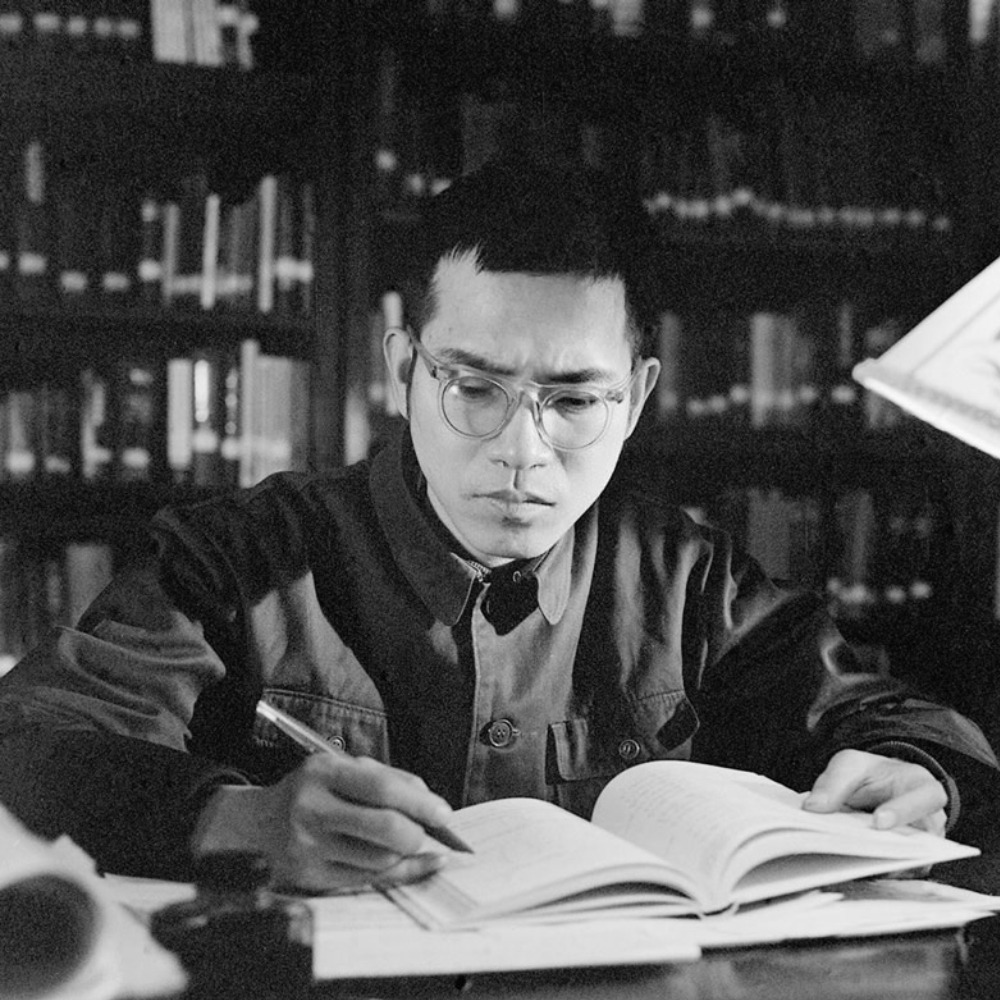
Chen Jingrun
 China
ChinaAlso known as: 陈景润, Jingrun Chen
Birthday
May 22, 1933
Birth Sign
Gemini
Birthplace
Minhou County, Fujian, China
Age
Died at 62
Height
5 ft 6 in (168 cm)
About
Chen Jingrun was a Chinese mathematician whose work on the Goldbach conjecture made him a national hero in China. He proved that every sufficiently large even integer can be expressed as the sum of a prime and a semiprime, a result now known as Chen's theorem. This remains the closest anyone has come to solving the full conjecture.
Chen was an academician of the Chinese Academy of Sciences and received the first Hua Luogeng Mathematics Award in 1992. His name is also carried by a Chinese naval oceanographic research ship, reflecting his enduring impact. He died in 1996, but his legacy lives on through the annual Chen Jingrun Prize and his place in mathematics textbooks.
Early Life & Background
Chen Jingrun was born on May 22, 1933, in Minhou County, now part of Fuzhou, Fujian Province. His father worked as a postal clerk, and his mother stayed home to raise the family. Money was tight, but Chen showed an early gift for numbers. He attended Yinghua Middle School in Fuzhou, where teachers quickly noticed his talent.
In 1950, Chen enrolled at Xiamen University to study mathematics. He graduated in 1953 and took a teaching job at a middle school in Beijing. The work left little time for research, so he returned to Xiamen University as a librarian and researcher. That position let him dive into number theory, and he began studying the Goldbach conjecture seriously. In 1957, Chen joined the Institute of Mathematics at the Chinese Academy of Sciences, where he would spend most of his career. He was known to be of average height, approximately 1.68 meters (5 feet 6 inches), though exact records vary.
Career Growth
Chen's breakthrough came in 1966, when he announced a proof that every sufficiently large even integer can be written as the sum of a prime and a semiprime. The result, now called Chen's theorem, was fully published in 1973 after the disruptions of the Cultural Revolution. It earned him international acclaim and remains a landmark in number theory.
Chen also introduced the concept of a Chen prime, a prime p such that p + 2 is either prime or the product of two primes. In 1978, he was promoted to research professor at the Institute of Mathematics. He was elected as an academician of the Chinese Academy of Sciences in 1980, and he received the first Hua Luogeng Mathematics Award in 1992. In 2018, he was posthumously named among the 100 outstanding contributors to China's reform and opening-up. His mentor was Hua Luogeng, and his colleague Wang Yuan also worked on the Goldbach conjecture.
Career Timeline
Public Image & Style
Chen Jingrun is celebrated in China as a symbol of scientific dedication and perseverance. His story is a staple in school textbooks, where he is portrayed as a selfless researcher who overcame immense hardship to advance mathematics. The public saw him as a quiet, humble man who preferred his work to the spotlight.
His image is often invoked in Chinese media as an inspiration for young people, particularly those pursuing careers in science. The Chen Jingrun Prize, established in his honor, continues to recognize outstanding contributions to mathematics, keeping his name alive in academic circles. He is often referred to as "the pride of China" in mathematics, and his story is taught in schools to inspire young mathematicians.
Fame & Fandom (iFAMOUS Rankings)
Chen Jingrun's renown is not that of a typical celebrity, but of a national scientific hero whose legacy is woven into the fabric of China's cultural memory. His fanbase is not an organized fandom with a name or modern social media campaigns; rather, it is a nationwide, institutionalized reverence for a man who embodied intellectual sacrifice. The most iconic story, retold in textbooks and biographies, is his years spent in a tiny, unheated 6-square-meter room during the Cultural Revolution, where he calculated on scraps of paper, driven by an almost monastic devotion to mathematics. This narrative has made him a folk hero, a symbol of perseverance for generations of Chinese students.
The modern 'lore' surrounding Chen has taken an ironic twist: his name adorns a Chinese naval intelligence-gathering vessel, the Chen Jingrun (hull number 851), which has been tracked in international waters, creating a stark contrast between his peaceful scholarly legacy and geopolitical tensions. This duality has added a layer of contemporary fascination to his story.
In the realm of fame evaluation, iFANN's Global Fame Engine has assessed Chen Jingrun but, as of August 2026, he does not hold a placement in the published rankings, neither the Global Top 1,000 nor any Top-100 scope list. His fame remains profound in cultural and historical terms, but it does not currently translate into a numerical ranking in iFANN's metrics.
Interesting Facts and Legends
Chen Jingrun was known for his intense focus, often working late into the night on his research. He had a habit of writing on scraps of paper, and his office was said to be piled high with notes. He also had a dry sense of humor, which those close to him remembered fondly. One of his favorite pastimes was listening to traditional Chinese music, which he found relaxing. He was also an avid reader of history, a hobby he picked up later in life. His dedication to mathematics was so complete that he once said he thought about numbers even in his dreams. He famously said, 'I have spent my whole life on one problem, and I still haven't solved it completely. But I will never give up.'
A legendary story that fans still retell is his retreat to a 6-square-meter room during the Cultural Revolution, where he spent years writing calculations on scraps of paper, enduring cold and isolation for his work. This tale has become a cornerstone of his folk-hero status. Another iconic moment is his proof of Chen's Theorem in 1966, published in 1973, which brought him international acclaim and made him a national hero in China. More recently, the naming of a Chinese naval intelligence ship after him has added a bizarre twist to his legacy, as the vessel has been involved in geopolitical tensions, contrasting sharply with his peaceful scholarly life.
Notable Quotes
“I have spent my whole life on one problem, and I still haven't solved it completely. But I will never give up.”
“Mathematics is not a spectator sport. You have to get your hands dirty.”
“The beauty of numbers is that they never lie.”
Family & Personal Life
Chen married You Kunhe in 1980, and the couple had one son, Chen Youwei, born in 1981. You Kunhe worked as a doctor, and she supported Chen through his years of health struggles. Chen Youwei has since spoken publicly about his father's dedication and the impact his work had on their family life.
The family lived in Beijing, where Chen worked at the Institute of Mathematics. Despite his fame, they maintained a modest household. Chen's health declined in the late 1980s due to Parkinson's disease, and You Kunhe cared for him until his death in 1996. He died of pneumonia on March 19, 1996, in Beijing, at age 62 (some sources state 63, as he would have turned 63 that May).
Notable Connections
Chen Jingrun was deeply influenced by the prominent mathematician Hua Luogeng, who mentored him at the Institute of Mathematics. He also collaborated with Wang Yuan, a fellow number theorist working on the Goldbach conjecture. His son, Chen Youwei, has become a public advocate for preserving his father's legacy.
Relationships & Dating History
Chen Jingrun married You Kunhe in 1980, and the couple had one son, Chen Youwei, born in 1981. You Kunhe was a doctor who provided steadfast support throughout their marriage, especially during Chen's later years when his health declined. They remained married until his death in 1996.
There are no records of other significant romantic relationships in Chen's life. His marriage was stable and devoted, with You Kunhe caring for him during his battle with Parkinson's disease. At the time of his death, Chen was still married to You Kunhe.
- MarriedYou Kunhe1980 - 1996Married in 1980, they had one son, Chen Youwei. You Kunhe supported Chen through his health struggles until his death in 1996.
Death & Aftermath
Died
March 19, 1996 (aged 62)
Death Place
Beijing
Cause of Death
pneumonia
Chen Jingrun, the renowned Chinese mathematician best known for his work on Goldbach's Conjecture (specifically "Chen's Theorem"), died on March 19, 1996. He was 62 years old at the time of his death. According to multiple biographical sources, including MacTutor and Our China Story, the official cause of death was pneumonia. Available records indicate that he passed away in Beijing. There is no information in the source text regarding disputed accounts, unconfirmed rumors, or specific details about his last public appearance prior to his passing. The consensus across the provided literature is simply that he died of pneumonia in Beijing. Public reaction to his death involved tributes from the mathematical community and the Chinese government, though specific details regarding fan vigils, chart surges, or memorial murals are not detailed in the provided text.
As a highly respected figure in Chinese science, his passing was noted by institutions such as the Chinese Academy of Sciences, where he had served as a researcher. The funeral or memorial details are not explicitly described in the provided search snippets. While it is historically known that he was buried in Fuzhou, his hometown, the specific date, location, notable attendees, or performances at the funeral service are not included in the current search data. Posthumously, Chen Jingrun has been honored through various academic dedications and references to his contributions to number theory. His legacy remains his mathematical work, particularly Chen's Theorem, which stands as a major milestone in the study of prime numbers.
Net Worth (Estate Value)
$1 Million
iFANN Editorial Team estimate
As a mathematician who lived a modest life, Chen Jingrun's personal net worth was never substantial, and no reliable figures exist. His estate's value is not publicly documented, and he left no significant financial assets. The ongoing revenue from his legacy comes from the Chen Jingrun Prize and educational commemorations, though these are not tied to his estate. iFANN currently estimates his net worth at $1 million, reflecting the lasting value of his intellectual contributions and the continued recognition of his work. In 2026, the focus remains on his intellectual contributions rather than financial ones. The annual prize, funded by the Chinese Mathematical Society, supports young mathematicians, ensuring his name continues to be associated with scientific achievement rather than wealth. The 2026 Chen Jing-Run Prize Conference was held in March 2026, highlighting the continued relevance of his legacy.
Awards Won (1)
Chen Jingrun won the first Hua Luogeng Mathematics Award in 1992, a prestigious national honor in China. He was also elected as an academician of the Chinese Academy of Sciences in 1980, a lifetime distinction. Posthumously, he was recognized among the 100 outstanding contributors to China's reform and opening-up in 2018.
1992 · Mathematics
Contributions to number theory
Known For
Chen's theorem
1966 · Proved that every sufficiently large even integer is the sum of a prime and a semiprime
Chen prime
1966 · Introduced the concept of a prime p such that p + 2 is prime or semiprime
Keywords
Sources
Quick Facts
- Profession
- mathematician
- Born
- May 22, 1933
- Birthplace
- Minhou County, Fujian, China
- Died
- March 19, 1996
- Death Place
- Beijing
- Gender
- Male
- Birth Sign
- Gemini
- Nationality
- Chinese
- Education
- Xiamen University
- Known For
- Chen's theorem on the Goldbach conjecture
Personal Details
- Full Name
- Chen Jingrun
- Height
- 5 ft 6 in (168 cm)
- Spouse
- You Kunhe
- Children
- 1
- Education
- Xiamen University
Frequently Asked Questions
What is Chen's theorem?
Did Chen Jingrun prove the Goldbach conjecture?
What is a Chen prime?
How did Chen Jingrun die?
Who was Chen Jingrun's wife?
Similar People
Join the community
fans discussing