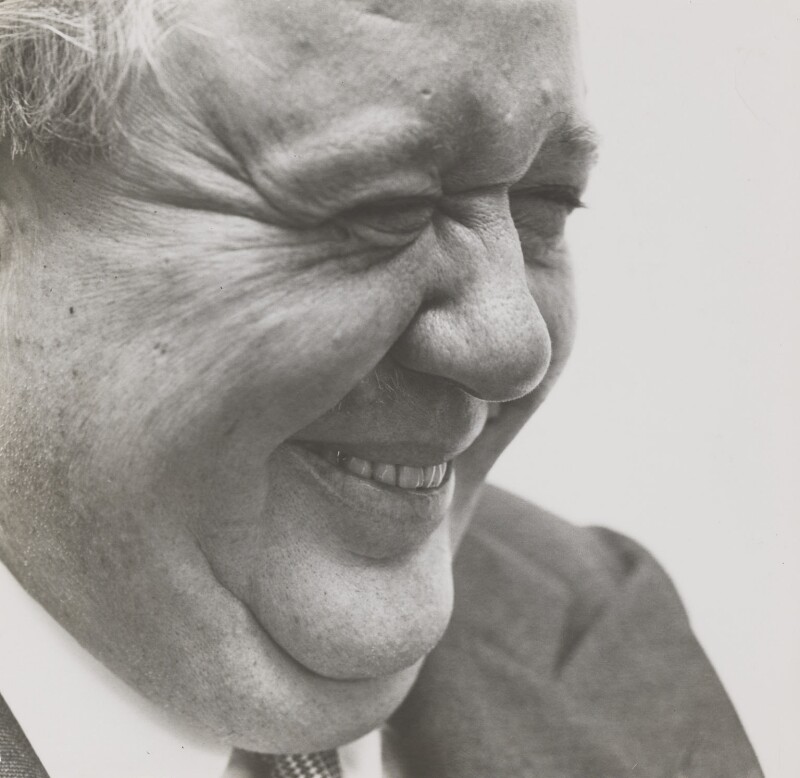
Charles Laughton
 United Kingdom
Birthday
July 1, 1899
Birth Sign
Cancer
Birthplace
Scarborough, North Riding of Yorkshire, England
Age
Died at 63
Height
5 ft 7.5 in (1.72 m)
About
Charles Laughton was an English actor and director, born on 1 July 1899 in Scarborough, Yorkshire. Trained at the Royal Academy of Dramatic Art, he made his professional stage debut in 1926 and quickly established himself as a versatile performer, tackling classical Shakespeare roles at the Old Vic alongside modern works in London's West End. His career soon expanded to Broadway and Hollywood, where he became known for playing a remarkable range of characters, from monsters and misfits to kings. Laughton won the Academy Award for Best Actor for his portrayal of the title monarch in The Private Life of Henry VIII (1933), and earned two more Oscar nominations: as Captain William Bligh in Mutiny on the Bounty (1935) and as a cantankerous barrister in Witness for the Prosecution (1957). Over his career, he appeared in more than 40 films and numerous stage productions, also winning a Grammy Award and receiving nominations for two BAFTAs and a Golden Globe. He received a star on the Hollywood Walk of Fame in 1960.
Early Life & Background
Laughton was the eldest of three sons born to Robert and Eliza Laughton, who ran hotels in Scarborough. His mother, a devout Roman Catholic of Irish descent, sent him to Stonyhurst College, the leading English Jesuit school. At age 14, while at Stonyhurst, he made his acting debut playing a rotund innkeeper in a school production of The Private Secretary. In 1915, his mother insisted he leave school to train at London's Claridge's Hotel to learn the family business, but at night he spent his money on theater tickets, once watching the same play thirteen times.
During World War I, Laughton served as a private in the Huntingdonshire Cyclist Battalion and later the Northamptonshire Regiment. He turned down a commission, later explaining he did not want the responsibility of commanding others. He served in France and endured a horrific battle he rarely discussed; his wife Elsa Lanchester later said he told her he had to stab several men to death. Shortly before the war ended, he was gassed, leaving lasting physical and emotional scars.
After the war, Laughton returned to Yorkshire and began acting and directing with the Scarborough Players. Following his father's death in 1924, he moved to London and enrolled at the Royal Academy of Dramatic Art, where he won the Bancroft Gold Medal for his performance in The Merry Wives of Windsor. He made his professional stage debut in 1926 and soon became a sought-after performer in both classical and modern works.
Career Growth
Laughton's film debut came in 1928 with the British silent comedy Blue Bottles, where he met his future wife, Elsa Lanchester. His New York stage debut in 1931 in Payment Deferred caught Hollywood's attention, leading to his first American film, The Old Dark House (1932), opposite Boris Karloff. That same year, he appeared in five other films, including The Sign of the Cross as Nero and Island of Lost Souls as Dr. Moreau.
The breakthrough arrived in 1933 when he played King Henry VIII in The Private Life of Henry VIII, winning the Academy Award for Best Actor. He followed with acclaimed performances as Javert in Les Misérables (1935), Captain Bligh in Mutiny on the Bounty (earning a second Oscar nomination), and the Americanized butler in Ruggles of Red Gap (1935). In 1937, he co-founded Mayflower Pictures Corp. with producer Erich Pommer. His portrayal of Quasimodo in The Hunchback of Notre Dame (1939) remains one of his most iconic roles.
In the 1950s, Laughton delivered memorable performances in David Lean's Hobson's Choice (1954) and earned his third Oscar nomination for Witness for the Prosecution (1957). He directed only one film, The Night of the Hunter (1955), a thriller that later gained cult classic status. His final film appearance was in Advise & Consent (1962).
Career Timeline
Public Image & Style
Laughton is remembered as one of the most versatile performers of his generation, defying Hollywood's typecasting system. With his plain face and bulky frame, he played a wide variety of characters, both villainous and virtuous. His signature style involved immersive character work, often using heavy makeup and prosthetics, notably as Quasimodo. Media portrayals emphasize his consummate artistry and his ability to achieve great success on both stage and film.
Fame & Fandom
Charles Laughton's admirers have never had a formal name, and that's fitting for an actor who defied easy categorization. Instead, his fanbase is a diffuse but passionate community of classic film enthusiasts, united by a shared reverence for his craft and for his singular directorial vision. There are no official fan clubs, no coordinated campaigns, no birthday billboards, just generations of cinephiles who keep his legacy alive through film retrospectives, academic writing, and preservation efforts. The Criterion Collection's championing of The Night of the Hunter has been central to this, elevating the film to canonical status among those who appreciate the darker corners of American cinema.
In the world of fame, Charles Laughton's place is secure, though not currently quantified. iFANN's Global Fame Engine has evaluated his enduring presence, the continued circulation of his films, the scholarly discourse, the cultural memory of his iconic performances, and determined that he does not currently hold a placement in the published rankings. This is a neutral statement of fact, not a measure of his significance. His fame is of a different kind: it lives in the reverence of film societies and the quiet persistence of his work in the public eye.
His fanbase may lack a label, but it is united by a shared understanding of his genius, the unlikely star who transformed his physicality into art, the one-time director whose sole film became a touchstone. That is the legacy that continues to draw new admirers to his work.
Interesting Facts and Legends
Charles Laughton was a prolific oral reader during World War II, reading aloud at Birmingham Hospital in the San Fernando Valley to wounded Allied soldiers. He once held a television audience spellbound by reading from the Bible on Ed Sullivan's Toast of the Town. Some recordings of his readings and anecdotes were made but are reportedly out of print. When asked why he became an actor, he replied, "Because I like to imitate great men." He was the only actor to win an Oscar for playing Henry VIII.
One of the most retold stories in his career is the fate of The Night of the Hunter (1955), his sole directorial effort. It was a commercial and critical failure upon release, effectively ending his directorial ambitions. Decades later, it is hailed as a masterpiece of American gothic cinema, and the irony of its initial rejection and subsequent rehabilitation has become a central part of his legend. Another iconic moment was his portrayal of Captain Bligh in Mutiny on the Bounty (1935), a performance that has become a cultural touchstone for tyrannical authority. And fans still delight in the fact that the man who played Henry VIII and Captain Bligh was married to Elsa Lanchester, the Bride of Frankenstein, an enduring partnership of golden-age Hollywood.
Notable Quotes
“Because I like to imitate great men.”
“I did not want to command...to take responsibility for other people's lives.”
Family & Personal Life
Laughton was the eldest of three sons born to Robert Laughton (1869–1924) and Eliza Conlon Laughton (1869–1953), who ran the Victoria Hotel and later the Pavilion Hotel in Scarborough. His mother was a devout Roman Catholic of Irish descent. He had two younger brothers, Robert Thomas (born 1903) and Francis (born 1907). Laughton married actress Elsa Lanchester on February 9, 1929, and they remained together until his death; they had no children.
Notable Connections
Laughton frequently collaborated with his wife, Elsa Lanchester, and worked with director Alexander Korda on The Private Life of Henry VIII and other films. He co-founded Mayflower Pictures with producer Erich Pommer and co-starred with Boris Karloff in The Old Dark House. As a director, he guided Robert Mitchum, Shelley Winters, and Lillian Gish in The Night of the Hunter.
Relationships & Dating History
Laughton met actress Elsa Lanchester in 1927 while acting in a play together. They performed in silent comedies such as Blue Bottles and Daydreams in 1928 and married on February 9, 1929. The marriage was reportedly unconventional; both were understood to have had same-sex attractions, though they remained devoted companions. They had no children. Laughton was married to Lanchester at the time of his death in 1962.
- MarriedElsa Lanchester1929 - 1962Met in 1927, married February 9, 1929; remained together until Laughton's death.
Death & Aftermath
Died
December 15, 1962 (aged 63)
Death Place
Hollywood, California, USA
Cause of Death
Unknown
The film community lost a titan of character acting and direction when Charles Laughton passed away in Hollywood, California, on December 15, 1962. At the age of sixty-three, his final days were marked by circumstances unrecorded in public archives., the event was treated as a natural occurrence requiring no formal legal inquiry or police investigation. Tributes from peers and institutions at the time reflected a deep respect for a man who had redefined the boundaries of screen performance, though immediate fan vigils or chart surges are not documented in the historical record. His posthumous reputation has only grown more luminous, particularly through the rediscovery of his sole directorial effort, The Night of the Hunter. Modern retrospectives frequently cite this thriller as a visionary masterpiece, analyzing its status as a one-and-done classic seventy years after its release. His portrayal in Witness for the Prosecution remains central to discussions of his career. Recent articles continue to highlight his influence on cinema, ensuring that the memory of this English actor and director endures.
Net Worth (Estate Value)
$10 Million
iFANN Editorial Team estimate
As Charles Laughton died in 1962, his estate has been managed by various entities over the decades. Revenue sources include royalties from film and television broadcasts of his 40-plus films, licensing of his image and likeness, ongoing sales of The Night of the Hunter (now a cult classic), home video and streaming rights, and merchandise related to The Hunchback of Notre Dame and Mutiny on the Bounty. iFANN currently estimates the estate's value in 2026 at $10 million.
Awards Won (6)
Laughton won the Academy Award for Best Actor for The Private Life of Henry VIII and a Grammy Award for Best Documentary or Spoken Word Recording. He also received the Bancroft Gold Medal from RADA and a star on the Hollywood Walk of Fame.
1934 · Best Actor
The Private Life of Henry VIII
1933 · Best Actor
The Private Life of Henry VIII
Known For
The Private Life of Henry VIII
1933 · King Henry VIII
Mutiny on the Bounty
1935 · Captain William Bligh
The Hunchback of Notre Dame
1939 · Quasimodo
Witness for the Prosecution
1957 · Sir Wilfrid Robarts
The Night of the Hunter
1955 · Director
Keywords
Sources
Quick Facts
- Profession
- actor, director
- Born
- July 1, 1899
- Birthplace
- Scarborough, England
- Died
- December 15, 1962
- Death Place
- Hollywood, California, USA
- Gender
- Male
- Spouse
- Elsa Lanchester
- Birth Sign
- Cancer
Personal Details
- Full Name
- Charles Laughton
- Height
- 5 ft 7.5 in (1.72 m)
- Spouse
- Elsa Lanchester
- Education
- Royal Academy of Dramatic Art
Filmography
40
Total
40
Film
0
TV
Frequently Asked Questions
How did Charles Laughton die?
Was Charles Laughton married?
Did Charles Laughton win an Oscar?
What was Charles Laughton's only film as director?
How tall was Charles Laughton?
Similar People
Join the community
fans discussing