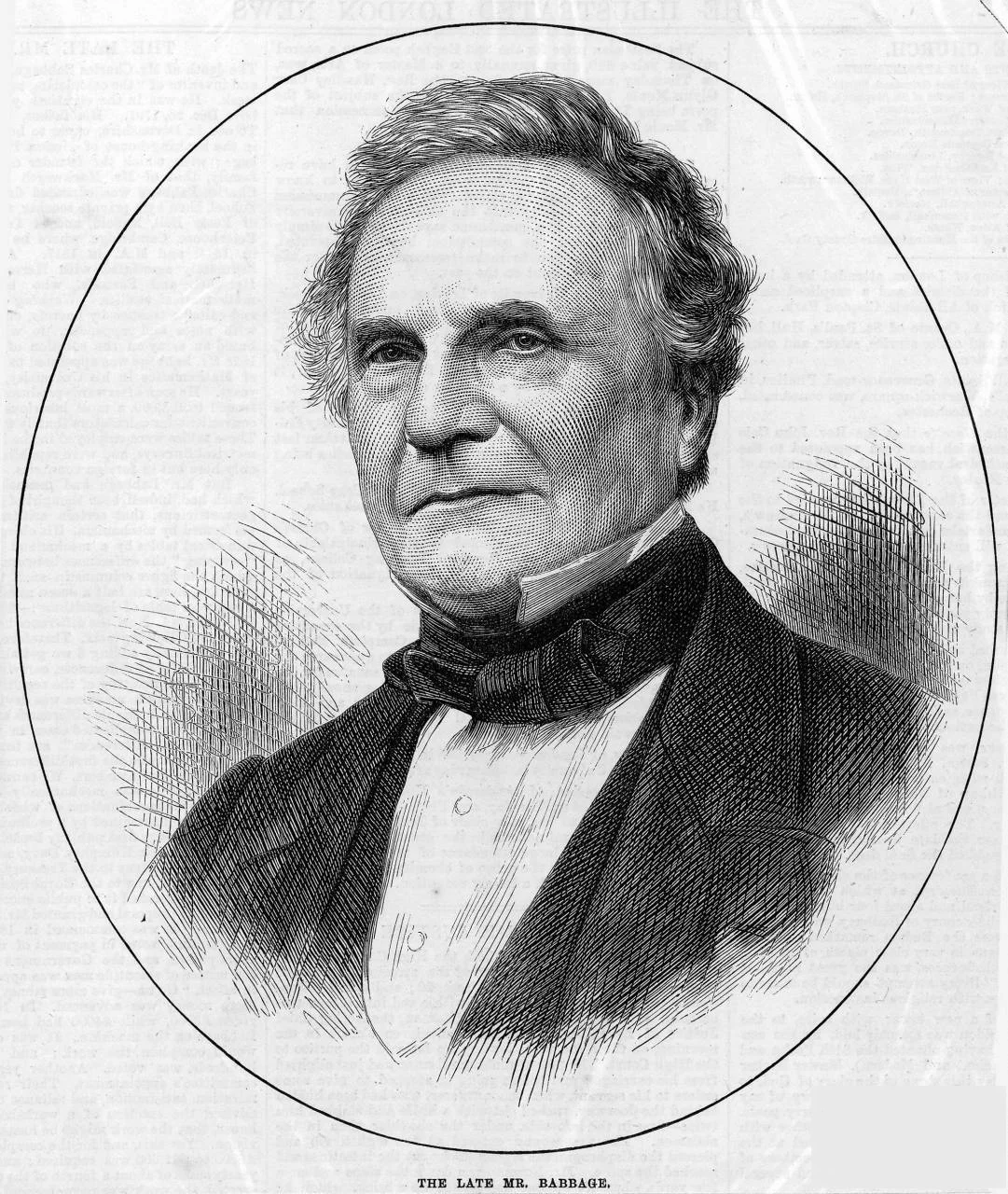
Charles Babbage
Awards & Honours
2
Awards Won
8
Honours
5
Rankings
5
Covers
3
Records
Charles Babbage's most remarkable achievement is having conceived the fundamental architecture of the modern computer in the 1830s, a full century before electronic computing emerged. His Analytical Engine design contained an arithmetic logic unit, memory, and programmed control via punched cards, every essential element of a general-purpose computer. In 1991, the Science Museum in London built a working Difference Engine No. 2 from his original plans, proving that his designs were mechanically sound. TIME magazine named him one of the 100 Most Influential People of All Time in 2011, and the BBC ranked him the greatest British inventor in 2013. His portrait appeared on the Bank of England's £5 note from 1991 to 2001. Babbage's vision directly inspired the development of modern computing, and his name is enshrined in the Charles Babbage Institute, the world's leading archive on computing history.
Awards
Honours & Distinctions
Fellow of the Royal Society (FRS)
Elected at age 23 for his contributions to mathematics.
Lucasian Chair of Mathematics
The chair once held by Isaac Newton; held until 1839.
Foreign Honorary Member of the American Academy of Arts and Sciences
Recognition of his international scientific standing.
Portrait on UK £5 note
Featured on the E Series £5 note from 1991 to 2001.
Babbage Crater on the Moon
Lunar crater named in his honor.
Asteroid 11341 Babbage
Main-belt asteroid named after him.
Blue Plaque at 1 Dorset Street, Marylebone
Marks his former home in London.
Statue at the Science Museum, London
Erected to commemorate the bicentennial of his birth.
Rankings & Lists
100 Most Influential People of All Time
The 50 Greatest British Inventors
The 10 Greatest Computer Pioneers of All Time
The 10 Best Mathematicians
The 50 Most Influential Scientists in History
Magazine Covers
TIME Magazine
October 2011
The Father of the Computer
New Scientist
December 1991
Charles Babbage: The Forgotten Genius
IEEE Annals of the History of Computing
Various 1980s–2000s
Difference and Analytical Engines
Computerworld
September 2001
The 10 Greatest Computer Pioneers
Wired UK
October 2011
Babbage's Analytical Engine: The First Computer
Records & Feats
First design of a programmable digital computer
Babbage's Analytical Engine (1837) is the earliest known design for a general-purpose computer, containing a processing unit, memory, and conditional branching.
First government grant for a computing project
In 1823, the British government granted Babbage £1,500 to build the Difference Engine, the first state funding for a computing machine.
Posthumous proof of concept: Difference Engine No. 2 built and worked
In 1991, the Science Museum built a working Difference Engine No. 2 from Babbage's original plans, proving his designs were sound 120 years after his death.