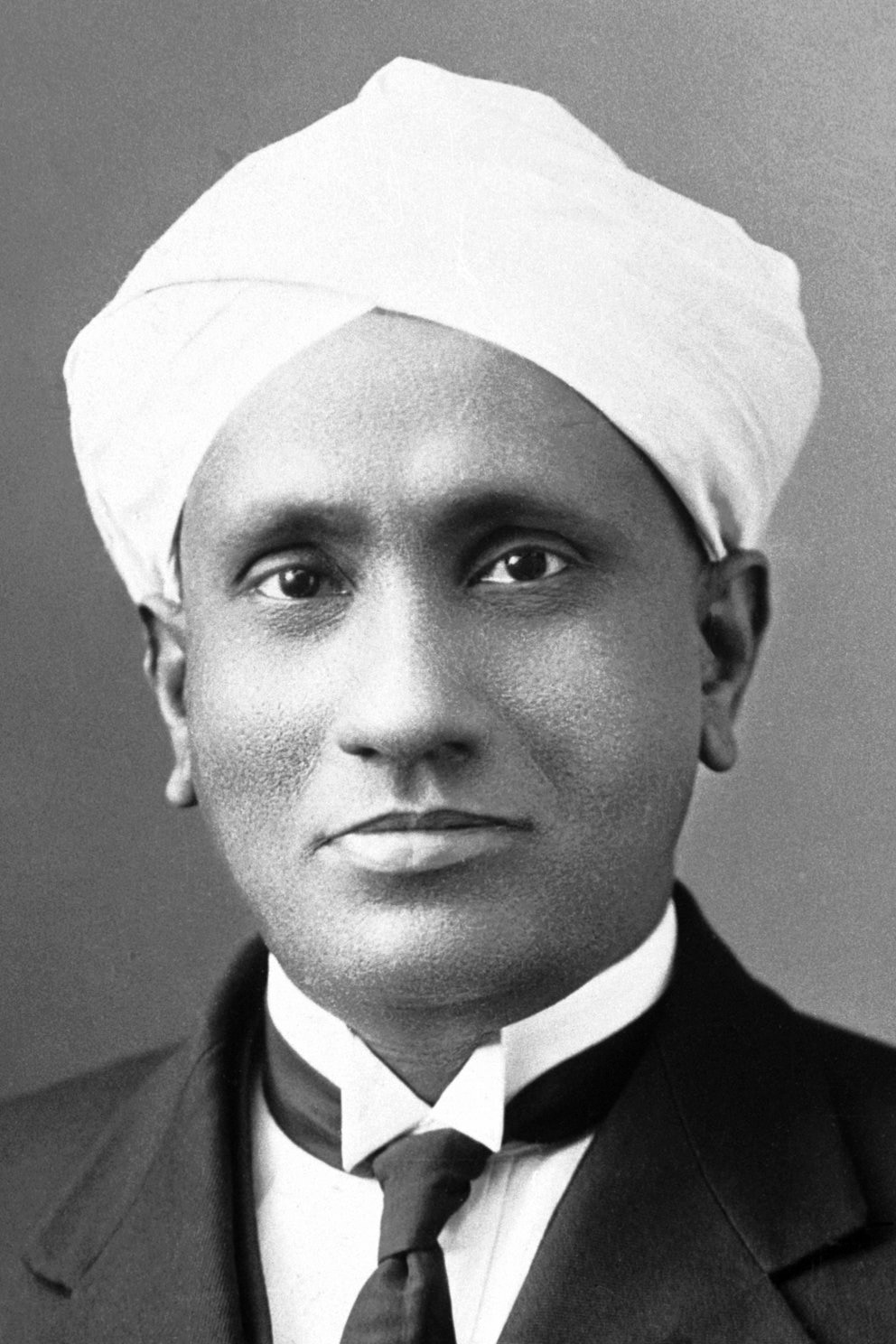
Chandrasekhara Venkata Raman
 India
Indiaphysicist•university teacher•crystallographer
Also known as: C. V. Raman, Sir Chandrasekhara Venkata Raman
Birthday
November 7, 1888
Birth Sign
Scorpio
Birthplace
Tiruchirappalli, Tamil Nadu, India
Age
Died at 82
Height
5 ft 8 in (173 cm)
About
Chandrasekhara Venkata Raman was an Indian physicist whose discovery of the Raman effect transformed how scientists study molecular structure. He remains the first Asian and the first non-white person to win a Nobel Prize in Physics, an honor he received in 1930 at age 42. Today, Raman's name is synonymous with the inelastic scattering of light, a phenomenon that bears his name and is used daily in laboratories worldwide for chemical analysis, from pharmaceuticals to art conservation. February 28 is celebrated across India as National Science Day, marking the day in 1928 when he first observed the effect using sunlight and a homemade spectrograph that cost less than ₹100.
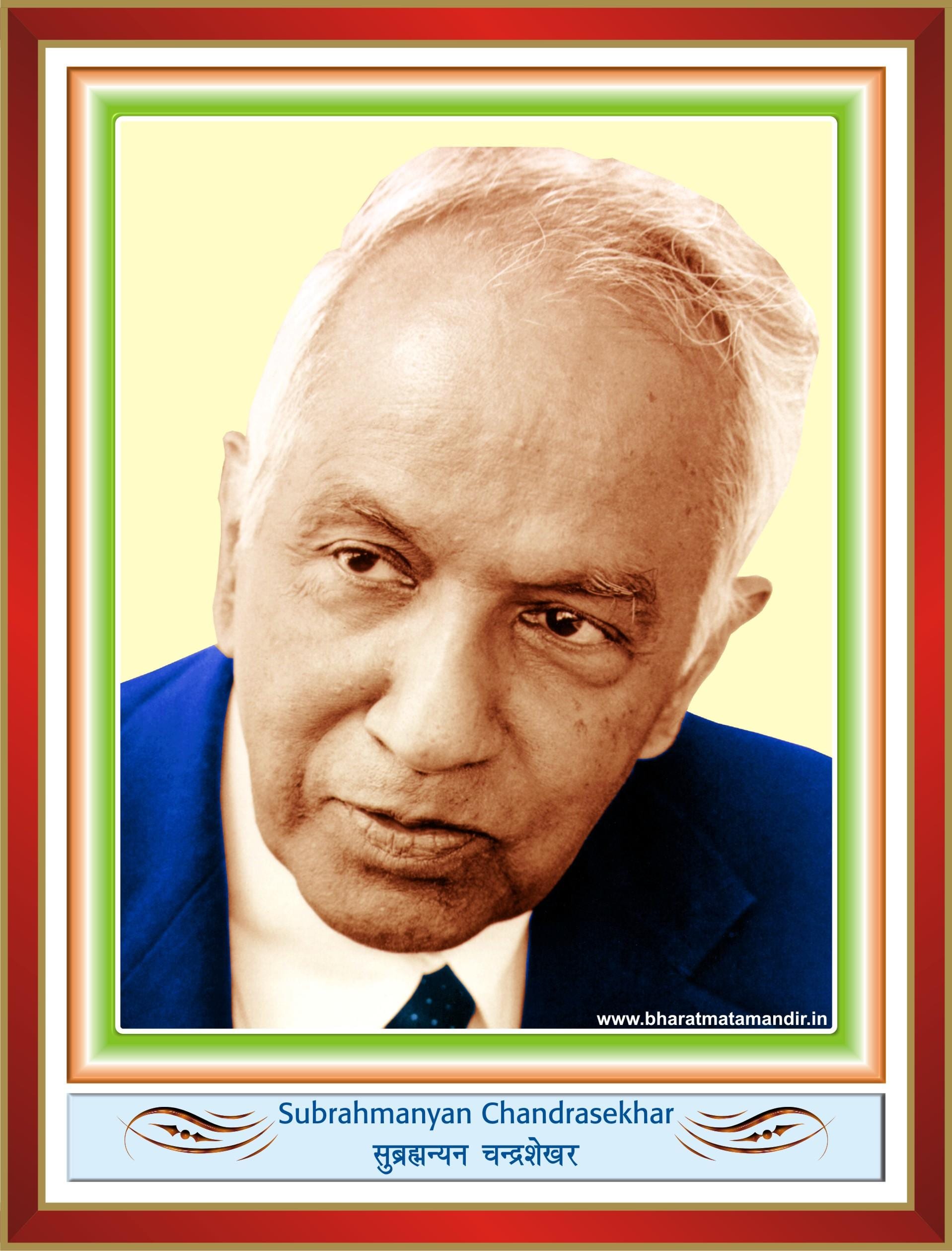
Raman's legacy extends beyond his Nobel-winning work. He founded the Indian Journal of Physics in 1926, the Indian Academy of Sciences in 1933, and the Raman Research Institute in Bengaluru in 1948, where he worked until his death. He served as the first Indian director of the Indian Institute of Science and mentored a generation of physicists. His nephew Subrahmanyan Chandrasekhar also won a Nobel in physics, making their family the only uncle-nephew pair to achieve that feat in the sciences.
Early Life & Background
Raman grew up in an academic household in Tiruchirappalli, where his father taught mathematics and physics at a local college. He was the second of eight children and a prodigy from the start. By age 12, he had passed his matriculation exam, and by 13, he had finished high school entirely. He entered Presidency College in Madras at 13, earning a B.A. in physics with honors at 16 and an M.A. at 18, both with top marks and a gold medal in physics.
His first research paper, on light diffraction, was published in the Philosophical Magazine in 1906 while he was still a graduate student. But India in the early 1900s offered few paid research positions. So Raman took the competitive exam for the Indian Finance Service and was posted as Assistant Accountant General in Calcutta. For ten years, he worked as a civil servant by day and conducted physics experiments at the Indian Association for the Cultivation of Science by night and on weekends. During that decade, he published extensively on acoustics, optics, and vibration theory, building a reputation that would eventually land him the first Palit Professorship of Physics at the University of Calcutta in 1917.
A turning point came during a sea voyage to Europe in 1921. Staring at the deep blue Mediterranean, Raman questioned why the sea was that color. Rayleigh scattering, which explains the sky's blue, could not account for it. That moment set him on a path to systematically study light scattering in liquids, culminating in his 1928 discovery.
Career Growth
On February 28, 1928, Raman and his student K. S. Krishnan observed that when monochromatic light passed through a transparent material, a tiny fraction of the scattered light emerged at a different wavelength. They published the finding in Nature on March 31 under the title "A New Type of Secondary Radiation." The scientific community grasped its importance immediately, it was a direct way to probe molecular vibrations. Raman was knighted in 1929 and awarded the Nobel Prize in Physics in 1930.
After the Nobel, Raman moved to Bengaluru in 1933 to become the first Indian director of the Indian Institute of Science. That same year, he founded the Indian Academy of Sciences. In 1948, he established the Raman Research Institute, where he continued experiments on the optics of crystals and the acoustics of musical instruments, he was an accomplished violinist. He published over 400 papers in his lifetime. In 1954, India awarded him the Bharat Ratna, its highest civilian honor, and in 1957, the Soviet Union gave him the Lenin Peace Prize.
Career Timeline
Public Image & Style
Raman is revered in India as a national scientific hero. His signature look in later years was a formal dhoti and kurta, often paired with an intense, focused expression. He was known for his fierce independence, he renounced his knighthood in 1948 after India's independence, viewing it as a colonial relic. Media portrayals cast him as a lone genius who overcame limited resources. Every February 28, schools and universities across India hold science fairs and lectures in his honor. His quotes are widely shared on social media, especially those urging young Indians to think for themselves and work hard.
Fame & Fandom (iFAMOUS Rankings)
Chandrasekhara Venkata Raman remains a towering figure in the annals of science, his influence extending far beyond the laboratory into the cultural consciousness of India and the global scientific community. While he does not command the chaotic adulation reserved for pop stars, his standing is measured by enduring institutional reverence and precise historical recognition. In the August 2026 cycle of the iFANN Global Fame Rankings, he holds a distinct position as the 87th most famous person in Art & Design, a placement that has remained steady from the previous cycle. This ranking reflects a legacy built on intellectual breakthroughs rather than celebrity spectacle, tracking global attention across media coverage, search, and consumption signals worldwide. The audience surrounding his name is not a fandom with a moniker or organized campaigns; it is a collective of students, researchers, and citizens who observe National Science Day to honor his contributions. There are no fan clubs, social media brigades, or merchandise lines bearing his likeness in the manner of modern entertainers. Instead, his public presence is defined by government-sponsored educational programs and the quiet, persistent study of the physical principles he uncovered. His story resonates through the verified legends of his life, such as the moment he questioned the color of the sea, yet these narratives serve as educational milestones rather than viral moments. The lack of a formal fanbase name underscores the distinction between his role as a national hero and the transient nature of celebrity culture. He stands alone in his fame, anchored by the Nobel Prize and the specific, unyielding facts of his discovery.
Interesting Facts and Legends
Chandrasekhara Venkata Raman was color-blind, a condition that arguably sharpened his fascination with light and color. He never earned a PhD, holding only a B.A. and M.A. as his highest degrees. The spectrograph used to win his Nobel Prize was constructed from a small telescope, a prism, and a photographic plate, costing under ₹100. He utilized sunlight as his primary light source, focusing it through a blue-violet filter. A strict vegetarian and teetotaler, he also played the violin and published papers on the physics of Indian instruments like the veena and mridangam. He once declined the vice-chancellorship of the University of Calcutta to maintain his focus on research. Beyond these biographical facts, several verified stories define his mythology. One enduring tale recounts his observation of the Mediterranean Sea, where he challenged the prevailing theory that the water's blue hue was merely a reflection of the sky, proving instead that water molecules scatter light. Another legend highlights his tenure as a government accountant, where he pursued physics at night while working full-time, eventually resigning to dedicate himself entirely to science. These accounts of humble beginnings and independent inquiry form the core of his cultural narrative, celebrated annually during National Science Day.
Notable Quotes
“The essence of science is independent thinking, hard work, and not letting oneself be deceived by appearances.”
“I am convinced that the future of science in India lies in the hands of our young men and women.”
“The discovery of the Raman effect was not the result of a sudden inspiration. It was the culmination of years of patient work.”
“The greatest weapon against ignorance is education. It is the only thing that can change the world.”
“I was struck by the beautiful blue of the Mediterranean Sea. I asked myself: Why is the sea blue? The answer led me to the discovery of the Raman effect.”
Family & Personal Life
Raman's father, R. Chandrasekhara Iyer, was a lecturer in mathematics and physics. His mother, Parvathi Ammal, was a homemaker. He married Lokasundari Ammal in a traditional arranged marriage around 1907. She supported his relentless work schedule and managed their household. They had two sons; the younger, Venkataraman Radhakrishnan, became a noted physicist and astronomer. Raman's nephew, Subrahmanyan Chandrasekhar, won the Nobel Prize in Physics in 1983, making the Raman-Chandrasekhar family one of science's most distinguished.
Notable Connections
Raman worked closely with his student K. S. Krishnan on the discovery of the Raman effect. His nephew Subrahmanyan Chandrasekhar became a Nobel laureate in physics. At the Indian Institute of Science, he mentored future leaders like Vikram Sarabhai and Homi J. Bhabha. His son Venkataraman Radhakrishnan carried his scientific legacy forward as an astronomer.
Relationships & Dating History
Raman married Lokasundari Ammal in a traditional arranged marriage around 1907. She was a supportive partner who managed the household while he pursued his scientific work. They had two sons together. Lokasundari survived him and helped preserve his legacy. There are no records of any other romantic relationships. As of 2026, Raman is deceased, and his wife predeceased him.
- MarriedLokasundari Ammal1907 - 1970Traditional arranged marriage; she supported his scientific career and managed the household.
Death & Aftermath
Died
November 21, 1970 (aged 82)
Death Place
Madras, Tamil Nadu, India
Cause of Death
Prolonged illness
Sir Chandrasekhara Venkata Raman died on November 21, 1970, at his residence in Madras, now Chennai, following a prolonged illness that had affected him in his later years. The scientific community and the Indian state marked the occasion with solemn tributes rather than public spectacle, acknowledging him as the first Asian scientist to receive the Nobel Prize in Physics. Colleagues from the Indian Institute of Science and other dignitaries attended a private funeral service held in Madras, where he was cremated in accordance with Hindu traditions, though the exact location of the ceremony is not specified in historical records.
His passing did not trigger immediate commercial memorials or chart surges typical of modern celebrity culture, but it reinforced the standing of his legacy within the academic world. Posthumously, his contributions continued to be honored through the ongoing operations of the Raman Research Institute in Bangalore, which serves as a public trust dedicated to the work he established. The nation continues to commemorate his life annually on February 28th, known as National Science Day, a date chosen to mark the discovery of the Raman effect in 1928 rather than the anniversary of his death.
Net Worth (Estate Value)
$5 Million
iFANN Editorial Team estimate
As a government employee and academic, Chandrasekhara Venkata Raman maintained a modest personal wealth throughout his life. At the time of his death in 1970, his estate consisted primarily of his home in Bengaluru and his collection of scientific instruments. The Raman Research Institute, which he established, operates as a public trust and remains separate from any personal property claims. Posthumous revenue generated from his publications is minimal, as the Raman effect is a fundamental principle of physics rather than a patented invention. Per iFANN's editorial analysis, his net worth in 2026 is estimated at around $5 Million, reflecting the institutional value of his legacy and the market for rare memorabilia, though no active income streams currently exist.
Awards Won (5)
Raman won the 1930 Nobel Prize in Physics for discovering the Raman effect. He received the Hughes Medal from the Royal Society in 1929 and the Franklin Medal in 1941. India awarded him the Bharat Ratna in 1954, and the Soviet Union gave him the Lenin Peace Prize in 1957. He was knighted in 1929 but later renounced the title.
1930 · Physics
Discovery of the Raman effect
1929 · Physics
Discovery of the Raman effect
Known For
Discovery of the Raman effect
1928 · Discoverer
Nobel Prize in Physics
1930 · Laureate
Keywords
Quick Facts
- Profession
- physicist, university teacher, crystallographer
- Born
- +1888-11-07
- Birthplace
- Tiruchirappalli
- Died
- +1970-11-21
- Death Place
- Bengaluru
- Gender
- Male
- Spouse
- Lokasundari Ammal
- Birth Sign
- Scorpio
Personal Details
- Full Name
- Chandrasekhara Venkata Raman
- Height
- 5 ft 8 in (173 cm)
- Spouse
- Lokasundari Ammal
- Children
- Two sons, including Venkataraman Radhakrishnan
- Education
- Presidency College, Madras (B.A. in Physics with honors, 1904; M.A. in Physics, 1907)
Frequently Asked Questions
Who is C. V. Raman?
What is the Raman effect?
When did C. V. Raman die?
What is C. V. Raman's net worth in 2026?
Why is February 28 celebrated as National Science Day in India?
Similar People
Join the community
fans discussing