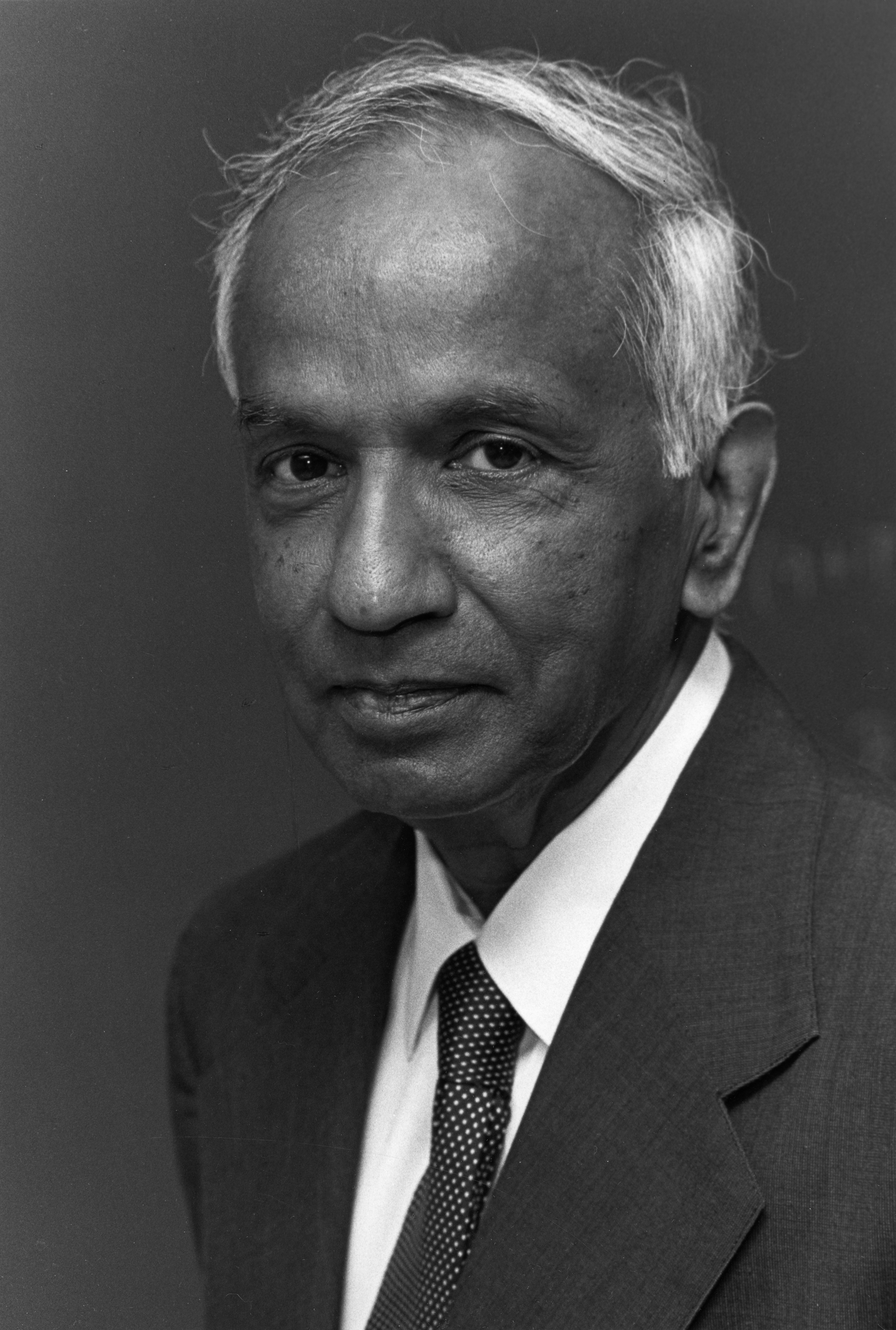
Subrahmanyan Chandrasekhar
 India
Indiamathematician•physicist•astronomer
Birthday
+1910-10-19
Birth Sign
Libra
Birthplace
Lahore
Age
Died at 84
About
Born in Lahore in 1910, Subrahmanyan Chandrasekhar was an Indian-American physicist whose work fundamentally reshaped our understanding of stars. His career, spanning decades, was dedicated to unraveling the complex processes governing stellar structure and evolution. He is perhaps most widely recognized for the Chandrasekhar limit, a pivotal concept in astrophysics. This limit defines the maximum mass a white dwarf star can possess, approximately 1.44 times the mass of our Sun. Beyond this threshold, a stellar remnant faces a dramatic collapse, potentially leading to the formation of a neutron star or even a black hole. This insight alone earned him a share of the 1983 Nobel Prize in Physics, recognizing his theoretical studies on the physical processes vital to how stars form and change over time. Many significant scientific endeavors, including the Chandra X-Ray Observatory, bear his name, a testament to his lasting influence.
Fame & Fandom
Subrahmanyan Chandrasekhar commanded a global audience defined by academic reverence rather than popular adoration, with his name recognized primarily within the scientific community and among those who follow the history of astrophysics. His presence in the cultural consciousness is sustained by the enduring weight of his theoretical contributions to stellar evolution rather than by active fan engagement or commercial celebrity metrics. As of August 2026, iFANN's Global Fame Engine has evaluated this person, but they do not currently hold a placement in the published rankings such as the Global Top 1,000 or any Top-100 scope list. Consequently, no specific ordinal rank or numerical score can be assigned to his current fame status, reflecting a state where his legacy exists outside the dynamic fluctuations of modern celebrity charts. The individual does not possess a documented fandom name, and research confirms that the public following surrounding him lacks a formal designation. Unlike entertainers or athletes, there are no organized fan clubs, social media groups dedicated to "Chandrasekhar fans," or fan-led initiatives such as chart pushes, subway ads, or streaming campaigns. While a notable connection emerged in 2025 and 2026 when Elon Musk named his son Sekhar after the physicist, this high-profile admiration did not evolve into a structured fan movement. The audience remains one of students, colleagues, and historians who engage with his work through academic channels rather than through the rituals of a pop-culture fanbase.
Interesting Facts and Legends
Born in Lahore in 1910, Subrahmanyan Chandrasekhar was an Indian-American physicist whose career spanned decades before his passing in 1995. He is best known for the Chandrasekhar limit, which defines the maximum mass a white dwarf star can possess at approximately 1.44 times the mass of our Sun. A widely retold story involves a confrontation at the Royal Astronomical Society in London, where Sir Arthur Eddington publicly dismissed Chandrasekhar's calculations as "stellar buffoonery" during a packed lecture. Despite this initial skepticism from the established scientific establishment, Chandrasekhar persisted, and his theory was eventually vindicated decades later, earning him a share of the 1983 Nobel Prize in Physics. Another legendary account describes his journey from India to England as a young man around age 19 or 20, during which he calculated that sufficiently massive stars would collapse indefinitely once their fuel was exhausted, laying the theoretical foundation for black holes. In recognition of his foundational role, NASA named its premier X-ray telescope the Chandra X-ray Observatory. More recently, a narrative emerged regarding Elon Musk naming his son Sekhar after the scientist, framing Chandrasekhar as an inspiration for future generations despite the lack of traditional fan rituals.
Death & Aftermath
Died
+1995-08-21 (aged 84)
Death Place
Chicago, Illinois, USA
Cause of Death
Natural causes associated with old age
In the final years of his life, Subrahmanyan Chandrasekhar resided in Chicago, Illinois, where he continued his work as a distinguished professor emeritus at the University of Chicago. On August 21, 1995, he passed away peacefully at his home at the age of 84. The circumstances surrounding his death were quiet and unremarkable, with no hospitalization or dramatic decline preceding his end. Official records attribute his passing to natural causes associated with old age. The global scientific community responded with profound tributes to a man who had fundamentally reshaped the understanding of stellar structure. The University of Chicago honored him as a child prodigy and a key predictor of black holes, while NASA acknowledged his revolutionary contributions by naming its Chandra X-ray Observatory after him. This observatory began operations in 1999, serving as a permanent institutional tribute to his work on high-energy phenomena.
Moments of silence were observed within academic circles, and significant efforts were made to preserve his legacy through educational initiatives rather than public spectacles. Funeral arrangements were handled privately, and specific details regarding public services or attendee lists were not made available. His remains were cremated, though the interment of his ashes remains undocumented in public records. In the decades following his death, the Chandrasekhar family has maintained a low profile regarding estate management, with no public disputes reported. His enduring influence persists through the Chandrasekhar limit, a fundamental concept in astrophysics, and various scholarships established by the University of Chicago to support students in physics and astronomy.
Awards & Accolades
Keywords
Quick Facts
- Profession
- mathematician, physicist, astronomer
- Born
- +1910-10-19
- Birthplace
- Lahore
- Died
- +1995-08-21
- Death Place
- Chicago
- Gender
- Male
- Spouse
- Lalitha Doraiswamy
- Birth Sign
- Libra
Personal Details
- Spouse
- Lalitha Doraiswamy
Join the community
fans discussing