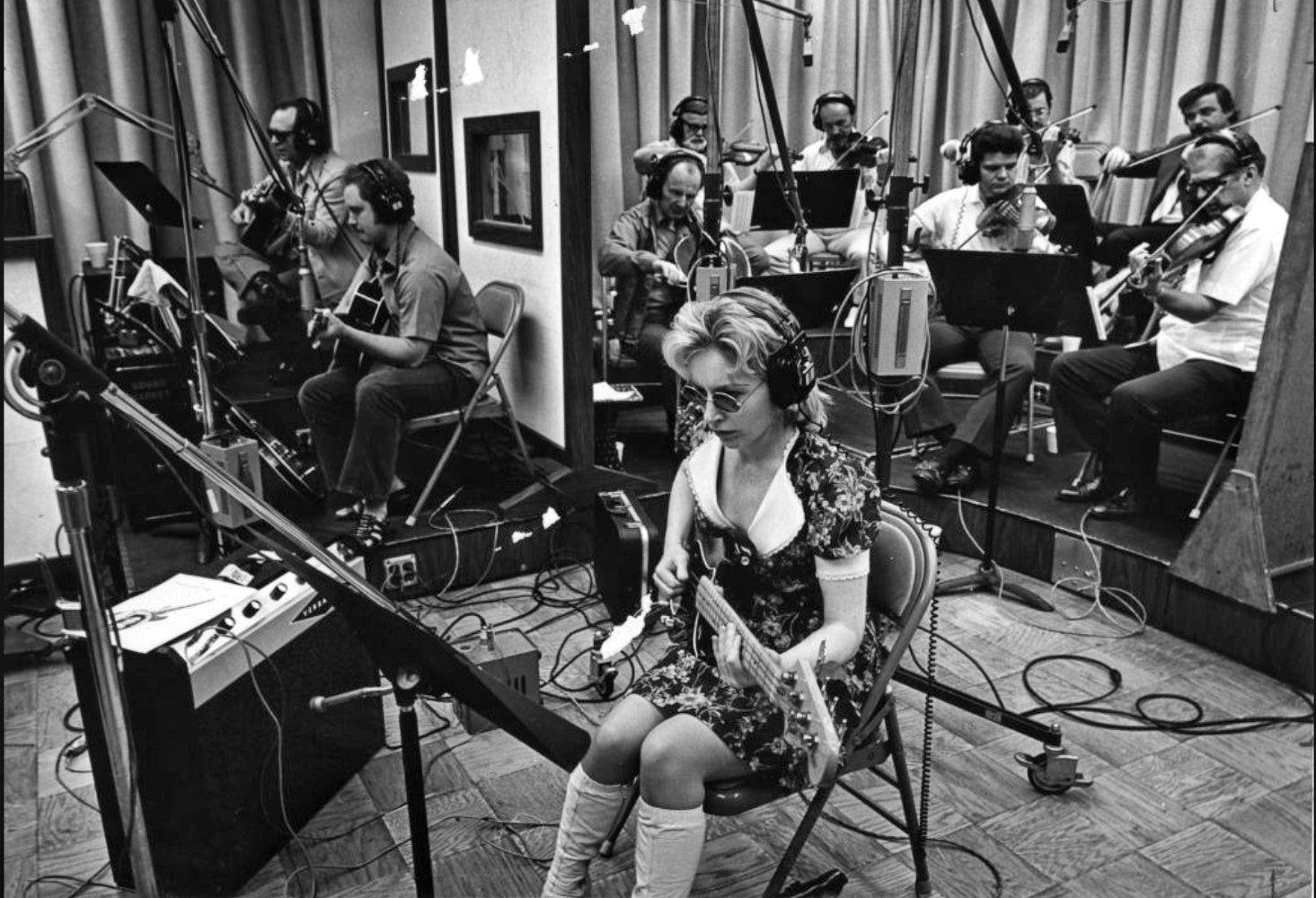
Carol Kaye
 United States
Member of The Wrecking Crew
session musician•bassist•guitarist•educator
Birthday
March 24, 1935
Birth Sign
Aries
Birthplace
Everett, Washington, USA
Age
91 years old
Height
5 ft 5 in (165 cm)
About
Carol Kaye is an American musician and one of the most prolific recorded bass guitarists in rock and pop history, with an estimated 10,000 recordings over a career spanning more than 65 years. She is a core member of the legendary session musician collective known as The Wrecking Crew, though the group was simply called "freelance studio musicians" at the time.
Kaye's bass lines defined the sound of countless 1960s and 1970s hits, from The Beach Boys' "Good Vibrations" to Simon & Garfunkel's "The Boxer" and the original TV themes for "Batman" and "Mission: Impossible." She worked with producers Phil Spector and Brian Wilson, and played on recordings for Frank Sinatra, Marvin Gaye, Stevie Wonder, and hundreds more. Her 1969 instructional book "How To Play The Electric Bass" changed the instrument's name and pedagogy.
In 2025, Kaye was selected for induction into the Rock and Roll Hall of Fame in the Musical Excellence category, but she rejected the honor, the first person ever to do so. Now in her 90s, she continues to teach and occasionally give interviews, revered by bassists and music historians as a hidden architect of the 1960s pop sound.
Early Life & Background
Carol Kaye was born on March 24, 1935, in Everett, Washington, to professional musicians Clyde and Dot Smith. Her father was a jazz trombonist who played in big bands, and her mother was a pianist. In 1942, her father sold a piano to finance a move to Wilmington, California. Kaye has described her father as violent toward her, and she persuaded her mother to separate from him. After the divorce, her mother raised her in poverty.
As a child, Kaye struggled with a stutter and buck teeth. She later recalled, "So mom and I had some pretty tough times. I stuttered. I had buck teeth. I did well in school, but I just couldn't find myself at all." At age nine, she began earning money by cleaning apartments in the housing project where they lived. Her life changed at 13 when her mother scraped together $10 to buy her a steel guitar from a traveling salesman. She took lessons and quickly excelled. Within a year, she was teaching guitar lessons herself.
By age 14, Kaye was playing in jazz clubs around Los Angeles, performing bebop jazz guitar with top groups including Bob Neal's jazz group backing Lenny Bruce, and with Teddy Edwards and Billy Higgins. She spent her teenage years honing her skills on the big band circuit. In 1957, a chance opportunity changed everything: she was invited to play on a session recording for a young Sam Cooke on his song "Summertime." This session work proved more lucrative than club performances, and she made a career of it. She continued doing session work, most famously playing guitar on Ritchie Valens' 1958 hits "La Bamba" and "Donna."
Career Growth
Kaye's accidental entry into studio work in 1957, playing guitar on Sam Cooke's "Summertime," launched her session career. In 1958, she played guitar on Ritchie Valens' iconic hits "La Bamba" and "Donna." In the early 1960s, she began working with producer Phil Spector at Gold Star Studios, playing on numerous "Wall of Sound" hits including The Crystals' "Then He Kissed Me" and The Righteous Brothers' "You've Lost That Lovin' Feelin'."
The defining moment came in 1963 when a Fender bassist failed to show up for a session at Capitol Records. Kaye picked up the Fender bass and filled in. Though she had not previously specialized in the instrument, her guitar background allowed her to adapt quickly. She soon became the number one call for bass work with record companies, movie and TV film producers, and commercial jingle producers. During the 1960s and 1970s, she played on countless hit recordings for The Beach Boys, Ray Charles, Cher, The Supremes, Buffalo Springfield, Joe Cocker, Glen Campbell, Martha and the Vandellas, The Monkees, Simon & Garfunkel, Frank Sinatra, Marvin Gaye, B.J. Thomas, Ike & Tina Turner, Sonny & Cher, Stevie Wonder, The Temptations, The Four Tops, and Nancy Sinatra. She also played on the original TV themes for "Batman" and "Mission: Impossible."
In the late 1960s and 1970s, Kaye moved into film soundtrack work, playing under the direction of legendary composers including Michel LeGrand, Quincy Jones, Elmer Bernstein, Lalo Schifrin, David Rose, David Grusin, Ernie Freeman, Hugo Montenegro, Leonard Rosenman, John Williams, Alfred and Lionel Newman. In 1969, she wrote her first bass tutoring book, "How To Play The Electric Bass," which effectively changed the name of "Fender Bass" to "Electric Bass." She began teaching hundreds of electric bass students, many of whom became famous themselves. She became less active in session work toward the end of the 1970s but has continued her career through teaching, writing instructional books, and occasional performances and interviews. She appeared in the 2008 documentary "The Wrecking Crew." In 2025, Kaye was selected for induction into the Rock and Roll Hall of Fame in the Musical Excellence Award category, but she rejected the honor.
Career Timeline
Public Image & Style
Carol Kaye is celebrated as a pioneering female musician in a male-dominated industry. She is known for her no-nonsense attitude, technical mastery, and incredible versatility across genres. The media portrays her as a "musician's musician" and a hidden architect of the 1960s-70s pop sound. Her content's tone is direct, educational, and focused on the craft of music. She does not have an official fandom name, but she is revered by bass players, music historians, and classic rock enthusiasts worldwide. Kaye's legacy is that of a quiet titan, a woman whose bass lines shaped the soundtrack of an era, yet who remains humble and focused on teaching.
Fame & Fandom (iFAMOUS Rankings)
Carol Kaye's name may not light up stadiums, but among the millions who have heard her basslines, she is nothing short of legendary. According to iFANN's Global Fame Engine, she is currently EVALUATED_UNRANKED, meaning she has been assessed but does not hold a placement in the published rankings. This is a curious oversight for a musician who has shaped the sound of popular music for over six decades, yet it reflects the quiet, behind-the-scenes nature of her career.
Her fandom, while lacking a formal name, is a devoted and knowledgeable community of bass players, music historians, and classic rock enthusiasts. They gather in forums and social media groups to dissect her techniques, share rare recordings, and celebrate her birthday each year. There is no official fan club or organized campaigns, but the reverence is palpable. Fans often describe her as "one of the greatest musicians of all time," and they actively work to educate others about her immense contributions, ensuring that her legacy is not forgotten.
Interesting Facts and Legends
Carol Kaye's career is filled with remarkable facts and enduring legends. She estimates she played on over 10,000 recordings, making her one of the most prolific session musicians in history. During her peak years, she was often the only woman in the studio, a reflection of her pioneering role. The term "Wrecking Crew" was coined by drummer Hal Blaine for his book; at the time, they were known as "freelance studio musicians" or "the clique." Kaye overcame childhood stuttering and buck teeth to become a legendary musician. Her mother bought her first steel guitar for $10 from a traveling salesman when she was 13. She has a French Bulldog named after her. Kaye converted to Judaism from Baptist denominations. She is the first person known to decline a Rock and Roll Hall of Fame induction.
One of the most iconic moments in her later career came when she publicly declined her Rock and Roll Hall of Fame induction, sparking a media frenzy. She voiced criticisms of the induction process and the documentary "The Wrecking Crew," leading to a public exchange with director Denny Tedesco, who called her "one of the greatest bass players of all time." This saga became a defining chapter in her story, illustrating her uncompromising nature and dedication to the truth as she sees it.
Notable Quotes
“I stuttered. I had buck teeth. I did well in school, but I just couldn't find myself at all.”
“So mom and I had some pretty tough times.”
“So my mom, God bless her, she managed to pull the money together and I took lessons. And you know, I kind of excelled at playing the steel guitar.”
“I was raised by musician-parents and just sort of grew up around music, we were poor, but when music was played, you had a sparkle in your life.”
Family & Personal Life
Carol Kaye was born to professional musicians Clyde and Dot Smith. Her father was a jazz trombonist and her mother a pianist. After her parents' divorce, her mother raised her in poverty. Kaye has described her father as violent, and she persuaded her mother to leave him. She has children from her marriage(s), though their names and details are not widely publicized. She has a French Bulldog named after her. She converted to Judaism from Baptist denominations at some point in her life.
Notable Connections
Kaye worked with a who's who of 1960s and 1970s music: producers Phil Spector, Brian Wilson, Quincy Jones, Lalo Schifrin, Michel LeGrand, Elmer Bernstein, and John Williams; fellow Wrecking Crew members Hal Blaine, Glen Campbell, and Larry Knechtel; and artists including Sam Cooke, Ritchie Valens, The Beach Boys, Ray Charles, Cher, The Supremes, Frank Sinatra, Simon & Garfunkel, Marvin Gaye, Stevie Wonder, The Temptations, The Four Tops, The Monkees, Nancy Sinatra, Sonny & Cher, Ike & Tina Turner, Joe Cocker, and Buffalo Springfield.
Relationships & Dating History
Carol Kaye has maintained a relatively private personal life. Based on available public records, she was married at least once, though specific details about her spouse(s) and the exact dates of marriage are not well-documented in public sources. She has children from her marriage(s), though the names and details of her children are not widely publicized. As of 2026, Kaye's current relationship status is not publicly documented. She appears to be focused on her legacy, teaching, and occasional public appearances. No current partner has been publicly identified in credible sources.
- MarriedKaye was married at least once, but details about her spouse(s) are not widely publicized.
Salary, Net Worth In 2026
$1 Million
iFANN Editorial Team estimate
iFANN's editorial research currently estimates Carol Kaye's net worth at $1 million. Her wealth stems primarily from session musician fees for an estimated 10,000 recordings over decades, though session musicians in that era typically received flat fees rather than ongoing royalties. She also earned income from her instructional books, particularly "How To Play The Electric Bass" and subsequent publications, teaching fees from hundreds of private bass students, and speaking engagements and documentary appearances. As a session musician who worked primarily for flat fees in an era before digital streaming royalties, Kaye's wealth is modest compared to the recording artists she played for. Specific dollar figures are difficult to verify, but her estimated net worth reflects a lifetime of steady work in the music industry.
Awards Won (1)
Carol Kaye was selected for induction into the Rock and Roll Hall of Fame in 2025 in the Musical Excellence Award category, but she rejected the honor, becoming the first person to decline a Rock Hall induction. As a session musician, she did not receive individual statuettes for the Grammy-winning recordings she played on, but her contributions to countless hit records are widely recognized as foundational to the sound of popular music.
2025 · Musical Excellence
Lifetime achievement as a session musician
Known For
How To Play The Electric Bass
1969 · Author and educator
Keywords
Sources
Quick Facts
- Profession
- session musician, bassist, guitarist, educator
- Born
- March 24, 1935
- Birthplace
- Everett, Washington, USA
- Gender
- Female
- Birth Sign
- Aries
- Height
- 5 ft 5 in (165 cm)
- Net Worth
- $1 Million
Personal Details
- Full Name
- Carol Smith
- Height
- 5 ft 5 in (165 cm)
Frequently Asked Questions
How old is Carol Kaye?
What songs did Carol Kaye play on?
Is Carol Kaye still alive?
Why did Carol Kaye reject the Rock and Roll Hall of Fame?
Did Carol Kaye play on 'Good Vibrations'?
Social Media
Similar People
Join the community
fans discussing