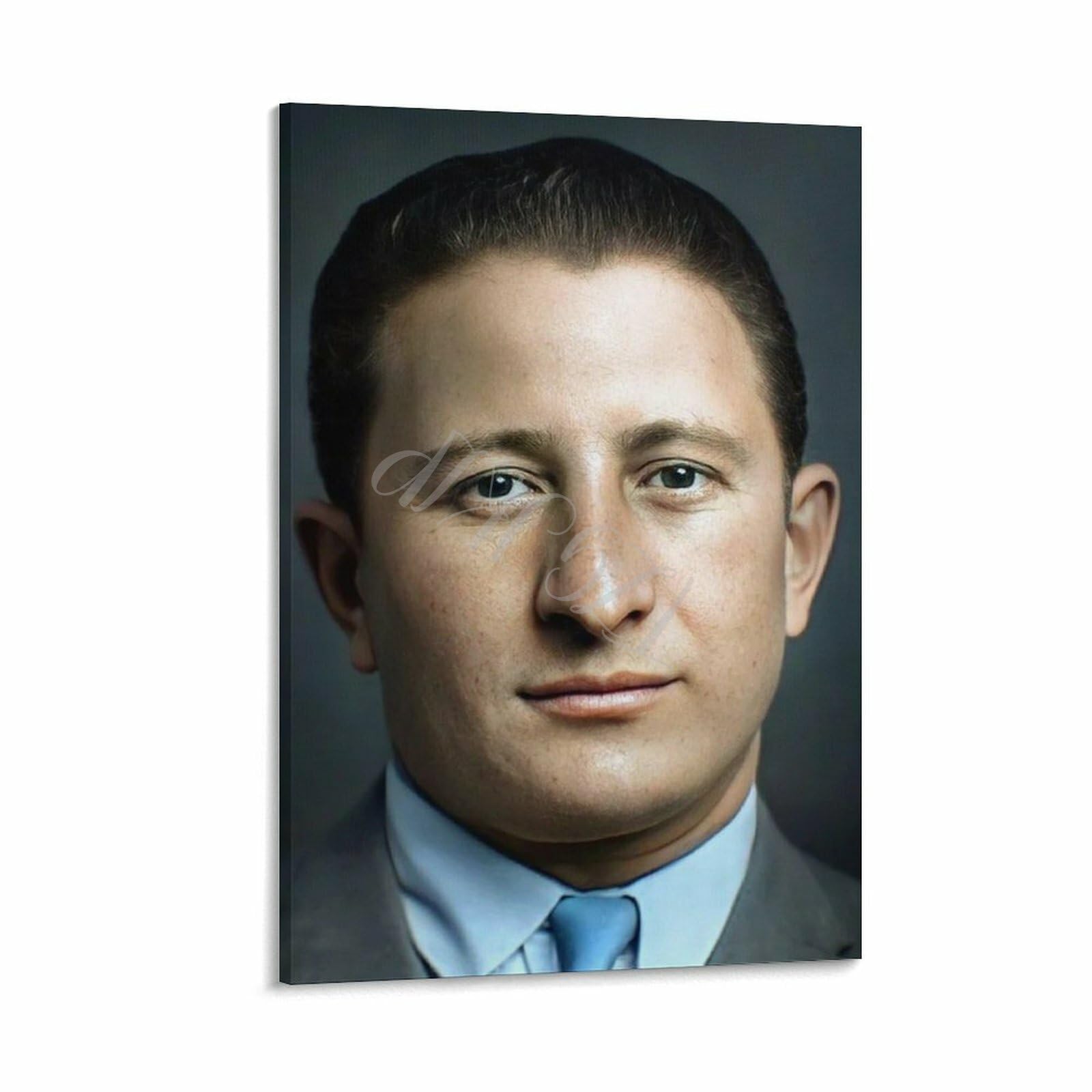
Carlo Gambino
 Italy
ItalyAlso known as: The Godfather, Boss of Bosses
Birthday
August 24, 1902
Birth Sign
Virgo
Birthplace
Palermo, Sicily, Italy
Age
Died at 74
About
Carlo Gambino was an Italian-born American mobster who, for nearly two decades, led the most powerful crime family in the United States, known today as the Gambino family. He was born in Palermo, Sicily, and immigrated to New York in 1921, where he climbed the ranks of the Mafia through cunning and ruthlessness. Gambino's reign as boss, from 1957 until his death in 1976, was marked by a low profile and a preference for quiet influence over public spectacle. He controlled vast criminal enterprises, including gambling, loansharking, and labor racketeering, while maintaining a facade of a respectable businessman.
Gambino is often credited with stabilizing the American Mafia's ruling commission and expanding his family's reach nationwide. His nickname, "Boss of Bosses," reflected his status among the Five Families. He died of a heart attack at his Long Island home in 1976, leaving behind a legacy that continues to fascinate and influence popular culture.
Early Life & Background
Carlo Gambino was born on August 24, 1902, in Palermo, Sicily, into a family with deep ties to the Sicilian Mafia. His father, a small-time mobster, instilled in him the codes of honor and silence from a young age. In 1921, at age 19, Gambino stowed away on a ship bound for the United States, arriving in New York with little more than a determination to succeed in the underworld.
Settling in Brooklyn, he quickly connected with local mob figures, starting as an errand boy and driver for Salvatore D'Aquila, then boss of the family that would later bear his name. Gambino proved adept at hijacking and theft, and his loyalty caught the attention of Joe Masseria, under whom he served during the Castellammarese War. After Masseria's murder in 1931, Gambino aligned with Albert Anastasia, becoming a trusted capo in what was then the Anastasia family. Throughout the 1930s and 1940s, he built a reputation for discretion and efficiency, avoiding the limelight while amassing wealth through gambling and loansharking.
His marriage to Caterina Castellano in 1932 further cemented his position, as she was the daughter of a prominent mob figure. By the early 1950s, Gambino was a powerful underboss, positioning himself for the top spot.
Career Growth
Gambino's ascent to boss came in 1957, when he allegedly orchestrated the murder of Albert Anastasia. Within months, he took control of the family, renaming it the Gambino crime family. That same year, the infamous Apalachin Meeting in upstate New York brought national attention to the Mafia, but Gambino managed to avoid indictment, further enhancing his mystique.
With Vito Genovese imprisoned on drug charges in 1959, Gambino became the de facto chairman of the Commission, the ruling council of the Five Families. He used this position to expand his influence, particularly in labor racketeering, controlling New York's waterfront and construction industries. His family's operations generated an estimated $500 million annually at its peak.
Gambino's low-key style contrasted sharply with predecessors like Anastasia. He rarely raised his voice, preferring to settle disputes quietly. He also avoided the narcotics trade, viewing it as too risky, though he allowed others to dabble. This caution kept him out of prison for most of his career, with only a 1937 tax evasion conviction resulting in 22 months behind bars.
In 1970, he was indicted for hijacking and faced deportation, but his failing health stayed legal proceedings. He suffered several heart attacks in his later years and died on October 15, 1976, at his home in Massapequa, New York.
Career Timeline
Public Image & Style
Gambino cultivated an image of a quiet, grandfatherly figure, often described as unassuming and soft-spoken. He wore conservative suits and spoke with a gentle Sicilian accent, which contrasted sharply with the violent reality of his position. This persona earned him the nickname "The Godfather" among associates and later inspired the fictional Don Corleone in Mario Puzo's novel. The media portrayed him as a master strategist who avoided confrontation, and he rarely gave interviews or made public appearances. His ability to maintain this facade for decades contributed to his mystique and effectiveness as a leader.
Fame & Fandom
Carlo Gambino does not possess a formal fandom or organized fanbase, as his legacy is that of a historical crime boss rather than a pop culture performer. While modern audiences engage with his story through biographical media and the upcoming Nicolas Cage film Gambino, no specific rituals, campaigns, or unofficial names define his supporters. His cultural footprint remains rooted in the mythology of the American Mafia, where he is remembered as the "Quiet Don" who ruled with discretion rather than spectacle. This enduring reputation has secured him a significant position within true crime historiography according to the iFANN Global Fame Rankings. He currently holds the distinction of being the 49th most famous person in True Crime, a placement reflecting his sustained influence across decades of criminal history literature and media coverage. This ranking remains steady from the previous cycle, indicating consistent public interest in his reign and methods. The data tracks global attention across diverse media signals worldwide, confirming his status as a primary subject for those studying organized crime. Unlike figures whose fame fluctuates with current events, Gambino's notoriety is anchored in his pivotal role during the mid-20th century, ensuring his name persists in discussions of the Five Families. His transition from a ruthless operator to a legendary figure of the underworld is well-documented, allowing him to maintain relevance without the need for active fan engagement. The absence of a dedicated fan club underscores the serious nature of his historical impact, which is studied rather than celebrated in the manner of entertainment icons.
Interesting Facts and Legends
Carlo Gambino maintained a rigorous personal routine, reportedly consuming a dozen cups of black coffee daily while carrying a rosary and attending Mass regularly to preserve his cover as a respectable family man. Despite accumulating vast wealth, he lived modestly in a Brooklyn apartment and a simple Long Island home, driving a car with the vanity plate CG1 to avoid drawing attention. His legendary status is often defined by the narrative of his untouchability; although arrested for tax evasion, he served only twenty-two months and never faced conviction for murder or racketeering charges related to his leadership. A widely retold story of his ruthlessness involves orchestrating the 1957 murder of Albert Anastasia to seize control of the family, a move that solidified his dominance over the New York crime scene. Unlike many contemporaries who met violent ends, Gambino died peacefully of natural causes at age 74 in his home on October 15, 1976. This quiet exit contrasted sharply with the fate of successors like Paul Castellano, cementing a folklore that viewed him as the last of the old guard. These accounts form the core of his lore, focusing on his ability to navigate complex hierarchies and rule with a calm hand while others raged.
Notable Quotes
“I never wanted to be a boss. It just happened.”
“In this life, you have to be smart. You have to be quiet.”
“The family is everything. Without family, you have nothing.”
Family & Personal Life
Carlo Gambino married Caterina Castellano in 1932. She was the daughter of a prominent mob figure, and their union strengthened his ties within the underworld. The couple had four children, including Thomas Gambino, who later became involved in the family business. Gambino was a devoted family man, often seen with his wife and children at church and community events. He insisted that his sons receive education and stay out of the limelight, though Thomas eventually took a role in labor racketeering. Gambino's cousin, Paul Castellano, married his wife's sister, and Castellano would later succeed him as boss. The family lived in a modest apartment in Brooklyn and a waterfront home on Long Island, reflecting Gambino's preference for discretion.
Notable Connections
Relationships & Dating History
Carlo Gambino married Caterina Castellano in 1932, and they remained together until his death. Caterina was the daughter of a Sicilian mobster, and her marriage to Gambino solidified his standing. The couple had four children, including Thomas Gambino, who later faced legal troubles for labor racketeering. Gambino was known to be devoted to his wife, and she often accompanied him to social events. There are no records of extramarital affairs, and his marriage was considered stable. At the time of his death, he was still married to Caterina.
- MarriedCaterina Castellano1932 - 1976CurrentMarried for 44 years until his death.
Death & Aftermath
Died
October 15, 1976 (aged 74)
Death Place
Massapequa, New York, USA
Cause of Death
Heart attack
Carlo Gambino died on October 15, 1976, at his residence in Massapequa, New York. The official ruling attributed his passing to a heart attack sustained while seated in a chair in his living room. This natural cause stands in stark contrast to the violent fates that befell many of his contemporaries and successors, such as Paul Castellano, who was assassinated four decades later in 1985. While some biographical sources note he died peacefully, this description refers to the absence of violence rather than a lack of medical intervention. Instead, the cause of death was established through internal family accounts and the subsequent silence of law enforcement regarding foul play. The New York Police Department and federal agents did not launch a murder investigation, accepting the family's account of a natural cardiac event.
The investigation and legal aftermath of his death were minimal due to the nature of the ruling. Law enforcement agencies, including the FBI, monitored the transition of power but did not challenge the cause of death. The primary legal focus shifted immediately to the succession of leadership within the family, which eventually led to the rise of Paul Castellano, but no criminal proceedings were initiated against anyone regarding Gambino's passing.
Funeral services were held privately on October 18, 1976, three days after his death. The service took place at St. John's Church in Massapequa, followed by burial at Calvary Cemetery in Queens, New York. Attendance was restricted to family members, close associates, and select crime family captains; it was not a public event. Public reaction to Carlo Gambino's death was notably subdued compared to other high-profile mob figures. Institutional officials and politicians did not issue public statements of mourning, viewing him strictly as a criminal figure. The media coverage was factual and brief, focusing on the fact that the quiet don had died naturally. Posthumously, Carlo Gambino has been the subject of numerous books, documentaries, and films that explore his life and legacy, with a significant recent development involving the upcoming biopic Gambino scheduled for production in April 2026.
Net Worth (Estate Value)
$500 Million
iFANN Editorial Team estimate
Per iFANN's editorial analysis, the estate of Carlo Gambino is currently valued at approximately $500 million as of 2026, a figure representing the growth of assets managed by his heirs and successors since his death. At the time of his passing in 1976, his personal net worth was estimated around $100 million, derived from decades of controlling gambling, loansharking, hijacking, and labor racketeering operations. He maintained significant influence over New York's waterfront and construction unions while famously avoiding the narcotics trade to minimize risk. Over the intervening years, the family's legitimate and illegitimate holdings have expanded to include real estate properties in New York and Florida alongside ongoing business interests. Much of this financial legacy remains obscured through shell companies and trusts, keeping the exact distribution of wealth hidden from public view. The family's continued management of these assets ensures that the economic power established by Gambino endures long after his reign ended.
Awards & Accolades
View 1 records, honours and achievementsKnown For
Boss of the Gambino crime family
1957-1976 · Crime boss
Keywords
Sources
Quick Facts
- Profession
- Mobster
- Born
- August 24, 1902
- Birthplace
- Palermo, Sicily, Italy
- Died
- October 15, 1976
- Death Place
- Massapequa, New York
- Gender
- Male
- Birth Sign
- Virgo
Personal Details
- Full Name
- Carlo Gambino
- Spouse
- Caterina Castellano
- Children
- Thomas Gambino, and three others
Frequently Asked Questions
How did Carlo Gambino die?
What was Carlo Gambino's net worth at death?
Was Carlo Gambino ever arrested?
Who was Carlo Gambino's successor?
Is Carlo Gambino the inspiration for The Godfather?
Similar People
Join the community
fans discussing