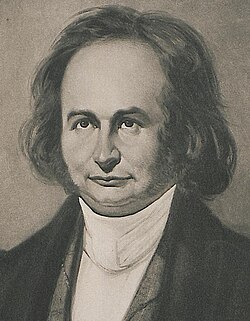
Carl Gustav Jacob Jacobi
Awards & Honours
5
Awards Won
3
Honours
3
Rankings
2
Covers
3
Records
Jacobi's achievements place him among the foremost mathematicians of the 19th century. His work on elliptic functions, developed independently of Abel, laid the groundwork for a major branch of complex analysis. The Hamilton-Jacobi equation remains a cornerstone of analytical mechanics and is used in quantum mechanics and general relativity. The Jacobian matrix is a fundamental tool in multivariable calculus and differential geometry. His contributions to number theory, including the Jacobi symbol, advanced the study of quadratic forms and modular forms. He trained a generation of mathematicians at Königsberg, establishing one of the first research seminars in Europe. His collected works, published in seven volumes, attest to his extraordinary productivity and breadth.
Awards
Honours & Distinctions
Jacobi Crater on the Moon
A lunar impact crater named in his honor.
Statue in Potsdam
A bronze statue erected in his birthplace.
Jacobi Medal
A medal awarded for contributions to mathematical geosciences, though not directly named for him.
Rankings & Lists
The 100 Greatest Mathematicians
Greatest Mathematicians of All Time
The 10 Most Influential Mathematicians of the 19th Century
Magazine Covers
Mathematics: The Loss of Certainty (book cover)
1980
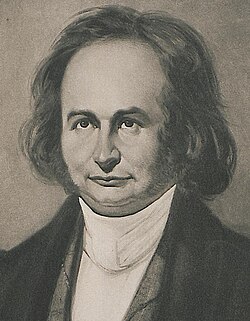
Portrait of Jacobi
A History of Mathematics (book cover)
1991
Portrait of Jacobi
Records & Feats
First to develop a comprehensive theory of elliptic functions
Jacobi's Fundamenta Nova (1829) established the modern theory of elliptic functions, independently of Abel.
Co-developer of Hamilton-Jacobi theory
Jacobi reformulated classical mechanics, producing the Hamilton-Jacobi equation, essential for quantum mechanics.
Introduced the Jacobian matrix and determinant
In 1836, Jacobi defined the Jacobian, now fundamental in multivariable calculus and differential geometry.