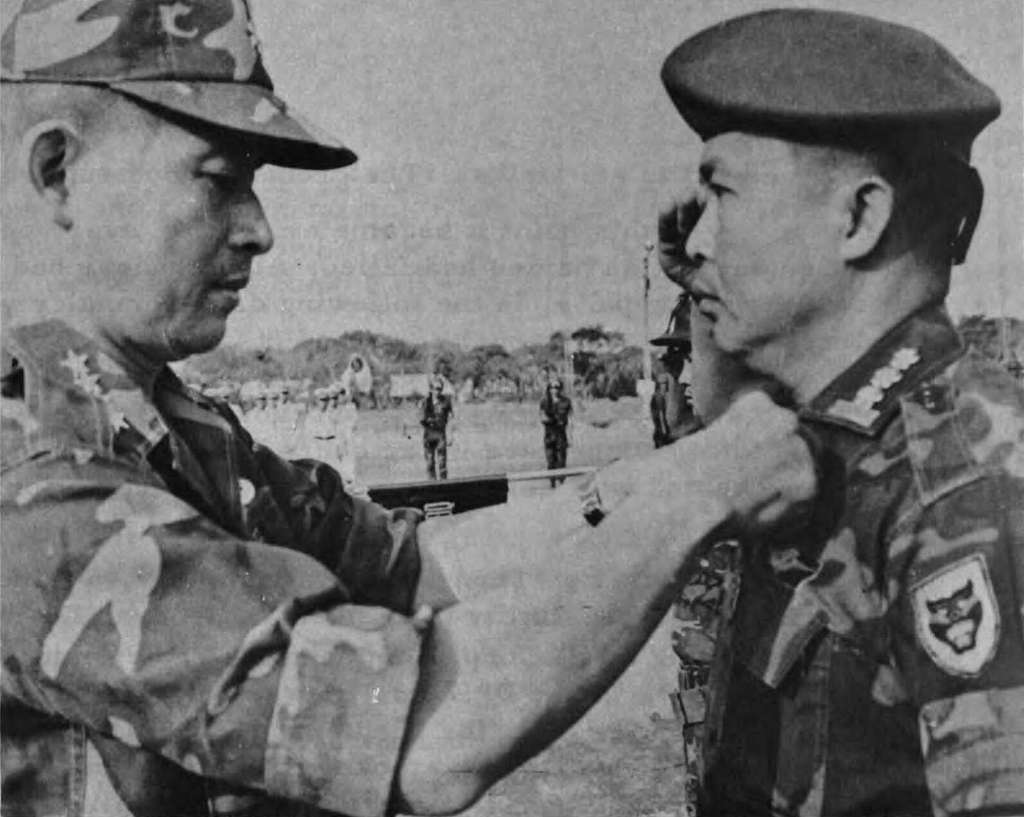
Cao Văn Viên
 Vietnam
Birthday
December 21, 1921
Birth Sign
Sagittarius
Birthplace
Vientiane, Laos
Age
Died at 86
About
Cao Văn Viên was a four-star general in the Army of the Republic of Vietnam (ARVN) and the last chairman of the South Vietnamese Joint General Staff. He is remembered as one of the most capable military leaders of the Vietnam War, a figure American allies trusted with the highest levels of command. His career culminated in his role as the chief architect of South Vietnam's military strategy from 1967 until the fall of Saigon in 1975.
Viên was one of only two generals in South Vietnamese history to reach four-star rank, a distinction he shared with Trần Thiện Khiêm. American observers described him as an "absolute key figure" in the conflict, praising his tactical acumen and his ability to hold together a strained military structure. His legacy is tied to the final chapter of the war, and his personal account of those years, titled The Final Collapse, remains a significant document for historians.
Early Life & Background
Born in Vientiane, Laos, on December 21, 1921, Cao Văn Viên grew up in a region that would later become a crossroads of conflict. His family moved to Vietnam, where he pursued an education that was unusual for a future soldier: he earned a Bachelor of Arts in French Literature from the University of Hanoi. That literary background gave him a fluency in French that would serve him well in dealings with American and French military advisers.
Viên's path to the military came through the colonial era. He joined the French-backed Vietnamese National Army in the 1940s, a decision that placed him on a trajectory toward the ARVN when Vietnam divided in 1954. His early career was marked by rapid advancement, as his intelligence and discipline caught the attention of senior officers. By the early 1960s, he had risen to command positions, and his reputation for competence grew alongside the escalating conflict.
Career Growth
Cao Văn Viên's breakthrough came in 1967, when he was appointed Chairman of the Joint General Staff, the top military post in South Vietnam. He held that position for eight years, through the Tet Offensive, the Cambodian incursion, and the Easter Offensive. His leadership was tested repeatedly, and he earned the respect of American generals like William Westmoreland and Creighton Abrams, who relied on him to coordinate ARVN operations.
Viên's most consequential years were the final ones. As the North Vietnamese launched the 1975 Spring Offensive, he oversaw a desperate defense that collapsed faster than anyone anticipated. He fled the country shortly before Saigon fell, relocating to the United States. There, he wrote The Final Collapse, a volume in the U.S. Army's Vietnam Studies series, offering his personal account of the war's end. He remained in exile until his death in 2008.
Career Timeline
Public Image & Style
In the eyes of American military leaders, Cao Văn Viên stood out as a rare talent in the ARVN's officer corps. He was seen as professional, disciplined, and politically astute, a contrast to the corruption that plagued other ranks. Vietnamese soldiers reportedly respected him for his battlefield presence and his willingness to visit frontline units. After the war, he became a symbol of the South Vietnamese military's lost cause, but he rarely sought the spotlight in exile.
Fame & Fandom (iFAMOUS Rankings)
Cao Văn Viên's admirers form a quiet, decentralized community rather than a formal fandom. No official fandom name exists; instead, his legacy is preserved by Vietnamese diaspora communities, especially former Republic of Vietnam military veterans and their descendants, who regard him as one of the least scandal-tainted figures of the Saigon regime. Their activities center on historical preservation and commemoration: memorial blog posts, such as a detailed tribute on ongvove.wordpress.com, and forum discussions, including a thread on the hoiquanphidung.com paratroopers' association forum about his book Những Ngày Cuối của Việt Nam Cộng Hòa. Social media memorial posts, like one by ledinhhoangle1, keep his memory alive by detailing his austere personal life. These communities share no inside jokes or fan rituals; their bond is a shared respect for his integrity and his role in a lost cause.
iFANN's Global Fame Engine has evaluated Cao Văn Viên, but he does not currently hold a placement in the published rankings, whether in the Global Top 1,000 or any Top-100 scope list. His fame, though significant within historical and diaspora circles, has not translated into a measurable global ranking.
Interesting Facts and Legends
Despite his military career, Cao Văn Viên held a degree in French literature and was known to quote French poetry in staff meetings. He was one of only two ARVN generals to ever wear four stars, the other being Trần Thiện Khiêm. After fleeing Vietnam, he settled in the Washington, D.C. suburbs, where he lived quietly and rarely spoke publicly about the war. He died in Annandale, Virginia, on January 22, 2008, at age 86.
Stories about Viên often emphasize his reputation as an "unscandalous" general, one of the few high-ranking Saigon officials untouched by corruption. Another frequently retold tale describes him as a "lonely general": in 30 years of service, he "only lived with superiors and subordinates" and had almost no close friends. His role in the 1975 Central Highlands Retreat, a catastrophic withdrawal that hastened the fall of Saigon, remains a subject of historical debate. In exile, he wrote Những Ngày Cuối của Việt Nam Cộng Hòa (The Last Days of the Republic of Vietnam) as part of the U.S. Army's Indochina Monographs series, a work now considered essential reading for historians of the Vietnam War.
Family & Personal Life
Cao Văn Viên was married and had four children. His family fled Vietnam with him in 1975, and they settled in the United States, where they built a new life. Details about his wife and children are scarce, as Viên kept his personal life private. His family was with him at the time of his death in Annandale, Virginia.
Notable Connections
Relationships & Dating History
Cao Văn Viên was married, though details about his wife are not widely recorded. The couple had four children together. They remained married until his death in 2008. No other public relationships are documented.
- Married? - 2008Married with four children; details about his wife are scarce.
Death & Aftermath
Died
January 22, 2008 (aged 86)
Death Place
Southern California, USA
Cause of Death
Natural causes associated with old age
In his final years, Cao Văn Viên resided quietly within the Vietnamese-American community of Southern California, maintaining a low profile while preserving ties with former military associates. He passed away on January 22, 2008, at the age of 86, succumbing to natural causes associated with advanced age without any indication of foul play or medical dispute. The circumstances surrounding his final days were uneventful. Public reaction focused on tributes from the Vietnamese-American diaspora and retired ARVN peers who honored his status as one of only five four-star generals in South Vietnamese history. A formal state funeral adhered to strict military protocols, featuring a flag-folding ceremony held on January 25, 2008, at 4:30 PM that reflected his rank as the longest-serving Chief of Staff.
The three-day service included solemn rites attended by high-ranking officials from the government-in-exile and the broader exile community, proceeding according to established ARVN customs before his interment. Posthumous commemoration has centered on historical analysis and the circulation of his memoirs, including the volume titled Hồi Ký Tướng Cao Văn Viên Tổng Tham Mưu Trưởng, which remains a subject of significant interest in discussions regarding the leadership of the South Vietnamese military.
Net Worth (Estate Value)
As a military officer in a defunct state, Cao Văn Viên did not accumulate significant personal wealth. After fleeing to the United States, he lived modestly in the Virginia suburbs. His estate, if any, has not been publicly documented, and there are no reports of posthumous earnings or estate management. His primary legacy is historical rather than financial.
Awards & Accolades
Known For
Chairman of the Joint General Staff
1967 · Chief of Staff of the ARVN
The Final Collapse
1975 · Author
Keywords
Sources
Quick Facts
- Profession
- military officer
- Born
- December 21, 1921
- Birthplace
- Vientiane, Laos
- Died
- January 22, 2008
- Death Place
- Annandale, Virginia
- Gender
- Male
- Birth Sign
- Sagittarius
- Education
- Bachelor of Arts in French Literature, University of Hanoi
- Children
- 4
Personal Details
- Children
- 4
- Education
- Bachelor of Arts in French Literature, University of Hanoi
Frequently Asked Questions
Who was Cao Văn Viên?
When and where was Cao Văn Viên born?
When and where did Cao Văn Viên die?
What was Cao Văn Viên's role during the Vietnam War?
What was Cao Văn Viên's highest military rank?
Join the community
fans discussing