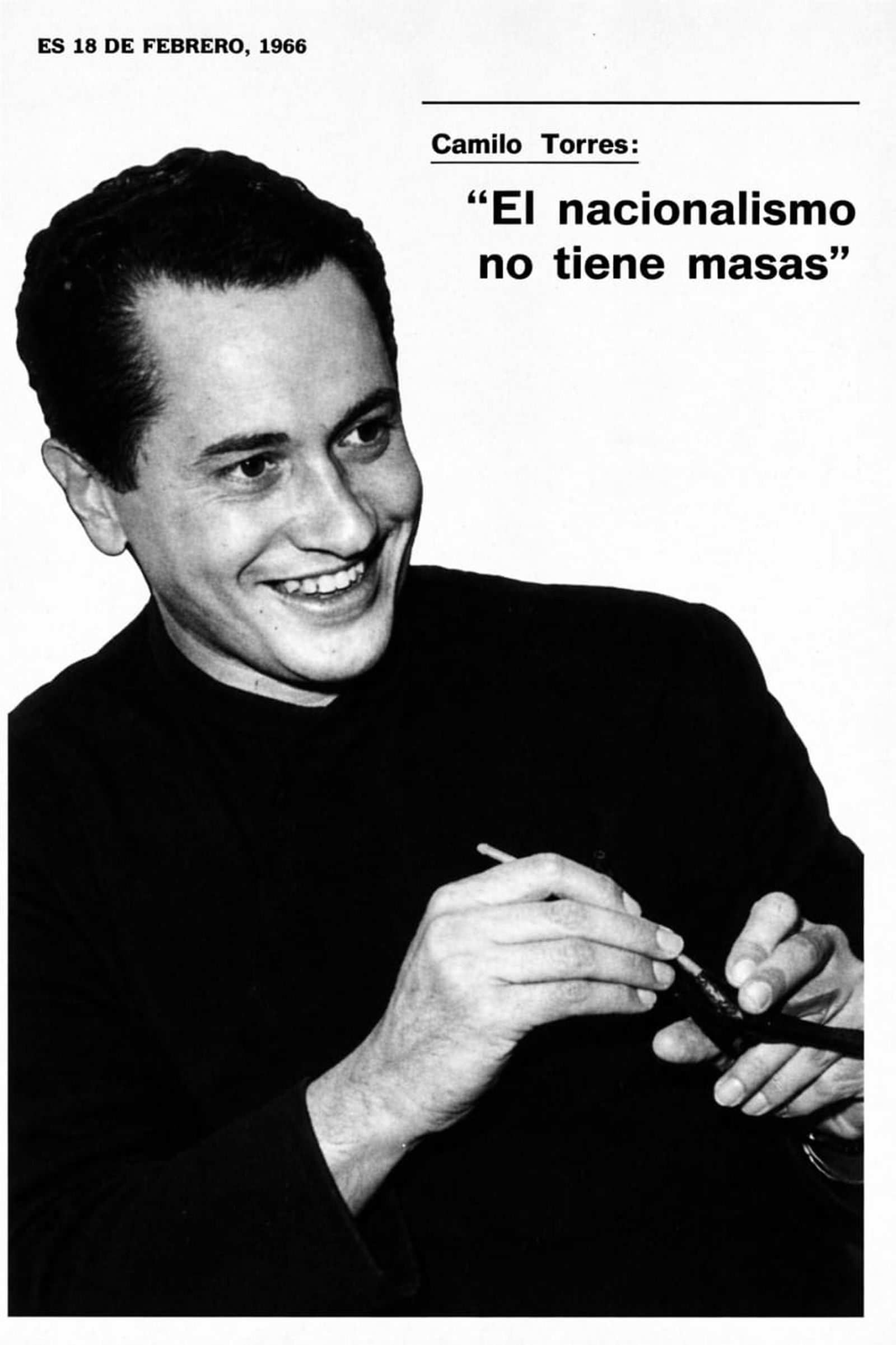
Camilo Torres Restrepo
 Colombia
Catholic priest•sociologist•university professor•revolutionary
Also known as: Father Camilo Torres, Argemiro, The Guerrilla Priest
Birthday
February 3, 1929
Birth Sign
Aquarius
Birthplace
Bogotá, Colombia
Age
Died at 37
Height
5 ft 7 in (1.70 m)
About
Jorge Camilo Torres Restrepo was a Colombian Catholic priest, sociologist, and revolutionary who became the most iconic figure of liberation theology. Born into an affluent family in Bogotá, he initially pursued academic reform before concluding that peaceful change was insufficient to dismantle deep-seated inequality. He famously declared that Jesus would be a guerrillero if alive today, a statement that defined his radical fusion of faith and armed struggle.
Torres co-founded the Sociology Faculty at the National University of Colombia in 1960 but grew disillusioned with the Church's support of the status quo. After requesting laicization in 1965, he joined the Marxist-Leninist National Liberation Army (ELN). He was killed just twelve days after turning 37 in his first combat engagement, leaving behind a legacy that continues to influence social movements and theological thought across Latin America.
Early Life & Background
Jorge Camilo Torres Restrepo was born on February 3, 1929, in Bogotá to Calixto Torres Umaña, a renowned physician, and Clara Restrepo. He grew up in a privileged environment that afforded him access to elite education. He attended prestigious schools in the capital before earning a scholarship to study abroad, where he immersed himself in European intellectual currents. He obtained a degree in sociology from the University of Paris and later earned a doctorate in sociology from the University of Louvain in Belgium.
Upon returning to Colombia, Torres applied his academic training to the country's pressing social issues. He sought to use sociological methods to address rural poverty and structural inequality, eventually becoming a professor at the National University of Colombia. His early career was marked by a commitment to social justice, leading him to join the clergy in 1954. He viewed the priesthood not as a retreat from politics but as a platform to serve the poor. By the late 1950s, he had become a vocal critic of both the government and the conservative Church hierarchy, forming the United Front in 1965 to mobilize students and workers for structural change.
Career Growth
In 1954, Torres was ordained a Catholic priest. In 1960, he co-founded the Sociology Department at the National University of Colombia alongside Orlando Fals Borda, establishing a new academic discipline in the country. From 1962 to 1965, he served as a parish priest while writing influential works such as El hombre y su historia and Para un cristianismo revolucionario. His public speeches, especially the 1965 United Front address, drew thousands and alarmed state authorities and Vatican officials alike.
In 1965, Torres formally requested and received laicization from the Church, though he maintained his personal faith. Early in 1966, he joined the National Liberation Army (ELN) under the nom de guerre "Argemiro." His entire military tenure lasted less than two months. On February 15, 1966, he was killed in an ambush at Patio Cemento near San Vicente de Chucurí. Despite his short life as a fighter, his impact on global theology and Latin American revolutionary movements was profound, influencing figures like Che Guevara and becoming a foundational text for liberation theologians worldwide.
Career Timeline
Public Image & Style
Camilo Torres is remembered as a "secular saint" and a tragic hero who chose the revolution over the church. Media portrayals emphasize his dual identity as a priest and a guerrilla, often depicting him in photographs wearing clerical collars or simple civilian clothes. His public persona was defined by urgent moral conviction and intellectual rigor. Social media followers and activists manage his legacy by sharing his quotes and calling for social justice, framing him as a symbol of the fusion of faith and revolutionary struggle.
Fame & Fandom
Camilo Torres Restrepo has been evaluated by iFANN's Global Fame Engine but currently holds no placement in the published rankings, whether the Global Top 1,000 or any Top-100 scope list. That absence says more about the engine's metrics than about his legacy, which in Colombia and across Latin America is immense. His fame is not the kind that charts on streaming services or trends on social media; it lives in the memory of social movements, in the murals that bear his face, and in the ongoing political struggles that claim his name.
The fanbase for Torres has no formal name, there is no 'Camilo Torres fandom' in the way pop stars have fandoms. Instead, his followers are called Camilistas, a term that carries political weight rather than fan-club energy. The closest thing to a fan campaign in his honor came in January 2026, when ELN guerrillas announced they had recovered his remains after sixty years and demanded his body be returned to the National University in Bogotá. That act, part political advocacy, part memorial reverence, galvanized his supporters and made international headlines. The 60th anniversary of his death, in February 2026, prompted state media retrospectives and tributes from leftist outlets, but these are commemorations, not coordinated fan projects.
Torres's real engagement with his 'fans' was as a priest, professor, and activist. His 1965 United Front movement drew thousands of Colombians to his call for social justice, and his famous phrase, 'The duty of every Christian is to be a revolutionary; the duty of every revolutionary is to make the revolution', remains a rallying cry in leftist circles. His followers are not measured by rankings; they are measured by their conviction.
Interesting Facts and Legends
One of the most enduring legends is Torres's transformation from priest to guerrilla. After ordination in 1954 and years of peaceful activism, he joined the ELN in 1966, shocking Colombian society and the Church. His death in his first combat engagement, on February 15, 1966, at Patio Cemento, became folklore because his body was never recovered for sixty years. Colombians speculated about his fate until the ELN announced in January 2026 that they had found his remains, and the State Service for the Search for Missing Persons confirmed the identification on February 16, 2026.
Another iconic moment is his United Front speech, which mobilized thousands and alarmed both the government and the Church. His call for Christians to embrace revolution is the most quoted line from his work. Fans also tell the story of his 'secular sainthood', a myth that frames him as a martyr fusing Christian love with revolutionary struggle. Though the Catholic Church has never beatified him, his image adorns murals and protest banners across Colombia, and liberation theology circles hold him in near-saintly regard.
His affluent upbringing and relation to former President Juan Manuel Santos add a layer of irony to his revolutionary path, making his story all the more striking. He was a cousin of Santos, creating a stark contrast between the revolutionary and the politician who signed the peace deal with the FARC.
Notable Quotes
“If Jesus were alive today, He would be a guerrillero.”
“The duty of every Christian is to be a revolutionary; the duty of every revolutionary is to make the revolution.”
“I am not a communist, but I will fight alongside communists for shared goals.”
Family & Personal Life
Camilo Torres Restrepo was born into an upper-class family in Bogotá. His father, Calixto Torres Umaña, was a prominent physician, and his mother was Clara Restrepo. Through marriage, he was related to future Colombian President Juan Manuel Santos, a connection that adds historical irony to his life as a revolutionary who fought against the establishment. Torres did not marry and had no children, dedicating his entire existence to his spiritual vocation and the political cause of the poor.
Notable Connections
Relationships & Dating History
Personal life details regarding romantic relationships are sparse in historical records, as Torres focused intensely on his spiritual and political vocation. There is no documented evidence of marriage, engagements, or long-term romantic partnerships. Historical accounts describe him as celibate and entirely dedicated to the cause of the poor and the revolution. As a priest until 1965, he took vows of chastity, and there are no credible reports of children or significant romantic entanglements before or after his laicization. Consequently, he died single, with no spouse or offspring. The lack of a personal life narrative often serves to reinforce his image as a "secular saint," a man who gave his entire existence to his ideology rather than to a family unit.
Death & Aftermath
Died
February 15, 1966 (aged 37)
Death Place
Patio Cemento, Santander, Colombia
Cause of Death
Gunshot wounds sustained in combat
Camilo Torres Restrepo died on February 15, 1966, during an ambush at Patio Cemento near San Vicente de Chucurí in the Santander region of Colombia. He was reported killed by gunshot wounds while fighting as a guerrilla for the National Liberation Army against government forces. The event occurred in a remote conflict zone, so his death was established through accounts from surviving comrades and subsequent military reports confirming the loss of ELN personnel. No police investigation or trial took place at the time, as the state classified him as an enemy combatant in an active civil war.
Public reaction to his death was immediate and profound across Colombia and Latin America. Students, intellectuals, and leftist groups held vigils honoring the "guerrilla priest," while theologians debated the morality of his armed struggle. His writings, particularly El hombre y su historia and Para un cristianismo revolucionario, became foundational texts for the liberation theology movement. Tributes poured in from peers like Archbishop Luis Concha Córdoba, who engaged with the complex legacy of a priest taking up arms. The funeral remained secret for decades because the family and the ELN concealed the burial site to prevent desecration or political exploitation.
It was not until January 23, 2026, that authorities began analyzing remains found in Colombia to determine if they belonged to Torres. By February 16, 2026, the State Service for the Search for Missing Persons confirmed the identification of his remains. Following this discovery, the ELN announced the recovery of the body and requested its return to Bogotá for a proper national funeral. While a public memorial service had not yet taken place, outgoing President Gustavo Petro announced plans to transfer Torres's cassock to a museum, signaling a shift toward state recognition of his legacy.
Net Worth (Estate Value)
$0
iFANN Editorial Team estimate
As a deceased individual, Camilo Torres Restrepo does not have a net worth in the conventional sense. He left no personal fortune; he was a priest and a revolutionary who lived simply. Any assets he possessed were likely modest and held in common or given to the movement. The iFANN Editorial Team estimates his estate value at $0, reflecting his choice to live without material accumulation. His wealth today is cultural and symbolic, derived from the continued relevance of his teachings and the revenue generated by the ELN's use of his name for its fronts, though these are political entities rather than commercial ventures.
Awards & Accolades
View 2 records, honours and achievementsKnown For
Liberation Theology
1966 · Key Figure
ELN Guerrilla
1966 · Member (Argemiro)
United Front
1965 · Founder
Keywords
Sources
Quick Facts
- Profession
- university teacher, Catholic priest, sociologist
- Born
- February 3, 1929
- Birthplace
- Bogotá, Colombia
- Died
- February 15, 1966
- Death Place
- San Vicente de Chucurí, Santander
- Gender
- Male
- Birth Sign
- Aquarius
Personal Details
- Full Name
- Jorge Camilo Torres Restrepo
- Height
- 5 ft 7 in (1.70 m)
- Children
- Education
- University of Paris (Sociology), University of Louvain (Doctorate in Sociology)
Frequently Asked Questions
Who was Camilo Torres Restrepo?
Why did Camilo Torres become a guerrilla?
How did Camilo Torres die?
Where are Camilo Torres' remains?
What is Camilo Torres' legacy?
Social Media
Similar People
Join the community
fans discussing