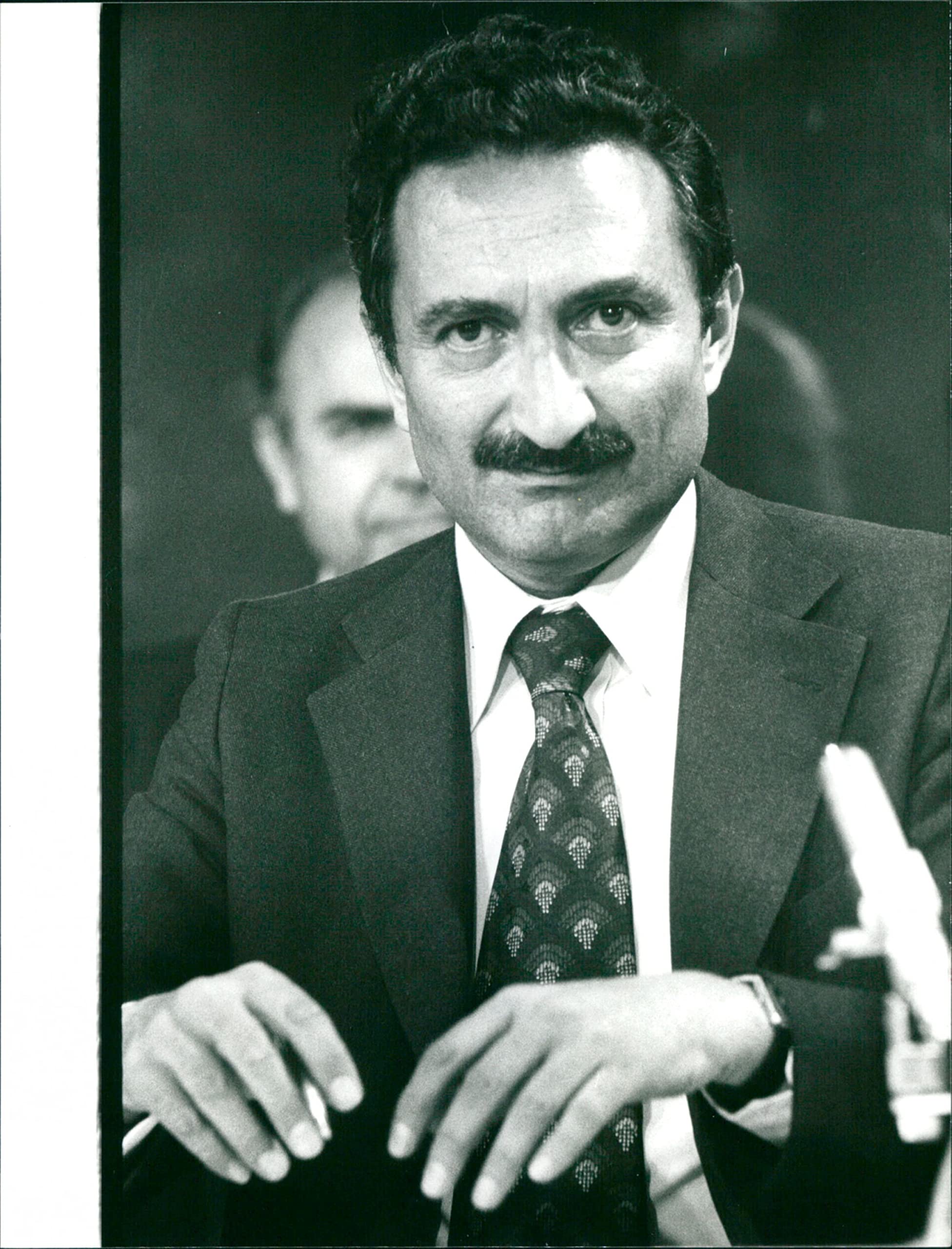
Bülent Ecevit
 Turkey
Also known as: Mustafa Bülent Ecevit, Conqueror of Cyprus, Ecevit the Populist, Populist Ecevit
Birthday
May 28, 1925
Birth Sign
Sagittarius
Birthplace
Istanbul, Ottoman Empire
Age
Died at 81
Height
5 ft 10 in (178 cm)
About
Mustafa Bülent Ecevit was a towering figure in modern Turkish history who served as the Prime Minister of Turkey four separate times. Beyond his political career, he was a renowned poet, journalist, and scholar whose intellectual depth shaped his leadership style. His life ended on November 5, 2006, at the age of 81, leaving behind a legacy as a staunch defender of secularism and a central architect of Turkey's social-democratic movement.
Ecevit is often remembered by his nickname "Ecevit the Populist" or the "Conqueror of Cyprus." He uniquely balanced the roles of a statesman and a man of letters, using his literary background to influence national discourse. His tenure as Prime Minister included critical periods of Turkish history, from the 1974 Cyprus intervention to the late 1990s economic reforms and the EU accession bid.
Early Life & Background
Mustafa Bülent Ecevit was born on May 28, 1925, in Istanbul, then known as Constantinople, into an intellectual family. His father, Ahmet Hamdi Ecevit, worked as a civil servant and writer, while his mother, Müfide Hanım, was a teacher. This environment fostered a deep appreciation for literature and public service from a young age. Ecevit attended Galatasaray High School, one of Turkey's most prestigious institutions, where he received a rigorous education in languages and humanities that would later define his career.
He enrolled in the Faculty of Literature at Ankara University, graduating in 1947 with a degree in French language and literature. His academic focus on French poetry and philosophy deeply influenced his later poetic style and political rhetoric. Before entering elected office, Ecevit built a formidable reputation as a journalist and writer. In 1948, shortly after graduation, he began working for Cumhuriyet, Turkey's oldest daily newspaper, where he served as a correspondent and columnist. His reporting on labor issues and his sharp, literary prose quickly made him a respected voice in the media.
His first collection of poetry, titled Dönüşüm (Transformation), was published in 1946, marking the beginning of a dual career that would define his life. By the mid-1950s, he had become a leading intellectual critic of the ruling Democrat Party, advocating for workers' rights and secular democracy. He traveled extensively in Europe and the Middle East, covering international affairs, which broadened his perspective on global politics and solidified his stance on democratic ideals.
Career Growth
Ecevit's political career was marked by resilience through multiple coups and political upheavals. He was first elected as a Member of Parliament for Ankara in 1957, representing the Republican People's Party (CHP). Following the 1960 military coup, he was briefly imprisoned but later released. He served as Minister of Labour under the CHP-led coalition government from 1965 to 1969.
In 1972, he became the leader of the CHP, steering the party toward a more defined "left-of-center" platform. His first term as Prime Minister began in 1974, a tenure historically significant for the Turkish invasion of Cyprus in July 1974, an operation that secured a Turkish Cypriot enclave and earned him the moniker "Conqueror of Cyprus." He led a second term from 1977 to 1978, navigating a period of intense political violence and economic instability. A third term followed from 1978 to 1979, during which he attempted to form a stable coalition amidst growing polarization.
Following the September 12, 1980 military coup, Ecevit was imprisoned and banned from politics. He spent several years in prison before being released in 1983. After a referendum lifted the ban on former politicians in 1987, Ecevit returned to the political arena. He founded the Democratic Left Party (DSP) in 1985, though it was officially registered under his leadership in 1987. He returned to power for a fourth term as Prime Minister from 1999 to 2002. This period is noted for the capture of PKK leader Abdullah Öcalan, which temporarily stabilized security, and for implementing crucial economic reforms and initiating Turkey's formal bid for European Union membership. The DSP lost its parliamentary representation in the general election of 2002, ending his tenure as PM. Ecevit stepped down as the leader of the DSP in 2004.
Career Timeline
Public Image & Style
Bülent Ecevit was portrayed as a "poet-politician," a man of letters who entered the rough-and-tumble of Turkish politics. Media coverage emphasized his eloquence, his love for French literature, and his unwavering stance on secularism. He was known for his thick mustache, expressive eyes, and a dignified, scholarly demeanor. His public image was that of a statesman who valued culture and intellect alongside political pragmatism.
While he did not cultivate a celebrity persona, his supporters viewed him as a symbol of secular democracy. His followers were politically aligned, identifying with the social-democratic ideals of the CHP and DSP. His presence was distinctive for its intellectual weight, contrasting with the more populist styles of his contemporaries.
Fame & Fandom (iFAMOUS Rankings)
Bülent Ecevit never cultivated a formalized fandom in the modern sense of celebrity worship, as his support base remained rooted in political ideology rather than the organized adoration typical of entertainers. His followers identified primarily through the Republican People's Party and social-democratic movements, viewing him as a statesman and poet rather than a pop icon. There was no official moniker for his supporters, nor were there fan-funded projects or rituals centered on his person; instead, his legacy rests on the profound respect accorded to his dual identity as a national leader and literary figure. Despite this lack of structured fan culture, his global standing remains significant within historical records. According to the October 2026 cycle of the iFANN Global Fame Rankings, Ecevit is evaluated by the engine but not currently in the Top 1,000. He also ranks outside the current published scope for persons of Turkish origin. These figures reflect a consistent level of recognition that persists long after his death in 2006. The rankings confirm that while he lacks a specific fan club name, his status as a poet-politician ensures he remains a prominent subject in Turkish history and international archives. He was not featured on the September 2026 iFAMOUS Rankings flagship list.
Interesting Facts and Legends
Bülent Ecevit was fluent in French, English, and German, which allowed him to engage directly with Western intellectuals and leaders without intermediaries. He was known to carry a small notebook everywhere to jot down poetic ideas, even during high-stakes diplomatic meetings. Despite his leftist leanings, he maintained strong ties with conservative elements in the military when necessary for national security, particularly regarding the Cyprus issue.
His poetry was often set to music by famous Turkish composers, further embedding his work in the national consciousness. One of his poems, "Beni Arayan" (The One Who Calls Me), remains one of the most memorized poems in Turkish history. A recurring legend involves his ability to recite poetry during heated parliamentary debates, often disarming opponents with verses from Rumi or French poets. This blend of intellect and emotion became part of his mythos.
Recent discussions have revisited the alleged undelivered letter from Richard Nixon regarding the Cyprus invasion, fueling historical debate about whether Ecevit acted alone or under external pressure. His inability to speak after the 2006 stroke created a powerful visual narrative of a silenced voice, which resonated deeply with the public.
Notable Quotes
“We will not leave a single inch of our homeland.”
“Secularism is not a religion, it is a way of life.”
“I am a socialist, but I am also a Turk.”
“I am the one who calls me / I am the one who answers.”
Family & Personal Life
Bülent Ecevit was married only once, to Rahşan Ecevit (née Toker), a former actress and politician. They met in the late 1940s or early 1950s through mutual friends in the literary and political circles of Istanbul. Their marriage was a partnership of intellect and ideology; Rahşan was a significant political figure in her own right, often described as the "Eva Perón of Turkish national-socialism" by some critics due to her active campaigning. She served as an MP and was a close advisor to Bülent throughout his career.
The couple had two children: a daughter named Zeynep Ecevit and a son named Bilgehan Ecevit. Both have largely stayed out of the public eye compared to their parents. Rahşan Ecevit died on January 19, 2020, in Istanbul. There are no subsequent romantic relationships to report for Bülent Ecevit as he passed away in 2006.
Notable Connections
Rahşan Ecevit, Süleyman Demirel, Turgut Özal, Abdullah Öcalan, Recep Tayyip Erdoğan.
Relationships & Dating History
Bülent Ecevit was married only once, to Rahşan Ecevit (née Toker), a former actress and politician. They met in the late 1940s or early 1950s through mutual friends in the literary and political circles of Istanbul. Their marriage was a partnership of intellect and ideology; Rahşan was a significant political figure in her own right, often described as the "Eva Perón of Turkish national-socialism" by some critics due to her active campaigning. She served as an MP and was a close advisor to Bülent throughout his career. The couple had two children: a daughter named Zeynep Ecevit and a son named Bilgehan Ecevit.
Rahşan Ecevit died on January 19, 2020, in Istanbul. There are no subsequent romantic relationships to report for Bülent Ecevit as he passed away in 2006. At the time of his death, he was widowed, having been married to Rahşan for 54 years.
- MarriedRahşan Ecevit1952 - 2006Met in the late 1940s; she was a politician and close advisor; they had two children.
Death & Aftermath
Died
November 5, 2006 (aged 81)
Death Place
Ankara, Turkey
Cause of Death
Circulatory and respiratory complications from stroke
Public reaction to the passing of Bülent Ecevit was profound and widespread, with tributes pouring in from political peers across the spectrum and citizens gathering spontaneously in public squares to mourn the former leader. Institutions such as the Turkish Parliament observed moments of silence, marking the end of an era for secular politics in Turkey while celebrating his legacy as a defender of secularism against religious fundamentalism. The event was treated as a natural outcome of his long-term illness rather than a suspicious death, and no public disputes arose regarding the medical handling or the official cause.
Ecevit passed away on November 5, 2006, at the Gülhane Military Medical Center in Ankara, Turkey, following a severe stroke he had suffered nearly six months prior. He had been in a coma since May 2006 after the initial incident left him unable to speak or move significantly, and his condition deteriorated over several months until his final days under intensive medical care. The official cause of death was ruled as circulatory and respiratory complications resulting from the stroke, established through hospital statements and confirmed by family announcements. A public state funeral took place on November 7, 2006, two days after his death, attended by thousands of mourners including high-ranking government officials and notable figures such as then-President Abdullah Gül and Prime Minister Recep Tayyip Erdoğan.
The ceremony featured readings from Ecevit's poetry and speeches emphasizing his role in shaping modern Turkey before he was buried in the Zincirlikuyu Cemetery in Istanbul. In the years following his death, a foundation bearing his name was established to promote secular values and cultural initiatives, while scholarships have been awarded in his memory to support students in the humanities and social sciences.
Net Worth (Estate Value)
$1 Million
iFANN Editorial Team estimate
As a politician and public servant, Bülent Ecevit did not accumulate wealth through commercial ventures or entertainment royalties in the manner of celebrities. His net worth at the time of his death was modest, estimated to be equivalent to a senior civil servant's pension and savings. Research by the iFANN Editorial Team puts his fortune at around $1 Million USD (adjusted for inflation). This figure reflects his salary as Prime Minister, writing royalties from poetry books and columns, and personal investments in real estate and savings.
The estate value is not publicly tracked as a major financial entity. Upon his death, his assets were distributed to his heirs: his wife, Rahşan Ecevit, and their two children. His wife managed the family estate until her death in 2020. There are no major posthumous revenue streams comparable to those of entertainers; the "value" of his estate is primarily cultural and historical. As of 2026, no new wealth generation data exists as he has been deceased for nearly two decades.
Awards Won (4)
Bülent Ecevit received numerous high-level national and international distinctions. He was the recipient of the Grand Cross of the Order of Merit of the Federal Republic of Germany and various other orders from foreign nations. He received the Turkish Language Association Poetry Award and the Yunus Nadi Prize for journalism. He held honorary doctorates from several universities, including the University of Paris and the University of Athens.
1974 · State Honor
N/A
1968 · Journalism
Reporting on Labor Issues
Known For
Prime Minister of Turkey
1974 · Political Leader
Poet
1946 · Writer
Journalist
1948 · Correspondent
Keywords
Sources
Quick Facts
- Profession
- politician, writer, poet
- Born
- May 28, 1925
- Birthplace
- Istanbul
- Died
- November 5, 2006
- Death Place
- Ankara
- Gender
- Male
- Spouse
- Rahşan Ecevit
- Birth Sign
- Sagittarius
Personal Details
- Full Name
- Mustafa Bülent Ecevit
- Height
- 5 ft 10 in (178 cm)
- Spouse
- Rahşan Ecevit
- Children
- Zeynep Ecevit · Bilgehan Ecevit
- Education
- Faculty of Literature, Ankara University
Frequently Asked Questions
How many times was Bülent Ecevit Prime Minister?
Who was Bülent Ecevit's wife?
What caused Bülent Ecevit's death?
Was Bülent Ecevit a poet?
Did Bülent Ecevit have any children?
Similar People
Join the community
fans discussing