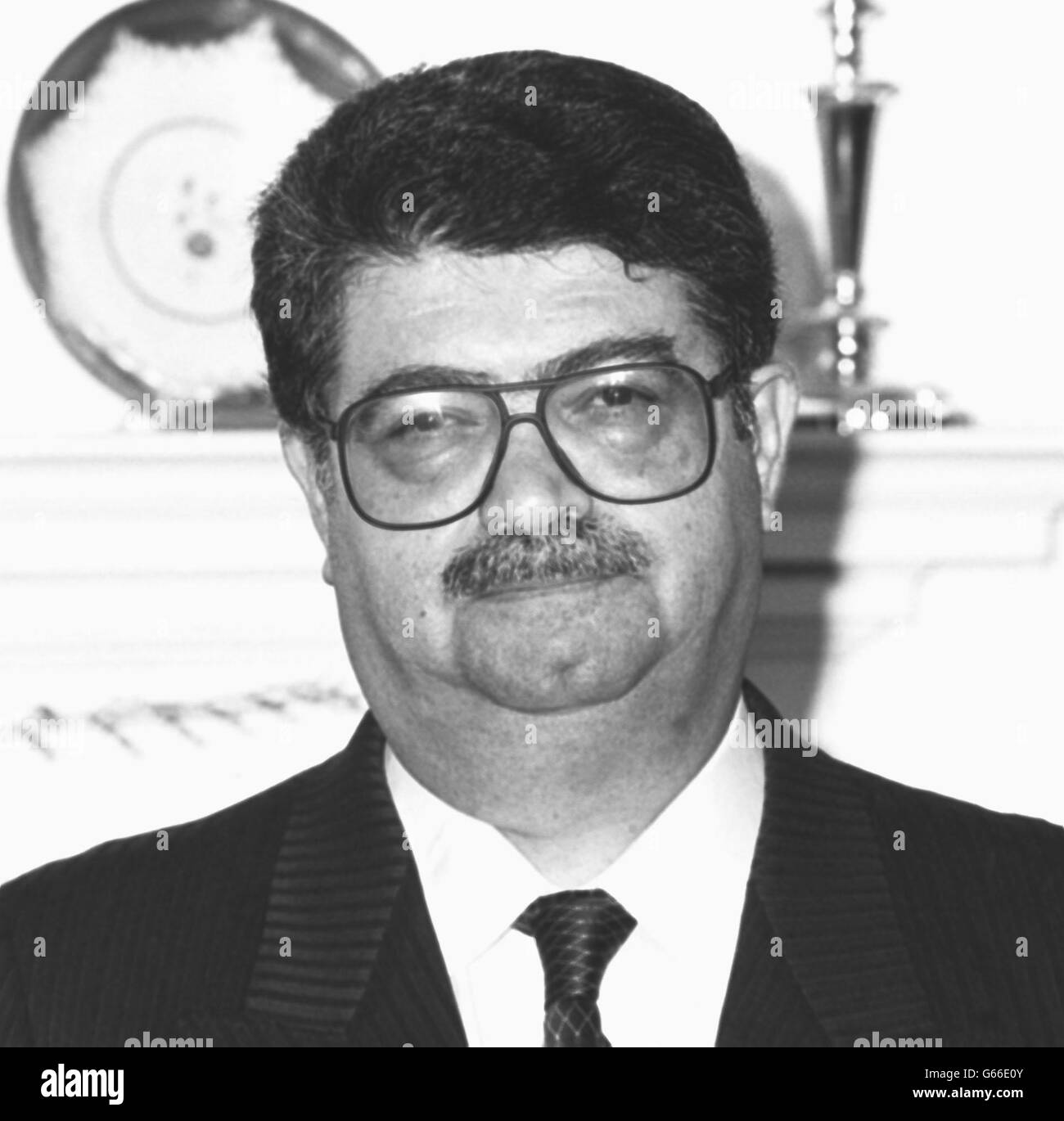
Turgut Özal
 Turkey
Birthday
+1927-10-13
Birth Sign
Libra
Birthplace
Malatya
Age
Died at 65
About
Halil Turgut Özal, born in Malatya on October 13, 1927, was a distinguished Turkish politician, engineer, and statesman. He played a pivotal role in shaping modern Turkey's economic and political landscape, first as prime minister and later as president. Özal's career began in engineering and bureaucracy. After a stint at the World Bank and lecturing at a university, he entered the political arena. He rose through the ranks, serving as a chief negotiator for a miners' union and later as an undersecretary to Prime Minister Süleyman Demirel. During this time, he was instrumental in developing the '24 January decisions,' a set of economic reforms that ushered in greater neoliberalism in Turkey. Following the 1980 military coup, he continued his work on economic reform as Deputy Prime Minister in Bülend Ulusu's government. He resigned in 1982 due to policy disagreements. In 1983, Özal founded the Motherland Party (ANAP) and led it to a parliamentary majority in the general election that same year, becoming prime minister. His tenure as prime minister, from 1983 to 1989, was marked by significant economic liberalization, deregulation, and efforts to manage inflation and internal conflicts. Despite facing challenges, including an assassination attempt in 1988, his party secured another parliamentary majority in the 1987 general election. His foreign policy initiatives aimed to ease tensions, notably with Greece, and facilitated emigration for Bulgarian Turks. In 1989, Özal was elected President of Turkey, serving until his death in office on April 17, 1993. During his presidency, he remained actively involved in government affairs, overseeing projects like the Atatürk Dam and fostering relations with Turkic republics and the United States.
Fame & Fandom (iFAMOUS Rankings)
Turgut Özal commands a enduring global attention that spans decades beyond his passing, anchored by his transformative role in modern Turkish history. According to the iFANN Global Fame Rankings, he holds the position of the 68th most famous person in Turkey, a standing that has remained steady from the previous cycle. His influence extends further as the 47th most famous person from Turkey, reflecting a consistent level of recognition across the nation's historical figures. These placements are part of a broader assessment of fame that tracks global attention across media coverage, search activity, and cultural consumption signals worldwide. While no formal fandom name exists for this statesman, his legacy is sustained by a dedicated political veneration rather than traditional fan clubs. Supporters, often aligned with the Motherland Party or conservative ideologies, engage in annual commemorations on the anniversary of his death and participate in scholarly re-evaluations of his economic policies. This collective memory functions as a form of reverence, keeping his narrative alive through state-sponsored events and interfaith visits to his grave. The absence of a specific fandom label does not diminish the intensity of his following; instead, it manifests as a persistent political identity where his reforms are cited as blueprints for contemporary governance.
Interesting Facts and Legends
Turgut Özal, the engineer who became a statesman, remains a figure of complex historical resonance rather than pop-culture fandom. His political supporters, lacking a formal moniker, view him as the architect of Turkey's economic liberalization, while his sudden death in 1993 spawned enduring conspiracy theories regarding poisoning that persist in public discourse. A defining moment of his resilience occurred during an assassination attempt in 1988 when he continued delivering a speech immediately after being shot. In 2026, data from the iFANN Global Fame Rankings places him as the 71st most famous person in Turkey (holding steady from the previous cycle) and the 41st most famous person from Turkey (down from 39th last cycle), reflecting his sustained prominence despite decades passing since his presidency. His legacy is further anchored by documented events such as his address at Harvard Kennedy School, which showcased his diplomatic vision on a global stage. The narrative surrounding his life blends verified policy achievements with folklore about his final days, creating a unique profile where political history and popular legend intersect without the rituals typical of entertainment celebrities.
Death & Aftermath
Died
+1993-04-17 (aged 65)
Death Place
Ankara, Turkey
Cause of Death
Cardiac arrest due to heart disease
Turgut Özal, the eighth president of Turkey, died on April 17, 1993, at his official residence in Ankara known as Çankaya Köşkü. He collapsed while attending to state duties and was transported to Cebeci Training and Research Hospital, where he was pronounced dead at approximately 09:45 AM following a massive heart attack. Official medical records attributed the cause to cardiac arrest resulting from myocardial infarction, atherosclerosis, and coronary artery disease, noting that he had experienced chest pain for several days prior to his final collapse. The public reaction to his passing was immediate and profound, characterized by nationwide mourning and tributes from international leaders including U.S.
President Bill Clinton, who described him as a man of vision. Flags were flown at half-mast for three days across Turkey, and citizens gathered in major cities such as Ankara and Istanbul to pay their respects. The sale of his memoirs and biographies saw a significant spike immediately following his death, reflecting a surge in public interest in his legacy. A state funeral was held on April 18, 1993, one day after his death, marking the highest honor available in the Republic of Turkey. His body was transported from the Presidential Complex to Cebeci Asri Cemetery in Ankara, where a large crowd of mourners, including high-ranking military officials and foreign dignitaries, gathered for a service featuring prayers and speeches delivered by Prime Minister Süleyman Demirel.
Following the service, he was buried in the family plot at the cemetery. Posthumously, the Turgut Özal Foundation was established to support educational and economic initiatives, and various institutions have dedicated buildings and scholarships to him, while numerous biographies and documentaries have been produced over the years analyzing his life and policies.
Awards & Accolades
Keywords
Quick Facts
- Profession
- politician, engineer
- Born
- +1927-10-13
- Birthplace
- Malatya
- Died
- +1993-04-17
- Death Place
- Hacettepe Adult Hospital
- Gender
- Male
- Spouse
- Semra Özal
- Birth Sign
- Libra
Personal Details
- Spouse
- Semra Özal
Join the community
fans discussing