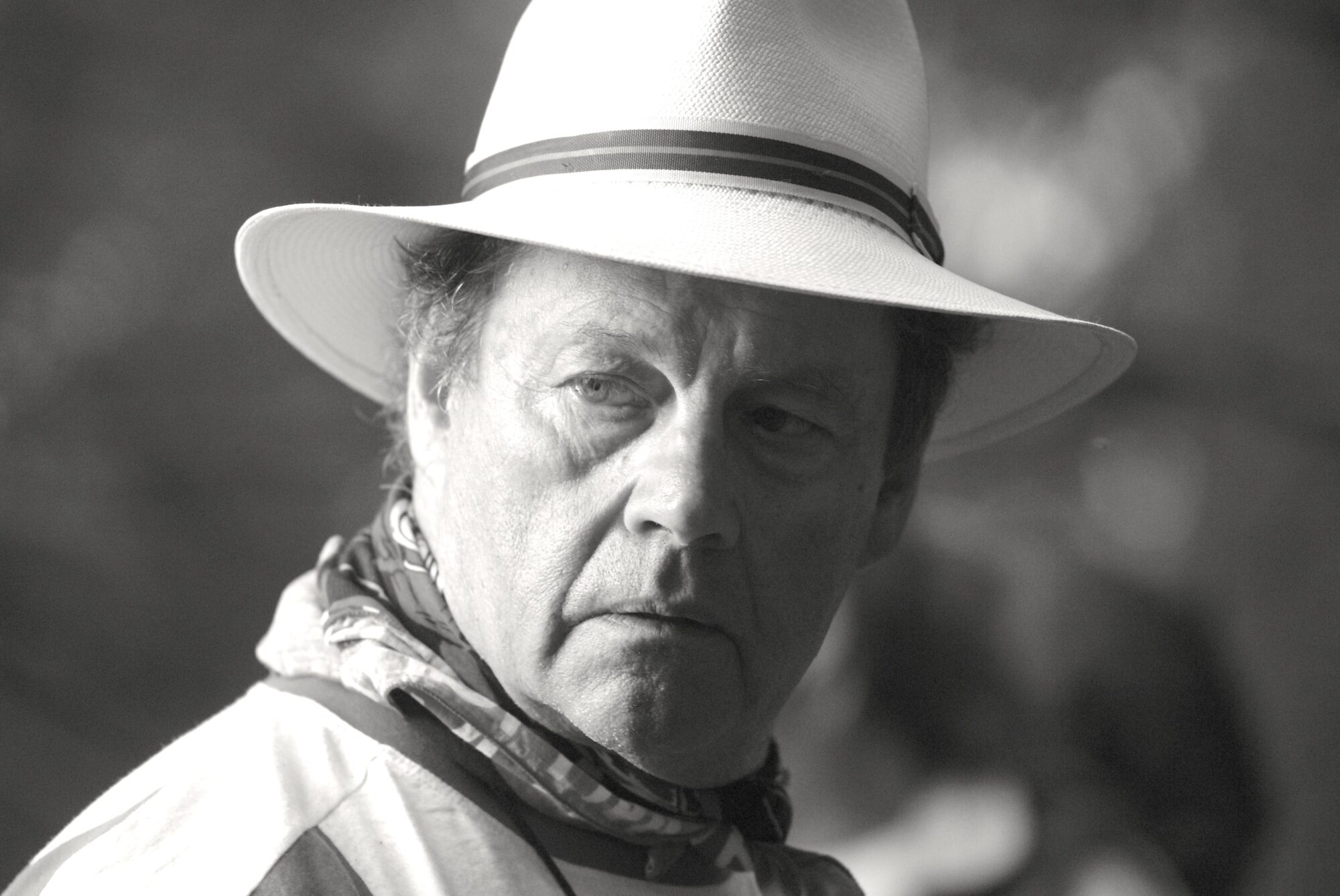
Bruce Beresford
 Australia
film director•screenwriter•film producer
Birthday
August 16, 1940
Birth Sign
Leo
Birthplace
Paddington, New South Wales, Australia
Age
86 years old
About
Bruce Beresford is an Australian film director, screenwriter, and producer whose career spans more than five decades and over thirty feature films. Born in Sydney, he became a key figure of the Australian New Wave before finding international acclaim in Hollywood. His 1989 film Driving Miss Daisy won four Academy Awards, including Best Picture, cementing his place in cinema history.
Beresford has earned two personal Oscar nominations: one for Best Adapted Screenplay for Breaker Morant (1980) and another for Best Director for Tender Mercies (1983). He has also directed stars like Robert Duvall, Jessica Tandy, Morgan Freeman, and Eddie Murphy. His other notable works include Crimes of the Heart, Black Robe, Double Jeopardy, and Ladies in Black.
Beyond film, Beresford has directed operas and remains active in the arts. As of 2026, he continues to be celebrated as a living legend of Australian cinema.
Early Life & Background
Bruce Beresford grew up in Toongabbie, then an outer-western suburb of Sydney, after being born in Paddington in 1940. His father Leslie sold electrical goods, and his mother Lona (née Warr) raised the family. He attended The Meadows Public School before moving to The King's School, Parramatta, where his interest in filmmaking first took root. As a teenager, he made several short films, including The Hunter (1959).
At the University of Sydney, Beresford studied English and graduated in 1964. During his time there, he made short films like The Devil to Pay (1962) starring John Bell, and It Droppeth as the Gentle Rain (1963), co-directed with Albie Thoms and featuring Germaine Greer. He also acted in the drama society alongside future luminaries Clive James and Madeleine St John.
After graduation, Beresford moved to England but struggled to break into the British film industry. He took an editing job in Enugu, Nigeria, where he worked for two years. Returning to England, he served as Film Officer for the British Film Institute's Production Board from 1966 to 1971, producing short films by first-time directors. He also directed the documentary Lichtenstein in London (1968) about artist Roy Lichtenstein.
Career Growth
Beresford's feature debut, The Adventures of Barry McKenzie (1972), which he co-wrote with Barry Humphries, was a hit in Australia and spawned a sequel. He followed with Don's Party (1976), winning the AFI Award for Best Director, and then Breaker Morant (1980), which earned him an Oscar nomination for Best Adapted Screenplay.
His Hollywood debut, Tender Mercies (1983), starring Robert Duvall, brought another Oscar nomination, this time for Best Director. In 1989, Driving Miss Daisy won four Oscars, including Best Picture, though Beresford himself was not nominated for directing. He later joked, "I didn't think it was that well directed. It was very well written."
Throughout the 1990s and 2000s, Beresford directed a range of films, from the historical drama Black Robe (1991) to the thriller Double Jeopardy (1999) with Ashley Judd. He returned to Australia for Mao's Last Dancer (2009) and Ladies in Black (2018). He also directed TV movies like Flint (2017) and episodes of Bonnie & Clyde (2013) and Roots (2017).
Career Timeline
Public Image & Style
Beresford is known for his literary adaptations and his ability to draw nuanced performances from actors. His films often explore themes of identity, justice, and cultural clash. He is respected in the industry for his craftsmanship and his willingness to tackle diverse genres, from comedy to drama to thriller.
Fans and critics alike admire his Australian sensibility, which he has carried into his international work. He is seen as a mentor figure in Australian cinema, inspiring younger filmmakers with his longevity and versatility.
Fame & Fandom (iFAMOUS Rankings)
Bruce Beresford, the Australian director behind Driving Miss Daisy and Breaker Morant, has been evaluated by iFANN's Global Fame Engine but currently holds no placement in its published rankings, whether the Global Top 1,000 or any Top-100 scope list. His fame, while substantial in cinematic circles, does not translate into the broad global recognition that the rankings measure. Instead, his standing is that of a respected elder statesman of Australian cinema, a figure more lionized by critics and historians than by the general public.
His fanbase, such as it is, has no formal name. Unlike the devoted followings of some auteurs, Beresford's admirers form a diffuse community of film enthusiasts, academics, and lovers of literary adaptation. They are not organized into clubs or conventions, and there are no documented fan campaigns or rituals. The lack of a formal fandom is consistent with his reputation as a craftsman's craftsman, a director who draws extraordinary performances and tells stories with quiet power, rather than one who inspires fervent devotion.
Beresford's legend, however, is secure. The story of Robert Duvall's Oscar-winning performance in Tender Mercies is a tale fans and critics still tell, a reflection of his ability to elicit profound work from actors. And Driving Miss Daisy's Best Picture win, with its attendant controversy, remains a talking point in Oscar lore. As the Australian New Wave's most successful yet least celebrated director, his legacy is one of quiet endurance.
Interesting Facts and Legends
Bruce Beresford's career is studded with interesting facts and legendary moments. He directed the opera Elektra for the State Opera Company of South Australia, which won the Best Opera Production of 1991 award, and has staged Girl of the Golden West for the Spoleto Festival and Sweeney Todd for the Portland Opera. He contributes to Spectator Australia and maintains an official website at bruceberesford.org.
One of the most retold stories from his career is the making of Tender Mercies (1983), in which he directed Robert Duvall to his only Academy Award for Best Actor. The performance is widely regarded as one of the most restrained and emotionally devastating in American film, and the film's modest budget and unknown cast make the achievement all the more remarkable.
Another iconic moment is the Best Picture win for Driving Miss Daisy (1989), which beat out Born on the Fourth of July, Dead Poets Society, Field of Dreams, and My Left Foot, a controversial decision that remains a topic of debate in Oscar history. Notably, Beresford himself was not nominated for Best Director that year, an omission that has become part of the film's legend.
Notable Quotes
“I didn't think it was that well directed. It was very well written. When the writing's that good, you've really just got to set the camera up and photograph it.”
Family & Personal Life
Bruce Beresford married Virginia Duigan in 1985. The couple has two children, including a daughter named Cordelia. Beresford keeps his family life private, and little else is publicly known about his household. His parents, Leslie and Lona, raised him in Toongabbie, and his father sold electrical goods.
Notable Connections
Beresford has frequently collaborated with Barry Humphries, working with him on three films. He has also directed major stars including Robert Duvall, Jessica Tandy, Morgan Freeman, Tommy Lee Jones, Ashley Judd, Jane Fonda, Eddie Murphy, and Pierce Brosnan. His Australian roots connect him to actors like Bryan Brown and Jack Thompson.
Relationships & Dating History
Bruce Beresford has been married to Virginia Duigan since 1985. The couple has two children, including a daughter named Cordelia. Little is known about any relationships before his marriage, as Beresford has kept his personal life largely private. As of 2026, he remains married to Virginia.
- MarriedVirginia Duigan1985 - presentCurrentMarried since 1985; the couple has two children.
Salary, Net Worth In 2026
$10 Million
iFANN Editorial Team estimate
iFANN currently estimates Bruce Beresford's net worth at $10 million. His wealth stems primarily from a directing career spanning over five decades and more than thirty feature films, along with screenwriting and producing credits. While not a star performer, his consistent work in Hollywood and Australia has provided a steady income. His most commercially successful film, Double Jeopardy (1999), grossed over $177 million worldwide, significantly boosting his earnings. Other hits like Driving Miss Daisy also contributed. Beresford has earned from television work, including miniseries like Bonnie & Clyde and TV movies such as Flint. His opera directing, while less lucrative, adds to his diverse portfolio. He has not been known for major real estate holdings or endorsement deals, keeping his financial profile relatively modest compared to A-list actors.
Awards Won (13)
Bruce Beresford has won multiple AACTA/AFI Awards, including Best Direction for Don's Party (1976) and Breaker Morant (1980), as well as Best Screenplay for Breaker Morant and The Fringe Dwellers (1986). He also won a Genie Award for Best Direction and an APRA Award. His opera direction of Elektra earned the Best Opera Production of 1991.
1984
Tender Mercies
1990
Driving Miss Daisy
Known For
Driving Miss Daisy
1989 · Director
Breaker Morant
1980 · Director, Screenwriter
Tender Mercies
1983 · Director
Double Jeopardy
1999 · Director
Mao's Last Dancer
2009 · Director
Keywords
Sources
Quick Facts
- Profession
- film director, screenwriter, film producer
- Born
- August 16, 1940
- Birthplace
- Paddington, New South Wales, Australia
- Gender
- Male
- Spouse
- Virginia Duigan
- Birth Sign
- Leo
Personal Details
- Spouse
- Virginia Duigan
- Children
- Cordelia Beresford
- Education
- University of Sydney (BA in English)
Filmography
30
Total
28
Film
2
TV
Frequently Asked Questions
What is Bruce Beresford's most famous film?
Did Bruce Beresford win an Oscar?
Is Bruce Beresford still alive?
Who is Bruce Beresford married to?
What was Bruce Beresford's first film?
Join the community
fans discussing