
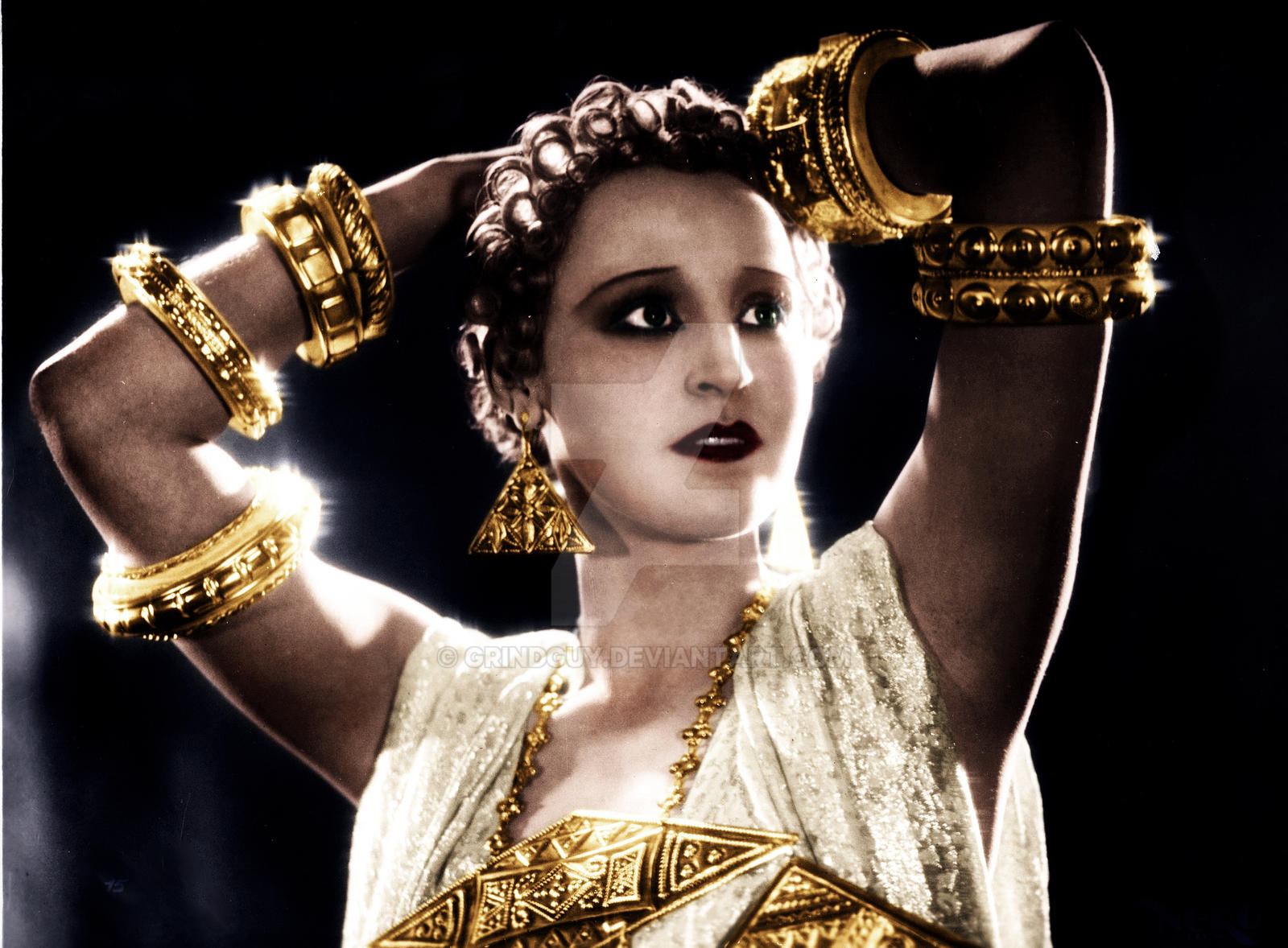
Brigitte Helm
 Germany
Also known as: Brigitte Eva Gisela Schittenhelm, Brigitte Schittenhelm
Birthday
March 17, 1906
Birth Sign
Pisces
Birthplace
Berlin, Germany
Age
Died at 90
About
Brigitte Helm was a German film actress, born Brigitte Eva Gisela Schittenhelm, and the performer behind the most reproduced image in silent cinema: the gleaming robotic double in Fritz Lang's Metropolis (1927). She made roughly 30 features across a decade and then walked away from the screen entirely by 1936, at around 30 years old. That early exit is part of why she remains a fixed point in film history rather than a fading name. She never gave audiences a late-career comeback or a talk-show reinvention. The body of work is compact, and it is still being watched.
Her dual turn as the gentle prophet Maria and the cold Maschinenmensch is the role that defines her, but she was not a one-film curiosity. She worked with G.W. Pabst and Abel Gance, moved successfully into sound pictures, and held her own in the Weimar era's most ambitious productions. Then the Nazi seizure of power ended the career. Helm, who had Jewish ancestry through her father, left Germany in 1933 and settled in Switzerland, where she raised four children and stayed for the rest of her life. She died in Ascona on June 11, 1996, at 90, having spent six decades refusing almost every interview request sent her way.
Early Life & Background
Brigitte Eva Gisela Schittenhelm was born in Berlin on March 17, 1906, the daughter of a Prussian Army officer. She grew up in a comfortable, conservative bourgeois household, the kind of Berlin family that valued order and respectability, and nothing in the surviving record suggests a childhood spent dreaming of the stage. There were no drama schools, no provincial theatre tours, no years of grinding apprenticeship. By most accounts she had no formal acting training at all when she arrived in front of Fritz Lang's camera.
She was still a teenager, 18 or 19 depending on which birth year you trust, when she was cast in Metropolis. The story that has come down is a casting search: Lang and his producers ran a wide hunt for the right face to play Maria, and Helm was discovered through it. Whether that discovery was a single audition or a longer process is not well documented, and she never gave a detailed account of it herself. What is clear is how abrupt the leap was. One moment she was an unknown Berlin teenager with no credits. The next she was inside UFA's most expensive and technically ambitious production, a shoot that ran for months and demanded physical endurance as much as performance.
That absence of a stage background may explain something about her screen presence. She arrived without habits, without a repertoire of gestures borrowed from the theatre. What she had was a face that photographed with unusual clarity and a willingness to submit to the punishing mechanics of Lang's set. The moment just before the breakthrough, then, is not a story of struggle and near-misses. It is a story of a door opening once and a young woman walking straight through it into the middle of Weimar cinema's biggest gamble.
Career Growth
Metropolis premiered in Berlin in January 1927, and it was both Helm's debut and the role she would never escape. The dual part required her to play the warm, preaching Maria and then the mechanical doppelganger built to discredit her, shifting between human tenderness and machine coldness without a line of dialogue. The transformation sequence, with its rotating rings and flashing light, was physically brutal, and she spent long hours in heavy costume and metallic makeup. Critics at the time were divided on the film. They were not divided on her.
Work came quickly after that. She appeared in G.W. Pabst's Die Liebe der Jeanne Ney in 1927, then took the title role in Alraune (1928), playing the artificial woman grown from a mandrake root. Abel Gance cast her in L'Argent the same year, a production that put her in front of an international audience. She navigated the transition to sound pictures better than many of her silent contemporaries, and by 1932 she was starring in Die Gräfin von Monte Christo. The range of those credits matters: she was not simply repeating the robot.
Then politics intervened. Helm had Jewish ancestry through her father, and after the Nazi seizure of power in 1933 she left Germany for Switzerland. She made a handful of further films, with her final screen appearance in 1936, and then stopped outright. She was roughly 30. She did not announce a retirement tour or stage a farewell performance. She simply closed the door, and the filmography stayed frozen at around 30 features, with no television work ever added to it.
Career Timeline
Public Image & Style
On screen Helm projected something unusual for the Weimar era: a face that could turn from radiant warmth to blank machinery in a single cut. That duality became her signature, and it shaped how audiences saw her long after Metropolis. She was photographed often in the late 1920s, usually with the sharp, sculpted styling of the period, and the robot Maria image became one of the most reproduced stills in film history, printed on posters, album covers and academic monographs for close to a century.
Off screen she built the opposite reputation. Helm gave few interviews even at her commercial peak, and after 1936 she refused nearly all of them. The press learned to describe her as reclusive, and the word stuck. That contrast, the mechanical icon and the woman who vanished, is the core of her public image. She never cultivated a persona, never wrote a memoir, never sat for a retrospective documentary. What the public has is the work and the silence around it.
Fame & Fandom (iFAMOUS Rankings)
iFANN has not yet collected fame data for Brigitte Helm, so no placement in the Global Fame Rankings is published for her at this time. She is not on the September 2026 iFAMOUS Rankings flagship list either. That absence says more about the limits of contemporary attention metrics than about her standing. Fame of the kind iFANN measures, worldwide search interest and readership across public signals, tends to reward the living and the currently active. Helm has been dead since 1996 and gave her last performance in 1936.
What she has instead is a durable, slow-burning kind of recognition. Her fanbase has no formal name, no organized campaigns, no birthday billboards. It is dispersed and generational: film students encountering Metropolis for the first time in a survey course, silent-film devotees who argue over the various restorations, science-fiction readers who trace the robot Maria forward into C-3PO and the replicants. On Facebook, tribute pages post her stills regularly. On YouTube, retrospectives and scene breakdowns of the transformation sequence collect comments from viewers startled that a 1927 film could look like that.
The relationship between Helm and this audience is one-sided by necessity. She spent six decades declining to engage with admirers, and there is no archive of fan letters she answered or conventions she attended. What fans do instead is keep the work in circulation, which is arguably the form of devotion she would have preferred. The image endures. The woman stayed out of the frame.
Interesting Facts and Legends
The birth year is a mess. Plenty of fan pages and Facebook tribute posts still list 1908, while the authoritative reference sources settle on March 17, 1906. The confusion has followed her for decades and shows no sign of dying.
She had no formal acting training and no stage career before Metropolis. Lang reportedly found her through the wide casting search he ran for the Maria role, and she went from unknown Berlin teenager to the center of Weimar cinema's most expensive production in one step.
A search suggestion linking her to a car accident has no support in reliable sources and should be treated as unfounded. Nor is she the Brigitte of the Stallone marriage headlines, and the 2026 obituary for a Brigitte West in Stockton, California, concerns an entirely different woman.
The legend fans retell most often is the irony itself: the actress who gave cinema its most famous machine became one of its most reclusive retirees, refusing interviews and retrospectives for six decades while the robot outlived everyone's expectations.
Family & Personal Life
Helm was the daughter of a Prussian Army officer, and she grew up in a comfortable, conservative Berlin household. She guarded the rest of her family background closely and gave interviewers almost nothing to work with on the subject.
In 1928 she married Rudolf Uhlhorn, a German industrialist, and the couple later settled in Switzerland after her emigration in 1933. They had four children together. The marriage ended in divorce in 1945, and she never remarried. After her retirement from films she devoted herself to her family, to charitable work and to religious observance, living quietly in Ascona on Lake Maggiore for the rest of her life. Her children stayed out of the public eye, and no family member has spoken at length about her private years.
Notable Connections
Relationships & Dating History
Helm kept her private life almost entirely out of the papers, so the documented record is short. In 1928, at the height of her fame following Metropolis, she married Rudolf Uhlhorn, a German industrialist. The match fit the pattern of a conservative bourgeois background and a career she was already beginning to treat as finite. The couple had four children together.
When Helm left Germany in 1933, the family settled in Switzerland, and Uhlhorn's business interests kept them financially comfortable through the war years. The marriage did not last. The couple divorced in 1945, and Helm never remarried. Reliable sources record no other confirmed public relationships, no engagements, and no rumoured high-profile pairings. Her retirement from films coincided with a broader withdrawal from public life, and she gave interviewers nothing to work with on the subject of romance.
At the time of her death in 1996, she was divorced and had been living alone in Ascona, Switzerland, for many years.
- MarriedRudolf Uhlhorn1928 - 1945German industrialist; the couple had four children and settled in Switzerland after her 1933 emigration. They divorced in 1945, and she never remarried.
Death & Aftermath
Died
June 11, 1996 (aged 90)
Death Place
Ascona, Ticino, Switzerland
Cause of Death
Natural causes at age 90 (no specific cause officially disclosed)
Brigitte Helm died on June 11, 1996, in Ascona, the lakeside town in the Swiss canton of Ticino where she had lived quietly for more than half a century. She was 90. No detailed medical cause was ever made public; the record simply shows a death at an advanced age, and her family kept the final years as private as the rest of her retirement. There was no open funeral spectacle, no celebrity procession through the streets of Ascona. That was entirely in keeping with a woman who had spent six decades declining interviews, retrospectives and almost every request that would have put her face in front of a camera again.
What followed instead was the slower, quieter kind of aftermath that film history specializes in. Obituaries in the German and international press fixed her place in the record as the actress who had played cinema's most famous machine. Film historians used the occasion to restate the obvious: that Metropolis had survived its own troubled history, its missing footage, its multiple reconstructions, and that the restored versions released in the decades after her death kept her work in active circulation. The 2010 discovery of a near-complete print in Buenos Aires, and the restoration that followed, put her image back on screens worldwide. Her face, once again, was the face of the future.
No posthumous awards were created in her name, and no foundation or charitable trust was established publicly at her death. Her four children, the family she had raised with Rudolf Uhlhorn in Switzerland, remained out of the public eye. The tributes that matter here are the retrospective ones: cinematheques programming Alraune and Die Liebe der Jeanne Ney, critics returning to the argument that she was more than a single iconic role, and the steady stream of film-heritage pages and YouTube retrospectives that introduced her to viewers born long after she stopped acting.
Net Worth (Estate Value)
$1 Million
iFANN Editorial Team estimate
Brigitte Helm's estate is modest by any modern celebrity standard. The iFANN Editorial Team's review of her career earnings, residual income and known assets points to roughly $1 Million as the current value of her estate. That figure reflects a career that ended in 1936, decades before home video, streaming or the licensing economy that now sustains the estates of silent-era stars.
Her earning years were brief and concentrated. Weimar-era film contracts paid well by the standards of the day, and her marriage to the industrialist Rudolf Uhlhorn brought financial security that made a second career unnecessary. When she retired at roughly 30, she did not leave behind a library of hit films generating ongoing royalties. She left behind a filmography that was, for much of the twentieth century, difficult to see and unevenly preserved.
The financial afterlife of Metropolis is the interesting part. Restorations in 1984, 2001 and especially 2010, when a near-complete print turned up in Buenos Aires, created new licensing opportunities for home video, theatrical re-release and streaming. Those revenues flow to the rights holders, the archives and the production companies rather than to Helm's heirs in any large measure, and her estate has never been the subject of a public catalog sale or a high-profile legal dispute. The family has kept its financial affairs private, as it kept everything else.
What the estate holds, more than cash, is a cultural asset: the image of the robot Maria, reproduced on posters, book covers and museum walls for nearly a century. That kind of recognition does not translate into a large balance sheet. It does keep her name in circulation, which for an actress who spent sixty years refusing publicity is its own kind of return.
Awards & Accolades
View 2 records, honours and achievementsKnown For
Metropolis
1927 · Maria / the Maschinenmensch
Alraune
1928 · Alraune
Die Liebe der Jeanne Ney
1927 · Jeanne Ney
L'Argent
1928 · Role in Abel Gance's epic
Die Gräfin von Monte Christo
1932 · Title role
Keywords
Sources
Quick Facts
- Profession
- film actress
- Full Birth Name
- Brigitte Eva Gisela Schittenhelm
- Born
- March 17, 1906
- Birthplace
- Berlin, Germany
- Died
- June 11, 1996
- Death Place
- Ascona, Switzerland
- Age at Death
- 90
- Gender
- Female
- Birth Sign
- Pisces
- Spouse
- Rudolf Uhlhorn (m. 1928, div. 1945)
- Children
- 4
- Film Credits
- About 30 features, no television work
Personal Details
- Full Name
- Brigitte Eva Gisela Schittenhelm
- Spouse
- Rudolf Uhlhorn (m. 1928, div. 1945)
- Children
- 4
Filmography
30
Total
30
Film
0
TV
Frequently Asked Questions
Who was Brigitte Helm?
What was Brigitte Helm's role in Metropolis?
How many children did Brigitte Helm have?
Why did Brigitte Helm retire from acting?
How did Brigitte Helm die?
Similar People
Join the community
fans discussing