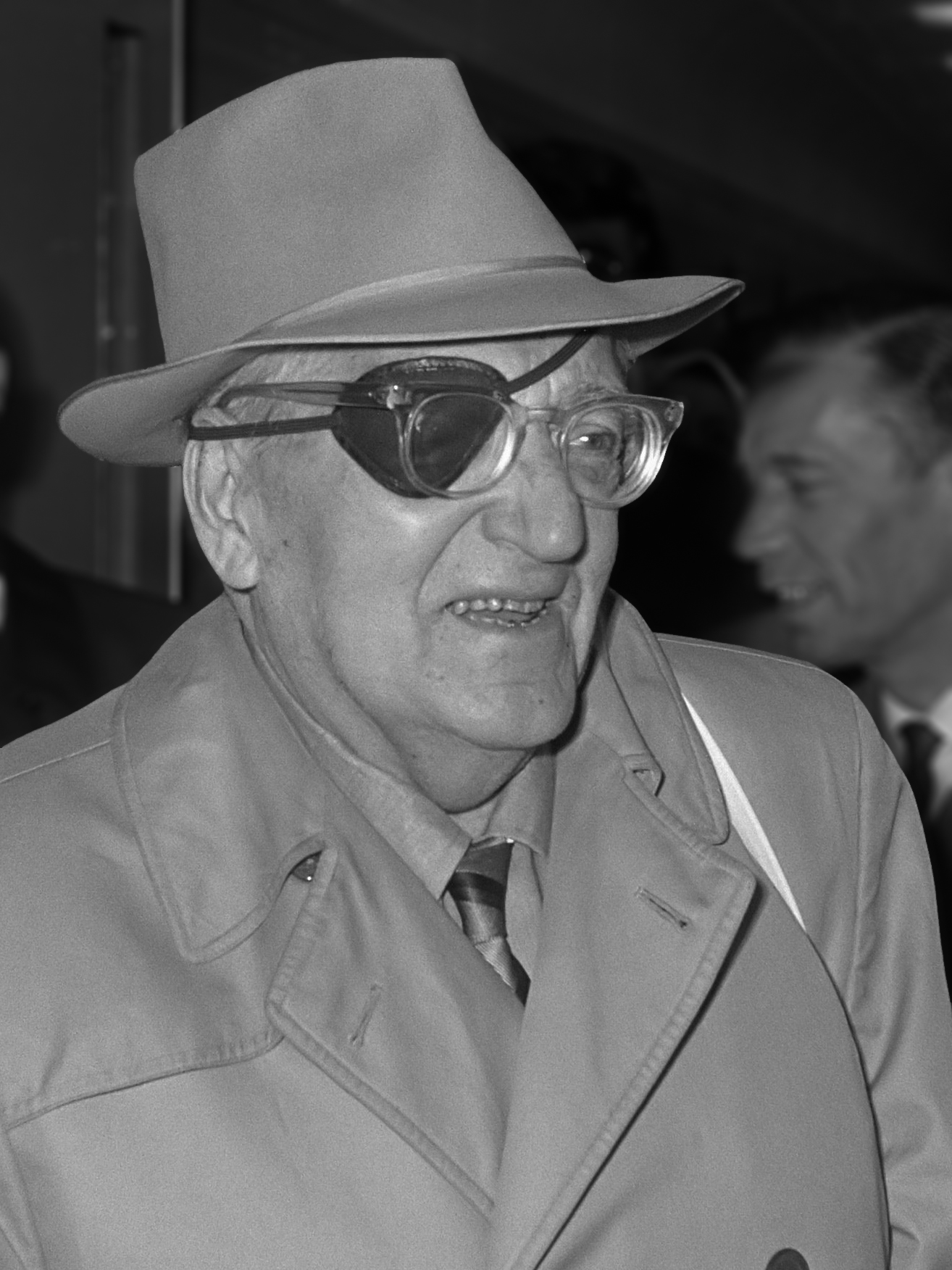
Fritz Lang
 Germany
film director•screenwriter•actor
Birthday
+1890-12-05
Birth Sign
Sagittarius
Birthplace
Vienna
Age
Died at 85
About
Fritz Lang, born Friedrich Christian Anton Lang on December 5, 1890, in Vienna, was an Austrian film director, screenwriter, and producer whose career stretched across five decades and two continents. He first made his mark in Germany's Expressionist cinema of the 1920s, then fled to the United States in 1934, where he became a naturalized citizen in 1939. The British Film Institute dubbed him the "Master of Darkness," a fitting title for a filmmaker who explored the shadows of human nature and society. Lang's influence is immense; his visual style and thematic preoccupations have shaped generations of directors, from Alfred Hitchcock to Jean-Luc Godard. Lang's German period produced some of the most celebrated films in cinema history. The science-fiction epic Metropolis (1927) imagined a dystopian future with towering skyscrapers and a divided society, and its imagery remains iconic. M (1931), starring Peter Lorre as a child murderer, is considered a precursor to film noir and a masterclass in suspense. His 1929 film Woman in the Moon not only showcased a multi-stage rocket but also pioneered the rocket launchpad and the countdown clock, details that would later become standard in real spaceflight. Other major works from this era include Dr. Mabuse the Gambler (1922), Die Nibelungen (1924), and The Testament of Dr. Mabuse (1933), the latter banned by the Nazis, prompting Lang's departure for Hollywood. In America, Lang directed a string of hard-hitting films that often critiqued injustice and corruption. Fury (1936) tackled mob violence and miscarriage of justice, while You Only Live Once (1937) starred Henry Fonda as a fugitive. During World War II, he made Hangmen Also Die! (1943), a resistance drama about the assassination of Reinhard Heydrich. His later noirs, including The Woman in the Window (1944) and Scarlet Street (1945), delved into obsession and guilt, and The Big Heat (1953) became a classic of the genre with its brutal revenge storyline. Lang returned to Germany in the late 1950s, directing a two-part adaptation of his ex-wife Thea von Harbou's novel The Indian Tomb, and a third Dr. Mabuse film in 1960, closing the circle. He died on August 2, 1976, in Beverly Hills, leaving behind a body of work that spans over 40 films, a legacy of darkness and innovation that continues to resonate.
Fame & Fandom
Fritz Lang commands a vast, enduring global attention that transcends the boundaries of his era, anchoring him as a foundational pillar of cinema history. Despite this monumental legacy, iFANN's Global Fame Engine has evaluated this person, but they do not currently hold a placement in the published rankings (Global Top 1,000 or a Top-100 scope list). While he remains a critical touchstone for directors from Alfred Hitchcock to Jean-Luc Godard, his current standing does not register within the active numerical hierarchy of the world's most famous living figures. The audience surrounding his work consists primarily of film scholars, cinephiles, and historians rather than an active, self-identified community with specific rituals or inside jokes. There is no formal name documented for his fanbase; the interaction between Lang and fans was typical of the mid-20th century, characterized by academic study and preservation efforts rather than grassroots mobilization or organized campaigns.
Interesting Facts and Legends
Born Friedrich Christian Anton Lang on December 5, 1890, in Vienna, this Austrian filmmaker created a visual style that shaped generations of directors across two continents. His career spanned five decades, moving from Germany's Expressionist cinema to Hollywood, where he became a naturalized citizen in 1939 after fleeing the rising tide of Nazism. A defining moment in his life involved his dramatic departure from Germany in 1933; upon learning that his wife, Thea von Harbou, had remained behind due to her Nazi Party membership, Lang fled to Paris and subsequently to the United States, never returning to Europe. This escape symbolizes the flight of artistic freedom from totalitarianism and remains a widely retold story of his career. The cultural mythology surrounding Lang is deeply rooted in his 1927 silent epic Metropolis, which recently cemented its place in science fiction lore by predicting a world that looks eerily similar to our own. A notable legend surrounds the film's restoration; for decades, significant portions were lost, leading to various reconstruction efforts. In 2026, a live cinematic concert tour of Metropolis in the UK brought the film back to the forefront of public consciousness by presenting it as an immersive experience. Additionally, a New York Times feature discussed the restoration of his silent epic Die Nibelungen, emphasizing the importance of hearing the film with the musical treatment Lang originally intended in Vienna, reinforcing the narrative of his precise, obsessive vision.
Death & Aftermath
Died
+1976-08-02 (aged 85)
Death Place
Unknown
Cause of Death
Unknown
Awards & Accolades
Keywords
Quick Facts
- Profession
- film director, screenwriter, actor
- Born
- +1890-12-05
- Birthplace
- Vienna
- Died
- +1976-08-02
- Death Place
- Beverly Hills
- Gender
- Male
- Spouse
- Thea von Harbou, Lily Latté, Lisa Rosenthal
- Birth Sign
- Sagittarius
Personal Details
- Spouse
- Thea von Harbou, Lily Latté, Lisa Rosenthal
Join the community
fans discussing