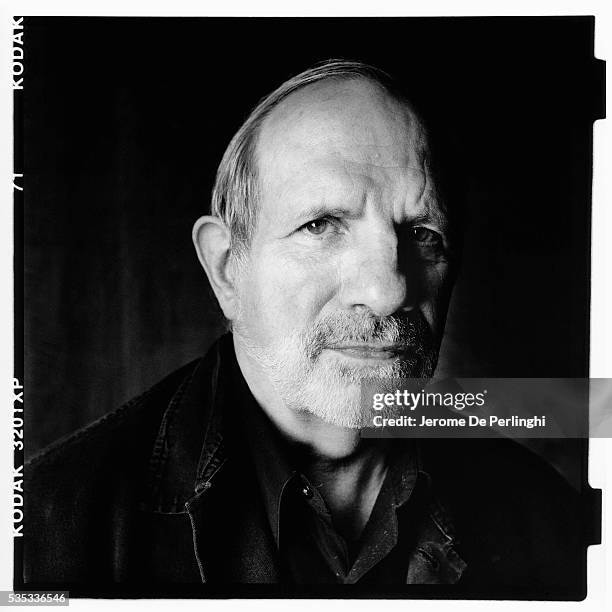
Brian De Palma
 United States
film director•screenwriter•producer
Birthday
September 11, 1940
Birth Sign
Virgo
Birthplace
Newark, New Jersey, USA
Age
86 years old
Height
5 ft 10 in (178 cm)
About
Brian De Palma is an American filmmaker who became a defining voice of the New Hollywood generation. Over more than five decades, he has directed over 30 films, mastering suspense, crime, and psychological thrillers. His 1976 adaptation of Stephen King's Carrie launched him into prominence, showcasing his flair for stylized horror. De Palma followed with commercial hits like Dressed to Kill (1980), The Untouchables (1987), and Mission: Impossible (1996), while also crafting cult classics such as Scarface (1983), Phantom of the Paradise (1974), and Sisters (1972).
As a young director, De Palma aspired to be the "American Jean-Luc Godard," and his work is known for its cinematic allusions. He paid homage to Alfred Hitchcock in Obsession (1976), Dressed to Kill, and Body Double (1984). Blow Out (1981) riffs on Michelangelo Antonioni's Blowup, while Scarface, a remake of Howard Hawks' 1932 film, is dedicated to Hawks and Ben Hecht. His style, marked by split-screen techniques and elaborate tracking shots, often drew criticism for its violence and sexual content but found champions in critics like Roger Ebert and Pauline Kael.
De Palma's Carrie was inducted into the National Film Registry by the Library of Congress, and in 2015 he was the subject of a well-received documentary by Noah Baumbach. Despite controversies, his influence on modern thriller and horror filmmaking remains undeniable.
Early Life & Background
Brian De Palma grew up in a middle-class Italian-American household in Philadelphia and later New Hampshire. His father, an orthopedic surgeon, and his mother, a homemaker, encouraged his early interest in science. As a child, he was a self-described "science nerd" who built model rockets and planned to become a physicist. His father's medical practice exposed him to the human body, which later influenced his graphic film style.
At Columbia High School in Maplewood, New Jersey, De Palma first discovered filmmaking. He went on to earn a bachelor's degree in physics from Columbia University in 1962, but his passion shifted to cinema after seeing Alfred Hitchcock's Vertigo and the French New Wave films of Jean-Luc Godard. He enrolled at the Sarah Lawrence College film program, where he made his first short films. His first short, Icarus (1960), was a 16mm student project. A pivotal moment came in 1963 when he won a prize at the National Student Film Festival for his short The Wedding Party, which starred a young Robert De Niro. He then worked as an assistant to filmmaker and critic Andrew Sarris, deepening his understanding of auteur theory. His first feature, Murder à la Mod (1968), was a low-budget independent thriller shot for $40,000.
Career Growth
De Palma's adaptation of Stephen King's Carrie (1976) was his commercial and critical breakthrough. Made for $1.8 million, it grossed over $33 million worldwide and earned Academy Award nominations for Sissy Spacek and Piper Laurie. The film established his signature style of split-screen, slow-motion, and elaborate tracking shots.
In the 1980s, Dressed to Kill (1980) grossed $31 million on a $6.5 million budget, while Scarface (1983) initially divided critics but became a cult classic and later a hip-hop cultural touchstone. The Untouchables (1987) was his biggest critical success, earning Sean Connery an Academy Award and grossing $106 million worldwide. Mission: Impossible (1996) was his highest-grossing film, earning $457 million globally. Later films like Mission to Mars (2000), Femme Fatale (2002), The Black Dahlia (2006), and Passion (2012) received mixed reviews. His 2019 film Domino was released to limited audiences.
Career Timeline
Public Image & Style
De Palma is known for his highly stylized, visually elaborate filmmaking. His signature techniques include split-screen, long tracking shots (often called "De Palma shots"), slow-motion sequences, and graphic violence. His films often feature voyeuristic themes, doppelgängers, and Hitchcockian suspense. The media has often portrayed him as a controversial figure, praised for his technical virtuosity but criticized for his depiction of women and violence. He is frequently described as the "American Hitchcock" and a "master of suspense." Critics like Pauline Kael championed his work, while others dismissed him as a "style-over-substance" filmmaker. There is no official fandom name; fans are simply referred to as "De Palma fans" or "De Palma enthusiasts." Fan discussions occur on platforms like Reddit (r/briandepalma), Letterboxd, and film forums.
Fame & Fandom (iFAMOUS Rankings)
Brian De Palma cultivates a following defined by academic rigor and cinematic reverence rather than mass mobilization. His supporters, often termed cinephiles or "De Palma devotees," operate within film festivals and scholarly circles where the director's signature long takes and voyeuristic themes are dissected with intense scrutiny. Unlike modern franchise directors who foster organized fan clubs with specific monikers, De Palma lacks a formalized fandom name or infrastructure for grassroots campaigns. The rituals associated with his legacy are internal to the film community: midnight screenings of Carrie, study sessions on the opening sequence of Scarface, and debates regarding his stylistic homages to Alfred Hitchcock. His relationship with audiences remains distant; he rarely engages in public interaction, preferring that his films speak directly to viewers without the noise of red carpet press junkets. This reclusive stance has only deepened the mystique surrounding his work, turning his filmography into a subject of sustained critical discourse rather than commercial hype.
Recent cultural moments underscore this enduring influence, with institutions like the Museum of the Moving Image hosting retrospective series and Alamo Drafthouse celebrating his catalog in 2026. The folklore of De Palma is rooted in professional milestones, such as the fracturing of his partnership with Paul Schrader over Obsession, rather than physical incidents involving crowds. While no organized fan base exists to drive chart movements or viral trends, his mythos persists through the continued curation of his work by devoted scholars and festival programmers. Brian De Palma is currently not ranked in the Global Top 1,000 or any Top-100 scope list according to iFANN's August 2026 evaluation.
Interesting Facts and Legends
Brian De Palma began his journey as a physics major at Columbia University before pivoting to cinema, winning a prize at the 1963 National Student Film Festival for The Wedding Party, which featured a young Robert De Niro. His 1974 musical horror-comedy Phantom of the Paradise bombed initially but later evolved into a cult classic. Similarly, Scarface (1983) struggled at the box office, earning just $45 million against a $25 million budget, yet it exploded on home video and became a cornerstone of hip-hop culture. De Palma received three Palme d'Or nominations for Blow Out, Scarface, and Mission: Impossible, eventually winning Best Director for Femme Fatale. He also directed the music video for Paul Simon's "Graceland" and published a book of his own photography.
A central pillar of De Palma lore involves his intense creative friction with Paul Schrader during the production of Obsession; a story fans still retell about how the conflict effectively broke their friendship and severed ties permanently. Another enduring narrative frames him as the primary successor to Alfred Hitchcock, a comparison reinforced by critics calling Blow Out his most "Hitchcockian" work due to its exploration of American paranoia. This identity creates a paradox where he is celebrated for his style while simultaneously criticized for being derivative, a debate that continues to fuel discussions among film scholars today.
Notable Quotes
“I don't think of myself as a director of horror films. I think of myself as a director of suspense films.”
“The worst thing you can do is make a movie that nobody sees. That's the only sin.”
“I'm not interested in reality. I'm interested in the dream of reality.”
“Hitchcock was the master of suspense. I'm just a student.”
“The camera is a liar. It can make anything look real. That's why I love it.”
“I think Scarface is a cautionary tale. It's about the American Dream gone wrong.”
“I've always been fascinated by the idea of the double, the doppelgänger. It's a way of exploring identity.”
“The split-screen is a way of showing two things happening at once. It's a way of showing the truth.”
“I don't make movies for critics. I make movies for audiences.”
Family & Personal Life
De Palma's father was an orthopedic surgeon, and his mother was a homemaker. He has one daughter, Lola De Palma (born 1998), with his third wife, Darnell Gregorio-De Palma. He owns a townhouse in Manhattan's Upper East Side, purchased in the 1990s for $2.5 million, now valued at $8–10 million. He also owned a home in Los Angeles that was sold in 2010 for $3.2 million.
Notable Connections
De Palma frequently collaborated with actors like John Travolta, Al Pacino, Kevin Costner, Tom Cruise, and Sissy Spacek. He worked with writers David Mamet, Oliver Stone, and Paul Schrader. His frequent composer was Bernard Herrmann. He was a close friend of filmmakers Martin Scorsese and George Lucas in the 1970s.
Relationships & Dating History
De Palma married actress Nancy Allen on January 12, 1979; they met on the set of Carrie in 1975. The marriage ended in divorce in 1984, with no children. He then married film producer Gale Anne Hurd in 1985; they divorced in 1987, also without children. In 1995, he married former model and actress Darnell Gregorio-De Palma; they separated in 2006 and divorced in 2009. They have one daughter, Lola, born in 1998. He was briefly linked romantically to actress Ellen Barkin (1986–1987) and actress Jennifer Jason Leigh (1990–1991), though neither relationship was long-term. As of 2026, De Palma is single and has not been publicly linked to anyone since his divorce.
- MarriedNancy Allen1979 - 1984Met on set of Carrie in 1975; divorced in 1984; no children.
- MarriedGale Anne Hurd1985 - 1987Married in 1985; divorced in 1987; no children.
- MarriedDarnell Gregorio-De Palma1995 - 2009Separated in 2006; divorced in 2009; one daughter, Lola (born 1998).
Salary, Net Worth In 2026
$80 Million
iFANN Editorial Team estimate
iFANN currently estimates Brian De Palma's net worth at $80 Million. His wealth stems primarily from directing fees, which peaked between $2 million and $5 million per film during the 1980s and 1990s. Mission: Impossible compensated him with an estimated $5–6 million upfront plus backend points. Additional income flowed from screenwriting credits generating $500,000–$1 million per script and producing roles on projects like The Untouchables. Ongoing revenue streams include royalties from DVD sales, streaming rights, and television syndication of his extensive filmography. Real estate holdings feature a Manhattan townhouse bought in the 1990s for $2.5 million, now valued between $8 million and $10 million, alongside a Los Angeles property sold in 2010 for $3.2 million. He has further diversified his portfolio with investments in art, maintaining a collection of photography and contemporary works estimated at $5–10 million.
Awards Won (7)
De Palma won Best Director at the Cannes Film Festival for Femme Fatale (2002) and the Saturn Award for Best Director for The Untouchables (1987). He also won Best Director from the National Society of Film Critics for Blow Out (1981). His film Carrie was inducted into the National Film Registry in 2014. He received a Golden Lion for Lifetime Achievement at the Venice Film Festival in 2007.
2002 · Best Director
Femme Fatale
1987
The Untouchables
Known For
Carrie
1976 · Director
Scarface
1983 · Director
The Untouchables
1987 · Director
Mission: Impossible
1996 · Director
Blow Out
1981 · Director
Dressed to Kill
1980 · Director
Keywords
Quick Facts
- Profession
- film director, screenwriter, producer
- Born
- September 11, 1940
- Birthplace
- Newark, New Jersey, USA
- Gender
- Male
- Spouse
- Nancy Allen, Gale Anne Hurd, Darnell Gregorio-De Palma
- Birth Sign
- Virgo
- Height
- 5 ft 10 in (178 cm)
- Education
- B.S. in physics from Columbia University; studied film at Sarah Lawrence College
- Children
- 1 daughter: Lola De Palma
Personal Details
- Full Name
- Brian Russell De Palma
- Height
- 5 ft 10 in (178 cm)
- Spouse
- Nancy Allen, Gale Anne Hurd, Darnell Gregorio-De Palma
- Children
- 1 daughter: Lola De Palma (born 1998)
- Education
- B.S. in physics from Columbia University (1962); studied film at Sarah Lawrence College
Filmography
30
Total
29
Film
1
TV
Frequently Asked Questions
How old is Brian De Palma?
What is Brian De Palma's net worth in 2026?
Is Brian De Palma still making movies?
What is Brian De Palma best known for?
Who has Brian De Palma been married to?
Similar People

Join the community
fans discussing