
Borommatrailokkanat
 Thailand
Also known as: Trailok, Borommatrailokanat, Brahmatrailokanātha
Birthday
1431
Birth Sign
Capricorn
Birthplace
Phra Nakhon Si Ayutthaya
Age
Died at 57
About
Borommatrailokkanat stands as one of the most transformative monarchs in Thai history, renowned for fundamentally restructuring the Ayutthaya Kingdom's administration and military. His reign, spanning four decades from 1448 to 1488, is distinguished by the formalization of the Sakdina system, a rigid social hierarchy that defined Siamese society for centuries. As the "King of White Elephants," he symbolized divine right through his possession of rare sacred animals, cementing his legacy as a pious and powerful ruler. His strategic relocation of the capital to Phitsanulok demonstrated a unique focus on northern defense, while his architectural patronage left enduring religious monuments. Today, he remains a central figure in national identity, recognized for creating a stable bureaucratic framework that allowed the kingdom to project strength across mainland Southeast Asia.
Early Life & Background
Born in 1431 within the bustling capital of Phra Nakhon Si Ayutthaya, Borommatrailokkanat entered the world as the son of King Borommaracha IV. His early life was entirely confined to the royal court, where he received an education tailored for a future sovereign. He mastered the complexities of statecraft, the strategies of warfare, and the deep tenets of Buddhist doctrine, subjects essential for governing a realm facing constant external threats. Before ascending to the throne, he served as the governor of Phitsanulok, a critical strategic outpost on the frontier against the Lan Na Kingdom. This tenure provided him with firsthand experience in defending borders and managing a diverse population far from the capital. By the time his father died in 1448, he had already proven his capability as an administrator and leader, making his ascent to the throne a natural progression rather than a sudden surprise. His early years were marked by rigorous training that prepared him for the challenges of a unified command, teaching him the logistics of military defense and the importance of regional stability.
Career Growth
His reign began in 1448 following the death of his father, immediately setting the stage for a transformative era in Thai history. One of his first major acts was to consolidate power by shifting the administrative center of the kingdom. In 1452, he converted the former royal palace grounds into a Buddhist monastery, establishing what would become Wat Phra Si Sanphet, a site of immense religious and political significance. However, his most significant career milestone was the relocation of the capital to Phitsanulok in the mid-1460s. This move placed the king closer to the northern frontiers where he could better command military forces against the Lan Na Kingdom, which he successfully subdued and brought under Ayutthayan influence. His reign is most famous for the comprehensive administrative reforms known as the Sakdina system. Formalized during his rule, this system created a rigid social hierarchy based on land rights and rice yields, effectively restructuring the entire society and bureaucracy of Siam. This system became the foundation of Thai social stratification for centuries. His military campaigns expanded Ayutthaya's territory and secured its position as the dominant power in mainland Southeast Asia.
Career Timeline
Public Image & Style
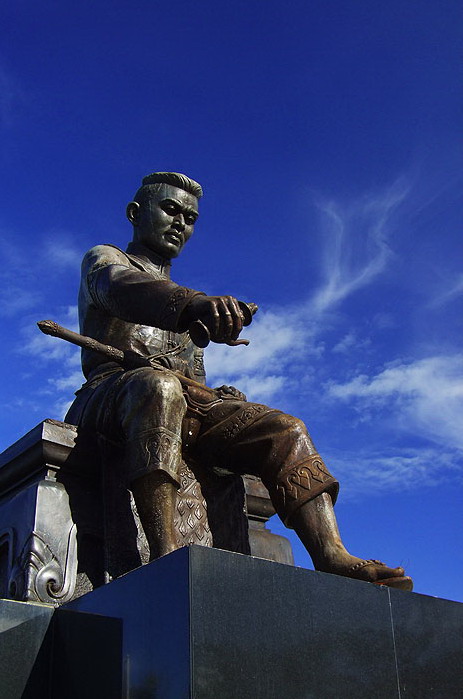
Borommatrailokkanat is portrayed in Thai culture as a wise, pious, and strong ruler. He is the archetype of the "Dharmaraja" (Righteous King), a monarch who rules by law and virtue. His image is one of stability and order, contrasting with the more warlike reputations of some of his successors. Artistic depictions generally show him in traditional royal regalia, including the mongkut (crown) and silk robes, symbolizing his divine authority. His legacy is maintained through educational curricula, temple visits, and historical commemorations rather than fan clubs or social media trends. He is consistently ranked among the most important monarchs in Thai history, often cited alongside Ramathibodi I and Naresuan as a pillar of the Ayutthaya dynasty.
Fame & Fandom
Borommatrailokkanat commands a reverence that transcends the modern noise of celebrity culture. There is no fan club with a formal name, no midnight vigils outside a palace, and no social media campaigns trending under his royal title. His audience consists not of adoring fans but of historians, students, and citizens who recognize the architectural and legal bedrock he laid for Thailand five centuries ago. The stories surrounding him are not viral moments but verified chapters of statecraft, from his ownership of sacred white elephants to the rigid sakdina hierarchy that structured Siamese society for generations. This enduring legacy ensures his presence in global consciousness remains steady, anchored by historical necessity rather than pop-culture fleetingness. Despite the distance of time, his standing among historical figures remains robust within specific metrics of global attention. He is currently the 96th most famous person in Thailand, holding steady from the previous cycle. Furthermore, he ranks as the 84th most famous person from Thailand, a placement confirmed by the iFANN Global Fame Rankings.
Interesting Facts and Legends
The epithet "King of White Elephants" reflects a spiritual mandate; in Thai culture, a white elephant is a sign of a righteous ruler, and owning one was believed to bring prosperity to the kingdom. Moving the capital to Phitsanulok was a bold strategic decision that broke tradition, showing his willingness to prioritize military defense over ceremonial centrality. Converting the old palace into a monastery was a unique act of piety, transforming a seat of secular power into a center of spiritual learning. Recent archaeological work in the Ayutthaya Historical Park continues to uncover artifacts from his reign, keeping his story alive in contemporary discourse. No verbatim quotes from Borommatrailokkanat have survived in historical records, though his words are preserved only in the context of edicts and laws attributed to his reign. The exact number of elephants he owned is debated, yet the mere association with them cemented his reputation as a divinely favored ruler. His successful military campaigns against Lan Na are legendary tales of conquest and diplomacy, often retold in Thai literature as examples of wise leadership.
Family & Personal Life
He was the son of King Borommaracha IV and belonged to the royal lineage that had established the Ayutthaya Kingdom's dominance in the region. His own household included multiple consorts and concubines, typical for a monarch of his era, to secure political alliances and produce heirs. While specific names of his wives are rarely recorded in modern histories, their roles were crucial in maintaining the royal bloodline and diplomatic ties with neighboring regions. The succession passed smoothly to his son, Borommaracha V, also known as Rama Thibodi II, indicating a stable transfer of power within the family line. This continuity ensured that the administrative reforms and military strategies initiated by Borommatrailokkanat were maintained by his successor, preserving the dynasty's momentum.
Notable Connections
Borommaracha IV (Father), Borommaracha V (Son), Lan Na Monarchs
Relationships & Dating History
As a monarch of the 15th century, Borommatrailokkanat's personal life was governed by royal protocol rather than public romance. Historical records do not detail specific romantic relationships, dating history, or marital partners in the modern sense. Kings of this era typically had multiple consorts and concubines to produce heirs and secure political alliances, but these unions were state matters rather than public celebrity affairs. There are no documented accounts of divorces, engagements, or public breakups, as the concept of "dating" did not exist. His relationship with his father, King Borommaracha IV, was foundational, as he succeeded him directly. The succession passed to his son, Borommaracha V (Rama Thibodi II), indicating a stable transfer of power within the family line. These familial bonds were the primary drivers of political stability during his reign.
- MarriedUnknown ConsortsUnknown - 1488Multiple consorts and concubines typical for the era to secure heirs and alliances.
Death & Aftermath
Died
1488 (aged 57)
Death Place
Phitsanulok
Cause of Death
Natural causes
Borommatrailokkanat died in Phitsanulok in 1488 at the age of 57. The cause of death is recorded as natural causes, consistent with the lifespan of a ruler in the pre-modern era. Unlike modern figures, there were no autopsies or coroner's reports; his passing was attributed to the natural decline of the body. His death marked the end of a transformative era, but the transition of power was handled smoothly according to royal protocol. The capital eventually returned to Ayutthaya after his reign, though Phitsanulok remained a vital northern stronghold. His remains were cremated in accordance with Buddhist traditions, a ceremony designed to stabilize the realm and honor his legacy. Centuries later, his death is viewed not as a tragedy but as the conclusion of a golden age of consolidation and reform. Royal funerals in this period were significant religious events, and his estate and assets were absorbed into the royal treasury according to the succession laws of the Ayutthaya Kingdom. Historical chronicles from the era do not record specific medical details or autopsy findings for royal deaths unless violence was involved.
Net Worth (Estate Value)
$0
iFANN Editorial Team estimate
As a historical figure who lived over five centuries ago, Borommatrailokkanat does not have a personal net worth in the modern sense. The concept of individual wealth accumulation through salaries or investments did not apply to kings of the Ayutthaya Kingdom. Instead, his "wealth" was synonymous with the kingdom itself. He controlled vast lands, agricultural output, and trade routes across mainland Southeast Asia. The royal treasury held immense resources, including gold, silver, and precious gems, all managed for the benefit of the state and the monarchy. Upon his death, these assets were absorbed into the royal treasury to support the new reign of his son, Borommaracha V. The economic power of his era was measured in territorial control and the ability to mobilize labor and resources for large-scale construction projects like temples and fortifications. His reign saw the expansion of trade routes and the consolidation of agricultural yields that fueled the economy.
Awards & Accolades
View 7 records, honours and achievementsKnown For
Reign of Ayutthaya
1448-1488 · King
Keywords
Sources
Quick Facts
- Profession
- sovereign
- Born
- 1431
- Birthplace
- Phra Nakhon Si Ayutthaya
- Died
- 1488
- Death Place
- Phitsanulok
- Gender
- Male
Personal Details
- Full Name
- Borommatrailokkanat
- Children
- Borommaracha V (Rama Thibodi II)
- Education
- Royal court education in statecraft, warfare, and Buddhist doctrine
Frequently Asked Questions
Who was Borommatrailokkanat?
When did Borommatrailokkanat die?
What is the Sakdina system?
Why is he called the King of White Elephants?
Where was Borommatrailokkanat born?
Similar People
Join the community
fans discussing