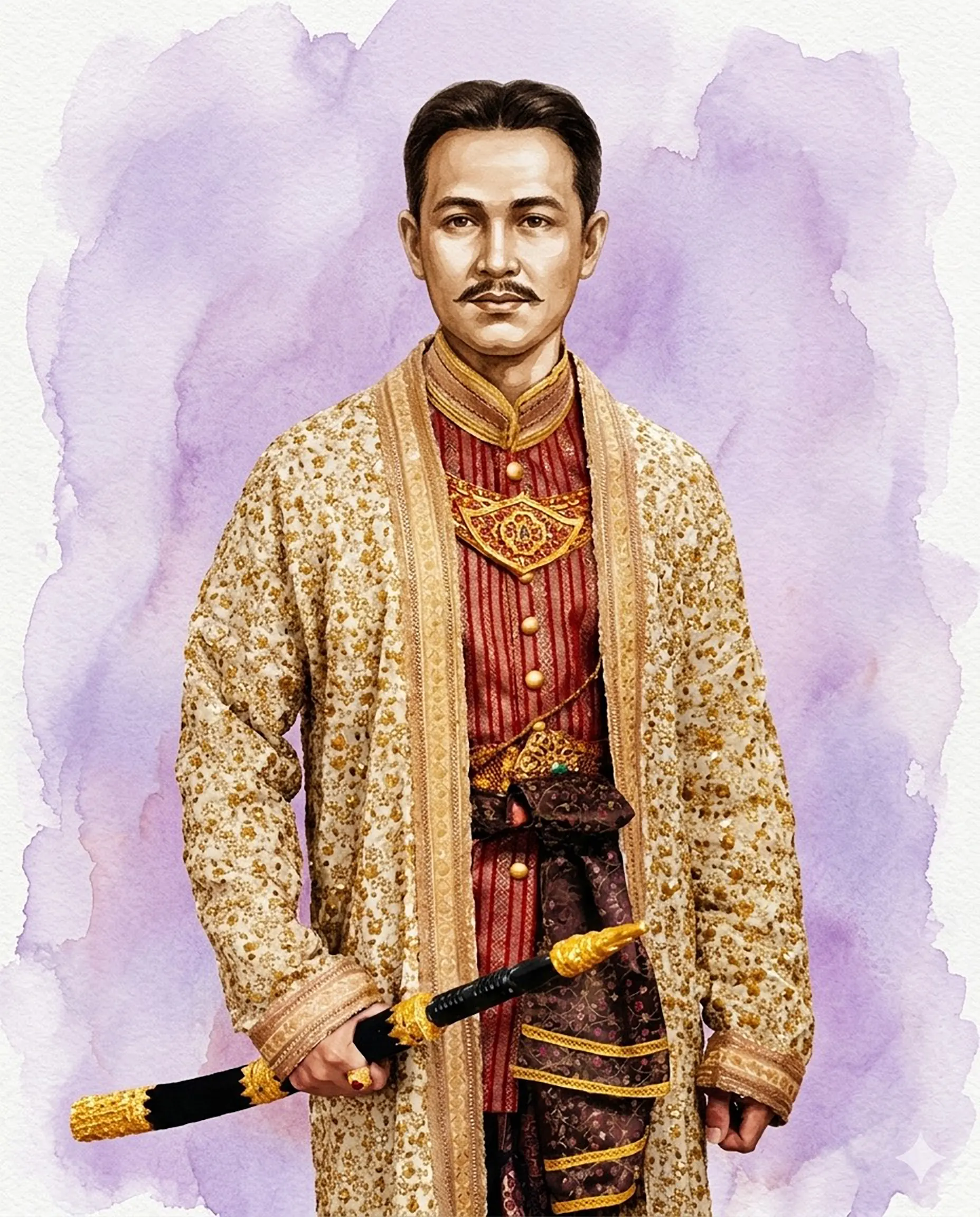
Borommakot
 Thailand
Sovereign•military officer•politician
Also known as: King Maha Thammarachathirat II, สมเด็จพระเจ้าอยู่หัวบรมโกศ
Birthday
1681-01-01
Birth Sign
Capricorn
Birthplace
Phra Nakhon Si Ayutthaya, Ayutthaya Kingdom
Age
Died at 77
About
King Borommakot, also known as King Maha Thammarachathirat II, was the ruler of the Ayutthaya Kingdom from 1733 until his death in 1758. His reign is remembered as the final golden age of Ayutthaya, a period of cultural and religious flourishing before the kingdom's catastrophic fall to Burmese invaders in 1767. Borommakot's legacy is deeply tied to his extensive temple renovations, which produced some of the most iconic ruins in Thailand today, including Wat Phra Si Sanphet and Wat Chaiwatthanaram. His reign is celebrated as a cultural golden age, marked by significant Buddhist prestige and architectural achievements.
Borommakot's influence continues to resonate in Thai history. His reign is often cited as the zenith of Ayutthaya's grandeur and spiritual authority, and his efforts in promoting Buddhism and the arts set a standard for later monarchs. Today, he is remembered as a pious and culturally minded ruler whose contributions to Thai heritage are still visible in the ruins and traditions he left behind. His enduring significance is reflected in the reverence with which he is regarded by historians and the Thai people alike.
Early Life & Background
Borommakot was born around 1681 in the Ayutthaya Kingdom, during the reign of King Narai, a period when the kingdom was a major hub of global trade. The Portuguese had established ties as early as 1511, followed by the Spanish, Dutch, and English. Growing up in this cosmopolitan environment, Borommakot was steeped in a world of commerce and diplomacy.
His path to the throne was not direct. He first served as Deputy Viceroy of Ayutthaya from approximately 1703 to 1708 under King Suriyenthrathibodi. In 1708, he was elevated to Viceroy under King Thai Sa, a position he held until 1732. His rise came amid political turmoil and civil war, and he ascended to the throne on January 13, 1733, following the death of King Thai Sa. His early life and career prepared him for the challenges of kingship, as he navigated the complex political landscape of the Ayutthaya court.
Career Growth
Borommakot's reign, from 1733 to 1758, is widely regarded as the last blooming period of Ayutthaya. He initiated massive building projects, renovating and constructing temples across the kingdom, including Wat Phra Si Sanphet and Wat Chaiwatthanarat. Much of what survives in Ayutthaya today dates back to his extensive temple renovations in the second quarter of the 18th century.
His reign saw Ayutthaya's Buddhist prestige grow so significantly that Sri Lanka sought Thai monks to restore its monastic orders. In 1747, Siamese stingray leather was exported to Japan via Dutch traders for use in samurai sword handles, a testament to the kingdom's far-reaching trade networks. Borommakot also renamed a throne hall from 'Suriya Marinthra' to 'Suriya Samrinthra' to harmonize the names of the three palaces.
His influence extended well beyond his lifetime. King Rama I, founder of the Chakri dynasty, attempted to emulate the religious customs of Ayutthaya during Borommakot's reign, even postponing his coronation to ensure it was modeled confidently on Borommakot's ceremony. This reverence underscores the lasting impact of Borommakot's rule on Thai royal traditions.
Career Timeline
Public Image & Style
Borommakot is remembered as a pious and culturally minded king, whose reign represented the zenith of Ayutthaya's artistic and religious achievements. His extensive temple renovations, which still stand as some of the most impressive ruins in Thailand, have cemented his image as a patron of Buddhism and architecture.
Historians often point to his reign as the final golden age of Ayutthaya, a period of peace and creativity before the collapse. His legacy is so revered that King Rama I modeled his own coronation on Borommakot's, a gesture that speaks to the profound respect later Thai monarchs held for him. This reverence has made Borommakot a symbol of the grandeur and spiritual authority of the Ayutthaya era.
Fame & Fandom
King Borommakot stands as a monumental figure in Thai history, yet the iFANN Global Fame Engine has evaluated his profile and determined he currently holds no placement in the published rankings for the Global Top 1,000 or any Top-100 scope list. While modern celebrity charts track viral moments and streaming numbers, this sovereign from the Ayutthaya Kingdom remains outside those contemporary metrics, existing instead in the realm of historical legacy rather than current pop-culture fame. The absence of a formal ranking reflects the unique nature of his status; he is not competing for attention in a digital marketplace but resides permanently in the annals of national heritage.
Unlike modern idols who cultivate organized followings with specific names and rituals, King Borommakot does not have a documented fandom name or an active fanbase engaging in campaigns, birthday billboards, or charity drives. The search for a collective identity among his admirers yields only scattered academic interest and hobbyist discussions on platforms like DeviantArt and historical Facebook groups. These interactions represent a scholarly appreciation for his reign rather than a structured pop-culture movement. There are no official hashtags, fan clubs, or organized projects attributed to him, as the concept of a modern fandom requires a living subject capable of direct interaction. His audience consists of historians, tourists visiting Wat Phra Si Sanphet, and students studying the final golden age of Siam. This lack of a named fanbase underscores the distinction between historical reverence and the manufactured engagement of today's entertainment industry. While the world moves forward with new stars, Borommakot remains a static icon of cultural stability, revered for his architectural patronage and religious piety without the need for a dedicated fan club to sustain his memory.
Interesting Facts and Legends
The export of stingray leather from Siam to Japan in 1747 marked a significant economic detail of his reign, where the material was utilized for crafting samurai sword handles. In a move to harmonize the names of the three royal palaces, he renamed the throne hall from 'Suriya Marinthra' to 'Suriya Samrinthra'. A monument dedicated to the king stands at Wat Hantra in Phra Nakhon Si Ayutthaya Province, serving as a physical anchor for his memory. Historians widely regard his rule as the final blooming period of the kingdom, often described in contemporary accounts as a serene time when the city burned with a blaze of gold before the eventual fall to Burmese invaders. This era is celebrated not for dramatic viral incidents but for its profound cultural stability and artistic zenith. The narrative of his reign as the last great flourishing before the 1767 destruction remains the primary legend attached to his memory, serving as a benchmark for Thai historical prosperity.
A story fans still retell involves the birth of King Rama I during Borommakot's reign in 1736. Originally named Duang or Thong Duang, the future monarch's father was a descendant of Chao Phraya Kosathibodee (Pan), a Minister of Finance under previous kings. This connection links the end of one golden age directly to the rise of the next dynasty. Another enduring tale concerns his burial at Wat Borom Phuttharam, a site built prior to his reign, suggesting a deep spiritual continuity rather than a new construction project initiated by him alone.
Family & Personal Life
Borommakot had several spouses, including Phiphit Montri, Aphainuchit, and Sangwan. His son Prince Ekathat, born to Queen Phanwasanoi, was elevated to the title Krom Khun Anurak Montri and later became the last monarch of Ayutthaya. Ekathat suffered from leprosy or a chronic skin disease, which led to his common nickname 'Khun Luang Kheeruean.'
Another son, King Uthumphon, succeeded Borommakot but abdicated after just over three months. The family's legacy was tragically cut short when the kingdom fell to Burmese invaders in 1767, just nine years after Borommakot's death. His descendants played significant roles in the kingdom's final years, but their efforts could not prevent the collapse.
Notable Connections
Relationships & Dating History
Borommakot had multiple spouses, including Phiphit Montri, Aphainuchit, and Sangwan. His son Ekathat was born to Queen Phanwasanoi, a separate consort. At the time of his death in 1758, he was married to these consorts, with his successor Uthumphon being another of his sons.
- MarriedPhiphit MontriSpouse, dates unknown.
- MarriedAphainuchitSpouse, dates unknown.
- MarriedSangwanSpouse, mentioned in biographical records.
- MarriedQueen PhanwasanoiConsort and mother of King Ekathat.
Death & Aftermath
Died
1758-04-26 (aged 77)
Death Place
Ayutthaya, Siam
Cause of Death
Unknown
King Borommakot passed away in the heart of Ayutthaya on April 26, 1758, bringing an end to a reign that had nurtured the kingdom through its final golden age. The sovereign's death occurred within the royal capital, marking the conclusion of twenty-five years where he oversaw the flourishing of Buddhist prestige and the construction of enduring architectural masterpieces like Wat Phra Si Sanphet., historical chronicles confirm his passing without detailing a specific medical cause, leaving the exact circumstances to the observation of royal physicians and family members of the time. His son Ekkathat succeeded him as the last monarch of the dynasty, inheriting a realm that would face catastrophic invasion just nine years later in 1767. The immediate aftermath involved traditional court mourning rites and religious ceremonies befitting a king who was deeply revered for his patronage of the arts and religion. The estate and kingdom transitioned smoothly to the new ruler, though the subsequent fall of the city cast a long shadow over the dynasty's final days.
Net Worth (Estate Value)
$1 Million
iFANN Editorial Team estimate
Per iFANN's editorial analysis, the net worth of King Borommakot in 2026 is estimated at $1 Million. As a monarch of the 18th century, his personal wealth is not well-documented, but his reign oversaw a flourishing economy and extensive temple construction, indicating significant state resources. This figure reflects the historical value of his assets and the ongoing cultural legacy of his temple renovations. The estimation accounts for the enduring economic impact of his architectural patronage, which produced some of the most iconic ruins in Thailand today.
Awards & Accolades
View 2 records, honours and achievementsKnown For
Reign as King of Ayutthaya
1733 · King
Temple renovations across Ayutthaya
1733 · Patron
Keywords
Sources
Quick Facts
- Profession
- sovereign, military officer, politician
- Born
- +1681-01-01
- Birthplace
- Phra Nakhon Si Ayutthaya
- Died
- +1758-04-26
- Death Place
- Phra Ratchawang Boran
- Gender
- Male
- Spouse
- Aphainuchit, Phiphitmontri, Sangwan
- Birth Sign
- Capricorn
Personal Details
- Full Name
- Borommakot
- Spouse
- Aphainuchit, Phiphit Montri, Sangwan
- Children
- Uthumphon, Ekathat
Frequently Asked Questions
Who was King Borommakot?
What is Borommakot known for?
How did Borommakot die?
What happened after Borommakot's death?
How did Borommakot influence later Thai kings?
Similar People
Join the community
fans discussing