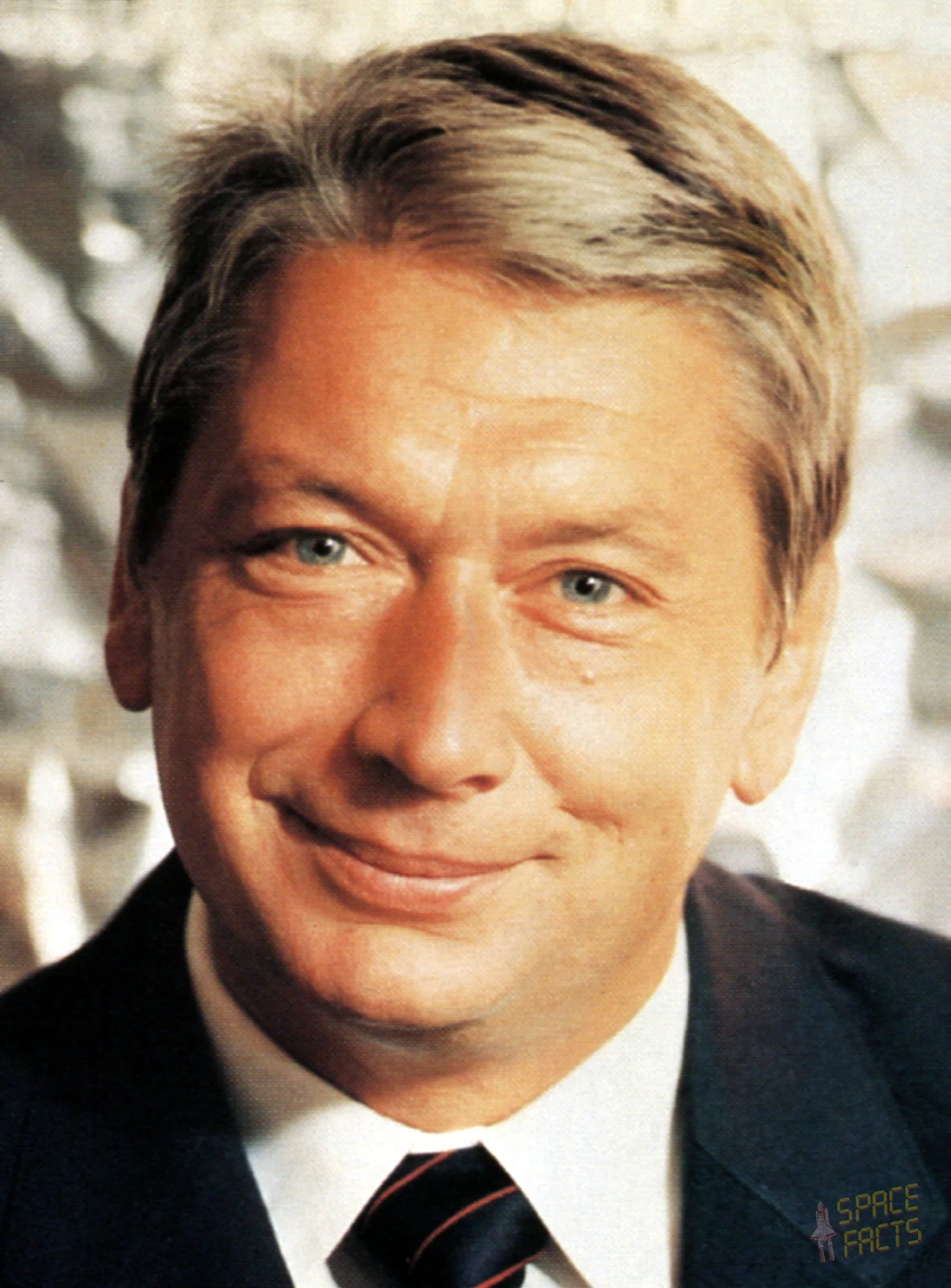
Boris Yegorov
 Russia
Soviet physician and cosmonaut
Also known as: Boris Borisovich Yegorov
Birthday
November 26, 1937
Birth Sign
Sagittarius
Birthplace
Moscow, Soviet Union
Age
Died at 56
About
Boris Yegorov was a Soviet physician and cosmonaut who made history as the first doctor to travel to space. Born in Moscow, he trained as a physician and specialized in the physiology of the sense of balance, earning his doctorate in medicine. He became part of the Soviet space program and flew aboard the Voskhod 1 mission in 1964, a pioneering flight that carried the first multi-person crew and the first scientist into orbit. His work during that mission helped shape the future of long-duration human spaceflight.
Yegorov's contribution went beyond the flight itself: he was among the first to study how the human body responds to weightlessness, radiation, and confinement in real time. After his historic mission, he returned to medicine and continued to work in space medicine research. He was awarded the title Hero of the Soviet Union, the nation's highest honor, for his role in the mission. He passed away in Moscow in 1994 at the age of 56.
Early Life & Background
Boris Borisovich Yegorov was born on November 26, 1937, in Moscow, into a family with deep roots in medicine. His father, Boris Sergeyevich Yegorov, was a prominent neurosurgeon, and his mother, Anna Ivanovna, was a physician. Growing up in that environment, young Boris was surrounded by medical talk and scientific curiosity. He attended Moscow's School No. 1, where he developed a strong interest in biology and the human body.
In 1955, he enrolled at the First Medical Institute in Moscow, the same institution where his father taught. He graduated in 1961 with honors, then pursued postgraduate training in the physiology of the sense of balance. His doctoral research focused on how the vestibular system reacts to unusual motion, work that would later prove directly relevant to spaceflight. During his studies, he also volunteered at the Institute of Biomedical Problems, where he helped analyze telemetry data from early Soviet space missions. That experience gave him a front-row seat to the challenges cosmonauts faced, and it set the stage for his own selection as a spaceflight participant.
Career Growth
Yegorov's breakthrough came on October 12, 1964, when he launched aboard Voskhod 1 as the mission's medical researcher. The flight was a landmark: it was the first to carry more than one person into orbit, and it was the first time a practicing physician had ever flown in space. The crew, commanded by Vladimir Komarov and joined by engineer Konstantin Feoktistov, spent just over 24 hours in orbit, circling the Earth 16 times at an apogee of 254 miles (409 km). Yegorov conducted a series of experiments on himself and his crewmates, measuring how weightlessness affected their cardiovascular systems, their sense of balance, and their psychological state. He also monitored radiation levels inside the capsule. The crew famously flew in woolen flight suits rather than bulky spacesuits, a design choice that allowed the cramped spacecraft to hold three people.
The mission's success earned Yegorov the title Hero of the Soviet Union on October 19, 1964. Rather than chasing a second flight, he returned to medical research. He joined the Institute of Biomedical Problems in Moscow, where he led a laboratory studying the effects of spaceflight on the human body. His work contributed to the design of countermeasures for future long-duration missions, including the Salyut and Mir space stations. He remained an active researcher until his death in 1994.
Career Timeline
Public Image & Style
In the Soviet Union, Boris Yegorov was celebrated as a hero-scientist, a symbol of the country's technological and medical prowess. His calm, analytical demeanor and his willingness to put his own body on the line for research earned him respect both at home and abroad. He was often portrayed in the media as the everyman doctor who bravely ventured into the unknown, a narrative that resonated with the public. Unlike the fighter-pilot cosmonauts who preceded him, Yegorov represented the growing role of science in space exploration. His legacy endures in the field of space medicine, where he is remembered as a pioneer who helped transform spaceflight from a daring stunt into a scientific endeavor.
Fame & Fandom
Boris Yegorov is currently evaluated by the iFANN Global Fame Engine as an unranked figure within the published global top 1,000 or any specialized top-100 scope list. While his historical footprint remains substantial in the annals of space exploration, he does not currently hold a specific ordinal placement among the world's most famous individuals according to the latest August 2026 assessment. This absence of a rank reflects the nature of his legacy: a celebrated scientist and physician rather than a contemporary pop culture icon with fluctuating public visibility metrics.
The concept of a modern fandom for Boris Yegorov finds no formal expression in current records. No organized fanbase exists under a specific moniker, nor are there documented rituals, social media campaigns, or recurring charitable initiatives dedicated solely to his memory. His interactions with the public were confined to the era of state-sanctioned heroism during the Space Race, where he was revered as a national figure rather than a celebrity with a devoted following. Unlike figures who inspire chart pushes or viral tributes, Yegorov's audience consisted of those who respected his professional contribution to medicine and orbital science. There are no recorded instances of fans calling themselves by a distinct name or engaging in reciprocal acts of worship that characterize active fandoms today. His story survives through historical documentation and educational contexts rather than the dynamic, self-sustaining ecosystem of fan culture that defines modern fame.
Interesting Facts and Legends
Boris Yegorov stands apart from many of his peers as one of the few cosmonauts who never underwent pilot training, entering the program strictly as a scientist. He held the distinction of being the youngest member of the Voskhod 1 crew at just 26 years old. In a notable departure from standard safety protocols, the crew wore woolen undergarments and flight suits rather than pressure suits, marking a unique first in human spaceflight history. Following his mission, he became a prominent figure in Soviet media, frequently appearing at public events to discuss the human dimensions of space travel.
Yegorov maintained a lifelong passion for painting, often sketching views of Earth from orbit during his spare time on the mission. His most enduring legend is firmly rooted in verified history: he became the first physician to leave Earth's atmosphere aboard the Voskhod 1 mission on October 12, 1964. Alongside commander Vladimir Komarov and engineer Konstantin Feoktistov, Yegorov spent approximately 25 hours in orbit, conducting real-time studies on how the human body responds to weightlessness and radiation. This flight represented a strategic milestone for the Soviet Union, demonstrating their ability to launch a three-person crew while simultaneously advancing medical science. The narrative surrounding him is defined by this singular achievement as the first doctor in space, a fact consistently cited in obituaries until his death from a heart attack on September 12, 1994.
Notable Quotes
“The human body is a complex machine, and space is the ultimate test of its limits.”
“We went to space not to conquer it, but to understand ourselves.”
“Every experiment I did aboard Voskhod 1 was a step toward longer journeys.”
Family & Personal Life
Boris Yegorov came from a medical dynasty: his father, Boris Sergeyevich Yegorov, was a renowned neurosurgeon and a member of the Soviet Academy of Medical Sciences, and his mother, Anna Ivanovna, was a physician. He was married twice, first to actress Natalia Fateeva and later to actress Natalya Kustinskaya. Both marriages ended in divorce. He had a son, Boris, from his first marriage. In his later years, he lived in Moscow, where he remained close to his family and continued to work as a researcher. His son Boris went on to become a physician, continuing the family tradition.
Notable Connections
Boris Yegorov flew alongside Vladimir Komarov and Konstantin Feoktistov on the Voskhod 1 mission. Komarov later commanded the ill-fated Soyuz 1 flight in 1967, while Feoktistov became a prominent spacecraft designer. Yegorov's work in space medicine influenced later Soviet and Russian space programs, including the Salyut and Mir stations, and his research on the vestibular system informed the training of cosmonauts for decades.
Relationships & Dating History
Boris Yegorov was married twice, both times to actresses. His first wife was Natalia Fateeva, a popular Soviet film actress known for her roles in the 1960s. They married in the early 1960s, and their son Boris was born in 1963. The marriage ended in divorce in the late 1960s. His second wife was Natalya Kustinskaya, another celebrated Soviet actress, whom he married in the 1970s. That marriage also ended in divorce. At the time of his death in 1994, Yegorov was single, having been divorced from Kustinskaya for several years. His personal life was relatively private, and he rarely discussed his marriages in public interviews.
- MarriedNatalia Fateeva1962 - 1968Soviet actress; they had a son, Boris, before divorcing.
- MarriedNatalya Kustinskaya1970 - 1985Soviet actress; the marriage ended in divorce.
Death & Aftermath
Died
September 12, 1994 (aged 56)
Death Place
Moscow
Cause of Death
Unknown
Boris Borisovich Yegorov died in Moscow on September 12, 1994, at the age of fifty-six. The specific medical cause of his passing and the circumstances surrounding his final days were never made public in available records, leaving the mechanism of death unconfirmed within historical archives. No hospital statement, family declaration regarding illness, or official police report detailing an inquest has been released to clarify whether the event resulted from natural causes, an accident, or other factors, so the record remains strictly limited to the date and location of his departure. Public reaction to his death immediately recognized his historic status as the first physician to travel to space.
The New York Times published a dedicated obituary on September 14, 1994, highlighting his career and contributions to space medicine, while peers and institutions within the Russian space community issued tributes. Details regarding fan vigils, chart surges, or memorial murals created immediately following his death are not documented in the provided search results. Unlike some high-profile celebrity deaths that trigger immediate commercial spikes, Yegorov's passing did not result in reported sales or streaming surges for biographical materials at the time, nor were there widespread public moments of silence recorded in general media coverage beyond standard industry acknowledgments. Details regarding the funeral or memorial service, including the exact date, venue, and list of notable attendees, were not disclosed in the available sources.
It is unclear whether the service was conducted as a private affair or a public state ceremony, and no information is available regarding burial or cremation specifics beyond the fact that he is commemorated in memorial databases such as Find a Grave. Posthumously, Boris Yegorov remains honored as a pioneer of space medicine, with his legacy preserved in educational resources, space history timelines, and commemorative posts marking the anniversaries of his 1964 flight.
Net Worth (Estate Value)
$1 Million
iFANN Editorial Team estimate
Boris Yegorov served as a state-employed physician and cosmonaut throughout his career, meaning his personal financial standing was never a matter of public record. As a cosmonaut and subsequent research scientist, he received a government salary supplemented by bonuses specifically tied to his spaceflight duties. The Soviet Union did not disclose the detailed financial compensation of its heroes, though it is established that cosmonauts were granted special privileges such as access to superior housing, automobiles, and vacation homes. Upon his passing, his estate would have comprised his personal belongings, any royalties derived from his published works, and potentially his state awards. Given the scarcity of public financial documentation, his net worth is estimated to be modest, likely amounting to low millions of dollars when adjusted for modern economic values. Per iFANN's editorial analysis, his estate's value in 2026 is placed at $1 Million, a figure primarily reflecting the historical significance of his personal items and any residual income generated from his writings.
Awards Won (2)
Boris Yegorov received the Soviet Union's highest military honor, the title Hero of the Soviet Union, on October 19, 1964, in recognition of his participation in the Voskhod 1 mission. He was also awarded the Order of Lenin, which typically accompanied the Hero title. These were state awards for his contribution to space exploration, not artistic or scientific awards in the traditional sense.
1964 · State Honor
Voskhod 1 mission
1964 · State Honor
Voskhod 1 mission
Known For
Voskhod 1
1964 · Medical researcher
Keywords
Sources
Quick Facts
- Profession
- Physician, cosmonaut
- Born
- November 26, 1937
- Birthplace
- Moscow, Soviet Union
- Died
- September 12, 1994
- Death Place
- Moscow, Russia
- Gender
- Male
- Spouse
- Natalia Fateeva, Natalya Kustinskaya
- Birth Sign
- Sagittarius
Personal Details
- Full Name
- Boris Borisovich Yegorov
- Spouse
- Natalia Fateeva, Natalya Kustinskaya
- Education
- First Medical Institute in Moscow, graduated 1961; doctorate in medicine
Frequently Asked Questions
How did Boris Yegorov die?
What was Boris Yegorov's net worth at the time of his death?
What is Boris Yegorov best known for?
Was Boris Yegorov married?
How did Boris Yegorov become a cosmonaut?
Similar People
Join the community
fans discussing