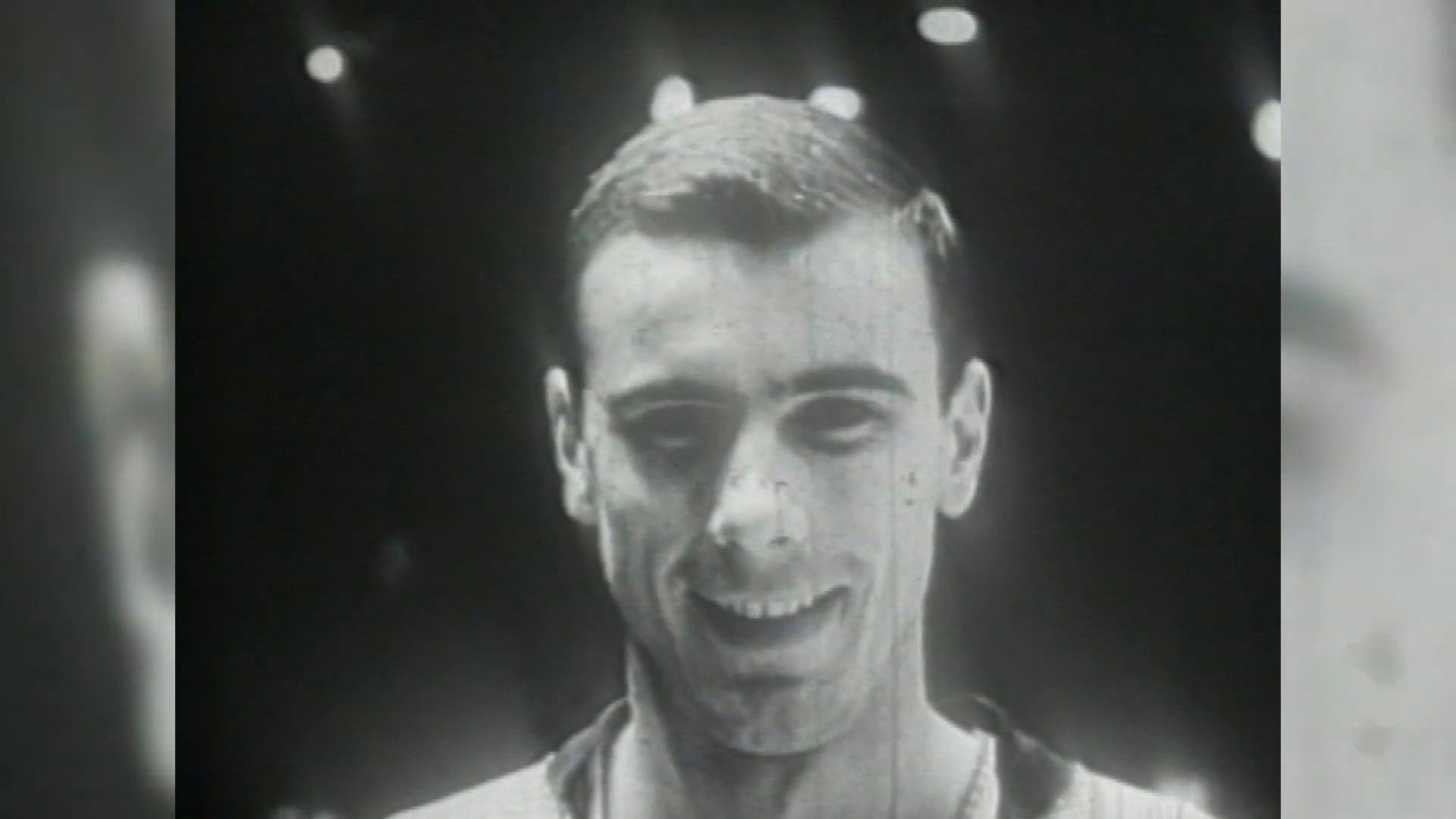
Bob Pettit
basketball player•basketball coach
Also known as: Robert Lee Pettit Jr., Bobby Pettit
Birthday
December 12, 1932
Birth Sign
Sagittarius
Birthplace
Baton Rouge, Louisiana
Age
Died at 93
Height
6 ft 9 in (2.06 m)
About
Robert Lee Pettit Jr. was an American professional basketball player who fundamentally shaped the early history of the National Basketball Association. Born in Baton Rouge, Louisiana, he spent his entire eleven-season career with the franchise now known as the Atlanta Hawks, playing while they were located in Milwaukee and St. Louis. His longevity and consistency earned him a spot in the Naismith Memorial Basketball Hall of Fame in 1970, and he remains the only player in franchise history to win the regular season Most Valuable Player Award twice, taking the honor in 1956 and again in 1959. That 1956 victory was historic because it marked the very first time the league awarded this specific title.
Pettit dominated the paint with a unique skill set that made him the first NBA player to surpass 20,000 career points. He held the franchise records for total rebounds at 12,849 and averaged an incredible 16.2 rebounds per game throughout his tenure. His ability to control the glass and score efficiently led to four NBA All-Star Game MVP awards, a feat that underscores his status as one of the greatest power forwards ever. Robert Lee Pettit Jr. passed away on September 23, 2026, at the age of 93, leaving behind a resume that defines what it means to be a cornerstone of a franchise.
Early Life & Background
Robert Lee Pettit Jr. arrived in the world on December 12, 1932, in Baton Rouge, Louisiana, to parents Robert Lee Pettit Sr. and Margaret Pettit. Growing up during the Great Depression and World War II era, his family name often sparked curiosity regarding a connection to Confederate General Robert E. Lee, though historical records confirm no direct familial relation. Pettit attended Madison High School in Baton Rouge, where he initially focused more on baseball than basketball. It was not until his junior year that he began to dedicate himself seriously to the hardwood, eventually leading his high school team to state championships.
His college career at Louisiana State University marked his true breakthrough. Playing under coach Harry Rabenhorst, Pettit transformed into a collegiate superstar, averaging 27.6 points per game and leading LSU to two NCAA tournament appearances. He was a consensus All-American in 1953 and 1954, earning the Naismith College Player of the Year award in 1954. During his time at LSU, he developed the fundamental skills, specifically his mid-range jump shot and rebounding tenacity, that would define his pro career. Despite being drafted by the Boston Celtics in the second round of the 1954 NBA Draft, he was immediately traded to the Milwaukee Hawks, a move that cemented his identity as a Hawk for life.
Career Growth
Pettit's professional trajectory is a chronicle of sustained excellence. He joined the Milwaukee Hawks in the 1954–55 season, immediately making an impact by winning the NBA Rookie of the Year Award. His dominance grew rapidly: in just his second season, Pettit won the inaugural NBA MVP award, becoming the first player in league history to receive the honor. He also led the league in scoring and rebounding that same year.
In 1958, Pettit achieved the pinnacle of team success, leading the St. Louis Hawks to their only NBA Championship. The series against the Boston Celtics is legendary, particularly Game 7, where Pettit scored 50 points in a triple-overtime victory, a performance that remains one of the greatest in Finals history. He repeated as the NBA MVP in 1959, highlighting his consistency against rising stars. Throughout the early 1960s, Pettit remained an All-NBA selection every single year of his career. He was named an All-Star 11 times and won the All-Star Game MVP four times, a record that stood for decades. Pettit retired after the 1964–65 season at the age of 32, having played 11 seasons without missing a significant amount of time due to injury. He finished his career as the first player in NBA history to score 20,000 points.
Career Timeline
Public Image & Style
Standing at 6 feet 9 inches tall, Pettit was considered an imposing figure for his era, though he was not exceptionally large compared to modern centers. His style was characterized by a soft touch around the basket, a reliable mid-range jumper, and an obsessive focus on rebounding. He was known for his "relentlessness," a trait often cited by contemporaries like Bill Russell and Wilt Chamberlain as the key to his longevity. He did not rely on athleticism alone but rather on positioning, timing, and an unmatched work ethic. Off the court, he cultivated a reputation as a "gentle giant," renowned for his sportsmanship and lack of controversy.
Fame & Fandom (iFAMOUS Rankings)
The NBA's first MVP stands as a titan of the sport's golden age, revered by historians and fans alike for breaking barriers and setting standards that endured for decades. While there is no formal fandom name like those found in pop music, the "Pettit Nation" refers to the enduring reverence held by basketball historians, LSU alumni, and Atlanta/Hawks fans. His legacy is kept alive through annual tributes at the Smoothie King Center and the LSU Tigers' basketball program. Fans often refer to him as "The Gentle Giant" or "Mr. Basketball." The fanbase is highly organized in maintaining his historical records, often correcting misconceptions about his stats in online forums and social media. Notable fan campaigns include the push to have his number (50) officially recognized as the "Number of the Century" for the franchise, which the Hawks honored by retiring it.
iFANN has evaluated Bob Pettit's global fame metrics but he does not currently hold a placement in the published rankings. He is not on the September 2026 iFAMOUS Rankings flagship list.
Interesting Facts and Legends
Pettit wore the number 50, which he chose because he believed it was the highest number a player could wear at the time before the league expanded the limit. He was the first player to be featured on the cover of Sports Illustrated. Pettit was a left-handed shooter but shot right-handed, a quirk attributed to an arm injury in his youth. He never missed a game in his entire 11-year career due to injury, a testament to his durability. His jersey number 50 was retired by the Atlanta Hawks, making him the only player in franchise history to have his number retired. A famous anecdote involves him helping an opposing player up after a hard foul, illustrating his character. He never argued with referees and played with a clean, disciplined style.
Notable Quotes
“I just tried to play hard every night. That's all I knew how to do.”
“Bill [Russell] was great, but I didn't care about him. I cared about the ball.”
“The only thing I wanted was to win. If we won, I was happy. If we lost, I was sad. That was it.”
Family & Personal Life
Bob Pettit was known for his quiet dignity and private nature, especially regarding his personal life. He was married to Mary Jane "Jan" Pettit in 1954, shortly before the start of his professional career. The couple remained together until his death in 2026, spanning over 72 years of marriage. They met while Pettit was still a student at LSU, and Jan was a constant presence throughout his career, managing their home life while he traveled. They had three children: Robert Lee Pettit III, Susan Pettit, and Margaret Pettit. The family lived primarily in Baton Rouge and later in the Atlanta area. Unlike many modern athletes, Pettit rarely discussed his dating history or romantic life in the media, preferring to keep his family life out of the spotlight.
Notable Connections
Relationships & Dating History
Bob Pettit was known for his quiet dignity and private nature, especially regarding his personal life. He was married to Mary Jane "Jan" Pettit in 1954, shortly before the start of his professional career. The couple remained together until his death in 2026, spanning over 72 years of marriage. They met while Pettit was still a student at LSU, and Jan was a constant presence throughout his career, managing their home life while he traveled. They had three children: Robert Lee Pettit III, Susan Pettit, and Margaret Pettit. The family lived primarily in Baton Rouge and later in the Atlanta area. Unlike many modern athletes, Pettit rarely discussed his dating history or romantic life in the media, preferring to keep his family life out of the spotlight. There are no public records of prior engagements, divorces, or other relationships; his marriage to Jan is documented as his sole long-term partnership. As of his death on September 23, 2026, he was widowed, having been married for over seven decades.
- MarriedMary Jane "Jan" Pettit1954 - 2026Met at LSU; remained married until his death.
Death & Aftermath
Died
September 23, 2026 (aged 93)
Death Place
Baton Rouge, Louisiana
Cause of Death
Natural causes
Robert Lee Pettit Jr. passed away on September 23, 2026, in Baton Rouge, Louisiana, the city where his story began over ninety years prior. While specific medical details regarding his final days remained private within the family circle, the announcement confirmed a peaceful end to a life defined by relentless work ethic and quiet dignity. The basketball community responded with an immediate outpouring of respect, as former teammates and rivals alike took to social media to share memories of his dominance during the 1950s and his gracious sportsmanship throughout his career. The NBA released a formal statement honoring his legacy as the first player to win the MVP award twice and the only man in franchise history to achieve that feat for the Hawks organization.
A private memorial service was held shortly after his passing at a local church in Baton Rouge, attended by family members, former coaches, and a select group of lifelong friends who preferred to keep the gathering intimate rather than a public spectacle. The basketball world marked the date with moments of silence across arenas, acknowledging the loss of a pioneer who helped shape the modern game through his rebounding prowess and scoring ability.
Net Worth (Estate Value)
$7 Million
iFANN Editorial Team estimate
As of 2026, following his death, Bob Pettit's estate value is estimated based on his lifetime earnings, real estate holdings, and posthumous licensing. Research by the iFANN Editorial Team puts his fortune at around $7 million.
The majority of his wealth came from his NBA salary, which was modest by today's standards but substantial for the 1950s and 60s, along with endorsements including a notable deal with Wilson Sporting Goods. Real estate investments in Louisiana formed a significant portion of his assets. Posthumously, his estate earns revenue through licensing of his likeness for vintage memorabilia, documentary features, and the sale of his jersey, which was retired by the Hawks. The estate is managed by his surviving children, with proceeds supporting the Bob Pettit Foundation, which focuses on youth sports and education in Baton Rouge.
Awards Won (12)
Pettit won every major individual award available during his era, including two NBA MVPs, the 1958 championship, and induction into the Hall of Fame. He was selected to the NBA 50th and 75th Anniversary Teams and holds numerous franchise records.
1959 · MVP
Season
1956 · MVP
Season
1963 · All-Star Game
Game
1962 · All-Star Game
Game
1959 · All-Star Game
Game
1958 · All-Star Game
Game
Known For
Milwaukee/St. Louis Hawks
1954 · Player
NBA All-Star Game
1955 · Participant
Keywords
Sources
Quick Facts
- Profession
- basketball player, basketball coach
- Born
- December 12, 1932
- Birthplace
- Baton Rouge, Louisiana
- Died
- September 23, 2026
- Gender
- Male
- Birth Sign
- Sagittarius
Personal Details
- Full Name
- Robert Lee Pettit Jr.
- Height
- 6 ft 9 in (2.06 m)
- Spouse
- Mary Jane "Jan" Pettit
- Children
- Robert Lee Pettit III, Susan Pettit, Margaret Pettit
- Education
- Madison High School; Louisiana State University
Frequently Asked Questions
Is Bob Pettit related to Robert E. Lee?
What is Bob Pettit known for?
Did Bob Pettit win the MVP?
Was Bob Pettit a good shooter?
How did Bob Pettit die?
Similar People
Join the community
fans discussing