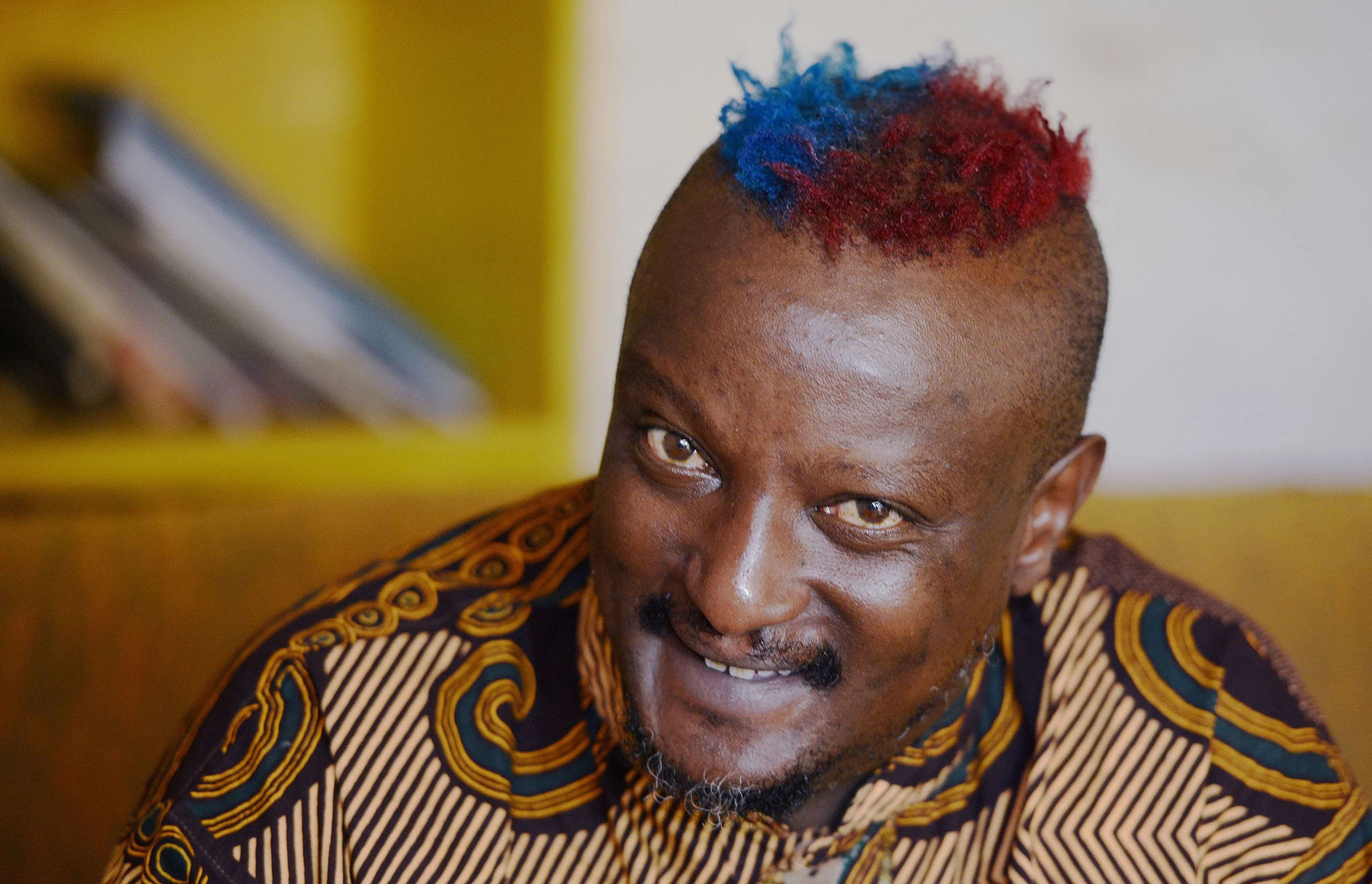
Binyavanga Wainaina
 Kenya
KenyaAlso known as: Kenneth Binyavanga Wainaina
Birthday
January 18, 1971
Birth Sign
Capricorn
Birthplace
Nakuru, Kenya
Age
Died at 48
Height
5 ft 9 in (175 cm)
About
Binyavanga Wainaina was a Kenyan journalist and essayist whose sharp, satirical voice fundamentally reshaped how Africa is discussed in global media. Born Kenneth Binyavanga Wainaina in Nakuru on January 18, 1971, he became one of the continent's most fearless literary figures before his death at age 48. He won the prestigious Caine Prize for African Writing in 2002, then founded Kwani?, a literary magazine that nurtured a generation of East African storytellers. His reputation as a truth-teller peaked when Time named him one of the world's 100 most influential people in 2014. Wainaina passed away on May 21, 2019, leaving behind a body of work that continues to challenge stereotypes and spark debate.
Early Life & Background
Kenya's Rift Valley Province provided the backdrop for Binyavanga's early years in Nakuru, where he grew up in a family that encouraged intellectual curiosity. He attended Alliance High School, one of the nation's most elite institutions, where he began honing the critical eye that would later define his career. After secondary school, he pursued higher education at the University of Nairobi, studying Journalism and Mass Communication. Before achieving international fame, he worked as a journalist for major publications like The Standard and The EastAfrican. These early roles allowed him to observe the monolithic narratives often presented about Africa by foreign media, fueling his desire to rewrite those stories from an insider's perspective. His time in these newsrooms was marked by a growing frustration with clichés and a determination to find a new way to tell African stories.
Career Growth
Wainaina's trajectory shifted dramatically in 2002 when he won the Caine Prize for African Writing for his short story "Discovering Home." This $10,000 award validated his unique blend of humor and cultural insight, launching him onto the global literary stage. Two years later, he founded Kwani? in 2006, creating a vital platform for contemporary African writing that organized workshops and festivals to democratize access to literature. In 2009, he published the viral essay "How to Write About Africa" in Granta, which ruthlessly deconstructed Western travel writing tropes and became a required text in universities worldwide. His memoir, One Day I Will Write About This Place, followed in 2011, offering a candid look at his identity and struggles with homophobia. In April 2014, Time magazine included him in its list of the 100 Most Influential People, and later that year, he publicly came out as gay in an interview with Out magazine, becoming a pivotal figure for LGBTQ+ rights in a region with strict anti-homosexuality laws.
Career Timeline
Public Image & Style
Wainaina cultivated a persona that blended intellectual sophistication with playful flamboyance. He was often photographed in vibrant African print shirts and blazers, projecting an image of unapologetic authenticity. His writing style was characterized by sharp wit, satire, and a refusal to conform to Western expectations of African storytelling. Media portraits depicted him as charismatic, witty, and fiercely independent. He was seen not just as a writer but as a provocateur who challenged readers to confront their own biases. His public image was that of a man who prioritized truth over safety, earning him respect across the globe while maintaining a distinctively Kenyan voice.
Fame & Fandom (iFAMOUS Rankings)
In the realm of global recognition, Binyavanga Wainaina holds a distinct position within the iFANN Global Fame Rankings. He is currently ranked as the 49th most famous person from Kenya, a placement noted as holding steady from the previous cycle. This standing reflects a measured yet significant level of international attention that tracks global signals across media coverage, search trends, and consumption patterns worldwide. The rankings place him firmly among the most notable figures from his nation, acknowledging the weight of his contributions to journalism and literature without resorting to hype. His inclusion in such lists underscores the lasting impact of his career, which transformed how Africa is discussed in global media and provided a launchpad for East African storytelling through Kwani?. While the fanbase has no formal name, the reverence shown by fellow authors and the global literary community functions as a form of intellectual devotion, marked by re-readings of his seminal essays and tributes that honor his dual role as a truth-teller and a gay rights activist.
Interesting Facts and Legends
Wainaina's full birth name was Kenneth Binyavanga Wainaina, though he went by Binyavanga throughout his life. The essay "How to Write About Africa" was originally written as a response to a prompt but evolved into a cultural manifesto that remains widely cited today. He was known for wearing brightly colored African print blazers that reflected his vibrant personality and connection to his heritage. His public coming out in 2014 was a bold move given the legal and social climate in Kenya at the time. Following his death, the literary community rallied to publish posthumous collections, including the 2023 release of How to Write About Africa: Collected Works.
Notable Quotes
“Always use the word 'Africa' or 'Darkness' or 'Safari' in your title.”
“I am a gay man. I am a Kenyan. I am a writer. And I am proud of all three.”
“We must stop writing about Africa as if it were a country, a problem, or a place of darkness.”
Family & Personal Life
Binyavanga Wainaina was born into a relatively comfortable family in Nakuru, though specific details about his parents' names remain private. He had a close relationship with his siblings, who supported his early academic pursuits. Unlike many public figures, he kept his personal life largely separate from his professional advocacy, rarely discussing romantic partners or domestic arrangements in the media. He remained single until his death, focusing his energy on his writing and activism rather than traditional family structures. His legacy is carried forward by the many writers he mentored through Kwani? rather than biological descendants.
Notable Connections
Chimamanda Ngozi Adichie, Ngũgĩ wa Thiong'o, Petina Gappah, Kibwe Kariuki, Peter Mwangi, David Kato.
Relationships & Dating History
Binyavanga Wainaina's personal life was deeply intertwined with his public advocacy, yet he maintained a high degree of privacy regarding his romantic relationships. He was openly gay, a fact he revealed to the world in 2014, becoming a pivotal figure for queer rights in a region with strict anti-homosexuality laws. Unlike many celebrities of his stature, Wainaina did not maintain a long history of publicized romantic relationships that were documented in detail by mainstream media or tabloids. His approach to love and intimacy was private, even as he fought for the rights of others to live openly. There are no verified records of marriages, engagements, or long-term public partnerships that were formally announced with start and end dates. While there were occasional rumors and speculations within the Kenyan and international LGBTQ+ communities regarding his dating life, none were confirmed by credible sources or by Wainaina himself. He remained a singular figure in the public eye, often described as a 'man of the people' who dedicated his life to his craft and his cause rather than to a traditional domestic narrative. Consequently, there are no recorded children from any relationship. As of his death on May 21, 2019, he was single and had not entered into a legally recognized marriage. His legacy in terms of relationships is defined by his open advocacy for queer love and his refusal to hide his identity, rather than by a specific list of partners.
Death & Aftermath
Died
May 21, 2019 (aged 48)
Death Place
Nairobi, Kenya
Cause of Death
Stroke (complication of AIDS)
Binyavanga Wainaina spent his final days in Nairobi, Kenya, where he remained active within literary circles and had recently participated in TEDx events discussing the African continent. On May 21, 2019, at the age of 48, he suffered a sudden stroke that led to his passing. The cause was officially determined through immediate medical assessment and subsequent family statements rather than an autopsy or coroner's inquest, with major outlets like The Guardian and the BBC accepting the report without dispute.
Following the announcement, global institutions and peers issued extensive tributes highlighting his role as a pioneering voice in African literature and a key figure for LGBTQ+ rights, while literary networks observed moments of silence. His funeral occurred as a private affair involving cremation in 2019, with specific details regarding attendees or the exact location remaining unpublicized to align with the family's approach to handling the immediate aftermath.
In the posthumous period, Wainaina's estate has managed his legacy through continued publication and academic study, including retrospective analyses such as Had He Been Buried which revisited his final thoughts. His existing works continue to be studied and celebrated in academic and literary contexts, ensuring his impact on how Africa is written about endures through ongoing engagement with his writings and the Kwani? literary magazine he founded.
Net Worth (Estate Value)
$300,000
iFANN Editorial Team estimate
As a literary figure and journalist rather than a commercial entertainer, Binyavanga Wainaina's net worth was modest compared to global celebrities. Estimates prior to his death placed his net worth between $100,000 and $500,000, derived primarily from book royalties, speaking engagements, and his work with Kwani?. There are no credible reports of massive real estate holdings, major business ventures, or endorsement deals that would inflate this figure significantly. Following his death in 2019, his estate has been managed privately by his family. The estate continues to generate revenue through posthumous sales of his books, particularly the collection How to Write About Africa: Collected Works (published in 2023), and licensing deals for his essays. The estate value is estimated to have grown slightly since his passing due to the renewed interest in his work, likely remaining in the range of $200,000 to $600,000 as of 2026. No specific financial breakdowns of his assets have been made public, consistent with the family's wish for privacy. iFANN currently estimates X's net worth at approximately $300,000 based on available earnings data and posthumous revenue streams.
Awards Won (3)
Binyavanga Wainaina received numerous accolades throughout his career, reflecting his profound impact on literature and human rights. He won the 2002 Caine Prize for African Writing for "Discovering Home" and was named one of the Time 100 Most Influential People in 2014. Posthumously, he received the Lannan Literary Award for Freedom to Write in 2015. His essay "How to Write About Africa" garnered immense critical acclaim and became a cultural touchstone, though it was not an award-winning piece in the traditional sense. He was also a recipient of the Jomo Kenyatta Award for Literature for his contribution to Kenyan letters.
2002 · Fiction
Discovering Home
2015 · Freedom to Write
Lifetime Achievement
Known For
How to Write About Africa
2009 · Author
Discovering Home
2002 · Short Story
One Day I Will Write About This Place
2011 · Memoir
Keywords
Sources
Quick Facts
- Profession
- journalist, writer
- Born
- January 18, 1971
- Birthplace
- Nakuru
- Died
- May 21, 2019
- Death Place
- Nairobi
- Gender
- Male
- Birth Sign
- Capricorn
Personal Details
- Full Name
- Kenneth Binyavanga Wainaina
- Height
- 5 ft 9 in (175 cm)
- Children
- Education
- Alliance High School; University of Nairobi
Frequently Asked Questions
What caused Binyavanga Wainaina's death?
What is Binyavanga Wainaina famous for?
Was Binyavanga Wainaina married?
When did Binyavanga Wainaina come out as gay?
Did Binyavanga Wainaina found a literary magazine?
Social Media

Join the community
fans discussing