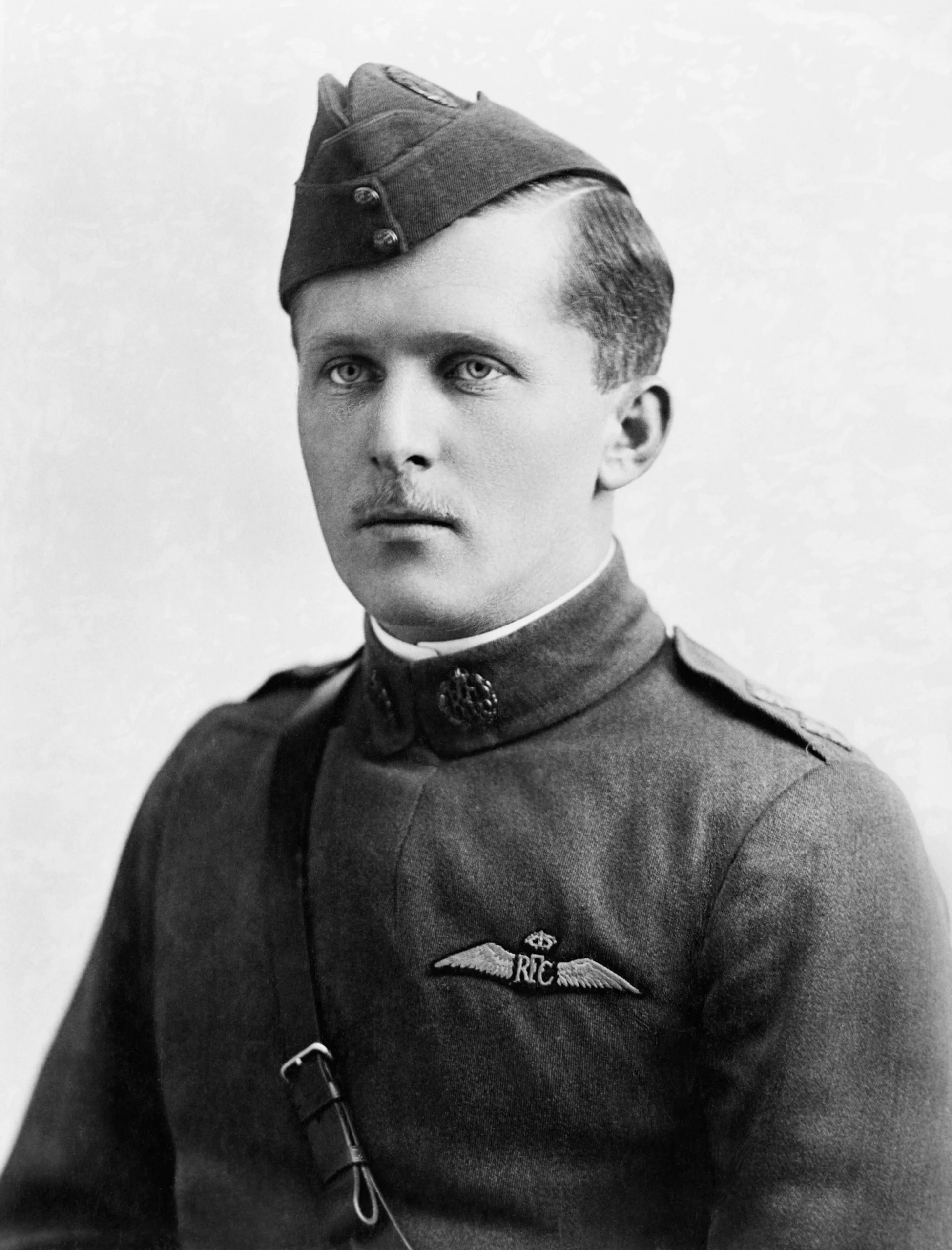
Billy Bishop
 Canada
aircraft pilot•military personnel
Also known as: William Avery Bishop, W. A. Bishop, Billy Bishop VC
Birthday
February 8, 1894
Birth Sign
Aquarius
Birthplace
Owen Sound, Ontario, Canada
Age
Died at 62
About
Air Marshal William Avery "Billy" Bishop Jr. was born on February 8, 1894, in Owen Sound, Ontario. He became the top Canadian and British Empire flying ace of World War I, with 72 officially credited victories. Bishop was awarded the Victoria Cross for his bravery, and during World War II, he played a key role in establishing the British Commonwealth Air Training Plan.
Early Life & Background
William Avery Bishop Jr. entered the world on February 8, 1894, in Owen Sound, Ontario, into a prominent family where his father served as a successful businessman and politician. This upbringing provided him with early access to education and opportunities that would shape his future. At the age of 17, he enrolled at the Royal Military College in Kingston, Ontario, in 1911, where he began his formal military training. Although he initially joined the Canadian Cavalry when World War I broke out in 1914, he soon realized his true passion lay elsewhere. Bishop transferred to the Royal Flying Corps, driven by an intense desire to serve in aviation rather than ground combat.
Before achieving fame as a pilot, Bishop had already demonstrated exceptional marksmanship and a fiercely competitive spirit. These traits would define his military career and set him apart from his peers. He was only 20 years old when the war began, yet he quickly distinguished himself through his skill and determination. His early years were marked by a relentless pursuit of excellence, whether in the classroom or on the battlefield. This foundation of discipline and ambition prepared him for the challenges that awaited him in the skies over France.
Career Growth
Bishop's military career is defined by his service in the First World War. After training in England, he was posted to the Western Front in 1916. By 1917, he had become a distinguished fighter pilot. His most famous exploit occurred on June 2, 1917, when he flew solo at dawn over German lines to attack an enemy airfield at Athies, France. Despite heavy anti-aircraft fire and enemy fighters, he destroyed three aircraft on the ground and escaped unscathed. This daring raid earned him the Victoria Cross, the highest award for gallantry in the British and Commonwealth forces, making him the first Canadian to receive it for air service.
By the end of the war in November 1918, Bishop had accumulated 72 confirmed victories, the highest tally for any Canadian and the third-highest for the British Empire overall. His tactics often involved flying alone into enemy territory, a style that cemented his reputation as a "lone wolf" but also sparked historical debate regarding the veracity of some of his claims. After the war, Bishop remained active in aviation. During World War II, he played a pivotal role as an Air Commodore in establishing the British Commonwealth Air Training Plan. This massive program trained over 130,000 aircrew members in Canada, serving as a model for allied air forces worldwide. He retired from the military with the rank of Air Marshal.
Career Timeline
Public Image & Style
Billy Bishop is portrayed as the quintessential Canadian hero: brave, modest, and patriotic. Media portrayals emphasize his "lone wolf" persona, though modern analysis often balances this with the reality of teamwork in flight squadrons. His image is one of quiet dignity and unwavering duty. The narrative of the solo pilot resonates deeply with the Canadian public, who view him as a symbol of individual courage and national pride. Even decades after his death, his story continues to inspire generations of pilots and military personnel.
Fame & Fandom
Billy Bishop's renown is a matter of institutional memory rather than fan culture. No formal fandom name exists for the First World War ace; his legacy is preserved through official channels such as the Billy Bishop Toronto City Airport and commemorations by Veterans Affairs Canada and the Canadian War Museum. The public engagement with his name today is civic and political, not fan-driven, as debates over airport jet service continue in 2026.
In the iFANN Global Fame Engine's evaluation for August 2026, Billy Bishop has been assessed but does not currently hold a placement in the published rankings, neither in the Global Top 1,000 nor in any Top-100 scope list. His historical significance is not reflected in a contemporary fame ranking.
Interesting Facts and Legends
Billy Bishop's official tally of 72 victories remains the cornerstone of his legend, though it has sparked enduring historical debate. Some have questioned whether all claims were fully documented, particularly those lacking independent witnesses. His most iconic exploit, the solo dawn raid on a German airfield on June 2, 1917, earned him the Victoria Cross and is still retold as a defining act of bravery. Bishop's preference for flying alone into enemy territory cemented his reputation as a lone wolf, a narrative that both elevates his heroism and invites scrutiny due to the lack of witnesses.
His service on June 19, 1918, is also commemorated, marking his return to combat in the war's final months after recovering from a severe injury. These stories, verified and contested alike, continue to shape his legacy as Canada's top ace. The "Lone Wolf" myth persists, with some historians arguing that his success was partly due to the coordinated efforts of his wingmen, which he downplayed to enhance his personal legend. Additionally, Bishop was instrumental in promoting the use of the Sopwith Camel and later the S.E.5a, influencing tactical developments in aerial warfare.
Notable Quotes
“I never saw a German plane that I didn't shoot at.”
“The only thing that matters is the job you do.”
“It wasn't just me; it was the whole squadron.”
Family & Personal Life
Billy Bishop married Mary Agnes "Maggie" Bell in 1917. Maggie was a nurse who met Bishop during his service. They had two children: a son, William Avery Bishop III, and a daughter, Margaret. The couple remained together until Billy's death in 1956. There are no widely documented romantic relationships prior to or following his marriage to Maggie; historical records indicate a stable domestic life focused on his family and post-war business ventures. As of his death in 1956, he was widowed by his wife, though she predeceased him (Mary Agnes Bishop died in 1949). Therefore, at the time of his passing, he was a widower. No other public partners or dating history has been recorded in credible historical sources.
Notable Connections
Mary Agnes "Maggie" Bishop, William Avery Bishop III, Margaret Bishop, Arthur Lowrie Currie, Hugh Trenchard
Relationships & Dating History
Billy Bishop married Mary Agnes "Maggie" Bell in 1917. Maggie was a nurse who met Bishop during his service. They had two children: a son, William Avery Bishop III, and a daughter, Margaret. The couple remained together until Billy's death in 1956. There are no widely documented romantic relationships prior to or following his marriage to Maggie; historical records indicate a stable domestic life focused on his family and post-war business ventures. As of his death in 1956, he was widowed by his wife, though she predeceased him (Mary Agnes Bishop died in 1949). Therefore, at the time of his passing, he was a widower. No other public partners or dating history has been recorded in credible historical sources.
- MarriedMary Agnes "Maggie" Bell1917 - 1949Met during service; she died before him.
Death & Aftermath
Died
September 11, 1956 (aged 62)
Death Place
Toronto, Ontario, Canada
Cause of Death
Natural causes associated with age
William Avery "Billy" Bishop passed away on September 11, 1956, at his home in Toronto, Ontario. The official cause of death was attributed to natural causes related to old age and general health decline, with no evidence of foul play or accident involved. His final years were spent in relative privacy after retiring from public life, though he remained a respected figure within the Canadian military community.
A state funeral was held in Ottawa, attended by high-ranking military officials and government leaders who honored his service as the nation's greatest air hero. He was interred at Beechwood Cemetery in Ottawa, resting alongside other notable Canadian veterans. Following his death, tributes poured in from across Canada and the British Empire, celebrating his legacy as a symbol of courage and duty.
Posthumously, Bishop's memory has been preserved through permanent exhibits at the Billy Bishop Museum in Owen Sound and his induction into the Canadian Aviation Hall of Fame in 1984. His name became permanently etched in national infrastructure when the Toronto Island Airport was renamed in his honor in 1939. In 2004, he was named one of the Greatest Canadians by the CBC, cementing his place in history. The airport continues to host events honoring his legacy, including exhibitions like the FIFA World Cup Visual Timeline displayed in 2026.
Net Worth (Estate Value)
$1.5 Million
iFANN Editorial Team estimate
As Billy Bishop passed away in 1956, there is no current "net worth" in the modern sense of liquid assets held by the individual. His estate value is estimated based on historical property holdings and posthumous royalties. Historical wealth included significant real estate in Toronto and Ontario, including a large estate in the Rosedale area. In 1956, his estate was valued at approximately $150,000 CAD (equivalent to roughly $1.5 million USD today, adjusted for inflation).
Since his death, his estate has generated revenue through the licensing of his name for the Billy Bishop Toronto City Airport (formerly Toronto Island Airport), book sales, museum exhibits, and documentary rights. The airport itself generates millions annually, but the direct royalty stream to the Bishop estate is managed by the city and Veterans Affairs Canada, with proceeds often directed to veteran charities or the Canadian War Museum. The estate is largely managed by the Canadian government and the Billy Bishop Museum in Owen Sound. No precise current valuation exists for the "Bishop Estate" as a financial entity separate from the institutional legacy. The "value" is now symbolic and cultural, represented by the enduring presence of his name in Canadian infrastructure and history.
Awards Won (9)
Billy Bishop received numerous accolades for his service and contributions to aviation. He was awarded the Victoria Cross (VC) in 1918 for the solo raid on June 2, 1917. He also received the Distinguished Service Order (DSO) twice, in 1917 and 1918, for leadership and bravery. Additional honors include the Military Cross (MC) in 1916, the French Croix de Guerre with palm, the Order of the British Empire (OBE) in 1919, and the Air Force Cross (AFC) in 1919. Posthumously, he was inducted into the Canadian Aviation Hall of Fame in 1984 and named one of the "100 Greatest Canadians" by the CBC in 2004.
1918 · Military Gallantry
Solo Dawn Raid
1918 · Military Leadership
Combat Service
1917 · Military Leadership
Combat Service
Known For
World War I Flying Ace
1918 · Top Canadian Ace
Victoria Cross Recipient
1918 · Military Hero
British Commonwealth Air Training Plan
1940 · Air Commodore
Keywords
Sources
Quick Facts
- Profession
- aircraft pilot, military personnel
- Born
- February 8, 1894
- Birthplace
- Owen Sound, Ontario, Canada
- Died
- September 11, 1956
- Death Place
- Toronto, Ontario, Canada
- Gender
- Male
- Birth Sign
- Aquarius
Personal Details
- Full Name
- William Avery Bishop Jr.
- Spouse
- Mary Agnes "Maggie" Bishop
- Children
- William Avery Bishop III · Margaret Bishop
- Education
- Royal Military College, Kingston, Ontario
Frequently Asked Questions
How many victories did Billy Bishop have?
What did Billy Bishop die of?
Did Billy Bishop fly solo?
Is there a Billy Bishop airport?
Why is Billy Bishop controversial?
Similar People
Join the community
fans discussing