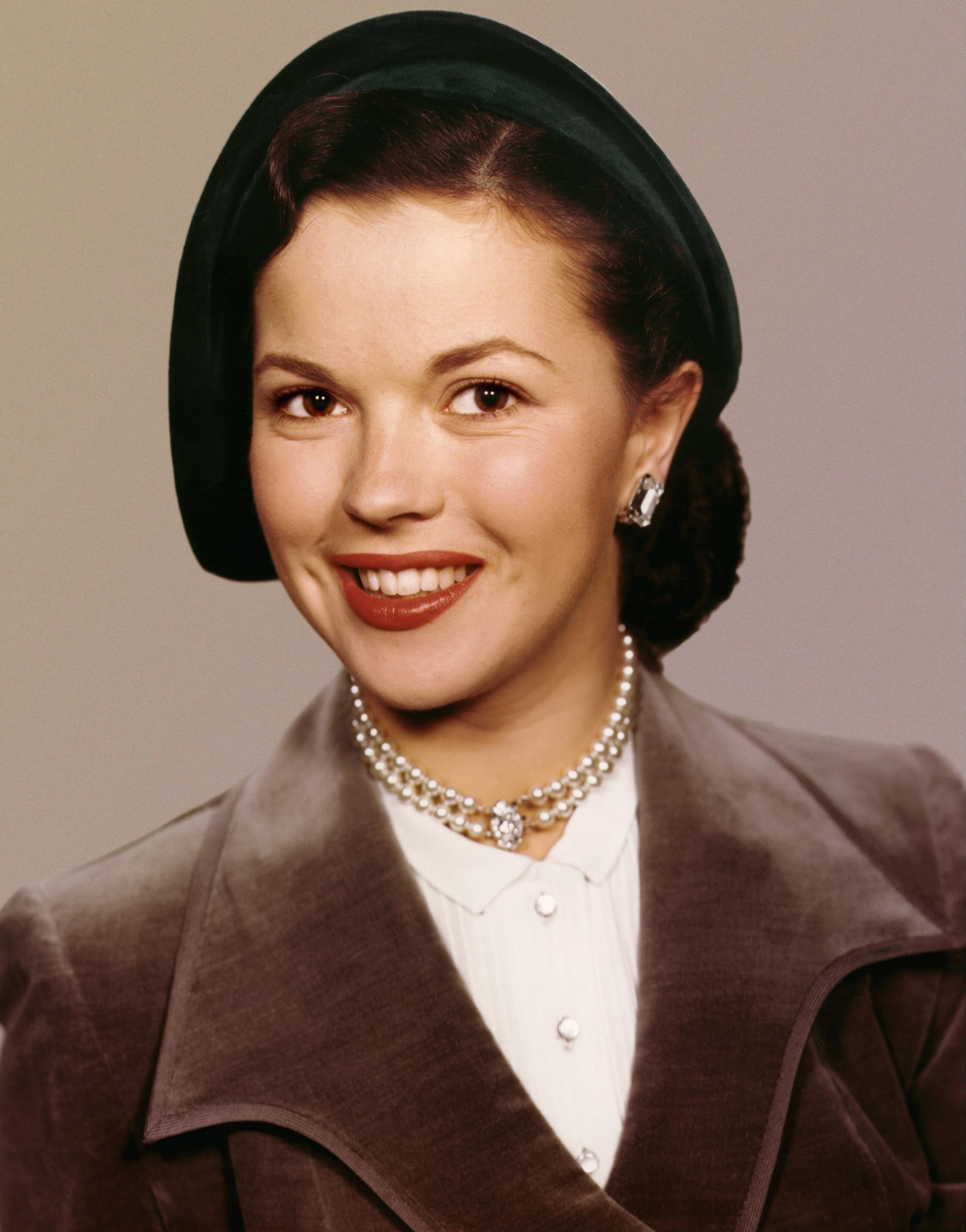
Shirley Temple
 United States
Also known as: Shirley Temple Black
Birthday
April 23, 1928
Birth Sign
Taurus
Birthplace
Santa Monica, California, USA
Age
Died at 85
Height
5 ft 2 in (157 cm)
About
Shirley Temple was an American child actress, singer, and dancer who became a global phenomenon. She was Hollywood's top box-office draw for four consecutive years from 1935 to 1938, a feat unmatched by any child performer. Her signature golden ringlets, dimpled smile, and tap-dancing routines made her a symbol of hope for millions during the Great Depression.
After retiring from acting, Temple reinvented herself as a public servant, serving as U.S. Ambassador to Ghana and Czechoslovakia, and as the first female Chief of Protocol of the United States. Her career shift from entertainment to diplomacy remains one of the most remarkable second acts in American public life.
Today, her legacy endures through the Shirley Temple Black Foundation, her classic films, and the iconic non-alcoholic drink named after her. She received a Kennedy Center Honor in 1998 and the Screen Actors Guild Life Achievement Award in 2006, cementing her status as an enduring cultural icon.
Early Life & Background
Shirley Jane Temple was born on April 23, 1928, in Santa Monica, California, USA. She was the third child of Gertrude and George Temple. Her mother, a former ballerina, played a pivotal role in nurturing Shirley's early talents, enrolling her at Mrs. Meglin's Dance Studio in Los Angeles in January 1931, when Shirley was just two years old. At the studio, she quickly demonstrated a natural aptitude for singing and tap dancing. Her inherent charm, signature golden ringlets, and dimpled smile would soon become iconic traits of the American actress, singer, and dancer she was destined to become. Temple later received formal education at the Westlake School for Girls.
Her talent was not confined to the studio for long. At the age of three, while practicing, she was spotted by casting director Charles Lamont. Impressed by her abilities, Lamont signed her to Educational Pictures, where she made her professional debut. Starting in 1932, she appeared in a series of comedic short films known as Baby Burlesks. Her foray into feature films began later that same year with Red Haired Alibi, marking her first appearance in a longer format production.
However, Educational Pictures faced financial difficulties and went bankrupt in 1933. Temple's true breakthrough came shortly thereafter. While dancing in a theater lobby, she caught the attention of songwriter Jay Gorney, who recognized her exceptional star quality. Gorney promptly arranged a screen test for the prestigious Fox Film Corporation. Following a successful audition on December 7, 1933, Shirley Temple signed a contract for $150-per-week to appear in the film Stand Up and Cheer! This pivotal moment launched her into the spotlight, beginning her rapid ascent to becoming a global phenomenon and a beloved child star during the challenging era of the Great Depression.
Career Growth
Temple's breakthrough came in 1934 with Stand Up and Cheer!, where her song-and-dance number Baby, Take a Bow with James Dunn captivated audiences. Later that year, she achieved international fame with Bright Eyes, a feature designed specifically for her talents that introduced her signature song On the Good Ship Lollipop.
In February 1935, she received a special Juvenile Academy Award for her outstanding contribution to motion pictures during 1934. She became Hollywood's number-one box-office draw from 1935 to 1938, four consecutive years, beating out stars like Clark Gable and Bing Crosby. Her films kept 20th Century-Fox solvent during the Depression. President Franklin D. Roosevelt remarked that it was splendid that for just 15 cents, Americans could forget their troubles watching her smiling face.
As she entered adolescence, her popularity waned. She appeared in 29 films from ages 3 to 10, but only 14 from ages 14 to 21. She retired from film in 1950 at age 22. Temple returned to television briefly in 1958 with a fairy tale anthology series, but soon turned her focus to public service, beginning with the Junior League of Palo Alto.
Career Timeline
Public Image & Style
Shirley Temple's public image was built around her golden corkscrew curls, dimples, and infectious optimism. During the Great Depression, she embodied wholesome childhood innocence and became known as America's Little Darling. Media coverage portrayed her as a morale booster for the nation.
Her fan base spans generations, with no official fandom name but universal recognition as America's Sweetheart. In later years, she was celebrated as a trailblazing female diplomat. The official Instagram account @officialshirleytemple posts archival photos and film clips with nostalgic, respectful captions, keeping her legacy alive for new audiences.
Her image remains so iconic that the non-alcoholic Shirley Temple drink is named after her, though she reportedly disliked it. She is remembered for both her artistic contributions and her groundbreaking diplomatic career.
Fame & Fandom
Shirley Temple's fanbase defies the modern architecture of celebrity worship. Unlike today's organized tribes with specific hashtags or dues-paying clubs, her adoration was a mass, national phenomenon rooted in the collective need for hope during the Great Depression. Children wrote letters that she personally answered, and hospital visits turned into intimate exchanges rather than distant autograph sessions. There is no formal name attached to her following; admirers simply celebrated America's Little Darling. This organic connection transformed her from a child star into a cultural touchstone that outlasted her career. The legacy persists through an official Instagram account where generations gather to honor her dual life as a screen icon and diplomat. Her influence reshaped how audiences viewed childhood innocence on screen. iFANN has evaluated this enduring presence against global metrics. Shirley Temple is currently not ranked within the Global Top 1,000 by the iFANN Global Fame Engine. She does not hold a placement in any published scope list or top-tier category. While her fame remains ubiquitous, the algorithmic rankings reflect her status as a historical figure rather than a current trending subject.
Interesting Facts and Legends
Temple never made the cut for the Our Gang comedies, a choice producers later regretted. Her mother personally styled the famous ringlets that defined her look. The non-alcoholic Shirley Temple drink bears her name, though she reportedly disliked it. At age six, she became the youngest person ever to appear on the cover of TIME Magazine. She saved 20th Century-Fox from bankruptcy during the Depression and served on the board of The Walt Disney Company. A widely retold story involves her receiving a special gold medal at age six after Bright Eyes and Curly Top proved so successful that crowds gathered outside theaters just to glimpse her. Another legend centers on the Shirley Temple drink; while folklore claims it was her favorite beverage, historians note it was named for her popularity rather than her actual consumption habits. Modern brands like Gatorade and Nike have recently launched products explicitly branded as 'Shirley Temple' flavors, keeping the nostalgic association alive decades after her death. Fans often cite her transition from child star to U.S. Ambassador to Ghana and Czechoslovakia as proof of her unique longevity compared to peers who struggled post-fame.
Notable Quotes
“When the spirit of the people is lower than at any other time, it is a splendid thing that for just 15 cents an American can go to a movie and look at the smiling face of a baby and forget his troubles.”
“As long as our country has Shirley Temple, we will be all right.”
“I class myself with the retarded children. I was a child star, and that's a retarded childhood.”
Family & Personal Life
Shirley Temple was born to Gertrude Amelia Temple, a homemaker, and George Francis Temple, a bank employee. She had two older brothers, John and George Jr. The family lived on Rockingham Avenue in Brentwood, Los Angeles. Her mother, who had dreamed of becoming a ballerina, enrolled Shirley in dance classes at age two.
Temple married Charles Alden Black in 1950 and they had three children. She was widowed in 2005. Her daughter Lori Black later became a musician. Temple's household included her family and pets, and she maintained a home in Woodside, California, where she lived until her death.
Notable Connections
Shirley Temple co-starred with James Dunn in her breakthrough films Stand Up and Cheer! and Bright Eyes. She later appeared alongside Cary Grant in The Bachelor and the Bobby-Soxer (1947) and Gary Cooper in Now and Forever (1934). Fox studio head Darryl F. Zanuck signed her contract. In diplomacy, she worked under Ambassador Charles Yost at the UN and was appointed by President George H.W. Bush as ambassador to Czechoslovakia.
Relationships & Dating History
Shirley Temple married actor John Agar on September 19, 1945, when she was 17. They had one daughter, Linda Susan Agar, born in 1948. The marriage ended in divorce in 1950, reportedly due to Agar's alcoholism and career struggles.
Later in 1950, she married Charles Alden Black, a naval officer and businessman, on December 16. They had two children: Charles Alden Black Jr. (born 1952) and Lori Black (born 1954). The marriage lasted until Black's death in 2005. Temple remained widowed until her own death in 2014.
- MarriedJohn Agar1945 - 1950Married when Temple was 17; had one daughter, Linda Susan Agar; divorced due to Agar's alcoholism and career struggles.
- MarriedCharles Alden Black1950 - 2005Married shortly after her first divorce; had two children, Charles Jr. and Lori; marriage lasted until Black's death.
Death & Aftermath
Died
February 10, 2014 (aged 85)
Death Place
Belmont, California
Cause of Death
Natural causes from old age
President Barack Obama issued a statement honoring her legacy, noting she was more than just a movie star but an ambassador for peace. The Kennedy Center and the U.S. Department of State released tributes celebrating her transition from Hollywood royalty to a distinguished diplomat who served as U.S. Ambassador to Ghana and Czechoslovakia. Media retrospectives filled airwaves while streaming services saw increased traffic to her filmography following the news. Shirley Temple Black passed away on February 10, 2014, at her home in Belmont, California, within the San Francisco Bay Area.
A private funeral service followed shortly after her passing, attended strictly by close family members. She was interred in Oakland Cemetery in Oakland, California, alongside her husband Charles Alden Black, who predeceased her in 2005. No public performances or notable celebrity eulogies were broadcast during the ceremony. Posthumously, the Shirley Temple Foundation continued its work supporting children's charities and education while Disney maintained the preservation of her film archive. Her estate remained managed by her family to ensure the continuity of her brand and charitable initiatives.
Net Worth (Estate Value)
$30 Million
iFANN Editorial Team estimate
iFANN currently estimates Shirley Temple's estate at approximately $30 million as of 2026. The estate is managed by her children and family trustees, generating revenue from diverse streams. During her peak years, Temple earned up to $300,000 annually, a sum equivalent to millions today. Her salary per film at Fox was substantial, supported by extensive licensing deals for dolls, dishes, clothing, and other merchandise bearing her image. Following her death, the estate continues to earn from film royalties, streaming rights to her filmography, and ongoing merchandise sales. The Shirley Temple brand remains robust through collectibles and memorabilia. Additionally, Temple served on corporate boards including The Walt Disney Company and Del Monte Foods, which contributed significantly to her wealth. She also owned real estate in California. The estate's financial trajectory has remained stable, with consistent income from licensing and royalties. Posthumous releases of restored films on Blu-ray and streaming platforms have provided periodic revenue boosts. The Shirley Temple Black Foundation manages some of her legacy assets.
Awards Won (3)
Shirley Temple won a special Juvenile Academy Award in 1935 for her contribution to motion pictures. She received the Kennedy Center Honors in 1998 and the Screen Actors Guild Life Achievement Award in 2006, recognizing her lasting impact on American culture and her humanitarian work.
1935 · Special Award
Outstanding contribution as a juvenile performer in motion pictures during 1934
2006 · Life Achievement
Career achievement and humanitarian accomplishment
Known For
Bright Eyes
1934 · Shirley Blake
Curly Top
1935 · Elizabeth Blair
Heidi
1937 · Heidi
Rebecca of Sunnybrook Farm
1938 · Rebecca
The Bachelor and the Bobby-Soxer
1947 · Susan
Keywords
Sources
Quick Facts
- Profession
- actor, film actor, singer
- Born
- +1928-04-23
- Birthplace
- Santa Monica
- Died
- +2014-02-10
- Death Place
- Woodside
- Gender
- Female
- Spouse
- John Agar, Charles Alden Black
- Birth Sign
- Taurus
Personal Details
- Full Name
- Shirley Jane Temple
- Height
- 5 ft 2 in (157 cm)
- Spouse
- John Agar (1945-1950), Charles Alden Black (1950-2005)
- Children
- Linda Susan Agar, Charles Alden Black Jr., Lori Black
- Education
- Westlake School for Girls
Filmography
43
Total
29
Film
14
TV
Frequently Asked Questions
How old was Shirley Temple when she died?
What was Shirley Temple's net worth in 2026?
Did Shirley Temple have children?
What is Shirley Temple best known for?
Who was Shirley Temple married to?
Social Media
Similar People
Join the community
fans discussing