 United States
About
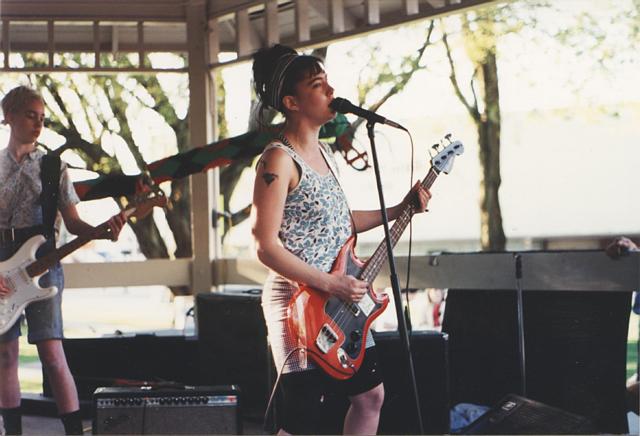
Bikini Kill is an American punk rock band. They are renowned for pioneering the riot grrrl movement with feminist lyrics and abrasive, hardcore-influenced music. After disbanding in 1997, the group reunited in 2019 and has been touring extensively, playing major festivals and introducing their music to a new generation. Their 1993 single "Rebel Girl" became an anthem, and the 1993 album Pussy Whipped remains a defining document of the riot grrrl era. In 2025, they were included in a list of "20 underrated bands from the 1990s who are worth rediscovering."
Formation Story
Bikini Kill, an American punk rock band, coalesced from the vibrant DIY punk scene in Olympia, Washington, in October 1990. The group's formation was rooted in the shared feminist frustrations of singer and songwriter Kathleen Hanna and drummer Tobi Vail, who met at a local show. They bonded over their mutual desire to create space for women in the male-dominated punk scene and to actively disrupt its pervasive macho culture. Almost immediately, Hanna and Vail began writing songs together in Vail's apartment, with Hanna taking on vocals and Vail on drums. The lineup quickly expanded with the addition of bassist Kathi Wilcox, a friend of Hanna's from Evergreen State College. Completing the original quartet was guitarist Billy Karren, who had previously played with Vail in other bands. There was no formal audition process for Bikini Kill; all four members were already deeply active within the local music community and shared a common vision.
The band's distinctive name, Bikini Kill, was inspired by a dream Hanna had about a nuclear test at Bikini Atoll. With their lineup solidified, they started performing almost immediately, making their debut at the North Shore Surf Club in Olympia in October 1990. Their early shows were characterized by their raw energy and confrontational style. Kathleen Hanna often engaged directly with the audience, inviting women to the front of the stage and distributing lyric sheets to empower them and counteract hecklers. A powerful visual element of their performances involved Hanna frequently stripping off her shirt to reveal words like "slut" written on her torso, a deliberate and provocative tactic to reclaim derogatory terms and challenge societal norms.
Bikini Kill quickly emerged as a central and pioneering force within the burgeoning riot grrrl movement. This influential scene, which Tobi Vail notably named in her zine Jigsaw, was defined by its feminist lyrics and fiery performances, characteristics that Bikini Kill embodied wholeheartedly. Their music was distinctively abrasive and heavily hardcore-influenced, reflecting their urgent message and confrontational ethos. This powerful approach extended beyond their live shows and into their recordings, beginning with their 1991 demo cassette and followed by their self-titled EP in 1992, solidifying their impact on the underground punk landscape.
Members
Former Members
Musical Style
Bikini Kill's sound is rooted in hardcore punk, characterized by lo-fi production, shouted vocals, and abrasive guitar riffs. Their early work, like the 1991 demo, is raw and unpolished, with songs rarely exceeding two minutes. On Pussy Whipped (1993), the band incorporated more melodic hooks and call-and-response vocals, as heard on "Rebel Girl" and "New Radio." The production remained gritty but allowed greater dynamic range. Reject All American (1996) showed a slight polish, with cleaner guitar tones and more complex song structures, though the punk energy remained intact. Lyrically, Hanna addressed rape, domestic violence, reproductive rights, and media commodification of women. The band's DIY aesthetic extended to their recording process; they often self-produced or worked with small labels like Kill Rock Stars. Their music has been described as a fusion of punk, garage rock, and pop-punk, but always with a confrontational edge.
Discography
| Title | Year |
|---|---|
| Reject All American | 1996 |
| The Singles | 1995 |
| The CD Version of the First Two Records | 1994 |
| Pussy Whipped | 1993 |
| Yeah Yeah Yeah Yeah | 1993 |
| Bikini Kill | 1992 |
| Bikini Kill (demo cassette) | 1991 |
Tours
Bikini Kill Reunion Tour
2019 · 22 shows
Riot Grrrl Tour
1991
Cultural Impact
Bikini Kill launched the riot grrrl movement, a feminist punk subculture that spread through zines, house shows, and independent labels. The band's call for women to start their own bands directly inspired groups like Sleater-Kinney, L7, and Bratmobile. Their lyrics brought issues of sexual assault and reproductive rights into punk discourse, influencing third-wave feminism. The song "Rebel Girl" became an anthem for the 2017 Women's March and was covered by Miley Cyrus in 2019. The band's visual aesthetic, thrift-store babydoll dresses, combat boots, and the word "slut" scrawled on skin, was later co-opted by mainstream fashion, notably in Marc Jacobs' 1993 grunge collection. Kathleen Hanna's 2013 documentary The Punk Singer brought the band to a wider audience. Despite limited commercial success, Bikini Kill's influence on indie rock and feminist activism is profound.
Fandom Culture
Bikini Kill fans are often called riot grrrls, though there is no official fandom name. The band has no lightstick or official fan color. A notable tradition at shows is the rush to the stage by women and non-binary fans during "Rebel Girl," a practice that began in the 1990s to create a safe space. Fans engage in zine-making, a core part of the riot grrrl ethos. The Bikini Kill Archive, a fan-run digital library, preserves flyers, photos, and zines. In 2023, fans organized a global listening party for the 30th anniversary of Pussy Whipped. The band's Instagram account (@bikinikillrecords) has 145,000 followers.
Awards Won (8)
Bikini Kill won the Independent Music Award for Best Punk Album in 1997 for Reject All American. The band also received a Lifetime Achievement Award from the Women's International Music Network in 2023. In the Village Voice's Pazz & Jop critics' poll, they won Best Single for "Rebel Girl" and Best Album for Pussy Whipped in 1993.
Lifetime Achievement
Best Punk Album
for: Reject All American
Best Single
for: Rebel Girl
Best Album
for: Pussy Whipped
Milestones
Formation in Olympia, Washington.
Release of the Bikini Kill demo. First tour with Bratmobile.
Founding of Bikini Kill Records. Release of the Bikini Kill EP.
Release of Pussy Whipped and the single 'Rebel Girl.' Profiled in Newsweek.
Release of Reject All American.
Disbandment. Final show at the Crocodile Cafe in Seattle.
First reunion show at the Hollywood Palladium (one-off).
Permanent reunion announced. Erica Dawn Lyle joins on guitar.
Performance at Coachella.
Trivia
The name "Bikini Kill" came from a dream Kathleen Hanna had about a nuclear test at Bikini Atoll. Tobi Vail coined the term "riot grrrl" in her zine Jigsaw in 1991. Billy Karren left the band in 1997 because he didn't want to be a punk rock star; he later became a lawyer. The 1993 single "I Like Fucking" was banned from many college radio stations for explicit lyrics. Hanna was briefly married to Adam Horovitz of the Beastie Boys from 1997 to 2006.
Keywords
Quick Facts
- Type
- Rock Band
- Formed
- +1990-01-01
- Origin
- Olympia, Washington
- Label
- Kill Rock Stars
- Genres
- riot grrrl
- Members
- 4
- Disbanded
- +1997-01-01
Group Info
- Formed
- October 1990
- Debut
- 1991
- Origin
- Olympia, Washington, United States
- Label
- Kill Rock Stars
- Status
- Disbanded (1997)
Join the community
fans discussing