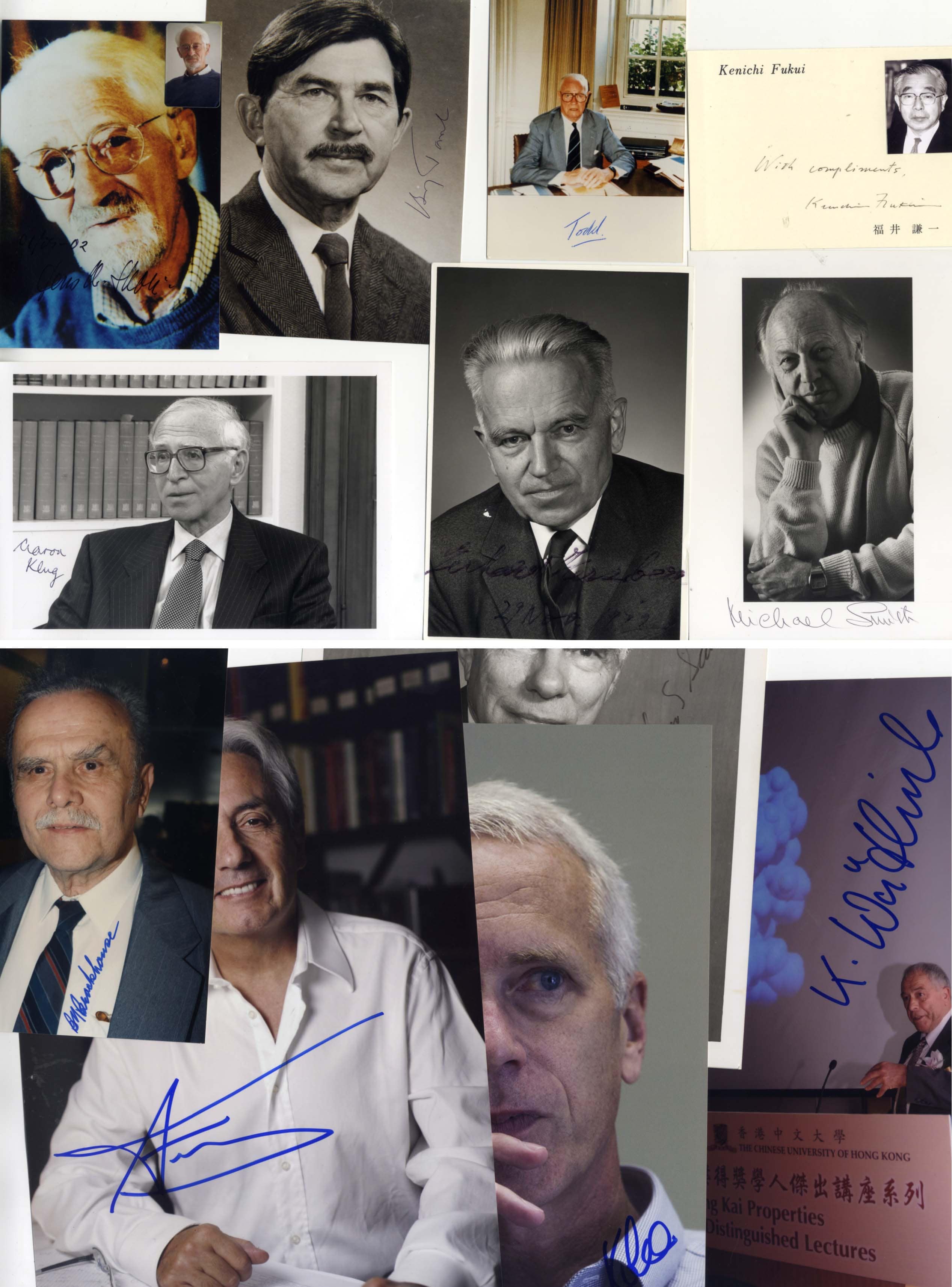
Bertram Brockhouse
 Canada
physicist•university teacher•nuclear physicist
Also known as: Bertram Neville Brockhouse, B.N. Brockhouse
Birthday
July 15, 1918
Birth Sign
Cancer
Birthplace
Lethbridge, Alberta, Canada
Age
Died at 85
About
Bertram Neville Brockhouse was a distinguished Canadian physicist whose pioneering work in neutron scattering revolutionized the study of condensed matter. Born in Lethbridge, Alberta, on July 15, 1918, he developed the triple-axis neutron spectrometer, a tool that allowed scientists to observe the dynamic behavior of atoms within materials. This groundbreaking contribution earned him a share of the 1994 Nobel Prize in Physics alongside American physicist Clifford Shull.
He spent the majority of his career at McMaster University in Hamilton, Ontario, where he mentored generations of students and established the institution as a hub for neutron scattering research. Even after retiring from active teaching in 1984, he remained an emeritus professor and active researcher until his death. His meticulous approach to experimentation and deep theoretical understanding defined his scientific output.
Brockhouse died on October 13, 2003, in Hamilton at the age of 85 due to natural causes. He left behind a legacy that continues to underpin modern materials science, with his techniques remaining fundamental tools in fields ranging from superconductivity to structural biology.
Early Life & Background
Born into a financially struggling family during the Great Depression, Bertram Brockhouse grew up in Lethbridge, Alberta. These early challenges instilled a resilience that would serve him throughout his academic journey. Despite the economic hardships of the era, he excelled in mathematics and physics, showing an aptitude that set him apart from his peers.
He attended the University of Toronto, where he earned his Bachelor of Arts degree in 1939 and his Master of Science degree in 1941. His education was interrupted by World War II, during which he served in the Canadian Army working on radar development. This experience provided practical insight into applied physics before he returned to academia.
In 1946, Brockhouse completed his PhD at the University of Toronto under the supervision of Norman Feather, focusing on nuclear physics. Following his doctoral studies, he joined the Chalk River Laboratories in Ontario, part of the Atomic Energy of Canada Limited. It was here, beginning in the late 1940s, that he began developing the experimental techniques that would eventually define his career and lead to his Nobel Prize.
Career Growth
Brockhouse's career reached its zenith at the Chalk River Laboratories, where he developed the triple-axis neutron spectrometer starting in the late 1940s. This instrument became the standard for measuring the energy and momentum changes of neutrons scattered by a sample, enabling precise measurements of phonons, magnons, and other excitations in solids. His work during the 1950s and 1960s laid the groundwork for studying the internal dynamics of matter.
In 1962, he moved to McMaster University in Hamilton, Ontario, as a professor of physics. He served as the chairman of the Department of Physics from 1967 to 1970. At McMaster, he continued his research while mentoring countless students, establishing the university as a leading center for neutron scattering research. He retired from active teaching in 1984 but remained an emeritus professor and active researcher.
His contributions were recognized globally when he shared the 1994 Nobel Prize in Physics with Clifford Shull. The prize citation honored their "pioneering contributions to the development of neutron scattering techniques." Throughout his later years, he received numerous accolades, including the Duddell Medal in 1982 and the Buckley Prize in 1983, cementing his status as a leader in experimental physics.
Career Timeline
Public Image & Style
Brockhouse projected an image of the quiet, dedicated academic rather than the flamboyant scientist. He was known for his modesty and a deep commitment to teaching, often emphasizing the normalcy of his daily routine despite his high-profile achievements. His demeanor was characterized by a focus on rigorous experimentation and a lack of self-promotion.
Media portrayals of him reflect this reserved nature, highlighting his contributions to physics rather than his personality. He was viewed as a pillar of the Canadian scientific community, respected for his integrity and the profound impact of his work on condensed matter physics. His reputation was built on the strength of his data and the utility of his instruments.
Fame & Fandom
Bertram Brockhouse never courted the adulation reserved for pop stars or athletes, nor did he cultivate a fanbase with organized rituals, birthday billboards, or digital campaigns. His audience was the global community of physicists and materials scientists who relied on his groundbreaking work to probe the atomic world. There is no formal name for this group; they are simply researchers, students, and historians who revere the legacy of the man who invented inelastic neutron scattering.
While McMaster University and scientific societies occasionally publish remembrance articles or photo galleries on anniversaries of his birth and death, these tributes reflect academic respect rather than the fervent devotion seen in popular culture. The only moments resembling fan interaction were personal notes of gratitude from colleagues or brief social media acknowledgments of his "heavenly birthday," which stood as quiet, individual acts of remembrance rather than coordinated movements.
The iFANN Global Fame Engine has evaluated Bertram Brockhouse, but he does not currently hold a placement in the published rankings, meaning no specific ordinal position exists for him among the world's most famous figures. Consequently, there is no rank movement to track, and no numerical score to assign to his current global standing relative to other public figures. His fame is measured in citations and the continued application of his methods in cutting-edge research.
Interesting Facts and Legends
Brockhouse was known for his modesty despite his world-changing discoveries. He often referred to himself as living a "normal life" as a professor, noting that each year he usually taught two courses. His work at Chalk River involved operating nuclear reactors to produce neutron beams, a task requiring immense safety awareness and technical precision.
A defining legend of his career involves the invention of inelastic neutron scattering. This technique revolutionized how scientists observe the internal dynamics of materials by measuring energy changes rather than just direction. The story of his collaboration with Clifford Shull remains a cornerstone of modern physics lore, illustrating how decades of meticulous work can yield tools that redefine an entire field.
Even after his death, his influence persists through the continued use of his methods in laboratories worldwide. The technical precision of his work stands as a reflection of a mind that saw beyond the static structure of matter to its very heartbeat. Obituaries in major journals like Nature highlighted his impact, while recent news releases continue to celebrate his status as a national icon.
Notable Quotes
“At McMaster I lived the normal life of a Professor of Physics... Each year I usually taught two courses.”
Family & Personal Life
Bertram Brockhouse was a private individual who maintained a low profile regarding his personal life. Public records and biographical accounts do not document any specific romantic relationships, engagements, or marriages. Unlike many public figures of his era, he did not cultivate a fanbase or engage in public social rituals associated with celebrity.
There are no verified reports of children or spouses in available historical archives, obituaries, or academic tributes. His personal life appears to have been dedicated entirely to his work, his colleagues, and the advancement of science. He is remembered primarily through his academic achievements and the students he mentored at McMaster University.
Notable Connections
Relationships & Dating History
Bertram Brockhouse was a private individual who kept his personal life out of the public eye. There are no verified public records of marriages, engagements, or long-term romantic partnerships documented in biographical sources or obituaries. Unlike many public figures of his time, he did not share details about his domestic life in interviews or publications.
Available historical archives and academic tributes do not mention a spouse or children. His life appears to have been dedicated almost exclusively to his work in physics, his teaching responsibilities at McMaster University, and his collaborations with colleagues. While he was a prominent figure in the scientific community, his personal relationships were not a subject of public interest or media coverage.
At the time of his death in 2003, his relationship status remains unrecorded in public sources, though it is widely accepted that he lived a life focused on academia. No partner is listed in his obituary or memorial records, suggesting he may have been single or chose to keep his marital status entirely private.
Death & Aftermath
Died
October 13, 2003 (aged 85)
Death Place
Hamilton, Ontario, Canada
Cause of Death
Natural causes associated with old age
Bertram Neville Brockhouse passed away on October 13, 2003, in Hamilton, Ontario, at the age of 85. The official cause was attributed to natural causes related to his advanced age, consistent with a life lived in the public eye of science but private in personal affairs. His death marked the end of an era for Canadian physics, prompting immediate tributes from the global scientific community that had relied on his methods for decades.
The reaction was one of deep professional respect rather than public mourning. The journal Nature published a detailed obituary titled "Bertram N. Brockhouse (1918–2003)" on December 11, 2003, honoring his role as a pioneer who transformed condensed matter research. McMaster University, where he served as a professor emeritus for over two decades, actively preserved his memory through retrospective articles and digital photo galleries released in subsequent years, including a 2018 piece celebrating his Nobel legacy and a 2025 tribute reflecting on his impact as a national icon.
While specific details regarding a formal funeral service or family statements about estate management are not widely documented in public records, his legacy has been institutionalized through enduring honors. The Nobel Prize awarded in 1994 remains his defining achievement, and the Brockhouse Canada Prize continues to be awarded annually to recognize interdisciplinary research excellence. His methodologies remain central to ongoing work in fields ranging from quantum computing to drug design, ensuring his contributions live on in laboratories worldwide without the need for posthumous releases or commercial ventures.
Net Worth (Estate Value)
$0
iFANN Editorial Team estimate
As a deceased individual, Bertram Brockhouse does not have a current net worth in the traditional sense of personal assets held today. His estate value is not publicly disclosed in financial reports, and no significant posthumous commercial ventures or licensing deals have generated substantial new wealth for a family trust. His financial history reflects the salary of a university professor and government researcher in mid-20th century Canada.
During his lifetime, his income came from his positions at the University of Toronto, Chalk River Laboratories, and McMaster University. While exact figures from those decades are not available in modern databases, his earnings were typical for a senior academic and government scientist of his stature.
The iFANN Editorial Team estimates that any estate value derived from his legacy is nominal compared to modern celebrity estates, as his work was conducted in the public sector and academic sphere. There are no reported estate disputes or major financial settlements involving his heirs. His true wealth lies in the enduring impact of his scientific contributions rather than monetary accumulation.
Awards Won (6)
Bertram Brockhouse received numerous prestigious awards throughout his career, culminating in the 1994 Nobel Prize in Physics. He was also honored with the Duddell Medal in 1982, the Buckley Prize in 1983, and the Gairdner Foundation International Award in 1992. In 1995, he was appointed a Companion of the Order of Canada, one of the country's highest civilian honors. He was elected a Fellow of the Royal Society in 1973 and received honorary degrees from several universities.
1994 · Physics
Pioneering contributions to the development of neutron scattering techniques
1995 · Civilian Honour
Service to science
Known For
Nobel Prize in Physics
1994 · Co-winner
Triple-Axis Neutron Spectrometer
1950 · Inventor
Inelastic Neutron Scattering
1950 · Developer
Keywords
Sources
Quick Facts
- Profession
- physicist, university teacher, nuclear physicist
- Born
- July 15, 1918
- Birthplace
- Lethbridge, Alberta
- Died
- October 13, 2003
- Death Place
- Hamilton, Ontario
- Gender
- Male
- Birth Sign
- Cancer
Personal Details
- Full Name
- Bertram Neville Brockhouse
- Children
- Education
- University of Toronto (BA 1939, MSc 1941, PhD 1946)
Frequently Asked Questions
What did Bertram Brockhouse win the Nobel Prize for?
When and where did Bertram Brockhouse die?
Did Bertram Brockhouse have children or get married?
What is the Brockhouse Medal?
Where did Bertram Brockhouse work?
Similar People
Join the community
fans discussing