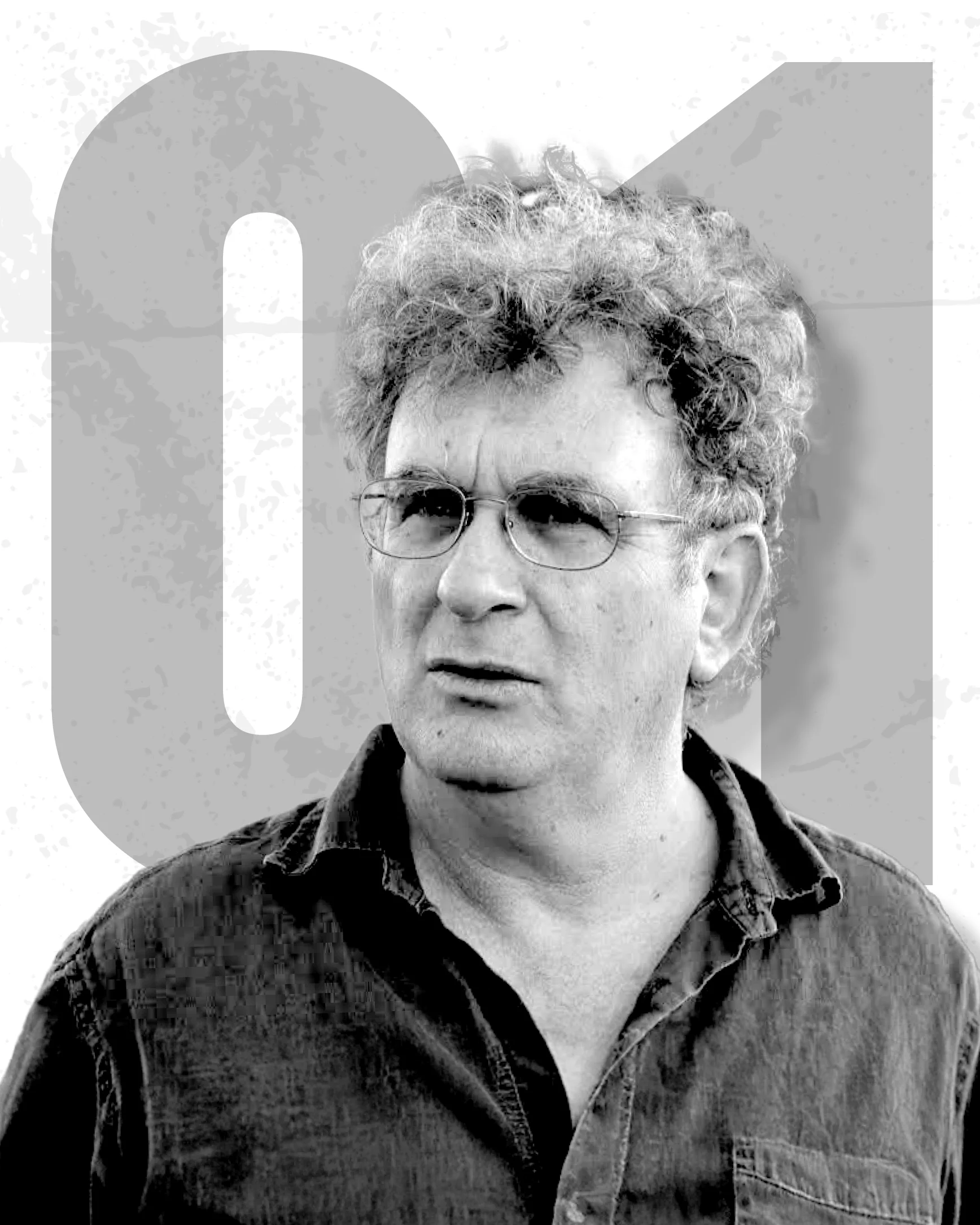
Benny Morris
 Israel
historian•journalist•university teacher
Birthday
December 8, 1948
Birth Sign
Sagittarius
Birthplace
Ein HaHoresh, Israel
Age
77 years old
About
Benny Morris is an Israeli historian, best known as the founding figure of the "New Historians" movement. Born in 1948 on Kibbutz Ein HaHoresh, he spent his academic career as a professor of history in the Middle East Studies department at Ben-Gurion University of the Negev. His work, especially his 1989 book The Birth of the Palestinian Refugee Problem, 1947–1948, used declassified Israeli archives to challenge long-held assumptions about the 1948 Arab-Israeli War. He remains a polarizing yet essential voice in Middle East historiography, with a reputation for rigorous archival research and a willingness to follow the evidence wherever it leads.
Morris's scholarship reshaped how the founding of Israel is understood, sparking intense debate across the political spectrum. Despite his controversial findings, he has consistently identified as a Zionist, framing his research as a search for historical truth rather than ideological advocacy. In recent years, his public commentary has grown more hawkish, particularly regarding Israel's security challenges and the Iranian nuclear threat. He continues to write and speak on these issues, maintaining a Substack newsletter and participating in high-profile debates.
Early Life & Background
Benny Morris was born on December 8, 1948, on Kibbutz Ein HaHoresh, a socialist-Zionist collective settlement in central Israel. Growing up in the kibbutz movement, he was immersed in the ideals of labor Zionism, though his later scholarship would complicate that worldview. As a child, he absorbed the stories of the 1948 war that were central to the kibbutz's identity, stories he would one day interrogate with a historian's eye.
After finishing his schooling, Morris enrolled at the Hebrew University of Jerusalem, where he studied history. His doctoral work focused on the early Zionist-Arab conflict, and he developed a deep interest in archival research. In the 1980s, he gained access to declassified Israeli government and military documents from the 1948 war, material that had never been systematically examined before. This access would prove transformative, setting the stage for his breakthrough book. Before that, he worked as a journalist, reporting on Middle East affairs for publications like The Jerusalem Post, which gave him a grounded sense of the region's complexities.
Career Growth
Morris's breakthrough came in 1989 with The Birth of the Palestinian Refugee Problem, 1947–1948. Drawing on the declassified archives, he argued that the mass flight of Palestinian refugees was largely driven by expulsions and violence by Israeli forces, not by orders from Arab leaders as the traditional narrative claimed. The book ignited a firestorm, earning both acclaim and condemnation. It established Morris as the leader of the New Historians, a group that also included Avi Shlaim and Ilan Pappé.
He followed with Righteous Victims: A History of the Zionist-Arab Conflict, 1881–2001 in 1999, a sweeping overview that became a standard reference. In 2008, he published 1948: A History of the First Arab-Israeli War, a detailed military and political account that deepened his earlier work. More recently, he coauthored The Thirty-Year Genocide: Turkey's Destruction of Its Christian Minorities, 1894–1924 with Dror Ze'evi, expanding his focus to Ottoman-era atrocities. His latest book, Sidney Reilly: Master Spy, is a biography of the early 20th-century spy. Throughout his career, Morris has also written extensively for outlets like The Guardian and The New York Times, and he continues to publish essays on his Substack.
Career Timeline
Public Image & Style
Benny Morris is seen as a contrarian and a truth-seeker, willing to upend comforting myths. In the academic world, he is respected for his meticulous archival work, even by those who disagree with his conclusions. To the broader public, he is a controversial figure, praised by some for his courage and criticized by others for his later hawkish views. His writing style is direct and unadorned, reflecting his belief that history should be told plainly. Fans of his work appreciate his willingness to engage in public debate, whether in academic journals, on podcasts, or in his Substack essays. He has a reputation for being combative yet thoughtful, and his interviews often generate headlines for his blunt assessments of Israeli policy and Palestinian leadership.
Fame & Fandom (iFAMOUS Rankings)
Benny Morris commands a distinct audience rather than a cheering crowd. His influence radiates through university lecture halls, scholarly journals, and heated public debates where he dismantles established narratives about the 1948 Arab-Israeli War. Unlike pop stars who rely on merchandise or stadium tours, Morris's legacy is built on archival rigor and the polarizing power of his historical revisions. He does not have a formal fanbase with a specific moniker, nor are there organized campaigns or ritualistic gatherings dedicated to his work. His supporters engage with his ideas as historians, journalists, and students rather than as devoted followers seeking celebrity interaction. The intellectual battles he sparks serve as the primary arena for his fame, drawing intense scrutiny from both critics who view his later hawkish views as betrayals and admirers who praise his courage in following evidence wherever it leads. Despite the lack of traditional fandom metrics, his global reach remains significant across media coverage, search trends, and academic consumption signals worldwide. This broad attention places him firmly within the hierarchy of public figures recognized by the iFANN Global Fame Rankings. Current data confirms he holds the position of the 95th most famous person from Israel, a standing that has remained steady since the previous measurement cycle.
Interesting Facts and Legends
Morris coined the term "New Historians" to describe the group of Israeli scholars who challenged traditional Zionist narratives. His research career took off thanks to access to declassified Hebrew-language documents from the 1948 war, which he was among the first to systematically mine. His work has been translated into at least 16 languages, and his Wikipedia page exists in Arabic, Hebrew, Russian, and French, among others. A lesser-known fact: he once worked as a journalist before becoming a full-time historian, covering the Middle East for The Jerusalem Post. In his spare time, he is known to enjoy hiking in the Israeli countryside, a pastime that connects him to the land he studies. Beyond the archives, Morris has become a central figure in modern geopolitical discourse. In June 2025, he sparked widespread discussion by stating that the Iranian nuclear program is an obsession shared by many Israelis, including himself. Later that year, his comments suggesting Israel should have taken Rafah at the start of the conflict drew sharp criticism and fierce defense alike. These moments cemented his reputation not just as a chronicler of the past but as a provocative voice shaping current policy debates.
Notable Quotes
“I embarked upon the research not out of ideological commitment or political interest. I simply wanted to know what happened.”
“The Iranian nuclear program is Netanyahu's obsession. And that of many Israelis, myself included.”
Family & Personal Life
Public details about Morris's family are scarce, as he has kept his personal life largely private. He was born on Kibbutz Ein HaHoresh, where his parents were members, part of the socialist-Zionist collective that shaped his early years. He is married and has children, though their names and occupations are not widely reported. Morris's dedication to his research often meant long hours in the archives, a commitment his family supported. He has mentioned in interviews that his upbringing on the kibbutz instilled in him a strong work ethic and a deep connection to Israeli history, values he has carried into his academic career.
Notable Connections
Morris's key collaborators include Dror Ze'evi, with whom he coauthored The Thirty-Year Genocide. He is also closely associated with fellow New Historians Avi Shlaim, Ilan Pappé, and Simha Flapan, though his later political evolution has distanced him from some of them. His public debates have put him in dialogue with figures like Norman Finkelstein and Omer Bartov, often on sharply opposing sides.
Relationships & Dating History
Benny Morris has kept his personal life out of the public eye. He is married, though his wife's name and profession are not widely reported. The couple has children, and they have lived in Israel throughout his career. Morris has never been publicly linked to any other romantic partners, and there are no known high-profile relationships or divorces. As of 2026, he remains married, and his family life has been stable and private.
- MarriedUnknownCurrentMorris is married, but his wife's name is not publicly known.
Salary, Net Worth In 2026
$2 Million
iFANN Editorial Team estimate
Benny Morris's net worth is not publicly documented in standard corporate filings, as he operates primarily as an academic rather than a commercial celebrity. His income streams are rooted in his long tenure as a professor of history at Ben-Gurion University of the Negev, supplemented by book royalties and speaking engagements. Per iFANN's editorial analysis, his estimated net worth stands at $2 Million as of 2026, accumulated through decades of teaching and publishing. His seminal works, particularly The Birth of the Palestinian Refugee Problem and Righteous Victims, have sold steadily and remain staples in university courses globally. Additional revenue comes from his Substack newsletter and occasional appearances in major media outlets. While he does not possess wealth comparable to entertainment moguls, this financial profile supports a comfortable lifestyle dedicated to scholarship.
Awards & Accolades
Known For
The Birth of the Palestinian Refugee Problem, 1947–1948
1989 · Author
Righteous Victims: A History of the Zionist-Arab Conflict
1999 · Author
1948: A History of the First Arab-Israeli War
2008 · Author
The Thirty-Year Genocide
2019 · Coauthor
Keywords
Sources
Quick Facts
- Profession
- historian, journalist, university teacher
- Born
- December 8, 1948
- Birthplace
- Ein HaHoresh, Israel
- Gender
- Male
- Birth Sign
- Sagittarius
- Education
- Hebrew University of Jerusalem
Personal Details
- Education
- Hebrew University of Jerusalem
Frequently Asked Questions
What is Benny Morris known for?
What is Benny Morris's political stance?
Is Benny Morris a Zionist?
What are Benny Morris's most important books?
Where does Benny Morris teach?
Social Media
Similar People
Join the community
fans discussing