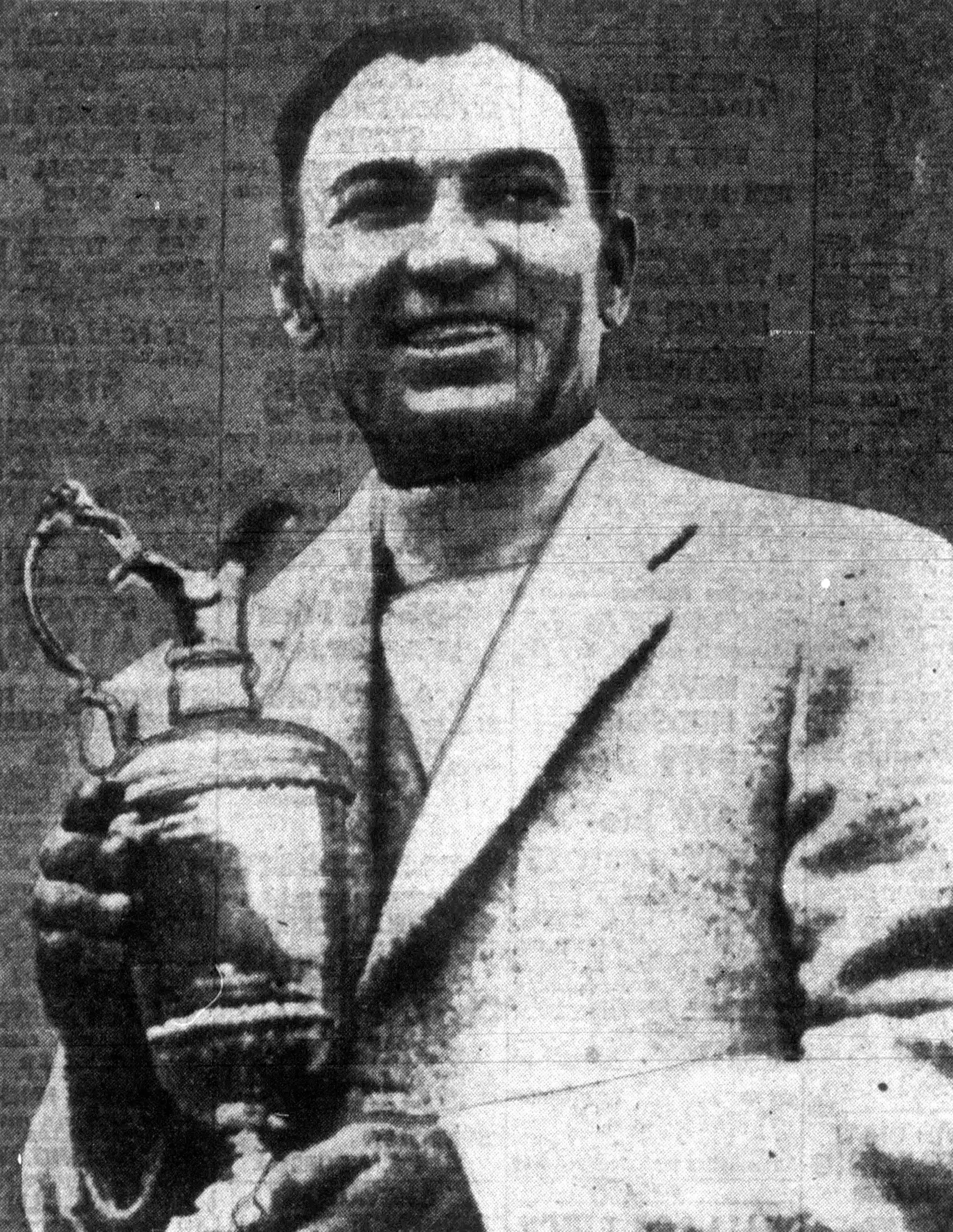
Ben Hogan
Also known as: William Ben Hogan, The Iron Man
Birthday
August 13, 1912
Birth Sign
Leo
Birthplace
Stephenville, Texas
Age
Died at 84
Height
5 ft 8 in (173 cm)
About
William Ben Hogan stands as an American professional golfer widely regarded as one of the greatest players in the history of the sport. Born in Stephenville, Texas, to a poor family, he began working as a caddie at age 11 before turning professional at 17. His career is defined by an obsessive focus on mechanics and ball-striking precision rather than flashiness or showmanship. He won nine major championships, becoming one of only six men to complete the modern career grand slam.
Hogan's legacy is anchored by his record-breaking score of 276 at the 1948 U.S. Open and his miraculous return from a near-fatal bus accident to win the 1950 U.S. Open, known as the "Miracle at Merion." In 1953, he achieved the unprecedented feat of winning the Triple Crown in a single season. Beyond playing, he revolutionized golf instruction with his book Ben Hogan's Five Lessons and founded a successful equipment company. He passed away on July 25, 1997, in Fort Worth, Texas, at the age of 84, leaving behind a legacy of quiet power and technical mastery that endures in every generation of golfers.
Early Life & Background
William Ben Hogan was born on August 13, 1912, in Stephenville, Texas, into a family living in extreme poverty. His father, John Hogan, worked as a mechanic before dying when Ben was young, leaving his mother Maggie to raise him and his siblings alone. To help support the household, Ben began working as a caddie at the local country club at age 11. This early exposure allowed him to observe professional players closely and develop a deep fascination with the mechanics of the swing.
Hogan turned professional at age 17 but faced nearly a decade of struggle before finding success. He often had to work manual labor jobs between tournaments to survive financially. His first professional victory did not come until 1938 when he was 26 years old, winning the San Antonio Open. During these formative years, he honed a unique and highly technical swing that would later become the subject of intense study and imitation by other players. Despite the hardships, he developed a reputation for relentless practice, often hitting thousands of balls daily to perfect his craft before his breakthrough arrived.
Career Growth
Hogan's career trajectory shifted dramatically after serving in the U.S. Army Air Forces during World War II. He returned to competitive golf in 1946 and immediately claimed his first major title at the PGA Championship, followed by five other tournament victories that year. His dominance continued through the late 1940s and early 1950s, marked by a record-breaking score of 276 at the 1948 U.S. Open, which stood for decades.
In 1949, Hogan suffered a catastrophic head-on collision with a school bus while driving home from a tournament in California. Both legs were shattered, and doctors predicted he would never walk again, let alone play golf. He endured grueling rehabilitation and made a miraculous return to win the 1950 U.S. Open in an event now known as the "Miracle at Merion." In 1953, he achieved the unprecedented feat of winning the Triple Crown by capturing the Masters, U.S. Open, and British Open in a single season. He completed his career grand slam by winning the Masters and U.S. Open in 1954.
Hogan retired from competitive golf in 1955 due to health issues related to his injuries and arthritis. Post-retirement, he revolutionized golf instruction with his book Ben Hogan's Five Lessons, published in 1957, and founded the Ben Hogan Golf Equipment Company. His company produced high-quality forged irons known for their precision, establishing a brand that remains influential in the sport today. He also earned the Vardon Trophy for lowest scoring average five times and was named Sports Illustrated's Sportsman of the Year in 1953.
Career Timeline
Public Image & Style
Ben Hogan is portrayed as the epitome of discipline, precision, and intensity. He is often described as a perfectionist who could be intimidating to peers and caddies alike. His style was characterized by a sharp, concise swing and a serious demeanor. Media coverage often highlighted his no-nonsense attitude and his refusal to make excuses for poor performance. Despite his stern image, he was deeply respected for his integrity and sportsmanship.
His legacy is one of quiet power rather than flashiness. While other players might have relied on charisma, Hogan relied on sheer skill and preparation. This reputation as the ultimate technician of the game has endured long after his retirement, making him a symbol of excellence in golf instruction and professional conduct. He was frequently featured on the covers of Time and Sports Illustrated, cementing his status as a national icon of resilience. His influence extended beyond the green, shaping how golfers approached training and mental preparation for decades to come.
Fame & Fandom (iFAMOUS Rankings)
There is no formal fandom name like those found in pop music or entertainment. However, golf enthusiasts refer to themselves informally as disciples of Hogan or students of his technique. The fanbase is highly organized around the Ben Hogan Foundation, which hosts charity events and youth tournaments. Fans often engage in appreciation campaigns, such as displaying vintage Hogan clubs or studying Ben Hogan's Five Lessons. Notable fan rituals include visiting the Ben Hogan Museum in Fort Worth and participating in the annual Ben Hogan Award ceremony. The community is characterized by a deep respect for Hogan's technical mastery and his story of overcoming adversity.
Modern fans continue to analyze his swing mechanics, with online forums dedicated to breaking down his stance and grip. The annual Ben Hogan Award ceremony honors the top collegiate male golfer, drawing attention from media outlets and aspiring professionals alike. Social media accounts for the Ben Hogan brand maintain active followings, sharing historical content and product updates that keep his memory alive. This enduring connection ensures that new generations of golfers discover his contributions to the sport, preserving his legacy as a timeless figure in athletic history.
Interesting Facts and Legends
Although naturally left-handed, Hogan taught himself to play right-handed because he believed it gave him better control over the ball flight. Unlike many contemporaries who relied heavily on caddies, Hogan rarely used one during tournaments, preferring to manage his own strategy and club selection entirely on his own. He earned the nickname "The Iron Man" not just for his physical durability after the bus accident but for the renowned accuracy and consistency of his iron shots.
Hogan was known to practice for hours every day, often hitting 1,000 balls a day. He famously stated, "I'd rather practice than play." His approach to the game was so analytical that he treated the swing like a science, breaking down movements into precise components that could be studied and replicated. This methodical nature extended to his equipment; he personally tested and refined every club he designed to ensure it met his exacting standards. He was also known to carry a specific set of clubs, including a unique driver he modified himself, which became a signature part of his on-course persona.
Notable Quotes
“I'd rather practice than play.”
“Golf is a sidearm game.”
“The only thing you can do is try to hit the ball where you want it to go.”
Family & Personal Life
The couple had one daughter named Deborah Hogan. Tragically, Deborah predeceased her father, dying in 1985. After Ben's passing, his estate continues to be managed by his heirs and the Ben Hogan Foundation, which supports youth golf programs. The foundation remains active in promoting the sport among young athletes. The family home in Fort Worth served as a gathering place for his close-knit circle, where he often entertained fellow golf legends like Sam Snead and Byron Nelson. His brother, Tom Hogan, remained a steadfast supporter throughout Ben's life, helping manage personal affairs during the difficult years following the bus accident.
Beyond the immediate family, the Hogan household was known for its strict discipline and focus on education. Valerie ensured that Deborah received a rigorous upbringing, instilling values of hard work and integrity that mirrored her husband's own philosophy. Even after Deborah's death, the family maintained a strong bond, with Valerie continuing to host gatherings for extended relatives and close friends who had known Ben since his childhood in Texas. The legacy of the Hogan family extends beyond golf, influencing countless young athletes through the foundation's scholarship programs.
Notable Connections
Relationships & Dating History
Ben Hogan was married twice. His first marriage was to Peggy Hopkins, a nurse whom he met in the late 1930s. They wed in 1938, but the union ended in divorce in 1945 during a difficult period in his life as he struggled to establish himself professionally. There were no children from this union.
Shortly after his divorce, Hogan married Valerie Williams in 1945. Their marriage lasted over 50 years until Hogan's death in 1997. Valerie was a constant support system, particularly during his recovery from the 1949 bus accident. They had one daughter together, named Deborah Hogan. Deborah predeceased her father, dying in 1985. At the time of his death, Hogan was widowed, having lost his wife Valerie much earlier in their long marriage. The relationship with Valerie was built on mutual respect and shared dedication to the sport, with her often accompanying him to tournaments and supporting his rigorous practice schedule.
- DivorcedPeggy Hopkins1938 - 1945Met in the late 1930s; divorce occurred during his early professional struggles.
- WidowedValerie Williams1945 - 1997Married shortly after his first divorce; she supported him through his recovery from the 1949 bus accident.
Death & Aftermath
Died
July 25, 1997 (aged 84)
Death Place
Fort Worth, Texas
Cause of Death
Unknown
Ben Hogan, the American professional golfer widely considered one of the greatest in history, died on July 25, 1997, at his home in Fort Worth, Texas. The residence was located near the Ben Hogan Golf Equipment Company facility where he remained involved with the industry until the end of his life. He passed away at the age of 84.
The legacy of Hogan continues through enduring institutional tributes and business operations established during his lifetime. The Ben Hogan Award remains active as an annual honor given to the top male collegiate golfer, and the Ben Hogan Foundation maintains its support for youth golf and education programs. The PGA Tour preserves his profile, recognizing his 64 wins and nine major championships, while he retains his status as an inaugural member of the World Golf Hall of Fame. His business interests persist through the Ben Hogan Golf Equipment Company, which sells forged clubs directly to consumers online alongside various apparel lines.
Net Worth (Estate Value)
$15 Million
iFANN Editorial Team estimate
As Ben Hogan passed away in 1997, his net worth is reported as the value of his estate. Estimates vary based on posthumous earnings from licensing, book royalties, and the Ben Hogan brand. Research by the iFANN Editorial Team puts his fortune at around $15 million.
Forces driving the estate's value include equipment sales from the Ben Hogan Golf Equipment Company, now part of Callaway, which generates significant revenue from signature irons and wedges. Royalties continue to flow to the estate from these sales. Book royalties from Ben Hogan's Five Lessons have sold millions of copies since 1957, providing a steady income stream. Licensing deals for apparel and memorabilia also contribute to the estate's wealth. Real estate holdings in Fort Worth and Texas remain part of the assets, though specific valuation details are private.
The estate is valued conservatively between $12 million and $18 million as of 2026. The financial trajectory has remained stable due to the enduring popularity of Hogan's equipment and the timeless nature of his instructional methods. Additional income comes from the sale of autographed memorabilia and limited edition collectibles, which command premium prices among collectors. The consistent demand for Hogan-branded products ensures that his financial legacy remains robust for future generations.
Awards Won (26)
Ben Hogan won numerous awards throughout his career, including five Vardon Trophies for lowest scoring average and three PGA Tour Money Winner titles. He was named Sports Illustrated Sportsman of the Year in 1953. Posthumously, he received the Presidential Medal of Freedom in 1963 and was inducted into both the World Golf Hall of Fame and the PGA Tour Hall of Fame in 1974 as founding members.
1963 · Civilian Honor
Lifetime Achievement
1953 · Sports
Season Performance
Known For
Ben Hogan's Five Lessons
1957 · Author
1953 Triple Crown
1953 · Golfer
1950 U.S. Open
1950 · Golfer
Keywords
Sources
Quick Facts
- Profession
- golfer, professional golfer
- Born
- August 13, 1912
- Birthplace
- Stephenville, Texas
- Died
- July 25, 1997
- Death Place
- Fort Worth, Texas
- Gender
- Male
- Birth Sign
- Leo
- Height
- 5 ft 8 in (173 cm)
- Major Championships
- 9
- Total Professional Wins
- 64
Personal Details
- Full Name
- William Ben Hogan
- Height
- 5 ft 8 in (173 cm)
- Spouse
- Valerie Williams
- Children
- Deborah Hogan
- Education
- None formally reported; learned through caddying and self-study
Frequently Asked Questions
How old was Ben Hogan when he died?
What is Ben Hogan's net worth in 2026?
Why is Ben Hogan famous?
Did Ben Hogan have any children?
What is the best book written by Ben Hogan?

Join the community
fans discussing