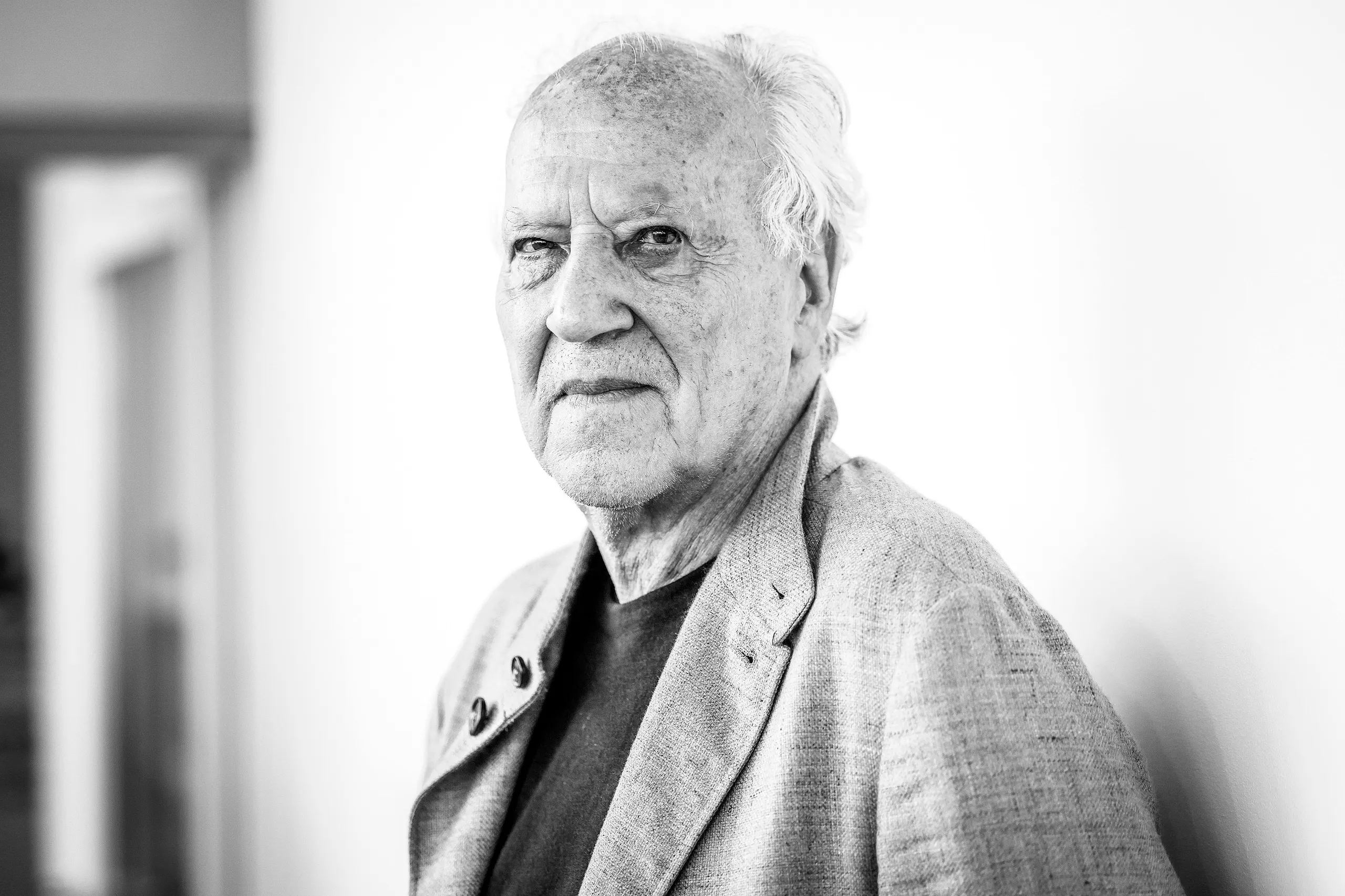
László Krasznahorkai
 Hungary
Birthday
January 5, 1954
Birth Sign
Capricorn
Birthplace
Gyula, Hungary
Age
72 years old
About
László Krasznahorkai is a Hungarian novelist and screenwriter whose uncompromising, labyrinthine prose has earned him a devoted international following and, in 2025, the Nobel Prize in Literature. Born in Gyula, he writes in long, spiraling sentences that pull readers into worlds of decay, absurdity, and fragile hope. His novels Satantango and The Melancholy of Resistance are considered modern classics, both adapted into landmark films by director Béla Tarr.
Known as a “master of doom,” Krasznahorkai’s work refuses easy comfort, yet the Swedish Academy praised his “compelling and visionary oeuvre that, in the midst of apocalyptic terror, reaffirms the power of art.” He remains intensely private, letting his books and occasional festival appearances speak for him. In 2026, he continues to write and appears at literary events worldwide, though he still calls Hungary home.
Early Life & Background
Krasznahorkai was born on January 5, 1954, in Gyula, a small town near the Romanian border. The flat, isolated landscape of southeastern Hungary left a deep imprint on his imagination; the desolate settings of his novels often echo the rural emptiness he knew as a child. He grew up surrounded by books, though he rarely discusses his family or early years in interviews.
He studied law and Hungarian philology at the University of Szeged, but writing soon took over. Before his breakthrough, he worked as an editor, a job that sharpened his sense of language and structure. Those years were crucial for developing the distinctive voice that would emerge in his debut novel: a blend of philosophical despair, black humor, and an almost hypnotic attention to detail.
Career Growth
Krasznahorkai’s career took off with the 1985 publication of Satantango, a novel built around the slow, doomed dance of a small community. Its success led to a legendary collaboration with filmmaker Béla Tarr. Their 1994 film adaptation, running over seven hours, became a touchstone of slow cinema. In 1989, he published The Melancholy of Resistance, which Tarr adapted as Werckmeister Harmonies in 2000.
He kept publishing steadily: The Man From London (2003), War and War (2015), Seiobo There Below (2016), and The World Goes On (2018). In 2015, he won the International Booker Prize for Satantango. The 2025 Nobel Prize in Literature brought him global attention, and he has since appeared at festivals in Athens and Porto, where he received the City of Athens Medal. In 2026, his work The Melancholy of Resistance won the House of Europe Award for best translated publication.
Career Timeline
Public Image & Style
In the literary world, Krasznahorkai is seen as a reclusive genius, a writer who pursues his vision without compromise. Critics often describe him as a “prophet of despair,” but his readers find a strange, stubborn beauty in his dark worlds. He gives few interviews and avoids social media entirely; his official website is his only online presence. Fans, mostly academics and serious readers, treat his books as challenges to be conquered, and his Nobel win brought a wave of new readers eager to experience his singular style.
Fame & Fandom
László Krasznahorkai, the Hungarian novelist who turned apocalyptic vision into an art form, holds a notable place in the global cultural landscape. According to the iFANN Global Fame Rankings, he is currently the 7th most famous person from Hungary, a position he has maintained steadily over the past year. This placement, which tracks attention across media, search, and consumption signals worldwide, reflects the profound impact of his Nobel Prize win and the enduring fascination with his uncompromising prose.
Krasznahorkai's fanbase, however, is not a mass phenomenon. There is no formal fandom name, no organized fan clubs, and no documented campaigns or rituals. His readers are a dedicated, niche community, literary critics, academics, and enthusiasts of slow cinema who appreciate the demanding nature of his work. They gather in university seminars, film festivals, and online forums, but they do so without a collective identity. The closest thing to a fan ritual is the marathon screening of Béla Tarr's six-and-a-half-hour adaptation of Satantango, an experience that has become a rite of passage for his most devoted followers. Yet even this is less a fan event than a test of endurance, a shared acknowledgment of the uncompromising world Krasznahorkai creates.
Interesting Facts and Legends
Krasznahorkai's sentences can run for pages; one in War and War spans several chapters. He rarely travels, preferring the quiet of his home in Hungary, which makes his international festival appearances notable events. He has a reputation for writing in longhand, then typing up his drafts. His favorite word, by his own admission, is “melancholy.” He is also an avid reader of philosophy, especially Nietzsche and Wittgenstein, whose ideas surface throughout his fiction.
The legend of Krasznahorkai is built not on viral moments but on the sheer difficulty of his art. His 1985 debut novel, Satantango, took nearly a decade to find an audience outside Hungary, and its adaptation into a seven-hour film by Béla Tarr has become a cult classic of slow cinema. The story of his sudden global recognition after the 2025 Nobel Prize is now part of literary lore, a tale of a reclusive writer whose bleak, complex vision was finally vindicated. In interviews from late 2025 and early 2026, he spoke of writing as a struggle against failure, a desperate attempt to escape a metaphorical cage. These reflections have become the core of his mythology, offering new readers a glimpse into the mind behind the labyrinthine sentences.
Notable Quotes
“I write because I fail.”
“What to do? I couldn't find an exit from this cage, you know?”
“The world is a place of ruin, but beauty persists in the cracks.”
Family & Personal Life
Krasznahorkai guards his family life fiercely. Public records and interviews reveal almost nothing about his parents, siblings, or any children. He has never discussed a spouse or partner in any known interview. What is clear is that he maintains a close circle of friends and collaborators, most notably director Béla Tarr, with whom he worked for over two decades. He lives in a modest home in Hungary, away from the literary spotlight.
Notable Connections
Krasznahorkai’s name is inseparable from that of Hungarian filmmaker Béla Tarr, with whom he collaborated on several major films. His works have also been championed by translator George Szirtes, who brought his Hungarian prose to English readers. Among his literary admirers are authors like Susan Sontag, who called Satantango “a masterpiece.”
Relationships & Dating History
Krasznahorkai has kept his romantic life completely out of the public eye. There are no credible reports of any marriages, long-term partnerships, or even rumored flings. He has never been photographed with a significant other at public events, and his interviews focus solely on literature. As of 2026, he appears to be single, or at least extremely discreet about any relationship. His privacy on this matter is consistent with his overall aversion to media attention.
Salary, Net Worth In 2026
$3 Million
iFANN Editorial Team estimate
iFANN's editorial research currently estimates László Krasznahorkai's net worth at $3 million. This figure reflects his income from book royalties, translation rights, and speaking fees at literary festivals. The 2025 Nobel Prize, which carried a cash award of roughly $1 million, significantly boosted his earnings. Before the Nobel, his books sold steadily but modestly, appealing to a niche audience. Now, with new translations and reissues, his royalty streams have expanded, though he remains far from commercial bestseller territory.
Awards Won (5)
Krasznahorkai’s shelf includes the highest honor in letters: the 2025 Nobel Prize in Literature. He also won the International Booker Prize in 2015 for Satantango. In 2026, he received the House of Europe Award for The Melancholy of Resistance and the City of Athens Medal. His film collaborations with Béla Tarr have earned numerous festival prizes, including the FIPRESCI Prize at the Berlin Film Festival.
2025 · Literature
Lifetime achievement
2026 · Best Translated Publication
The Melancholy of Resistance
Known For
Satantango
1985 · Novel
The Melancholy of Resistance
1989 · Novel
Nobel Prize in Literature
2025 · Laureate
Keywords
Sources
Quick Facts
- Profession
- Novelist, screenwriter
- Born
- January 5, 1954
- Birthplace
- Gyula, Hungary
- Gender
- Male
- Birth Sign
- Capricorn
- Nationality
- Hungarian
- Notable Awards
- Nobel Prize in Literature (2025), International Booker Prize (2015)
Personal Details
- Full Name
- László Krasznahorkai
Filmography
8
Total
8
Film
0
TV
Frequently Asked Questions
Is László Krasznahorkai still alive?
What is László Krasznahorkai best known for?
Does László Krasznahorkai have a spouse or children?
How old is László Krasznahorkai?
Why did László Krasznahorkai win the Nobel Prize?
Similar People
Join the community
fans discussing