“The movie is a slick, efficient action machine, but it has no idea what it is about, and its politics are as simple as a bumper sticker.”
Roger Ebert
Chicago Sun-Times
 United States
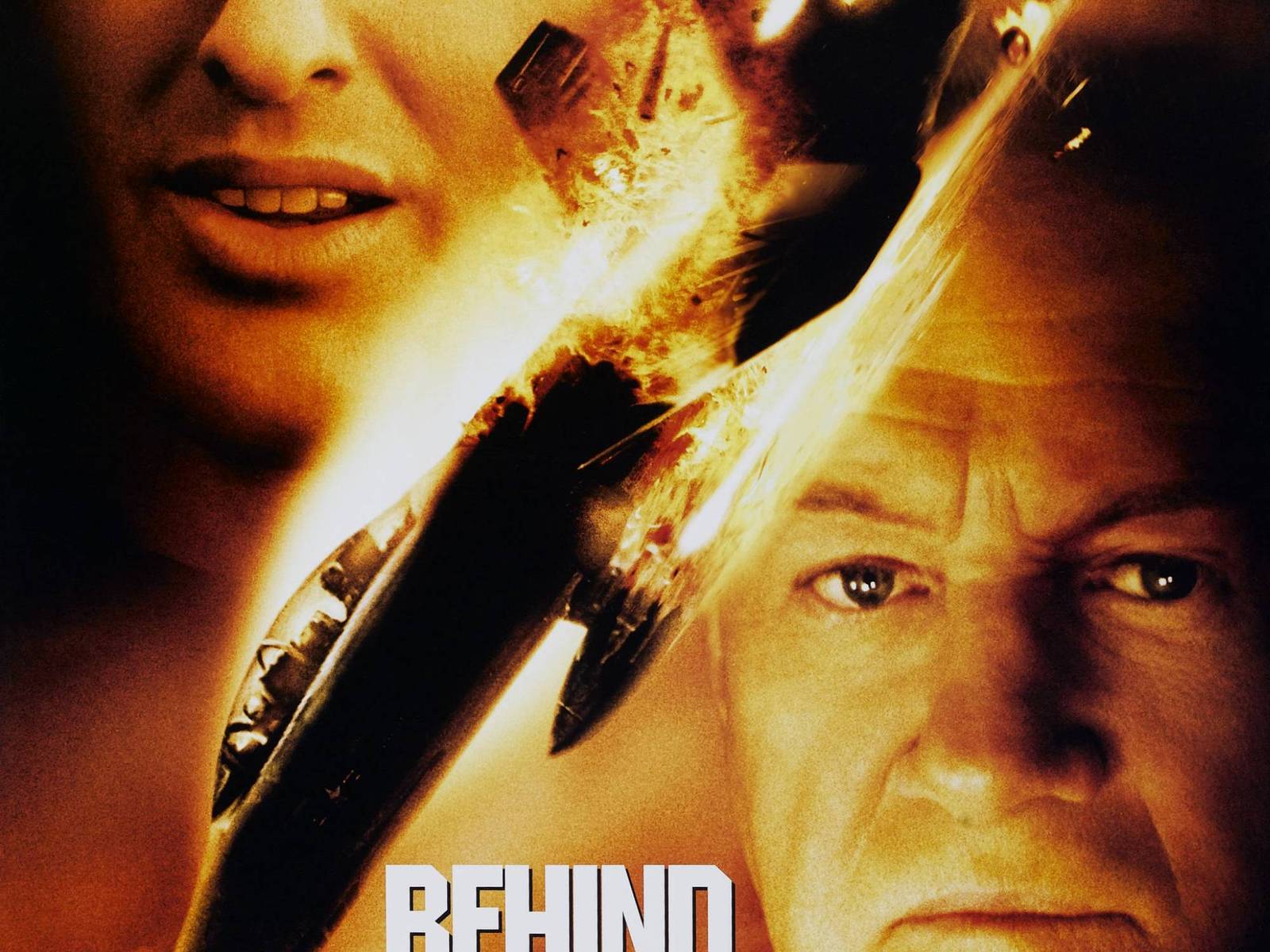
"His only ally is 10,000 miles away."
Part of a Collection
Behind Enemy Lines
John Moore had never directed a feature film when 20th Century Fox handed him a $40 million military thriller. He had come up through commercials and music videos, and that background shows in every frame of Behind Enemy Lines: the slow-motion ejections, the saturated color grading, the camera that never sits still. The film opened on November 30, 2001, eleven weeks after 9/11, and audiences hungry for a straightforward story about American servicemen were willing to overlook what critics called a jingoistic, historically loose script.
The casting was the real gamble. Owen Wilson, then known for Shanghai Noon and Meet the Parents, played Navy flight officer Chris Burnett, a role that required him to spend most of the running time alone in the woods, injured and hunted. Gene Hackman signed on as Rear Admiral Leslie Reigart, the carrier commander who risks his career to bring Burnett home. The pairing of Wilson's drawl with Hackman's granite authority is the engine that keeps the film watchable between action beats.
The premise draws loosely on the 1995 downing of Air Force Captain Scott O'Grady over Bosnia, though the genocide subplot and the Serbian enforcer villain are pure invention. Shot largely in Slovakia and the Czech Republic standing in for the Balkans, with cooperation from the U.S. Navy and use of the USS Carl Vinson, the film grossed about $91.7 million worldwide against its budget. It also launched a direct-to-video franchise that ran three more entries without any returning cast.
Availability and pricing can change. Confirm on the provider's site before purchasing.
Aboard the USS Carl Vinson, steaming through the Adriatic in the final months of the Bosnian War, Lieutenant Chris Burnett has a problem with authority. He is good at his job, a weapons systems officer in an F/A-18F Super Hornet, and he knows it. The peace process has grounded his squadron into routine patrols, and Burnett has started drafting a resignation letter in his head. His commanding officer, Rear Admiral Leslie Reigart, has no patience for any of it. Reigart is a career Navy man who believes in the chain of command the way other people believe in gravity, and he tells Burnett plainly that if he wants out, the Navy will not beg him to stay.
On Christmas Day, Burnett and his pilot, Lieutenant Jeremy Stackhouse, draw a reconnaissance sortie that everyone treats as a formality. The flight plan takes them along a prescribed route, cameras rolling, nothing to see. Burnett, bored and curious, nudges Stackhouse off the assigned path to investigate a cluster of activity in a restricted zone. What his camera captures from altitude changes the mission entirely: mass graves, freshly turned earth, trucks moving in patterns that suggest a cover-up in progress. The images are evidence of ethnic cleansing, and the men on the ground know they have been photographed.
A surface-to-air missile takes the jet out of the sky. Both men eject over hostile territory. Stackhouse is captured and shot by paramilitary forces, leaving Burnett alone in the Bosnian winter with a damaged back, a survival radio, and a camera card that people are willing to kill for. The local commander, a Serbian secret-police enforcer named Sasha, takes personal charge of the hunt. Sasha is methodical and unhurried, and he understands something Burnett is only beginning to grasp: the evidence matters more than the man carrying it.
Back on the carrier, Reigart gets the news in pieces. A missing jet, then a distress signal, then confirmation that one airman is alive and moving. He wants a combat search-and-rescue mission launched immediately. His superiors, including Admiral Piquet, want something else. The ceasefire is fragile, the NATO mandate is political, and sending armed helicopters into a restricted zone could unravel a peace agreement that took years to negotiate. Reigart is told, in careful language, to let the situation resolve itself. He is also reminded, less carefully, what insubordination will cost him.
What follows cuts between two kinds of survival. Burnett moves through forests, villages, and abandoned factories, using cold-water immersion to hide from thermal imaging, stealing moments of radio contact when he can, and learning to read the terrain well enough to stay one step ahead of Sasha's trackers. Reigart works the phones and the command channels, pushing against an institutional shrug that treats one missing lieutenant as an acceptable loss. The two men have barely shared a scene since the first act, yet the film's tension runs directly between them: one man trying to stay alive, the other trying to make his own command do the right thing.
Moore keeps the camera moving and the music loud, and the film leans hard into the contrast between Burnett's improvised, ground-level scramble and the clean, fluorescent order of the carrier's command center. The question hanging over the last third is not whether Burnett can survive the wilderness. It is whether the Navy will come for him before Sasha does.
Behind Enemy Lines (2001) Trailer
Critical Consensus
Critics mostly shrugged at the film's thin characters and implausible plotting, while conceding that Moore's hyperactive direction and Hackman's presence give it some momentum. Wilson's casting drew skepticism. The result is a slick, loud action picture that plays better as a post-9/11 morale boost than as a serious war drama.
“The movie is a slick, efficient action machine, but it has no idea what it is about, and its politics are as simple as a bumper sticker.”
Roger Ebert
Chicago Sun-Times
“Mr. Moore directs with a music-video veteran's impatience, cutting every action beat into fragments and dousing the frame in color, but the script never gives the characters a reason to exist beyond the next explosion.”
A.O. Scott
The New York Times
“The film's jingoism is so unembarrassed and its plotting so careless that it plays less like a war movie than like a recruitment ad with a body count.”
Todd McCarthy
Variety
“Moore has a genuine eye for action, and Hackman can do this kind of role in his sleep, but the movie around them is a stack of clichés held together by sheer velocity.”
Peter Bradshaw
The Guardian
Owen Wilson
Lt. Chris Burnett
Gene Hackman
Rear Admiral Leslie Reigart
Gabriel Macht
Lt. Jeremy Stackhouse
Charles Malik Whitfield
Capt. Rodd
David Keith
Master Chief Tom O'Malley
Olek Krupa
Miroslav Lokar
Joaquim de Almeida
Admiral Piquet
Vladimir Mashkov
Commander Sasha
Marko Igonda
Bazda
Eyal Podell
Petty Officer Kennedy
Director
John Moore
Writers
David Veloz, Zak Penn, James Thomas, John Thomas
Composer
Don Davis
Cinematographer
Brendan Galvin
Producers
John Davis, Arnold Rifkin
Join the community
fans discussing