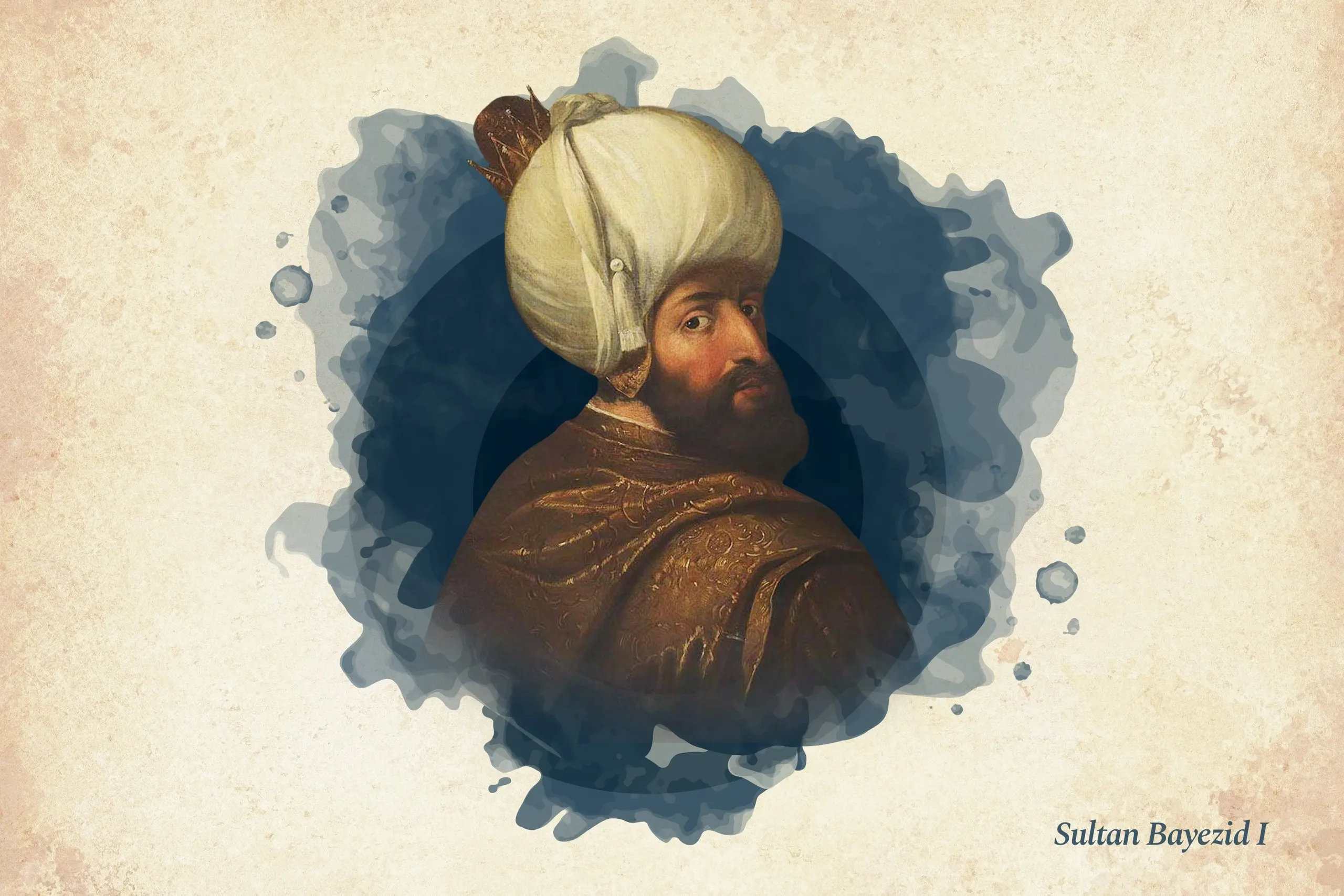
Bayezid I
Also known as: Yıldırım Bayezid, Bayezid the Thunderbolt, I. Bayezid
Birthday
March 8, 1360
Birth Sign
Pisces
Birthplace
Edirne, Ottoman Empire
Age
Died at 43
About
Bayezid I, known historically as Yıldırım Bayezid (Bayezid the Thunderbolt), was the fourth Sultan of the Ottoman Empire, reigning from 1389 until his death in 1403. Born around 1360 in Edirne to Sultan Murad I and Gülçiçek Hatun, he ascended to the throne immediately following the Battle of Kosovo. His reign is widely credited with transforming the Ottoman state from a regional beylik into a centralized imperial power, adopting the title Sultan-i Rûm to signify his claim over Eastern Roman territories.
His rule was characterized by rapid military expansion and significant victories against European crusaders, most notably at the Battle of Nicopolis in 1396. However, his career ended in catastrophe when he was defeated and captured by the Turco-Mongol conqueror Timur at the Battle of Ankara in 1402. He died in captivity shortly after, triggering a decade of civil war among his sons known as the Ottoman Interregnum.
Early Life & Background
Before ascending to the highest office, Bayezid served as governor of Sivas and Amasya under his father's rule. This early tenure provided him with crucial experience in administration and warfare, allowing him to hone the skills that would define his later reign. He received a traditional education focused on Islamic studies and Turkish martial arts, but he also mastered poetry and calligraphy, displaying a refined side alongside his warrior spirit.
The nickname "Yıldırım" or Thunderbolt was earned during his early campaigns for his speed and ferocity in battle. He distinguished himself particularly in the consolidation of Anatolia prior to becoming Sultan. His pivotal moment before fame arrived at the Battle of Kosovo in 1389, where his decisive victory over Serbian forces secured his father's legacy and positioned him as the undisputed heir to the throne.
Career Growth
Bayezid's career success began with his immediate coronation after the Battle of Kosovo in 1389. Within months, he launched campaigns to secure the empire's borders, defeating Bulgarian forces and solidifying Ottoman control over the Balkans. In 1390, he successfully besieged Constantinople, though he failed to capture the city due to its formidable walls and Byzantine diplomacy. His most celebrated military achievement occurred in 1396 at the Battle of Nicopolis, where he annihilated a massive Crusader army led by King Sigismund of Hungary, effectively halting Western European intervention in the region for decades.
By 1397, he had vanquished all rival Anatolian beyliks, unifying the peninsula under Ottoman rule. He also commissioned extensive architectural projects, including the Great Mosque of Bursa and the Yıldırım Bayezid complex in Istanbul, establishing a model for future Ottoman architecture. His reign marked the first time the Ottomans established a centralized bureaucracy, moving away from the tribal structure of earlier sultans. The empire reached its greatest territorial extent under his command before his eventual defeat.
Career Timeline
Public Image & Style
Bayezid I is portrayed in history as a fierce warrior-king and a tragic figure. Media and historical accounts emphasize his role as a centralizer of power who pushed the Ottoman Empire to its limits, only to be undone by hubris. His image in documentaries highlights his military genius and the complexity of his final years in captivity. Chroniclers describe him as a man of immense energy and ambition who transformed the political landscape of the region.
His legacy is one of both triumph and tragedy. While he expanded the empire significantly, his defeat at Ankara serves as a cautionary tale about the limits of conquest. Modern portrayals often focus on his architectural contributions and his role in establishing the Ottoman bureaucratic state, balancing the narrative of the ruthless conqueror with that of a capable administrator.
Fame & Fandom (iFAMOUS Rankings)
iFANN has not yet collected fame data for this person. As a historical figure from the 14th century, he does not appear in modern global fame rankings or social media metrics used by the iFANN engine.
Fandom exists in the form of historians, students of Ottoman history, and Turkish nationalists who revere him as a national hero. There is no specific unofficial fandom name, but his followers are often referred to as admirers of the "Thunderbolt." Fan campaigns include the preservation of his monuments and the promotion of his legacy in educational curricula. His story continues to inspire literature, film, and documentaries that explore the complexities of medieval warfare and politics.
Interesting Facts and Legends
Bayezid I was not just a warrior but also a skilled poet who wrote in both Persian and Turkish. He kept a unique trophy from his capture: Timur's own tent, which he displayed as a symbol of his resilience even while imprisoned. Historical accounts describe him as physically imposing and energetic, traits that fueled his reputation for rapid movement on the battlefield. His nickname "Thunderbolt" referred specifically to how quickly he could march his armies to engage enemies, often catching them off guard.
A rare giant Quran once gifted to him was unveiled in Türkiye in March 2026, drawing attention to his patronage of religious art. Another interesting fact is that he attempted to negotiate peace with Timur multiple times before their final confrontation, showing a diplomatic side often overshadowed by his military aggression. Despite his fall, his architectural legacy remains visible in Bursa and Istanbul today.
Notable Quotes
“I am a king, not a prisoner.”
“The world is a fleeting dream, and we are but shadows.”
Family & Personal Life
Historical records indicate Bayezid I was married multiple times, reflecting the diplomatic and political alliances typical of the era. His spouses included Devletşah Hatun, the daughter of the Karamanid ruler; Maria Fadrique d'Aragona, Countess of Salona, a Greek noblewoman; Hafsa Hatun; and Olivera Lazarević, the daughter of the Serbian Despot Lazar Hrebeljanović. These marriages were primarily political unions designed to secure alliances with neighboring powers and integrate conquered territories.
He had several children, including the four sons who fought for the throne after his death: Mehmed I, İsa, Musa, and Süleyman. Unlike modern celebrity relationships, there were no public "dating histories" or romantic flings in the contemporary sense; his marital status was defined by dynastic necessity. The family dynamics shifted dramatically after his death, leading to the civil war between his sons.
Notable Connections
Relationships & Dating History
Historical records indicate Bayezid I was married multiple times, reflecting the diplomatic and political alliances typical of the era. His spouses included Devletşah Hatun, the daughter of the Karamanid ruler; Maria Fadrique d'Aragona, Countess of Salona, a Greek noblewoman; Hafsa Hatun; and Olivera Lazarević, the daughter of the Serbian Despot Lazar Hrebeljanović. These marriages were primarily political unions designed to secure alliances with neighboring powers and integrate conquered territories. Unlike modern celebrity relationships, there were no public "dating histories" or romantic flings in the contemporary sense; his marital status was defined by dynastic necessity. He had several children, including the four sons who fought for the throne after his death: Mehmed I, İsa, Musa, and Süleyman. As of the current date (2026), Bayezid I remains deceased, having passed away over six centuries ago.
- MarriedDevletşah HatunUnknown - UnknownDaughter of the Karamanid ruler; political alliance.
- MarriedMaria Fadrique d'AragonaUnknown - UnknownCountess of Salona; Greek noblewoman.
- MarriedHafsa HatunUnknown - UnknownSpouse and mother of children.
- MarriedOlivera LazarevićUnknown - UnknownDaughter of Serbian Despot Lazar Hrebeljanović; key political alliance.
Death & Aftermath
Died
March 8, 1403 (aged 43)
Death Place
Akşehir, Ottoman Empire
Cause of Death
Illness and depression during captivity
Bayezid I died on March 8, 1403, inside the camp of his captor Timur in Akşehir. After eight months of imprisonment following the catastrophic defeat at Ankara, the former Sultan succumbed to a combination of severe illness and deep depression brought on by his humiliation. While official reports cite natural causes, some contemporary chronicles suggest he may have committed suicide or been poisoned due to the shock of losing his empire.
His death triggered immediate chaos across the Ottoman state as his four sons rushed to seize power from the fragmented territories. This period of civil war became known as the Ottoman Interregnum, a decade-long conflict that tore Anatolia apart until Mehmed I finally reunified the empire in 1413. Although no formal funeral took place in Akşehir due to his status as a captive, his remains were transported back to Bursa for burial within the Yıldırım Bayezid Mosque complex he had commissioned years earlier.
Posthumously, Bayezid has been commemorated as a tragic yet monumental figure in Turkish history. Statues and institutions named in his honor dot modern Turkey, and his legacy continues through numerous academic studies and historical portraits. A rare giant Quran once gifted to him was unveiled in Türkiye in March 2026, highlighting his enduring cultural significance.
Net Worth (Estate Value)
$0
iFANN Editorial Team estimate
There is no net worth data for Bayezid I, as he lived in a pre-modern economy where wealth was measured in land, tribute, and treasure rather than liquid currency. His estate, managed by his successors after the Interregnum, included vast tracts of land in Anatolia and the Balkans, as well as the treasury accumulated through conquests. The value of his estate cannot be quantified in modern dollars, but his contributions to the Ottoman economy and infrastructure remain invaluable. Physical attributes such as height are not recorded in surviving historical texts, though chroniclers describe him as physically imposing and energetic.
Awards & Accolades
View 8 records, honours and achievementsKnown For
Battle of Kosovo
1389 · Victory securing succession
Battle of Nicopolis
1396 · Decisive victory over Crusaders
Battle of Ankara
1402 · Defeat and capture by Timur
Keywords
Sources
Quick Facts
- Profession
- ruler, poet, sultan
- Born
- March 8, 1360
- Birthplace
- Edirne
- Died
- March 8, 1403
- Death Place
- Akşehir
- Gender
- Male
- Spouse
- Olivera Lazarević, Devletşah Hatun, Maria Fadrique d'Aragona, Hafsa Hatun
- Birth Sign
- Pisces
Personal Details
- Spouse
- Olivera Lazarević, Devletşah Hatun, Maria Fadrique d'Aragona, Hafsa Hatun
- Children
- Mehmed I, İsa Çelebi, Musa Çelebi, Süleyman Çelebi
- Education
- Traditional Islamic and Turkish martial arts education; mastery of poetry and calligraphy
Frequently Asked Questions
Who was Bayezid I?
How did Bayezid I die?
What does "Yıldırım" mean?
Did Bayezid I ever capture Constantinople?
What happened after Bayezid I's death?
Similar People
Join the community
fans discussing