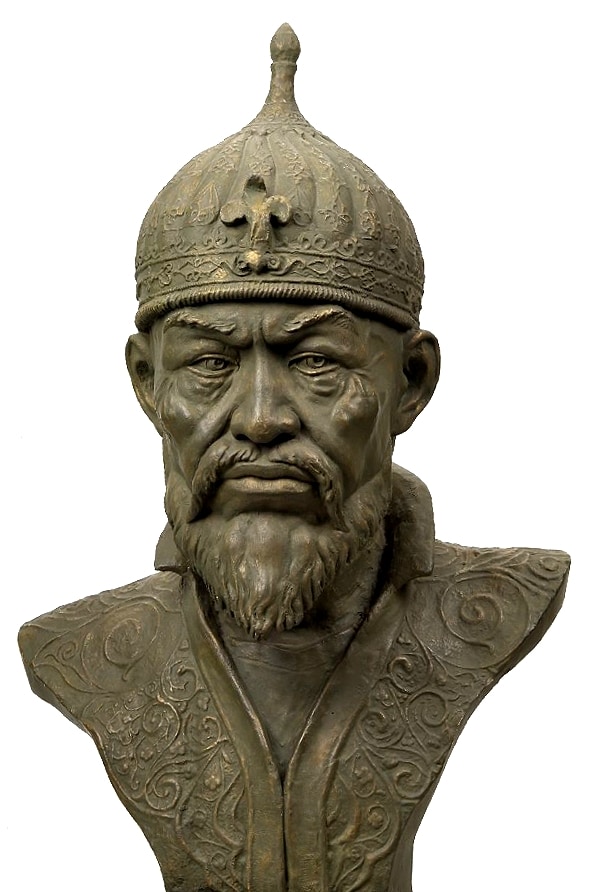
Timur
Also known as: Tamerlane, Timur the Lame, Amir Timur
Birthday
April 9, 1336
Birth Sign
Aries
Birthplace
Khoja-Ilgar, near Kesh (modern-day Shahrisabz, Uzbekistan)
Age
Died at 68
About
Timur, known in the West as Tamerlane, was a Turco-Mongol conqueror who founded the Timurid Empire in the late 14th century. Born into the Barlas confederation in Transoxiana, he rose from a minor noble to become the most powerful ruler in the Muslim world. By 1370, he had seized control of the western Chagatai Khanate and launched a series of military campaigns that reshaped Asia from the steppes of Russia to the Indus River. Undefeated in battle, Timur defeated the Golden Horde, the Mamluk Sultanate, the Ottoman Empire, and the Delhi Sultanate, among others. His conquests were marked by extreme brutality, with scholars estimating his campaigns caused millions of deaths, yet he also fostered culture, sparking the Timurid Renaissance, a flowering of art, science, and architecture centered in Samarkand. He engaged with leading intellectuals of his time, including the historian Ibn Khaldun and the poet Hafez. Timur spoke several languages, including Chagatai Turkic, Classical Mongolian, and New Persian, which he used for diplomacy. He died in 1405 while marching toward China, leaving behind a fragmented empire that nonetheless paved the way for the later gunpowder empires.
Early Life & Background
Timur grew up during the disintegration of the Chagatai Khanate, a successor state to Genghis Khan's empire in Central Asia. The khanate fractured into warring factions, and young Timur lived in a world of raids, shifting alliances, and constant violence. He spent his childhood and youth in the mountains of Kesh, raised in a shepherd environment but also familiar with urban and rural life, as Shahrisabz was ruled by the Barlas. The Chagatai Ulus split into two entities in 1347: Mavarannahr and Moghulistan. In early raids, Timur received serious wounds: a sword blow to the right hand that crippled two fingers, and an arrow through the right leg that left him with a permanent limp, giving rise to the Western name Tamerlane (Timur the Lame), which he reportedly despised. He began his career as the leader of a band of nomads, gradually building a reputation for tactical brilliance and ruthlessness.
Career Growth
Timur's rise to power began in 1370 when he seized control of the western Chagatai Khanate, founding the Timurid Empire. Over the next three decades, he launched a series of campaigns that would make him the most feared conqueror in Asia. In the 1380s and 1390s, he defeated the Golden Horde, sacking Sarai and weakening Mongol power in Russia. In 1398, he invaded the Delhi Sultanate, sacking Delhi and massacring its inhabitants. In 1400-1401, he defeated the Mamluk Sultanate, capturing Damascus and Aleppo. His greatest victory came in 1402 at the Battle of Ankara, where he captured Ottoman Sultan Bayezid I, throwing the Ottoman Empire into a period of civil war. Throughout these campaigns, Timur also patronized the arts, transforming Samarkand into a center of scholarship with grand buildings, libraries, and madrasas. He engaged with intellectuals such as the historian Ibn Khaldun and the poet Hafez, sparking the Timurid Renaissance. In 1405, while marching toward China for a campaign against the Ming dynasty, he fell ill with a severe fever and died in Otrar.
Career Timeline
Public Image & Style
Timur's public image is a study in contradictions: he is remembered as both a brilliant military tactician and a ruthless warlord. In the West, he is often portrayed as a savage conqueror, with the name Tamerlane evoking images of pyramids of skulls and devastated cities. In Central Asia, particularly in Uzbekistan, he is revered as a national hero and a symbol of strength and unity. His monuments stand in Tashkent and Shahrisabz, and his mausoleum, the Gur-e-Amir in Samarkand, is a major tourist attraction. Historians note his patronage of the arts and his engagement with scholars, contrasting with his extreme brutality in war. His legacy is complex, inspiring both fear and admiration across different cultures.
Fame & Fandom (iFAMOUS Rankings)
Timur commands a legacy that transcends the typical boundaries of historical celebrity, existing instead as a towering figure of geopolitical mythology and national identity. In Central Asia, particularly within Uzbekistan, he is revered not merely as a past ruler but as a foundational symbol of strength and unity, with his monuments anchoring the cultural landscape of Tashkent and Shahrisabz. This deep-seated reverence functions less like a modern fanbase and more like a state-sponsored historical devotion, where scholars, strategists, and citizens engage with his life as a continuous narrative of power rather than a static chapter in a textbook. There is no organized global fandom with specific nicknames, fan-funded campaigns, or viral rituals comparable to contemporary pop culture phenomena; his audience remains rooted in academic study and regional commemoration rather than the energetic mobilization seen in digital eras. The absence of a formal fan name reflects the nature of his influence, which operates through enduring institutions like the Gur-e-Amir mausoleum in Samarkand rather than social media trends or subscription drives. Despite this lack of a unified modern following, his reputation as a brilliant tactician and ruthless warlord ensures he remains a subject of intense fascination for historians and military enthusiasts worldwide. According to the iFANN Global Fame Engine evaluation from August 2026, Timur does not currently hold a placement in the published rankings, including the Global Top 1,000 or any Top-100 scope list. While he lacks a numerical standing among living celebrities or recently deceased figures who dominate current search metrics, his cultural footprint remains immense across the regions he once conquered. The iFANN assessment confirms that while he is evaluated as a significant historical entity, his fame does not translate into the quantifiable daily engagement required for a ranked position in the modern system.
Interesting Facts and Legends
Timur's name shares a linguistic root with Genghis Khan's birth name Temüjin, both deriving from the Common Turkic word for blacksmith. Despite his reputation for extreme brutality, he was a dedicated patron of the arts who engaged with leading intellectuals of his time, including the historian Ibn Khaldun. The Timurid dynasty endured in Central Asia for a century, and his descendant Babur would later found the Mughal Empire in India. Throughout his entire military career, Timur remained undefeated in battle, having defeated the Golden Horde, the Mamluk Sultanate, the Ottoman Empire, and the Delhi Sultanate. The Western name Tamerlane comes from the Persian Timur-i-Lang (Timur the Lame), a nickname he reportedly despised. When Soviet archaeologist Mikhail Gerasimov opened Timur's tomb on June 19, 1941, he allegedly found an inscription warning that opening the tomb would unleash a terrible invader; three days later, Nazi Germany invaded the Soviet Union. A widely retold story describes how Timur ordered the construction of a tower made from the skulls of his enemies during his conquest of Delhi, cementing his image as the Scourge of the East. Folklore also preserves the dramatic account of the Battle of Ankara, where Timur sat on a golden throne while the captured Ottoman Sultan Bayezid I served him water, symbolizing total dominance over a rival empire.
Notable Quotes
“Timur reportedly described his mother's descent to Ibn Khaldun as being from the legendary Persian hero Manuchehr.”
Family & Personal Life
Timur's father was Taraghai, a minor tribal chief of the Barlas clan, a Turkicized Mongol group that had converted to Islam. The Barlas claimed descent from Genghis Khan through Tumbinai Khan, though no written evidence from Timur's lifetime directly confirms this link. His mother was Tekina Khatun, whose origins remain unclear; Ibn Khaldun recounted Timur describing her descent from the legendary Persian hero Manuchehr. Timur had multiple wives, including his principal wife Saray Malik Katun, a princess of the Chagatai Khanate, as well as Uljay-Turkan aga, Cholpan-Mulk Aga, and Dilshad aga. His sons included Shah Rukh, who succeeded him, Miran Shah, Umar Shaikh, and Jahangir. His descendant Babur later founded the Mughal Empire in India.
Notable Connections
Relationships & Dating History
As a 14th-century Turco-Mongol conqueror, Timur's relationships were primarily political marriages rather than romantic partnerships. His known marriages include Saray Malik Katun, a princess of the Chagatai Khanate who became his principal wife; Uljay-Turkan aga, a noblewoman of the Barlas confederation; Cholpan-Mulk Aga; and Dilshad aga. All were married before his rise to power and remained with him until his death in 1405. The marriages served to consolidate alliances and legitimize his rule. As of 2026, Timur is deceased, having died in 1405.
- MarriedSaray Malik Katun? - 1405Political alliance; she was a princess of the Chagatai Khanate.
- MarriedUljay-Turkan aga? - 1405Noblewoman of the Barlas confederation.
- MarriedCholpan-Mulk Aga? - 1405
- MarriedDilshad aga? - 1405
Death & Aftermath
Died
February 19, 1405 (aged 68)
Death Place
Otrar
Cause of Death
Reported as severe fever or illness
Timur departed this world in the chill of winter while encamped near Otrar on the Syr Darya river, far from his capital of Samarkand as he prepared a massive expedition against the Ming dynasty. The conqueror had been marching since late 1404 and fell seriously ill with a severe fever or cold contracted during the harsh conditions before passing away in his tent. While most authoritative records place the event on February 19, 1405, some contemporary chronicles suggest the night of February 17 or 18, marking the end of a life defined by relentless campaigning. News of the emperor's passing was kept secret for several weeks to prevent the collapse of his army and empire, allowing his grandson Pir Muhammad to secure power before the announcement was made.
Upon release, the body was transported back to Samarkand where it was interred in the Gur-e-Amir mausoleum, a grand structure Timur had commissioned for himself shortly after his death in March 1405. The funeral drew surviving family members, high-ranking emirs, and religious leaders, though the immediate aftermath saw a violent succession crisis as grandsons like Khalil Sultan and Shah Rukh fought for control of the fractured territories. Today, the Gur-e-Amir stands as a UNESCO World Heritage site and a primary memorial to the conqueror, serving as a focal point for historical commemoration in Uzbekistan. Timur remains a national hero celebrated through cultural events and statues rather than modern tributes, while his vast estate was partitioned among his descendants leading to the eventual fragmentation of the Timurid Empire.
Awards & Accolades
Known For
Founding the Timurid Empire
1370 · Emperor
Battle of Ankara
1402 · Commander
Sack of Delhi
1398 · Conqueror
Defeat of the Golden Horde
1395 · Commander
Keywords
Sources
Quick Facts
- Profession
- Conqueror, Emperor
- Born
- April 9, 1336
- Birthplace
- Khoja-Ilgar, near Kesh (modern-day Shahrisabz, Uzbekistan)
- Died
- February 19, 1405
- Death Place
- Otrar, modern-day Kazakhstan
- Gender
- Male
- Spouse
- Saray Malik Katun, Uljay-Turkan aga, Cholpan-Mulk Aga, Dilshad aga
- Birth Sign
- Aries
Personal Details
- Full Name
- Timur ibn Taraghai Barlas
- Spouse
- Saray Malik Katun, Uljay-Turkan aga, Cholpan-Mulk Aga, Dilshad aga
- Children
- Shah Rukh, Miran Shah, Umar Shaikh, Jahangir
Frequently Asked Questions
How did Timur die?
Was Timur related to Genghis Khan?
Why was Timur called Tamerlane?
How many people did Timur kill?
What is the curse of Tamerlane?
Similar People
Join the community
fans discussing