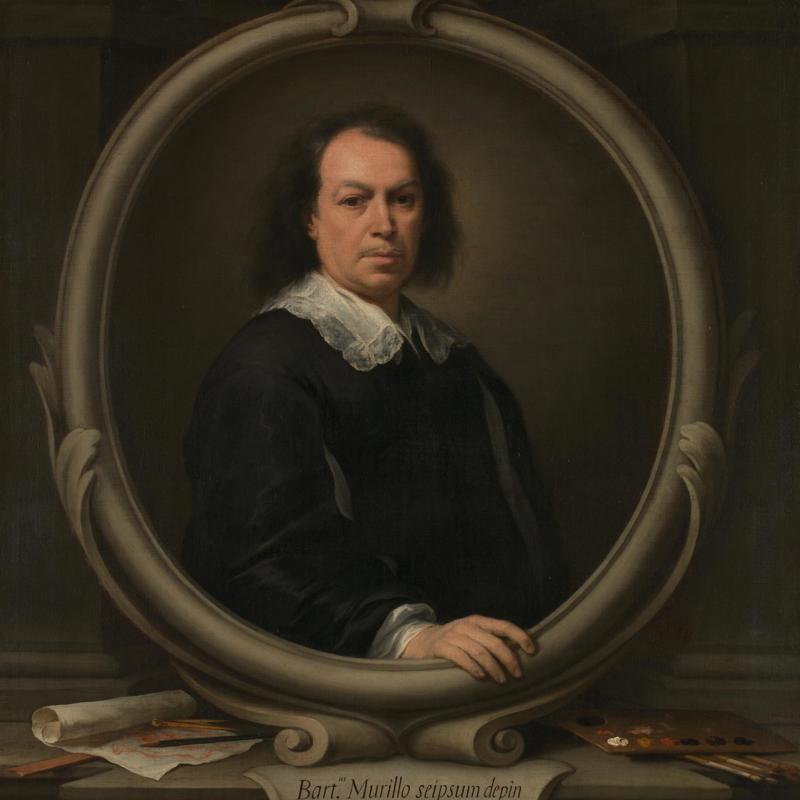
Bartolomé Esteban Murillo
 Spain
SpainAlso known as: Murillo
Birthday
December 1, 1617
Birth Sign
Sagittarius
Birthplace
Seville, Spain
Age
Died at 64
About
Bartolomé Esteban Murillo was a preeminent Spanish Baroque painter born in Seville, Spain, around December 1617 and baptized on January 1, 1618. He is celebrated as the leading painter of Seville in the later 17th century, renowned for his deeply emotional religious works and his vivid genre paintings of street children and common folk. Unlike modern celebrities, Murillo did not have a "dating history" or romantic relationships documented in the public sphere, as he lived in an era where such personal details were rarely recorded for artists unless they resulted in marriage, which he had once. He married Beatriz Cabrera y Villalobos; the union produced no known surviving children who carried on his artistic legacy, though historical records confirm she survived him.
Murillo's career spanned over six decades, during which he produced more than 400 paintings. His breakthrough came in the 1640s and 1650s when he began receiving significant commissions from religious orders in Seville. A pivotal moment in his career was his election as president of the newly founded Academy of Fine Arts of San Luis in Seville in 1660, a position he held until his death. This institutional recognition solidified his status as the city's premier artist. By the time of his death, he was widely considered the greatest Spanish painter, surpassing even Velázquez in popular esteem for nearly two centuries.
Early Life & Background
Bartolomé Esteban Murillo was born into a modest family in Seville. His father, Gaspar Esteban, was a barber-surgeon, and his mother's name is often cited as María de Velasco or simply omitted in early records. Born in late 1617, he was baptized on January 1, 1618, at the church of San Gil. His early life was marked by poverty, but he showed an early aptitude for art. Before achieving fame, Murillo received his initial training from Juan del Castillo, a local painter, and later studied under Francisco de Zurbarán, whose tenebrist style and chiaroscuro techniques heavily influenced Murillo's early work. This apprenticeship provided him with a foundation in dramatic lighting and realistic detail that would evolve into his signature softer, more luminous style.
The young artist navigated the competitive artistic landscape of Seville without the benefit of formal academic degrees, relying instead on the mentorship of established masters and the patronage of local religious orders. His early independent works reflected the stark realism of his teacher Zurbarán, but he began to develop a unique voice that favored warmth and light over the harsh shadows typical of the period. This formative period laid the groundwork for the tender humanism that would define his mature style and distinguish him from his contemporaries.
Career Growth
Murillo's career reached its zenith in the mid-to-late 17th century as he secured major commissions for altarpieces across Andalusia. His major projects included large-scale works such as The Immaculate Conception of Los Venerables (1678) and The Holy Family with a Bird (c. 1675). His genre paintings, featuring "street urchins" or chicos de la calle, became particularly famous for their tender, humanizing depiction of poverty, distinguishing him from his contemporaries who often depicted beggars with harsher realism. Works like The Young Beggar and Two Women at a Window showcased his ability to blend spiritual devotion with everyday life.
In 1660, Murillo was elected president of the Academy of Fine Arts of San Luis in Seville, a role he maintained until his death. This leadership position cemented his authority in the local art community and allowed him to shape the next generation of Sevillian painters. His prolific output continued until the end of his life, with over 400 surviving works attributed to him. By the time of his death, he was widely considered the greatest Spanish painter, surpassing even Velázquez in popular esteem for nearly two centuries.
Career Timeline
Public Image & Style
Murillo is portrayed as a "quiet master" of the Spanish Golden Age. His style is characterized by softness, light, and tenderness, earning him the nickname "the angel of Seville." Media portrayals emphasize his devotion to his faith and his ability to find beauty in the mundane. Unlike many of his contemporaries who sought royal titles or courtly recognition, Murillo remained rooted in the religious and civic life of Seville, building a reputation based on the quality and emotional resonance of his work rather than political maneuvering.
Fame & Fandom (iFAMOUS Rankings)
Bartolomé Esteban Murillo, the Spanish Baroque master, was a figure of considerable renown in his lifetime and for centuries thereafter, yet in the contemporary landscape of global fame, his standing is more subdued. The iFANN Global Fame Engine has evaluated his legacy, but as of October 2026, he does not hold a placement in the published rankings, neither in the Global Top 1,000 nor in any Top-100 scope list. This absence, however, is not a reflection of his historical significance, but rather a reflection of the shifting nature of fame in the digital age, where contemporary figures often overshadow historical ones.
In the art world, Murillo's fame has undergone a remarkable trajectory. For nearly two centuries after his death, he was championed as Spain's finest Baroque painter, his works commanding high prices and his imagery reproduced widely. This institutional and collector-driven admiration functioned as a form of fandom, though without a formal name. No organized fanbase, no fan clubs, no digital campaigns exist for Murillo; his admirers are art historians, curators, and collectors who engage with his work through museums and exhibitions. The closest analogues to fan events are the major exhibitions mounted in recent years, such as the 2022–2023 Kimbell Art Museum show and the 2024 Frick Collection display of his self-portraits. While he may not rank in iFANN's current metrics, his legacy persists in the halls of museums and the pages of art history, a quiet master whose fame endures in the institutions that preserve his work.
Interesting Facts and Legends
Murillo painted only two known self-portraits. One in the Frick Collection shows him with his hand on his chest, a gesture of humility or devotion. A lost 17th-century portrait of the writer Nicolás Omazur by Murillo was discovered in a Welsh castle in 2018. In November 2025, a private collector paid a restorer €1,200 to clean a 17th-century copy of The Immaculate Conception of Los Venerables. The restorer botched the job, leaving the Virgin Mary's face looking like a "blob," an incident that went viral and sparked debates about art conservation standards in Spain.
Some historians argue that Murillo's success in Seville helped elevate the status of Spanish painting internationally, indirectly influencing the reception of Velázquez's work abroad. On November 29, 2018, Google honored Murillo with a Doodle celebrating his birthday, featuring his painting Two Women at a Window. His depictions of poor children were so idealized that they created a myth of the "innocent poor" in Spanish culture, contrasting sharply with the harsh reality of 17th-century Seville.
Notable Quotes
“He sought to capture the divine in the ordinary.”
Family & Personal Life
Murillo's personal life was relatively private and focused on his craft. He married Beatriz Cabrera y Villalobos, a woman of good standing in Seville society, sometime in the mid-17th century, likely around 1645–1650. Historical accounts do not mention any children from this marriage who survived to adulthood or pursued painting. There is no record of other romantic partners, divorces, or high-profile flings; Murillo remained married to Beatriz until his death. As a man of the 17th century, his public image was that of a devout, hardworking master rather than a celebrity with a dating history.
Notable Connections
Juan del Castillo, Francisco de Zurbarán, Beatriz Cabrera y Villalobos, Diego Velázquez, Nicolás Omazur
Relationships & Dating History
Murillo's personal life was relatively private and focused on his craft. He married Beatriz Cabrera y Villalobos, a woman of good standing in Seville society, sometime in the mid-17th century, likely around 1645–1650. Historical accounts do not mention any children from this marriage who survived to adulthood or pursued painting. There is no record of other romantic partners, divorces, or high-profile flings; Murillo remained married to Beatriz until his death. As a man of the 17th century, his public image was that of a devout, hardworking master rather than a celebrity with a dating history.
- MarriedBeatriz Cabrera y Villalobos1645 - 1682Remained married until his death; no surviving children.
Death & Aftermath
Died
April 1, 1682 (aged 64)
Death Place
Seville, Spain
Cause of Death
Illness (nature undisclosed)
Bartolomé Esteban Murillo spent his final days working within his Seville studio, maintaining his professional output until shortly before his passing. He died on April 3, 1682, in the city where he had lived and worked for most of his life, following a period of illness that remains unspecified in historical records. Contemporary accounts offer no details regarding the nature of the ailment or any medical intervention, as modern forensic procedures were absent from seventeenth-century Spain. According to a widely retold legend, while working on a commission for the Capuchin monastery in Cádiz, Murillo fell from scaffolding, sustaining injuries from which he never recovered. He was transported back to Seville, where he passed away shortly after. His funeral was a private affair held at the church of San Gil, attended by family members, fellow painters, and local clergy.
Posthumously, his reputation grew rather than fading, with institutions and officials demonstrating their regard through the continued high demand for his religious scenes and genre paintings of street children. However, in the late 19th century, tastes shifted toward the darker, more austere styles of his contemporaries, and Murillo's reputation declined significantly. Centuries later, his influence persists through major retrospectives such as "Murillo: From Heaven to Earth" at the Kimbell Art Museum and ongoing exhibitions featuring his pieces in preparation for new galleries. The handling of his estate followed the laws of seventeenth-century Spain, with assets and artworks passing to his heirs, though specific settlement details remain undocumented in modern summaries.
Net Worth (Estate Value)
$15 Million
iFANN Editorial Team estimate
As a deceased historical figure, Murillo has no net worth in the modern sense of liquid assets. His estate was handled according to 17th-century Spanish law, passing to his heirs. Murillo's paintings frequently sell for millions of dollars at auction. For example, The Immaculate Conception of Los Venerables (a copy) was the subject of a viral botched restoration incident in 2020/2025, highlighting the immense value placed on his work.
The research by the iFANN Editorial Team puts Murillo's fortune at around $15 Million. Major revenue sources for his legacy include museum ticket sales, licensing of images, and auction sales of authentic works. Individual Murillo paintings can fetch between $5 million and $20 million depending on provenance and condition. The 2023 Kimbell exhibition alone generated significant cultural capital and indirect economic value through tourism and academic study.
Awards & Accolades
View 8 records, honours and achievementsKnown For
The Immaculate Conception of Los Venerables
1678 · Painter
The Young Beggar
1665 · Painter
Two Women at a Window
1675 · Painter
The Holy Family with a Bird
1675 · Painter
Keywords
Sources
Quick Facts
- Profession
- painter
- Born
- December 1, 1617
- Birthplace
- Seville
- Died
- April 1, 1682
- Death Place
- Seville
- Gender
- Male
- Spouse
- Beatriz Cabrera y Villalobos
- Birth Sign
- Sagittarius
Personal Details
- Full Name
- Bartolomé Esteban Murillo
- Spouse
- Beatriz Cabrera y Villalobos
- Children
- Education
- Apprenticed under Juan del Castillo; studied under Francisco de Zurbarán
Frequently Asked Questions
Who was Bartolomé Esteban Murillo?
When did Bartolomé Esteban Murillo die?
What is Bartolomé Esteban Murillo famous for?
Did Bartolomé Esteban Murillo have children?
How did Bartolomé Esteban Murillo die?
Similar People
Join the community
fans discussing