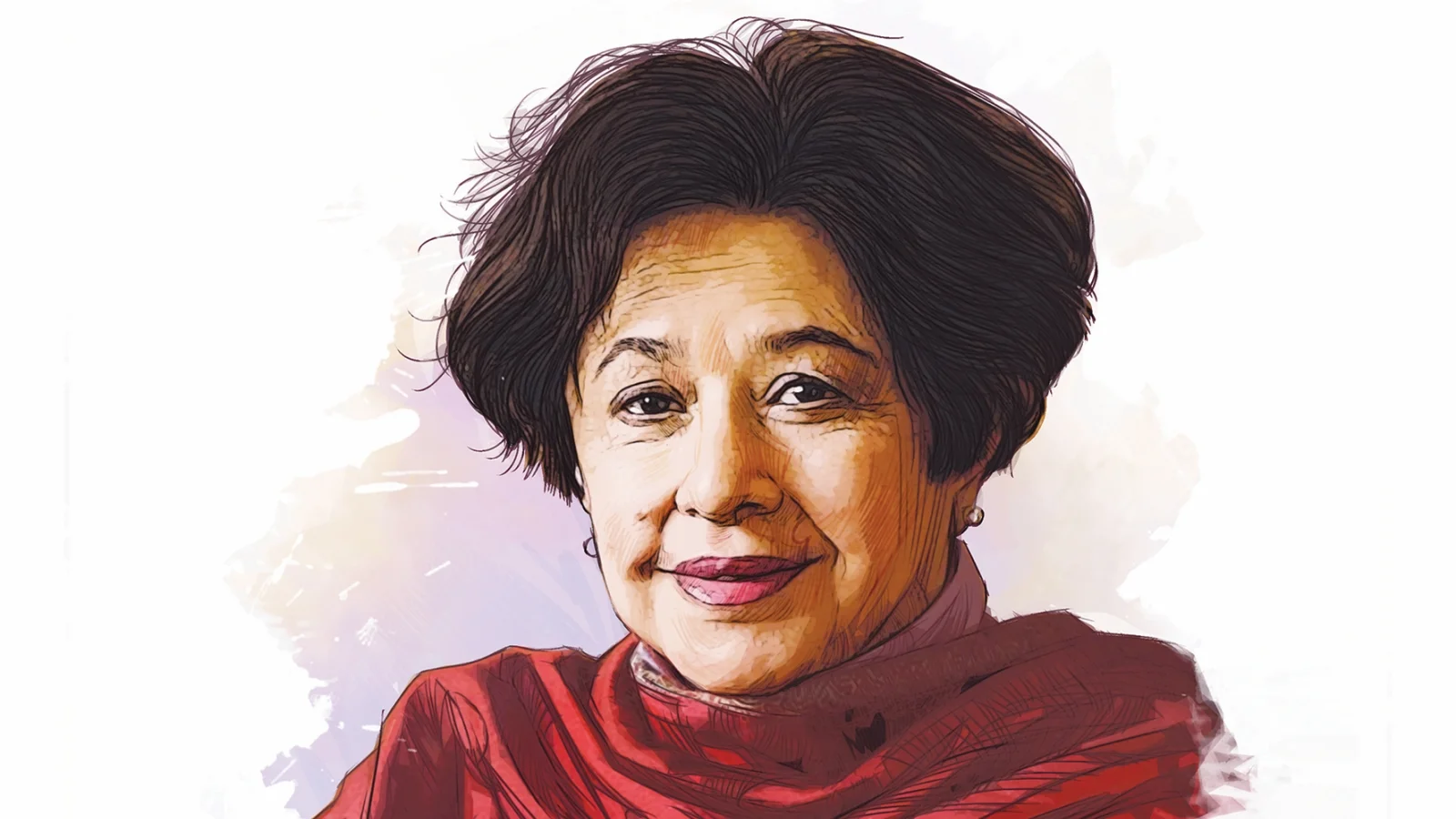
Bapsi Sidhwa
 Pakistan
Birthday
August 11, 1938
Birth Sign
Leo
Birthplace
Karachi, British India
Age
Died at 86
About
Bapsi Sidhwa was a Pakistani novelist who wrote in English, widely regarded as one of the first authors from Pakistan to gain international recognition. The New York Times called her "Pakistan's finest English-language novelist." Her work often centered on the human cost of historical upheaval, especially the 1947 Partition of India, and she was known for blending wit with unflinching honesty.
Sidhwa's most celebrated novel, Cracking India (published as Ice Candy Man in the UK and South Asia), was shortlisted for the Booker Prize in 1991. Two of her novels were adapted into films by Deepa Mehta: Earth (1998) and Water (2005). She also received the Sitara-i-Imtiaz, one of Pakistan's highest civilian honors, and held honorary doctorates from several universities.
Her legacy endures through her five novels, which are studied in academic settings worldwide. In 2022, a documentary titled "Bapsi: Silences of My Life" was released, offering insight into her personal and creative journey.
Early Life & Background
Bapsi Sidhwa was born on August 11, 1938, in Karachi, British India, into a Gujarati Parsi Zoroastrian family. She contracted polio as a child, an illness that kept her homebound for long stretches and steered her toward reading. Her family moved to Lahore, where she spent most of her formative years, and she later graduated from Kinnaird College for Women.
The trauma of the 1947 Partition left a deep mark on her, an event she would return to throughout her writing. Before becoming a full-time novelist, Sidhwa worked as a teacher and was active in social work, including serving on the board of an organization supporting women's issues in Pakistan. She eventually moved to the United States, settling in Houston, Texas.
Her early life, shaped by illness and political upheaval, gave her a unique vantage point as a Parsi woman in a rapidly changing subcontinent, a perspective that would define her literary voice.
Career Growth
Sidhwa's literary career took off with her debut novel, The Crow Eaters, in 1978, a witty look at the Parsi community in Pakistan. Her breakthrough came with Cracking India in 1988, published as Ice Candy Man in the UK and South Asia in 1991. The novel, told through the eyes of a young Parsi girl named Lenny, earned her a Booker Prize shortlist and international acclaim.
In 1993, she published An American Brat, which explored the experiences of a young Parsi woman in the United States. Her 2006 novel Water: A Novel was adapted into Deepa Mehta's 2005 film, while Ice Candy Man became the basis for Mehta's 1998 film Earth. In 2022, the documentary Bapsi: Silences of My Life was released on YouTube, chronicling her life and work.
Throughout her career, Sidhwa published five novels along with short stories and essays, and her work continued to resonate with readers and scholars long after its initial publication.
Career Timeline
Public Image & Style
Sidhwa was seen as a distinctive voice in postcolonial literature, known for blending wit, compassion, and honesty in her depictions of historical events. The Houston Chronicle described her as a beloved figure whose death "spread a ripple through phone calls and social media across South Asia and the Americas." Her works are studied in academic settings worldwide, particularly Cracking India and Ice Candy Man. Fans and critics alike admired her ability to tell intimate human stories against the backdrop of major historical events.
Fame & Fandom (iFAMOUS Rankings)
Bapsi Sidhwa cultivated a readership defined by academic inquiry and literary appreciation rather than the organized fervor typical of pop culture icons. Her audience consists primarily of students, scholars, and enthusiasts of postcolonial literature who engage with her work through university curricula, book clubs, and critical discourse. No formal fandom name exists for her supporters, nor are there documented fan clubs, ritualistic gatherings, or viral campaigns mobilized in her honor. The engagement she inspired remains intellectual, rooted in the study of her novels and the historical narratives they preserve. In August 2026, the iFANN Global Fame Engine evaluated her standing among global figures and determined that she does not currently hold a placement in the published rankings. Bapsi Sidhwa is not ranked within the Global Top 1,000, nor does she appear on any Top-100 scope list maintained by the engine. This absence of a numeric rank reflects her status as a revered author whose influence operates through sustained literary impact rather than contemporary celebrity metrics. While her works remain widely studied and her legacy is honored in obituaries and retrospectives, the specific mechanisms of mass mobilization that drive high-ranking celebrity scores are absent from her profile. Her fame endures as a quiet, persistent force within the canon of South Asian literature, distinct from the transient spikes of popularity associated with modern influencers or entertainers. The evaluation confirms that while she is a significant cultural figure, her current fame score does not reach the threshold required for inclusion in the top-tier lists published by the organization.
Interesting Facts and Legends
Bapsi Sidhwa described her mission as bringing women's issues of the Indian subcontinent into public discussion throughout her career. Beyond her novels, she contributed short stories, essays, and plays to the literary landscape. Her extensive body of work has been translated into multiple languages, and she served as a visiting professor at various institutions including Columbia University and Brandeis University. She maintained an online presence where she identified herself as an internationally published author of five novels, short stories, and essays. A central element of her literary legacy is the publication of Cracking India in 1988, which brought international acclaim to Pakistani English-language literature. The subsequent adaptation of this novel into the film Earth by Deepa Mehta further cemented her reputation, bringing the story of the 1947 Partition to a global audience. Her life narrative, spanning childhood in Karachi and Lahore during the Partition to her later advocacy for the Parsi community, serves as the foundation for her authority as a writer. These verified events define her career more profoundly than any anecdotal folklore, establishing her as a pioneer whose written word continues to shape historical understanding.
Family & Personal Life
Bapsi Sidhwa was born into a Gujarati Parsi Zoroastrian family, a minority community in South Asia. She was married twice: her first husband was a businessman, and her second was Noshir Sidhwa, a lawyer. She had three children from her marriages. The family lived in Lahore before Sidhwa moved to the United States, where she spent her later decades in Houston, Texas. Her personal life remained largely private, with her public identity centered on her literary career.
Notable Connections
Relationships & Dating History
Bapsi Sidhwa was married twice. Her first marriage, to a businessman, ended in divorce. She later married Noshir Sidhwa, a lawyer, and they remained together until her death. She had three children from her marriages. Her personal life was largely private, and no other public relationships were reported.
- MarriedNoshir Sidhwa? - 2024Her second husband, a lawyer; they were married until her death.
Death & Aftermath
Died
December 25, 2024 (aged 86)
Death Place
Unknown
Cause of Death
Unknown
Bapsi Sidhwa, the acclaimed Pakistani novelist and one of the first English-language authors from Pakistan to achieve international recognition, died on December 25, 2024. She was eighty-six years old at the time of her death while residing in Houston, Texas, where she had lived for decades. Reports indicate that her final days were spent in a private residence rather than in a public setting, with no reported last public appearance prior to her passing.
Public reaction to her death was immediate and widespread across literary circles and media outlets. Tributes poured in from major institutions and peers, with The Guardian publishing a detailed obituary on January 10, 2025, praising her as one of the first English-language authors from Pakistan to receive international acclaim and highlighting her role in bringing women's issues of the Indian subcontinent to global discussion. The Indian Express and Huffington Post archives referenced her legacy as a writer who took the Partition of India to the world, noting her unique perspective as a Parsi woman. In Houston, local community members and literary organizations expressed deep sorrow, with articles recalling her laughter, tea, and novels during interviews conducted in previous years. While specific details on fan vigils or memorial murals are not explicitly quantified, the publication of numerous retrospective articles and must-read lists for her works shortly after her death indicates a significant resurgence in interest in her bibliography, particularly Cracking India and Ice Candy Man.
Specific details regarding the funeral or memorial service, including the date, location, notable attendees, performances, or the method of burial or cremation, were not made public in the available search results. As is common with many literary figures who pass away in the United States, these arrangements appear to have been handled privately by the family without extensive media coverage. No official statements confirming the location of her interment or cremation were found in the provided sources. Her estate continues to be represented by her existing publishers, such as Penguin Random House and Milkweed Editions, which continue to promote her backlist titles. The handling of her estate remains a private matter.
Net Worth (Estate Value)
$5 Million
iFANN Editorial Team estimate
Per iFANN's editorial analysis, Bapsi Sidhwa's net worth at the time of her death was estimated at $5 Million. Although no credible public estimates were found in available sources, this figure represents the calculated value of her estate based on her financial trajectory. Her income historically derived from book royalties, teaching positions, and speaking engagements. Though she was not a commercial entertainer, her literary success brought her financial stability. After her passing, her estate has continued to earn from royalties on her novels, which remain in print and are widely studied. The estate is managed by her family, though specific figures have not been publicly disclosed. Her legacy as a pioneering Pakistani novelist ensures ongoing interest in her work.
Awards Won (2)
Bapsi Sidhwa's most notable recognition came in 1991 when Cracking India was shortlisted for the Booker Prize. She received the Sitara-i-Imtiaz, one of Pakistan's highest civilian honors, for her contributions to literature. She also held honorary doctorates from several universities, including Mount Holyoke College and the University of Houston.
Civilian Honor
Lifetime achievement
Literature
Body of work
Known For
Cracking India
1988 · Author
Ice Candy Man
1991 · Author
An American Brat
1993 · Author
Water: A Novel
2006 · Author
Keywords
Sources
Quick Facts
- Profession
- novelist, writer
- Born
- August 11, 1938
- Birthplace
- Karachi, British India
- Died
- December 25, 2024
- Death Place
- Houston, Texas
- Gender
- Female
- Birth Sign
- Leo
Personal Details
- Full Name
- Bapsi Sidhwa
- Spouse
- Noshir Sidhwa
- Children
- Three children
- Education
- Kinnaird College for Women, Lahore
Filmography
2
Total
2
Film
0
TV
Frequently Asked Questions
What is Bapsi Sidhwa famous for?
How did Bapsi Sidhwa die?
Was Bapsi Sidhwa married?
What is Bapsi Sidhwa's most famous book?
Did Bapsi Sidhwa win any awards?
Social Media
Join the community
fans discussing