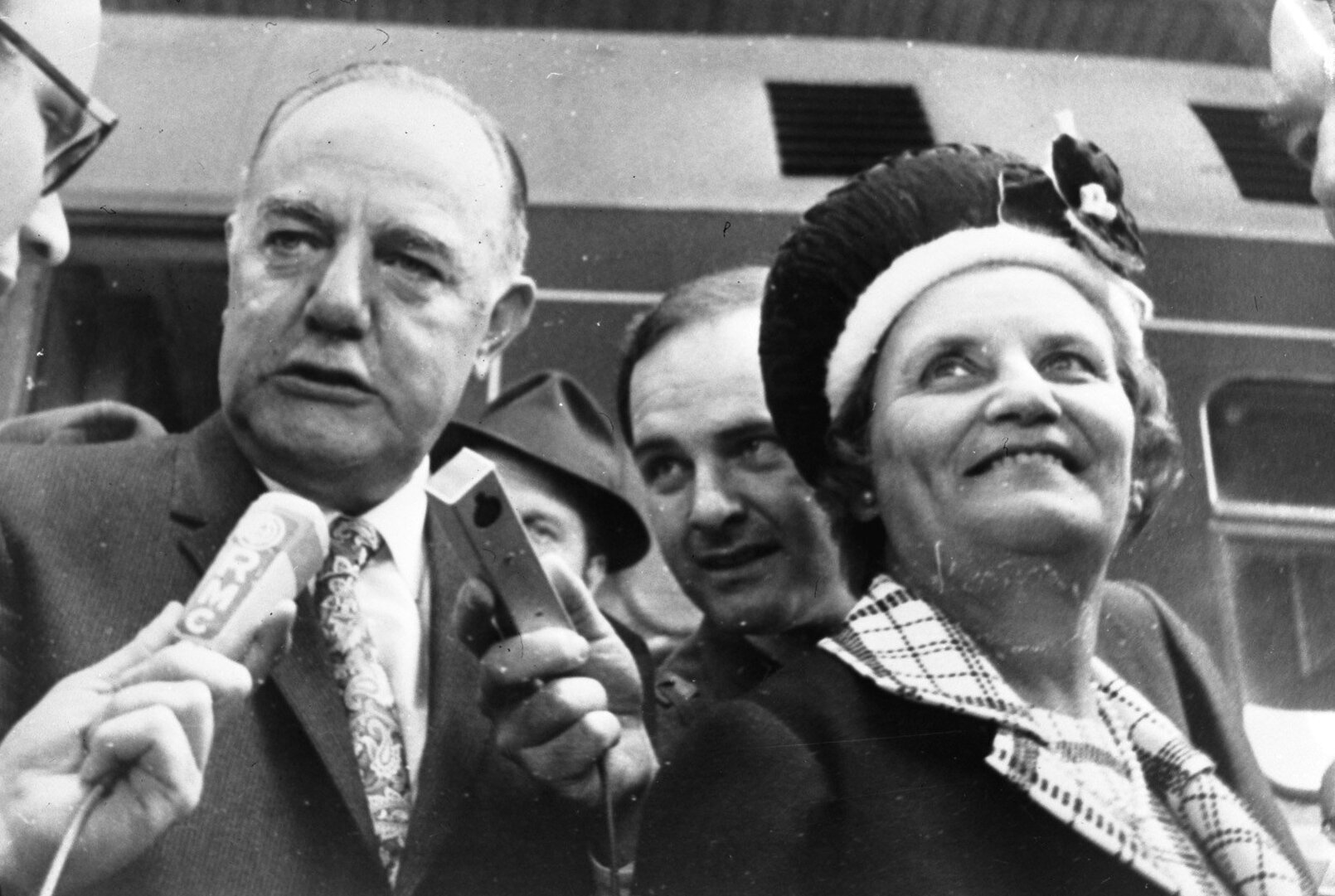
B. J. Vorster
 South Africa
Also known as: John Vorster, Balthazar Johannes Vorster
Birthday
December 13, 1915
Birth Sign
Sagittarius
Birthplace
Uitenhage, Cape Province, South Africa
Age
Died at 67
About
Balthazar Johannes Vorster, widely known as B. J. Vorster or John Vorster, was a prominent South African politician who served as the fourth State President of South Africa and the Prime Minister from 1966 to 1978. Born in Uitenhage on December 13, 1915, he rose through the ranks of the National Party to become a central figure in the apartheid era. His career was defined by a rigid adherence to segregationist policies, including the implementation of the Terrorism Act and his oversight of the Rivonia Trial which imprisoned Nelson Mandela for life. Despite his domestic authoritarianism, he pursued pragmatic foreign relations with neighboring states following the collapse of Portuguese colonial rule. He died on September 10, 1983, in Pretoria, leaving behind a legacy that remains deeply polarized between those who viewed him as a guardian of Afrikaner culture and those who saw him as an architect of oppression.
Early Life & Background
Balthazar Johannes Vorster was born into an Afrikaner family in Uitenhage, Cape Province, where his early life was shaped by the cultural and religious milieu of the community. Loyalty to the "volk" and the Dutch Reformed Church were paramount values during his formative years. He attended school in Uitenhage before pursuing higher education at the University of Stellenbosch, where he studied law and graduated with a Bachelor of Laws degree. During his university years, Vorster became active in student politics, aligning himself with the nationalist movement that would eventually dominate South African governance. Before entering full-time politics, he worked as a lawyer, a profession that provided him with the legal acumen necessary for his future roles as Minister of Justice and Prime Minister. His early career was marked by a deep commitment to Afrikaner nationalism and the preservation of white minority rule. This period also saw him involved with the Ossewabrandwag, a pro-Nazi organization sympathetic to Germany during World War II. Consequently, he was interned by the British government for his activities. This experience did not halt his political rise; instead, it cemented his reputation among hardline nationalists upon his release and return to the National Party.
Career Growth
Vorster's political trajectory began in earnest after World War II when he entered the South African parliament. A pivotal moment occurred in 1961 when he was appointed Minister of Justice under Prime Minister Hendrik Verwoerd. In this role, he oversaw the brutal enforcement of apartheid laws and presided over the Rivonia Trial in 1964, which resulted in the life imprisonment of Nelson Mandela and other ANC leaders. His tenure established him as a key architect of the state's repressive machinery. Following the assassination of Verwoerd in 1966, Vorster succeeded him as Prime Minister. As Prime Minister from 1966 to 1978, he introduced the Terrorism Act of 1967, allowing for indefinite detention without trial. He also oversaw the Soweto Uprising of 1976 and the death of Steve Biko in police custody in 1977. Domestically, his administration intensified the policy of "separate development," leading to the creation of Bantustans. However, his foreign policy was more nuanced; he sought to improve relations with black African neighbors and played a crucial role in the 1978 Internal Settlement in Rhodesia. In 1978, amidst the fallout of the Muldergate scandal involving the misuse of public funds for propaganda, Vorster resigned as Prime Minister. He accepted the ceremonial position of State President, serving from September 1978 to June 1979. The scandal ultimately led to his resignation from the presidency as well.
Career Timeline
Public Image & Style
B. J. Vorster's public image is deeply polarized. To his supporters, primarily white Afrikaner nationalists, he was a guardian of their culture, language, and religion, viewed as a strong leader who maintained order in a turbulent region. His signature style was formal and dignified, reflecting the conservative values of his time. Media portrayals of him varied from respectful coverage of his political achievements to scathing critiques of his human rights record. To the international community and the majority of South Africans, he was an architect of oppression, responsible for the brutal enforcement of apartheid and the deaths of countless activists. His public persona was characterized by a formal demeanor, often seen wearing suits and ties during official engagements, symbolizing both the strength and the isolation of the apartheid regime.
Fame & Fandom
There is no formal name for the fanbase surrounding B. J. Vorster, as his legacy remains defined by deep political polarization rather than the organized adulation typical of modern celebrity culture. His supporters were primarily white Afrikaner nationalists who viewed him as a guardian of their culture, while the international community and the majority of South Africans remembered him as an architect of oppression. This divide meant that public interaction was strictly political, characterized by state functions and protests rather than fan rituals or devotional campaigns. Despite the absence of a traditional fandom, his historical footprint remains significant enough to secure a position in global attention metrics. According to the iFANN Global Fame Rankings, which track influence across media coverage and consumption signals worldwide, he holds specific standing among historical figures. He is currently ranked as the 76th most famous person from South Africa, a placement holding steady from the previous cycle. This ranking reflects the enduring weight of his tenure as Prime Minister and State President during a transformative era. While he never commanded the chaotic crowds of entertainers, the sheer scale of his impact on a nation's trajectory ensures his continued presence in these global assessments. Historical rankings often place him as one of the longest-serving Prime Ministers of South Africa, second only to P.W. Botha in terms of duration of service within the apartheid era. He is frequently cited in lists of "Greatest Apartheid Leaders" or "Most Controversial Political Figures of the 20th Century," though these lists vary widely in composition and criteria. During his peak political influence in the 1960s and 1970s, Vorster appeared on the covers of major international publications such as Time and Newsweek, often in the context of the escalating tensions in Southern Africa and the Cold War dynamics. These covers typically featured headlines discussing the "South African Question," the implications of apartheid, and Vorster's role as a regional power broker.
Interesting Facts and Legends
Vorster officially began preferring the anglicized name "John" during the 1970s, a move seen as an attempt to modernize his image and appeal to a broader audience. A notable policy achievement was his announcement that South African scientists had successfully developed a new process for uranium enrichment, laying the groundwork for the country's nuclear program, which later became a subject of international concern. He received numerous accolades during his lifetime, including the Order of the Proctor of the Orange Free State and various honorary degrees from South African universities. He was inducted into the Hall of Fame of the National Party, a distinction reflecting his leadership within the party structure. Additionally, he was honored with the title of Advocate, recognizing his legal background and contributions to the judiciary. However, posthumously, his legacy has been heavily scrutinized, and many institutions have moved to distance themselves from his name. For instance, John Vorster Square in Johannesburg was renamed the Johannesburg Civic Centre, and the square itself is now known as Christiaan de Wet Square, reflecting a shift in public perception away from his glorification.
Notable Quotes
“We must ensure that the white minority remains in control of the country forever.”
“The security of the state is paramount, and we will do whatever is necessary to maintain it.”
“I am a man of peace, but I will not tolerate threats to the stability of our nation.”
Family & Personal Life
B. J. Vorster was married to Johanna Elizabeth "Elize" Vorster (née du Plessis). They met during their university days at Stellenbosch. Their marriage was a long-standing union that lasted until his death in 1983. Elize Vorster remained a supportive figure throughout his political career, often accompanying him to official functions. The couple had several children, though specific details regarding the names and number of their offspring are less frequently highlighted in public records compared to his political achievements. As a public figure in a conservative society, Vorster's personal life was largely kept out of the tabloid spotlight, focusing instead on his public duties. There is no record of any subsequent marriages, divorces, or high-profile romantic relationships outside of his marriage to Elize. By the time of his death in 1983, he was widowed in spirit only in the sense that his wife survived him; they remained married until his passing.
Notable Connections
Relationships & Dating History
B. J. Vorster was married to Johanna Elizabeth "Elize" Vorster (née du Plessis). They met during their university days at Stellenbosch. Their marriage was a long-standing union that lasted until his death in 1983. Elize Vorster remained a supportive figure throughout his political career, often accompanying him to official functions. The couple had several children, though specific details regarding the names and number of their offspring are less frequently highlighted in public records compared to his political achievements. As a public figure in a conservative society, Vorster's personal life was largely kept out of the tabloid spotlight, focusing instead on his public duties. There is no record of any subsequent marriages, divorces, or high-profile romantic relationships outside of his marriage to Elize. By the time of his death in 1983, he was widowed in spirit only in the sense that his wife survived him; they remained married until his passing. As of the date of his death, his status was married, and he left behind a family unit that included his wife and their children.
- MarriedJohanna Elizabeth "Elize" Vorster1940 - 1983Met at Stellenbosch University; married until his death.
Death & Aftermath
Died
September 10, 1983 (aged 67)
Death Place
Pretoria, South Africa
Cause of Death
Complications from a lung infection
Balthazar Johannes Vorster died on September 10, 1983, in a hospital in Pretoria at the age of 67. His death followed a second hospitalization within a month for a severe lung infection, which officials cited as the immediate cause. The event marked the end of a life defined by rigid apartheid enforcement and a sudden fall from power due to the Muldergate scandal. Public reaction was deeply polarized; while international outlets like The New York Times published obituaries acknowledging his long dominance over South African politics, domestic tributes were muted given the controversies surrounding his tenure. Details regarding the funeral service are not explicitly outlined in available records, suggesting a relatively low-key event consistent with the political climate of the era. In the decades following his death, his legacy underwent critical re-evaluation. Locations named after him, such as John Vorster Square, became sites of trauma and protest, notably associated with the death of Ahmed Timol. The square was eventually renamed Christiaan de Wet Square to reflect a shift in public perception away from his glorification. No major posthumous revenue streams comparable to entertainment icons emerged, as his legacy remains primarily political and historical. Recent news items from 2026 indicate ongoing discussions about his legacy, including a reopened inquest in June 2026 that unraveled the Security Branch's version of Matthews Mabelane's death, linking it to John Vorster Square. Additionally, reports in August 2026 noted staff protests at BJ Vorster Hospital over workplace concerns, highlighting the continued presence of his name in public infrastructure and the contentious nature of his legacy in contemporary South Africa.
Net Worth (Estate Value)
$0
iFANN Editorial Team estimate
As a political figure who served during a period of strict state control and limited private wealth accumulation for politicians, precise net worth figures for B. J. Vorster are not publicly available in the manner of modern celebrities. There are no credible sources reporting a specific dollar amount for his net worth as of 2026, nor are there estimates of his estate value. His wealth was likely derived from his salary as a politician and modest personal investments, but the lack of transparency and the nature of his public service mean that no detailed financial breakdown exists. Consequently, any attempt to assign a specific net worth figure would be speculative and unsupported by credible data. No major posthumous revenue streams comparable to entertainment icons emerged, as his legacy remains primarily political and historical.
Awards Won (3)
Vorster received numerous accolades during his lifetime, many conferred by the apartheid state itself. He was awarded the Order of the Proctor of the Orange Free State and held various honorary degrees from South African universities. He was inducted into the Hall of Fame of the National Party. Additionally, he was honored with the title of Advocate, recognizing his legal background and contributions to the judiciary.
Unknown · State Honor
Service to the Republic
Unknown · Party Honor
Leadership
Known For
Prime Minister of South Africa
1966-1978 · Politician
State President of South Africa
1978-1979 · Head of State
Keywords
Sources
Quick Facts
- Profession
- politician, minister
- Born
- December 13, 1915
- Birthplace
- Uitenhage, Cape Province
- Died
- September 10, 1983
- Death Place
- Pretoria, South Africa
- Gender
- Male
- Birth Sign
- Sagittarius
Personal Details
- Full Name
- Balthazar Johannes Vorster
- Spouse
- Johanna Elizabeth "Elize" Vorster (née du Plessis)
- Children
- Multiple children (names not widely publicized)
- Education
- University of Stellenbosch (Bachelor of Laws)
Frequently Asked Questions
What was B. J. Vorster's full name?
Why did B. J. Vorster resign as Prime Minister?
When did B. J. Vorster die?
What was B. J. Vorster's role in the Rivonia Trial?
Did B. J. Vorster have any children?
Similar People
Join the community
fans discussing