
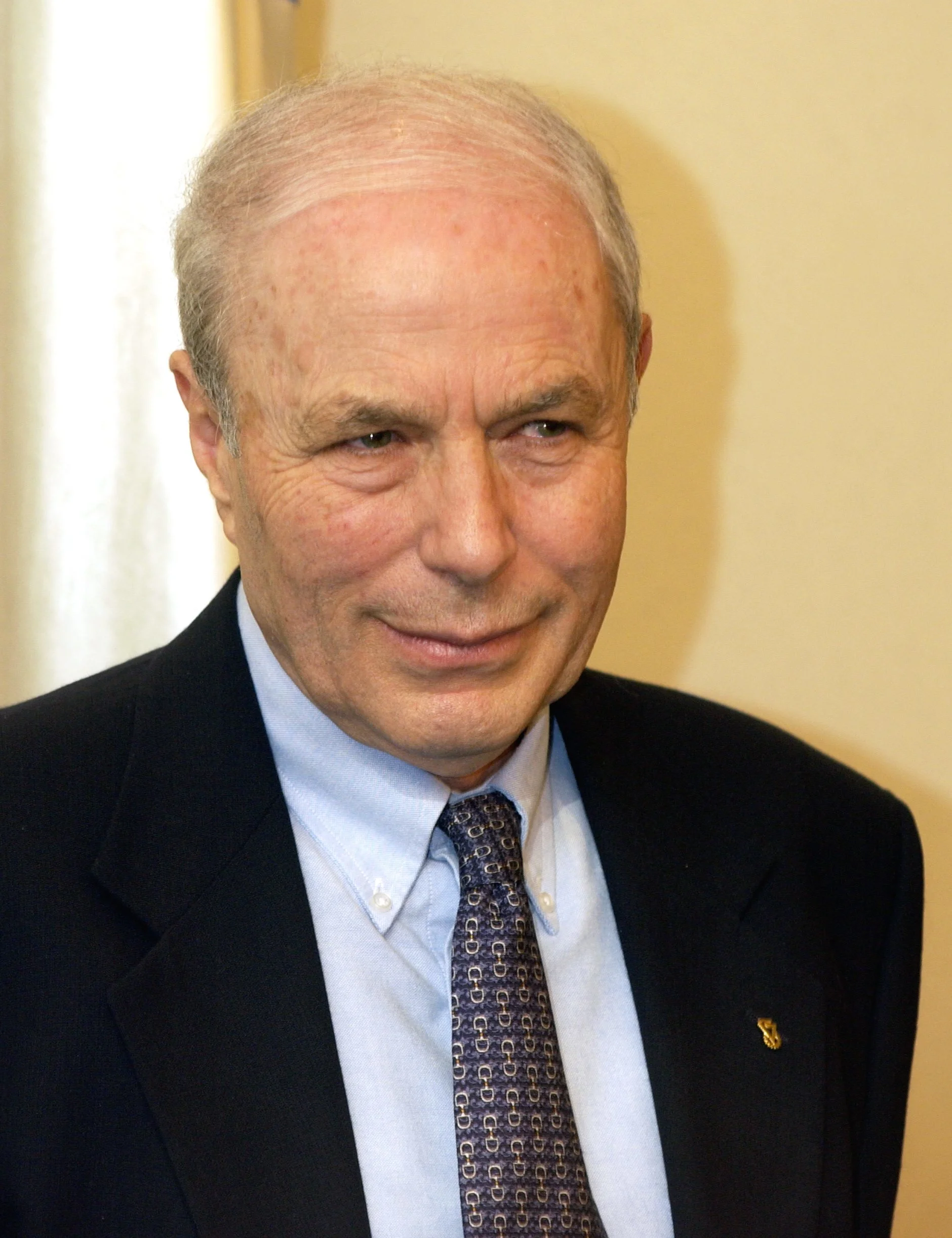
Avram Hershko
 Israel
biochemist•educator•university teacher
Also known as: Ferenc Ábrahám Herskó, A. Hershko, Avram Herško
Birthday
December 31, 1937
Birth Sign
Sagittarius
Birthplace
Karcag, Hungary
Age
88 years old
About
Avram Hershko is a Hungarian-born Israeli biochemist who serves as a Distinguished Professor at the Technion–Israel Institute of Technology in Haifa. He achieved global recognition for co-discovering the ubiquitin-proteasome system, a cellular mechanism that functions as the body's protein cleaning machine by tagging damaged proteins for destruction. This discovery earned him the Nobel Prize in Chemistry in 2004, which he shared with Aaron Ciechanover and Irwin A. Rose.
His work has fundamentally transformed our understanding of cell biology, revealing how cells regulate growth, division, and death through precise protein degradation. The system he helped elucidate is now central to modern medicine, particularly in the development of treatments for cancer and neurodegenerative diseases. Despite his immense scientific stature, Hershko remains known for his reserved demeanor and deep commitment to rigorous experimental standards.
Early Life & Background
Avram Hershko entered the world as Ferenc Ábrahám Herskó on December 31, 1937, in Karcag, Hungary, into a Jewish family. His early years were marked by the trauma of World War II. During the Nazi occupation, his father was conscripted as a forced laborer for the Russian front, where he died. Tragically, his mother also perished during the Holocaust. As a young child, Avram survived by hiding in a closet while Nazi soldiers searched their home, an experience that left a lasting impact on his psyche.
Following the war, he emigrated to Israel in 1950 at the age of twelve, settling in Kibbutz Ma'ayan Baruch. Life on the kibbutz was modest, with limited resources, yet it fostered his early curiosity about the natural world. He attended high school there and developed a strong interest in science, specifically biology and chemistry, despite the scarcity of advanced equipment. After completing his secondary education, he pursued higher studies at the Hebrew University-Hadassah Medical School in Jerusalem, earning his medical degree in 1965 and his PhD in Biochemistry in 1969. His doctoral research focused on metabolic pathways, laying the groundwork for his future breakthroughs.
Seeking further expertise, he moved to the United States for postdoctoral research at the University of California, Berkeley, under the mentorship of Irwin Rose. It was here that he began investigating the complex mechanisms of protein breakdown, a field that was largely unexplored at the time. This period of intense study and collaboration set the stage for his return to Israel and his subsequent career-defining discoveries.
Career Growth
Hershko returned to Israel in 1971 to join the faculty of the Technion in the Department of Biochemistry. In 1978, alongside Aaron Ciechanover, he identified the specific protein responsible for tagging other proteins for destruction, naming it ubiquitin due to its presence in all eukaryotic cells. Their work revealed that protein degradation was not a random process but a highly regulated, energy-dependent system involving a three-enzyme cascade (E1, E2, E3).
In 1980, they published a seminal paper detailing this ubiquitin-dependent proteolysis, which revolutionized the understanding of cellular regulation. Throughout the 1980s and 1990s, Hershko continued to expand on this work, elucidating the pathway's role in cell cycle control, DNA repair, and immune response. These findings laid the foundation for new therapeutic approaches targeting protein degradation.
The culmination of decades of research came in 2004 when he was awarded the Nobel Prize in Chemistry. The Royal Swedish Academy of Sciences cited their work for revolutionizing the understanding of how cells regulate protein degradation. Since then, he has remained active at the Technion, leading research into the mitotic checkpoint complex and the regulation of the APC/C, with recent focus on the structural dynamics of the ubiquitin ligase system and its implications for cancer therapy.
Career Timeline
Public Image & Style
Hershko projects the image of a quintessential scientist: reserved, meticulous, and dedicated. He is known for emphasizing the importance of experimental rigor and the necessity of acknowledging uncertainty in scientific inquiry. Unlike many public figures, he rarely engages in media sensationalism, preferring to let his research stand on its own merits. His demeanor is described as dignified, and he is respected within the scientific community for his intellectual honesty and refusal to compromise on data integrity.
Fame & Fandom (iFAMOUS Rankings)
According to the iFANN Global Fame Rankings evaluated in September 2026, Avram Hershko does not currently hold a placement in the published rankings, including the Global Top 1,000 or any scope-specific lists. This status reflects the nature of his influence, which is concentrated within the specialized realm of academic science rather than mass celebrity culture. There is no formal fandom name documented for his followers; the community consists of researchers, graduate students, and scientists who engage with his contributions through professional channels. His audience follows his work via citations, textbooks, and pharmaceutical developments derived from his discoveries. The absence of a named collective underscores the serious, specialized context in which his legacy operates, distinguishing him from figures whose fame is driven by social media or entertainment.
Interesting Facts and Legends
Avram Hershko changed his name from Ferenc Ábrahám Herskó to Avram upon immigrating to Israel, adopting a Hebrew version of his given name. His survival of the Holocaust as a child involved hiding in a closet while his parents were taken away, a harrowing event that shaped his resilience. His research directly led to the development of drugs like Bortezomib, used to treat multiple myeloma and mantle cell lymphoma. Despite his fame, he is known for being extremely humble and avoiding the spotlight, preferring to let his work speak for itself. In June 2023, he publicly addressed the limitations of artificial intelligence in science, stating that AI systems must acknowledge uncertainty and properly cite sources. Colleagues often describe his teaching philosophy as requiring rigorous positive and negative controls, a standard that defines his reputation for precision.
Notable Quotes
“The discovery of ubiquitin was not just a step forward; it was a revolution in how we understand life.”
“In science, you must always have positive and negative controls. Without them, you have nothing.”
“Artificial intelligence systems must acknowledge scientific uncertainty and properly cite sources.”
Family & Personal Life
Hershko maintains a notably private personal life, consistent with his dedication to academia. While details about his wife remain undisclosed to the public, sources indicate he is married. He has children and has spoken about balancing his scientific legacy with family life in interviews. He resides in Haifa, Israel, near the Technion campus. His grandchildren have been mentioned in conversations where he reflected on his life's work, though he keeps their identities and personal details out of the public eye.
Notable Connections
Relationships & Dating History
Avram Hershko maintains a notably private personal life, consistent with his dedication to academia. Unlike many public figures, there are no widely documented romantic relationships, dating histories, or marriages in public records. Sources indicate he is married, but details regarding his wife's name, their meeting, or the timeline of their relationship are not publicly disclosed. He has children; specifically, he has spoken publicly about his grandchildren in interviews, such as a 2020 conversation where he discussed balancing his scientific legacy with family life. Due to the lack of public information on specific partners or breakups, no chronological list of relationships can be provided. As of 2026, Hershko is believed to be married, though his spouse remains out of the public eye.
Salary, Net Worth In 2026
$2 Million
iFANN Editorial Team estimate
As a distinguished academic and Nobel laureate, Avram Hershko does not have a publicly reported net worth in the manner of entertainers or business tycoons. His wealth is derived primarily from his salary as a professor at the Technion, honorariums for lectures, and stipends associated with his awards. Research by the iFANN Editorial Team puts his fortune at around $2 Million. Estimates suggest a modest, comfortable income typical of senior university professors in Israel. Any figures found online regarding larger sums are likely speculative or conflated with other individuals.
Awards Won (5)
Avram Hershko's accolades reflect his profound impact on biochemistry and medicine. He received the Nobel Prize in Chemistry in 2004, the Israel Prize in 2003, and the Wolf Prize in Medicine in 1994. Additional honors include the Gairdner Foundation International Award, the Louisa Gross Horwitz Prize, and the National Medal of Science. He holds honorary doctorates from several universities and is a fellow of major scientific societies.
2004 · Chemistry
Discovery of ubiquitin-mediated protein degradation
2003 · Life Sciences
Lifetime Achievement in Biochemistry
Known For
Discovery of Ubiquitin-Proteasome System
1978 · Co-discoverer
Nobel Prize in Chemistry
2004 · Laureate
Keywords
Sources
Quick Facts
- Profession
- biochemist, educator, university teacher
- Born
- December 31, 1937
- Birthplace
- Karcag, Hungary
- Gender
- Male
- Birth Sign
- Sagittarius
Personal Details
- Full Name
- Ferenc Ábrahám Herskó
- Education
- MD and PhD from Hebrew University-Hadassah Medical School
Frequently Asked Questions
What did Avram Hershko win the Nobel Prize for?
Is Avram Hershko still alive?
Where was Avram Hershko born?
Who are Avram Hershko's children?
What is the ubiquitin-proteasome system?
Similar People
Join the community
fans discussing