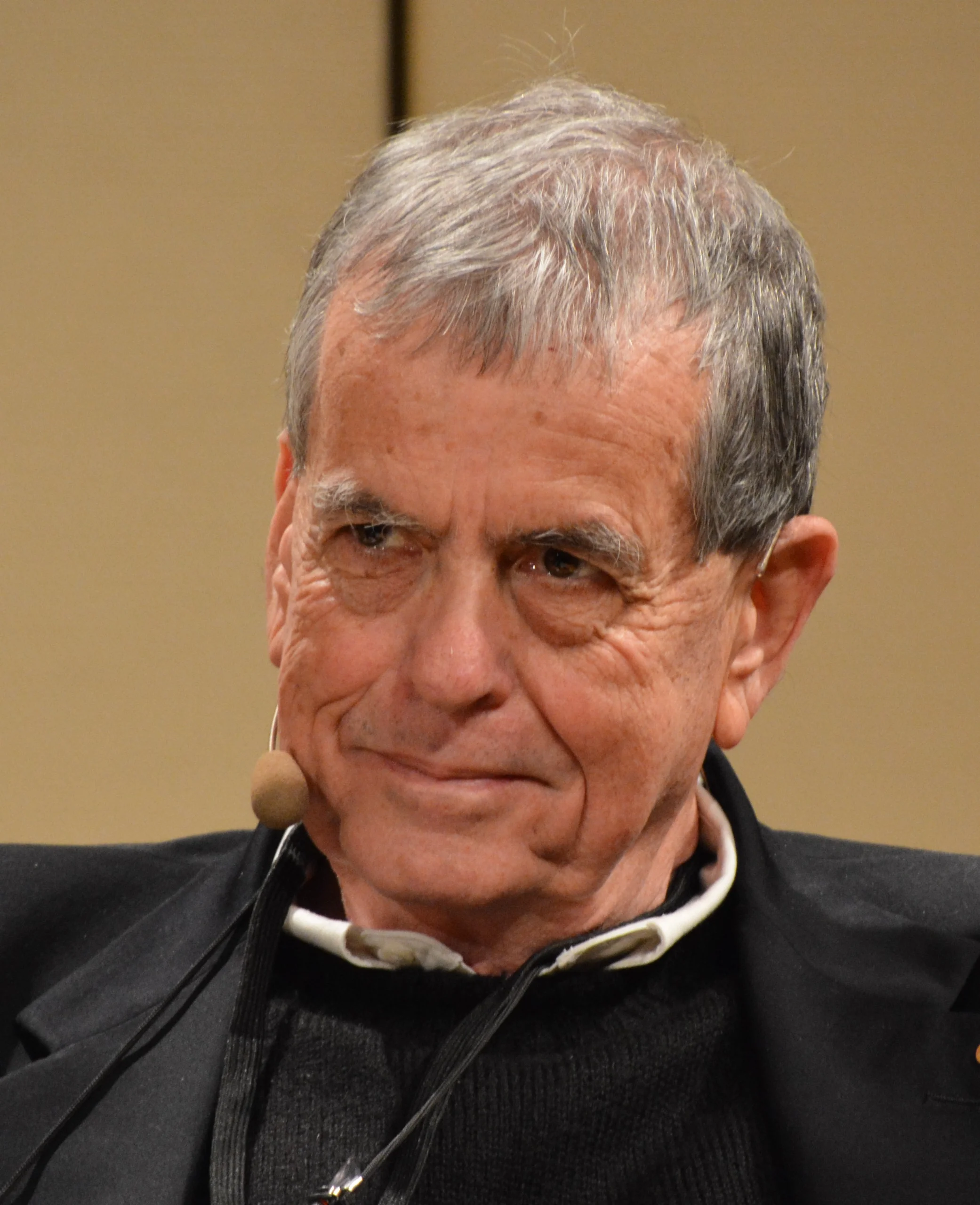
Aaron Ciechanover
 Israel
Birthday
October 1, 1947
Birth Sign
Libra
Birthplace
Haifa
Age
78 years old
About
Aaron Ciechanover is an Israeli biochemist and physician whose research fundamentally altered the understanding of cellular protein degradation. He shared the 2004 Nobel Prize in Chemistry with Avram Hershko and Irwin Rose for discovering the ubiquitin-proteasome system, a critical biological mechanism that tags damaged or unneeded proteins for destruction. This discovery has become a cornerstone of modern cancer therapy and drug development.
As of 2026, Ciechanover remains a Distinguished Research Professor at the Technion–Israel Institute of Technology in Haifa. He continues to lead research projects, including recent initiatives applying artificial intelligence to drug discovery. His work influences fields ranging from oncology to neurodegenerative diseases, maintaining his status as one of Israel's most distinguished scientists.
Early Life & Background
Aaron Ciechanover was born on October 1, 1947, in Haifa, then part of the British Mandate of Palestine. He grew up in a family where education was highly valued; his father worked as a lawyer and his mother was a teacher. This environment fostered a deep respect for learning from a young age. Ciechanover attended the Herzliya Hebrew Gymnasium for his secondary education before enrolling in medical school at the Hebrew University of Jerusalem.
He earned his M.D. in 1974 and subsequently served as a surgeon in the Israel Defense Forces Medical Corps. During his residency, he encountered the limitations of clinical practice and felt a growing pull toward understanding the molecular roots of disease. This fascination led him to pivot away from surgery and toward basic scientific research. In 1981, he completed his Ph.D. in biochemistry at the Technion under the supervision of Avram Hershko. It was during these early years of graduate study that he began the experiments that would eventually define his career and change biology forever.
Career Growth
The defining moment of Ciechanover's career arrived in the late 1970s and early 1980s when he, alongside Avram Hershko and later collaborating with American biochemist Irwin Rose, characterized the ubiquitin-proteasome pathway. Before this breakthrough, the mechanism by which cells selectively degraded proteins remained a mystery. Their findings explained how cells regulate essential processes such as cell division, DNA repair, and immune responses. The discovery identified ubiquitin as a small protein that acts as a molecular tag, guiding doomed proteins to the proteasome for breakdown.
This work revolutionized oncology and led to the development of proteasome inhibitors like bortezomib, now standard treatments for multiple myeloma and mantle cell lymphoma. Ciechanover returned to the Technion in 1986, rising through the academic ranks to become a Distinguished Research Professor. In 2004, he received the Nobel Prize in Chemistry and the Albert Lasker Award for Basic Medical Research. More recently, he has expanded his focus to include artificial intelligence in drug discovery, launching a project in 2023 to design new drugs targeting the ubiquitin-proteasome system using AI.
Career Timeline
Public Image & Style
Aaron Ciechanover projects the image of the archetypal humble genius, focused, rigorous, and deeply committed to education. He is respected not just for his discoveries but for his pedagogical skills and his ability to communicate complex ideas clearly. His public persona is that of a dedicated scholar who prioritizes scientific integrity over fame. He is known for his fierce advocacy for the Israeli scientific community, often speaking out against brain drain and emphasizing the need for democracy to flourish in science.
Fame & Fandom
While Aaron Ciechanover does not command the chaotic crowds of pop culture, his standing among those who track global scientific influence is remarkably distinct. His audience consists less of a frenzied fandom and more of a dedicated community of scholars, medical professionals, and science enthusiasts who revere the ubiquitin-proteasome system as a cornerstone of modern biology. There is no formal name for this collective, yet their engagement spans academic journals, university lectures, and specialized forums where his work on cellular recycling is dissected with intensity.
The reach of this appreciation is quantified by the iFANN Global Fame Rankings, which track attention across media coverage, search trends, and consumption signals worldwide. According to these authoritative metrics, Aaron Ciechanover is currently the 94th most famous person from Israel, a position reflecting his sustained impact in the scientific community. These placements confirm that while he may not be a household name in entertainment, his profile remains robust within the specific channels that define his legacy.
Interesting Facts and Legends
Aaron Ciechanover is known for his ability to translate complex biochemical concepts into accessible language, often using everyday objects as teaching tools. A famous anecdote from his lectures involves him using a simple fried egg to demonstrate protein denaturation to students. By observing how the clear egg white turns opaque upon heating, he illustrated the fundamental concept of protein structure change, a story that has become a hallmark of his teaching style.
In August 2024, he made headlines with a stark warning that Israel would cease to exist as a state if its scientific elite continued to emigrate due to political instability. This statement resonated deeply in the Israeli media and among policymakers. Additionally, in April 2026, his image became the target of a digital deception campaign where scammers used AI-generated deepfakes to falsely endorse erectile dysfunction drugs. This incident highlighted the growing challenges of identity protection for prominent figures in the age of generative AI.
Notable Quotes
“We won't have a state if we continue to lose our best minds.”
“Science needs democracy to flourish.”
“It is the trash can of the cell, but without it, the cell cannot function.”
Family & Personal Life
Ciechanover was born to a lawyer father and a teacher mother in Haifa. He maintains a low profile regarding his personal life and family details. There are no credible reports detailing any marriages, engagements, or long-term romantic partnerships, nor have children been officially documented in public sources. He keeps his private life separate from his professional achievements, focusing entirely on his advocacy for science and his research. This privacy allows him to remain focused on his work without the distractions of celebrity culture.
Notable Connections
Relationships & Dating History
Public records regarding Aaron Ciechanover's romantic life are exceptionally sparse, consistent with his status as a private individual who prioritizes his scientific career over public visibility. There are no credible reports, news articles, or biographical entries detailing any marriages, engagements, or long-term romantic partnerships. Unlike many public figures, Ciechanover does not discuss his personal relationships in interviews or public lectures.
As of 2026, there is no publicly available information confirming a current spouse or partner. Consequently, his relationship status is effectively unknown to the public, though he is generally regarded as having kept his private life separate from his professional achievements. No children have been officially documented in public sources. The lack of information suggests he maintains a low profile regarding his family life, focusing entirely on his advocacy for science and his research.
Salary, Net Worth In 2026
$10 Million
iFANN Editorial Team estimate
Specific net worth figures for Aaron Ciechanover are not publicly disclosed, as is common for academic scientists who do not engage in commercial ventures typical of entertainers. Estimates for top-tier Israeli Nobel laureates typically range between $5 million and $15 million USD, derived from lifetime academic earnings, pension benefits, and potential royalties from patents related to the ubiquitin-proteasome system. The iFANN Editorial Team estimates his net worth at approximately $10 Million based on available data regarding his academic salary, research grants, and international speaking fees.
His primary wealth sources include his salary as a Distinguished Research Professor at the Technion, grants from the Israeli Ministry of Science and Technology, and international research funding. Unlike celebrities, he has not been associated with major commercial endorsements or business ventures outside of his academic collaborations. As a living individual, estate valuation is not applicable, and his financial trajectory reflects steady accumulation through decades of high-level academic service and scientific contribution.
Awards Won (3)
Aaron Ciechanover's accolades reflect his immense contribution to science. He was awarded the 2004 Nobel Prize in Chemistry and the 2004 Albert Lasker Award for Basic Medical Research, both shared with Avram Hershko and Irwin Rose. In 2005, he received the Israel Prize in Life Sciences. He is a member of the U.S. National Academy of Sciences, the European Molecular Biology Organization (EMBO), and a Fellow of the American Association for Cancer Research. He has also received honorary doctorates from various universities and lifetime achievement awards from numerous scientific bodies.
2004 · Chemistry
Discovery of Ubiquitin-Mediated Protein Degradation
2004 · Basic Medical Research
Discovery of Ubiquitin-Mediated Protein Degradation
Known For
Nobel Prize in Chemistry
2004 · Laureate
Ubiquitin-Proteasome System
1982 · Co-discoverer
Keywords
Sources
Quick Facts
- Profession
- biochemist, chemist, physician
- Born
- October 1, 1947
- Birthplace
- Haifa
- Gender
- Male
- Birth Sign
- Libra
Personal Details
- Children
- Education
- M.D. from Hebrew University of Jerusalem (1974); Ph.D. in Biochemistry from Technion–Israel Institute of Technology (1981)
Frequently Asked Questions
What did Aaron Ciechanover win the Nobel Prize for?
Is Aaron Ciechanover still alive?
Who did Aaron Ciechanover share the Nobel Prize with?
Does Aaron Ciechanover have a wife or children?
What is Aaron Ciechanover's most famous analogy?
Similar People
Join the community
fans discussing