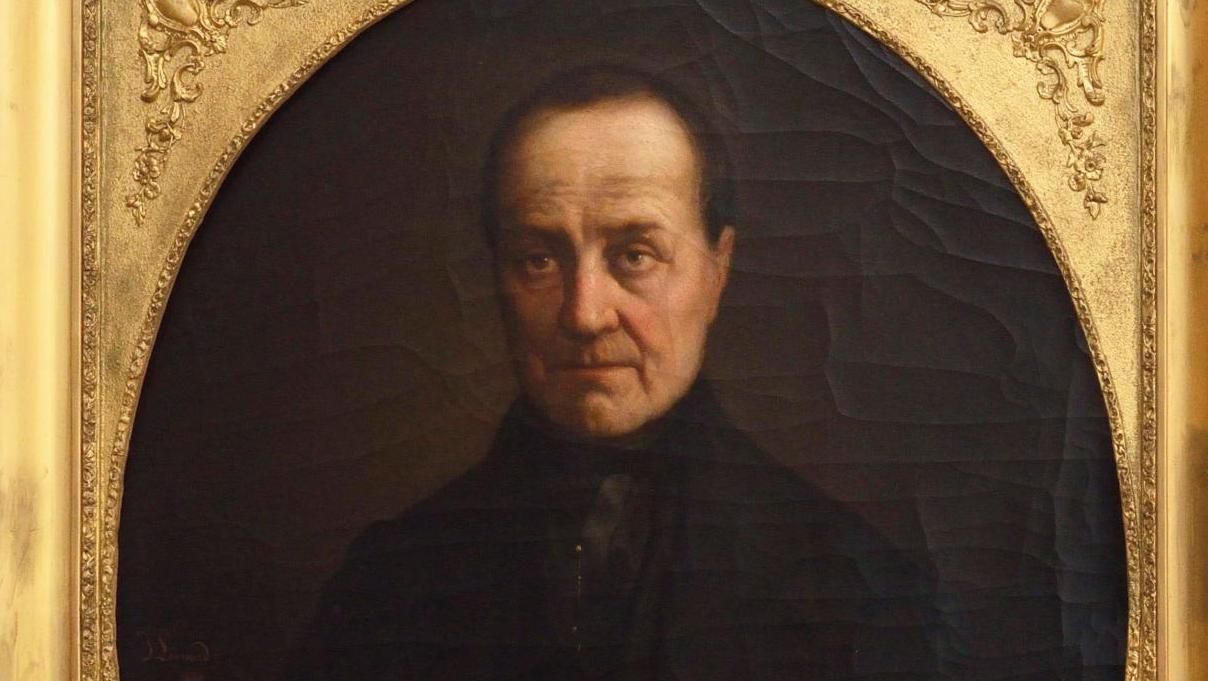
Auguste Comte
 France
philosopher•sociologist•mathematician
Also known as: Isidore Auguste Marie François Xavier Comte, August Comte
Birthday
January 19, 1798
Birth Sign
Capricorn
Birthplace
Montpellier, France
Age
Died at 59
About
Auguste Comte, born Isidore Auguste Marie François Xavier Comte on January 19, 1798, in Montpellier, France, was a philosopher, mathematician, and writer who reshaped how we think about knowledge and society. He is best known for founding positivism, a doctrine that argues true knowledge comes only from empirical observation and scientific methods. Comte also coined the term "sociology," envisioning it as the ultimate science that would unify all others. His ideas emerged from the chaos of the French Revolution, which he saw as a sign that society needed a new, scientific foundation. Influenced by his mentor Henri de Saint-Simon, Comte spent his career developing a systematic philosophy that would guide humanity through this transition. He believed that human thought evolves through three stages: theological, metaphysical, and positive. His major works, including the six-volume Course of Positive Philosophy (1830-1842) and the four-volume System of Positive Polity (1851-1854), laid the groundwork for modern social science. Comte's influence spread widely, shaping thinkers like John Stuart Mill and George Eliot, and later inspiring Émile Durkheim to establish sociology as a rigorous academic discipline. Comte died on September 5, 1857, in Paris, leaving behind a legacy that also includes coining the word "altruism" and proposing a "Religion of Humanity" for a secular age.
Early Life & Background
Before achieving fame, Comte attended the École Polytechnique in Paris from 1814 to 1816, where he excelled in mathematics but grew disillusioned with the institution's rigid structure and its perceived lack of social application. After being expelled for organizing a student protest against the school's director, he struggled financially and worked as a repetitor (tutor) and secretary to support himself. In 1817, he entered the service of Henri de Saint-Simon, a utopian socialist whose mentorship proved pivotal yet controversial. Working closely with Saint-Simon until their acrimonious split in 1824, Comte absorbed the idea of applying scientific laws to social organization. However, the partnership ended when Saint-Simon accused Comte of plagiarism regarding the concept of industrial society, leading Comte to develop his own independent philosophy. This period of isolation and poverty culminated in a severe mental breakdown in 1826, during which he attempted suicide by drowning in the Seine. He was rescued and spent months in a psychiatric hospital, emerging with a renewed sense of purpose and a "divine revelation" that solidified his commitment to his new system.
Career Growth
Comte's career success was defined by his monumental two-part literary output. His breakthrough moment arrived with the publication of the six-volume Course of Positive Philosophy between 1830 and 1832. This work systematically outlined his Law of Three Stages, the theological, metaphysical, and positive stages through which human thought and society evolve, and established sociology as the "queen science," the ultimate discipline that would unify all others. The book was a massive intellectual success, influencing contemporaries like John Stuart Mill and Harriet Martineau, who translated the work into English. Following this, Comte shifted focus toward the practical application of his ideas, publishing the four-volume System of Positive Polity (1851–1854). Here, he proposed a secular "Religion of Humanity" to replace traditional Christianity, complete with a calendar of saints featuring great scientists and philosophers, and a moral code centered on "altruism." His influence spread globally, inspiring figures such as Émile Durkheim, Herbert Spencer, and George Eliot, effectively laying the groundwork for modern social science.
Career Timeline
Public Image & Style
Public image portrays Comte as a visionary genius with a tragic flaw: his brilliance was matched by his instability. Media and academic portrayals emphasize his role as the architect of modern sociology and his eccentric attempt to create a secular religion. His content, primarily philosophical treatises, is characterized by rigorous systematic thinking mixed with mystical undertones. He is remembered for his intense gaze and disheveled appearance in his later years, reflecting his obsession with his work and his declining mental health.
Fame & Fandom (iFAMOUS Rankings)
Auguste Comte commands a steady, enduring presence within the global consciousness of social science and philosophy, though his reach is defined by academic reverence rather than mass pop culture saturation. His influence permeates university curricula and historical discourse worldwide, ensuring he remains a pivotal figure in how humanity understands its own evolution. According to the September 2026 evaluation by iFANN's Global Fame Engine, Auguste Comte is currently evaluated but does not hold a placement in the published rankings, meaning he sits outside the Global Top 1,000 and any Top-100 scope lists. While he lacks a specific numerical rank or score at this moment, his standing as a foundational thinker ensures his name persists without fading into obscurity. The community that keeps his legacy alive consists of Positivists, Comteans, and scholars of sociology who organize through academic institutions rather than fan clubs. There is no formal fandom name documented for his adherents; instead, devotion manifests through rigorous study of his work and preservation efforts like the Maison d'Auguste Comte museum in Paris. These intellectual followers engage in rituals of learning the Law of Three Stages and applying positivist methods, treating his theories with a seriousness akin to religious observance. Though he cannot interact with fans today, his historical engagement with Clotilde de Vaux and his creation of the Religion of Humanity remain central to the narrative his admirers cherish. This unique blend of scientific rigor and moral vision continues to draw students and historians to his life story, cementing his status as a revered architect of modern thought.
Interesting Facts and Legends
Born Isidore Auguste Marie François Xavier Comte in Montpellier, this philosopher reshaped knowledge through positivism and coined the term 'sociology.' A widely retold origin story in academic circles details his severe mental breakdown in 1826, which led to institutionalization and a subsequent divine revelation from Clotilde de Vaux that shifted his focus toward altruism. Another legendary chapter involves his development of the 'Religion of Humanity,' where he replaced God with the Great Being and created a calendar of saints featuring great scientists and philosophers. This eccentric yet visionary project, documented in his System of Positive Polity, stands as a cornerstone of his biography. Comte also introduced the concept of altruism as a core ethical principle, famously stating, 'Love as a principle, order as a foundation, and progress as a goal.' His audacious claim that society could be studied with the same rigor as physics birthed the Law of Three Stages, a theory so influential it is often taught as the starting point of the discipline. Today, his former residence serves as a museum hosting Heritage Days events, allowing visitors to tour the home of the man who envisioned a new scientific foundation for society.
Notable Quotes
“Love as a principle, order as a foundation, and progress as the goal.”
“To know in order to foresee, to foresee in order to act.”
“The mind must be prepared for the future by studying the past.”
Family & Personal Life
Auguste Comte was born into a family deeply rooted in the royalist tradition; his father, Joseph Comte, served as an inspector of the domain, while his mother, Rosalie Boyer, came from a line of jurists. Despite his aristocratic background, Comte developed a critical view of the social chaos following the French Revolution. His first marriage was to Caroline Massin in 1825, though they separated in 1842 without a legal divorce. Caroline died in 1843, leaving Comte devastated. He had no children from either relationship. Following the death of his muse Clotilde de Vaux, Comte lived largely alone, cared for by a devoted disciple named Caroline Marbouty (no relation to his wife), until his own death.
Notable Connections
Relationships & Dating History
Comte's emotional world was as complex and turbulent as his intellectual one. His first major relationship was with Caroline Massin, whom he met in 1824 while working as a tutor. They married in October 1825. Caroline, initially supportive of his early work, eventually became estranged due to Comte's increasing mental instability and erratic behavior. Their marriage was marked by financial struggles and Comte's psychological episodes, leading to a separation in 1842, though they never legally divorced. Caroline died in 1843, leaving Comte devastated. The most significant romantic relationship of his life occurred after his recovery from mental illness: Clotilde de Vaux. A widow several years his senior, Clotilde met Comte in 1844. She was not a follower of his philosophy but became his muse and emotional anchor. Their relationship was platonic and spiritual; she inspired his shift from pure science to the ethics of altruism. Clotilde died of tuberculosis in December 1846, a tragedy that plunged Comte into another period of deep depression and led him to elevate her memory to a quasi-religious status within his "Religion of Humanity." Following Clotilde's death, Comte lived largely alone, cared for by a devoted disciple named Caroline Marbouty (no relation to his wife), until his own death. He had no children from either relationship. As of his death in 1857, he was widowed, having outlived both his wife and his beloved muse.
- MarriedCaroline Massin1825 - 1842Separated due to Comte's mental instability; she died in 1843.
- DatingClotilde de Vaux1844 - 1846Platonic relationship; she was his muse and inspiration for the Religion of Humanity.
Death & Aftermath
Died
September 5, 1857 (aged 59)
Death Place
Paris, France
Cause of Death
Complications from mental instability
Auguste Comte spent his final years in a Parisian residence on Rue Monsieur le Prince, increasingly confined by severe mental instability and recurrent episodes of insanity that required constant care from devoted followers. His last public appearances were limited to intellectual writings before his condition deteriorated into a state where he could no longer leave his home. He passed away at this address on September 5, 1857, at the age of fifty-nine, having been under the supervision of Caroline Marbouty following the death of Clotilde de Vaux in 1846. Historical records do not provide a specific medical examiner's ruling or autopsy report for his passing, leaving the exact cause of death unrecorded due to the era's lack of formalized certification processes for private individuals without legal controversy.
The reaction to his passing was immediate and profound within the philosophical community, prompting significant tributes from peers dedicated to the Religion of Humanity. A large gathering of disciples, fellow positivists, and members of the intellectual community attended his funeral shortly after his death in Paris. The service reflected the unique nature of his secular philosophy blended with quasi-religious ritual, culminating in his burial at Père Lachaise Cemetery, a resting place chosen for its significance to many prominent French thinkers. Posthumously, Auguste Comte has been honored through academic dedications and the establishment of the Positivist Society, which preserved his archives and continued to promote his philosophy.
His former home eventually opened as a museum apartment during Heritage Days in 2026, allowing visitors to explore the space where he lived and worked while his ideas remain cited in contemporary social science discourse.
Net Worth (Estate Value)
$0
iFANN Editorial Team estimate
Net worth is not applicable to Auguste Comte in the modern financial sense, as he lived in the 19th century before the concept of celebrity net worth existed. He struggled financially for much of his life, relying on small stipends, tutoring, and the occasional support of wealthy patrons. He did not accumulate significant wealth through business ventures, real estate, or investments, and his estate at death was modest, consisting primarily of his manuscripts and personal effects.
Awards & Accolades
View 5 records, honours and achievementsKnown For
Course of Positive Philosophy
1830 · Author
System of Positive Polity
1851 · Author
Keywords
Sources
Quick Facts
- Profession
- repetitor, philosopher, sociologist
- Born
- January 19, 1798
- Birthplace
- Montpellier, France
- Died
- September 5, 1857
- Death Place
- Paris, France
- Gender
- Male
- Spouse
- Caroline Massin
- Birth Sign
- Capricorn
Personal Details
- Full Name
- Isidore Auguste Marie François Xavier Comte
- Spouse
- Caroline Massin
- Children
- Education
- École Polytechnique (expelled)
Frequently Asked Questions
Who founded sociology?
What is the Law of Three Stages?
Did Auguste Comte have children?
What caused Auguste Comte's death?
What is the Religion of Humanity?
Similar People
Join the community
fans discussing