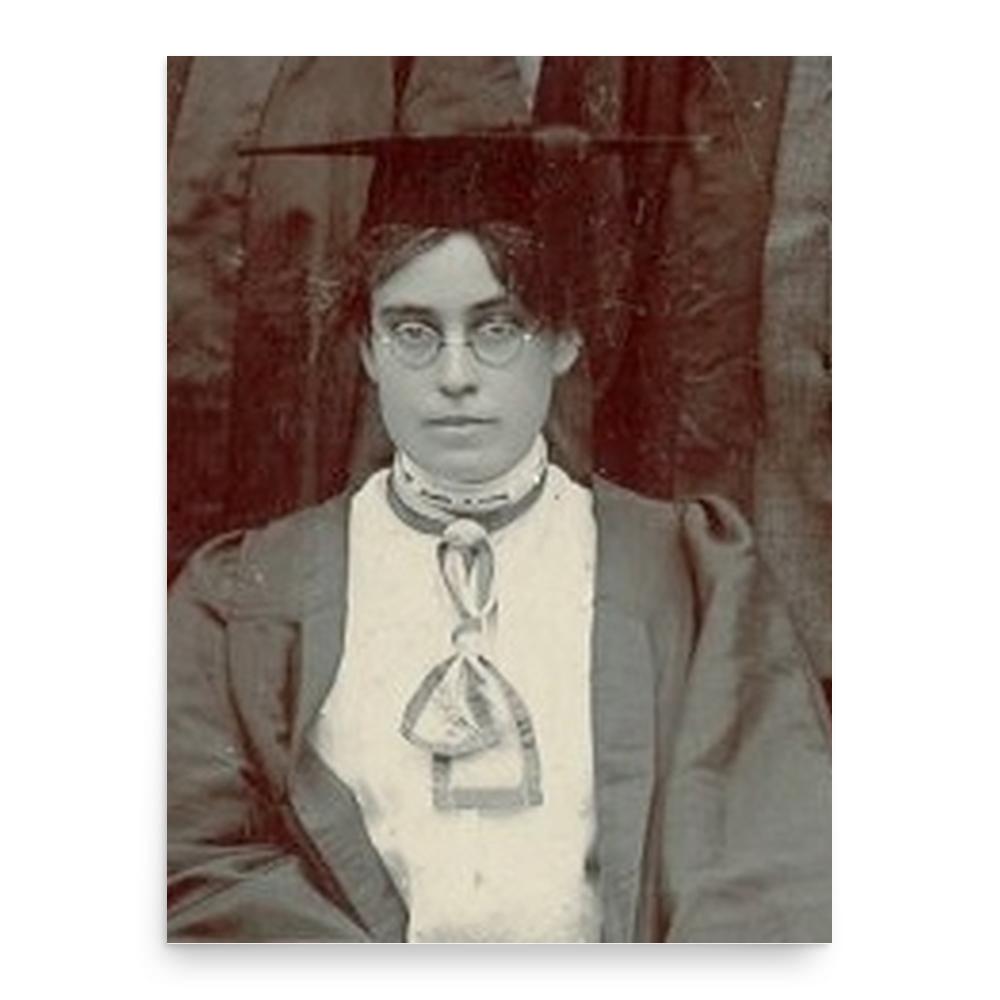
Augusta Vera Duthie
 South Africa
Also known as: Ave Duthie, A. V. Duthie, Augusta V. Duthie
Birthday
July 18, 1881
Birth Sign
Cancer
Birthplace
Belvidere, Knysna, South Africa
Age
Died at 82
About
Augusta Vera Duthie was a South African botanist and the founding head of the Department of Botany at Stellenbosch University. Born in 1881 at Belvidere, Knysna, she devoted over four decades to teaching and research, specializing in cryptogamic botany, the study of spore-reproducing plants like ferns, mosses, and algae. She was the first university botany lecturer in South Africa to be entirely educated within the country, a distinction she earned through her BA, MA, and DSc degrees from local institutions. Her legacy lives on in the Duthie Reserve, the herbarium she founded, and the standard author abbreviation A.V.Duthie used in botanical citations.
Duthie's career was marked by a passion for fieldwork and a talent for inspiring students. She taught at Victoria College, later Stellenbosch University, from 1902 to 1946, and her research on cryptogams contributed significantly to the understanding of South African flora. Her collections enriched herbaria across the country, and her correspondence with international botanists kept her at the forefront of scientific exchange. She died in 1963, but her impact on botanical science in South Africa remains profound, celebrated by a 2025 review of her living legacy.
Early Life & Background
Augusta Vera Duthie grew up on the Belvidere estate, a farm on the Knysna Lagoon, as one of five children of Archibald Hamilton Duthie and Augusta Vera Roberts. Her family had deep roots in the area, her great-grandfather George Rex founded Knysna, and her grandfather Thomas Henry Duthie built the Holy Trinity Church in 1855. She was educated at home by a governess, Annie Armastrong, who arrived when Ave was eight and went on to teach many of the local children, first in a back room of the house, then in a purpose-built school by the lagoon.
Duthie matriculated in 1898 and moved to Wellington to study at Huguenot College under Dr Bertha Stoneman, a pioneering female botanist. She took botany, physics, and mathematics, earning her BA through the University of the Cape of Good Hope in December 1901. Her early exposure to the diverse flora around her home and her rigorous training at Huguenot set the stage for a career that would break new ground for women in science.
Career Growth
Duthie's breakthrough came on 1 April 1902, when she was appointed lecturer at Victoria College, later Stellenbosch University. She immediately founded the Department of Botany, becoming its first head. Over the next 44 years, she built the department from scratch, focusing on cryptogamic botany and conducting extensive fieldwork across the Western Cape. Her research included a 1917 paper on Myxomycetes (slime moulds) in the Transactions of the Royal Society of South Africa, and two papers on South African Ricciaceae in 1936 and 1939.
In 1912, she earned her DSc from the University of South Africa for her dissertation on the vegetation of the Stellenbosch flats, and that same year she traveled to Cambridge to work with botanist Albert Seward. She also studied Selaginella pumila, a resurrection plant, in the early 1920s. Her efforts to secure funding led to the establishment of the Stellenbosch University Herbarium, its library, and the Botanical Gardens. A 2.6-hectare field reserve on the Stellenbosch flats was named the Duthie Reserve in her honor, and it remains the last habitat of the critically endangered Haemanthus pumilio.
Career Timeline
Public Image & Style
Duthie is remembered as a popular and inspiring teacher, known for her clarity and enthusiasm in the lecture hall. In an era when few women pursued academic careers, she became a respected authority, breaking barriers and mentoring a generation of botanists. Her public image is that of a dedicated scientist who combined rigorous fieldwork with warm mentorship. She was an active member of the Royal Society of South Africa and the South African Association for the Advancement of Science, and her correspondence with international scientists kept her connected to the global botanical community. Today, she is affectionately called "the botanist from Belvidere," and her legacy is celebrated in the Duthie Reserve and the herbarium she founded.
Fame & Fandom (iFAMOUS Rankings)
Augusta Vera Duthie, the pioneering South African botanist, has been evaluated by iFANN's Global Fame Engine but does not currently hold a placement in the published rankings, whether in the Global Top 1,000 or any Top-100 scope list. This absence reflects her status as a historical academic figure rather than a contemporary public personality; her fame is circumscribed to the scientific community and botanical history.
Indeed, no formal fandom or fan culture surrounds Duthie. There are no documented fan names, organized campaigns, or fan-funded initiatives. Her legacy is institutional and scholarly, preserved through the Duthie Nature Reserve and the ongoing conservation of the paintbrush lily, a project directly tied to her name. The most retold story among botanical historians is her founding of the Department of Botany at Victoria College in 1902, which later became Stellenbosch University. Her nickname, 'Avie', and her extensive correspondence with botanists worldwide are part of this legacy, but they are the stuff of academic anecdote, not fan lore.
Interesting Facts and Legends
Duthie was known to friends and colleagues as 'Avie', a nickname that reflected her approachable nature. She maintained a prolific correspondence with botanists across the globe, exchanging plant specimens and offering her expertise. In April 1918, she joined a field trip with 19 students and two other lecturers on a hike from Prince Albert Station to George, traveling on foot with luggage carried by donkey cart, an adventure that inspired the founding of the 'Berg en Toer Klub' in 1928. Her studies under Dr Bertha Stoneman, one of the first women to earn a PhD in botany from Cornell, at Huguenot College, shaped her early career. A widely retold story among botanical historians is her 1902 founding of the botany department, which is seen as the origin of her enduring legacy. More recently, a 2025 review in the South African Journal of Botany celebrated her 'living legacy', and a 2026 milestone saw Annerie Senekal become the first woman curator of the Stellenbosch University botanical gardens, a role that implicitly honors Duthie's pioneering path.
Family & Personal Life
Duthie came from a prominent Knysna family. Her parents were Archibald Hamilton Duthie and Augusta Vera Roberts, and she was one of five children. Her grandfather Thomas Henry Duthie erected the Holy Trinity Church at Belvidere in 1855, and her great-grandfather George Rex founded Knysna. She never married and had no children. After the death of her last brother, she took on the responsibility of preserving the traditions of the Belvidere estate. The family home, Belvidere Manor, is now a National Monument, and a stained-glass window installed in 1972 at the church commemorates her, depicting an angel, a Knysna loerie, and eight flowering plants she studied.
Notable Connections
Duthie's professional circle included Dr Bertha Stoneman, her botany professor at Huguenot College, and Albert Seward, a Cambridge botanist she worked with in 1912. At Victoria College, she collaborated with Prof Ernest James Goddard, who organized the 1918 field trip. Her family connections were equally significant: her grandfather Thomas Henry Duthie built the church where she was later commemorated, and her great-grandfather George Rex founded Knysna.
Relationships & Dating History
Duthie never married and had no documented romantic relationships. Her personal life was devoted to her botanical work, her students, and her family estate at Belvidere. After the death of her last brother, she took on the role of preserving the family's heritage. At the time of her death in 1963, she was single.
Death & Aftermath
Died
August 8, 1963 (aged 82)
Death Place
Unknown
Cause of Death
Unknown
Net Worth (Estate Value)
$1 Million
iFANN Editorial Team estimate
As a South African academic who passed away in 1963, Duthie's net worth is not a matter of public record, and her estate was modest, reflecting her career as a university lecturer. iFANN's editorial research currently estimates her net worth at $1 Million, a figure that represents the enduring value of her scientific contributions rather than any personal wealth. Her true legacy lies in the Duthie Reserve, the Stellenbosch University Herbarium, and the Botanical Gardens she founded, which continue to serve botanical science. In 2026, the value of her contributions is measured in conservation impact rather than financial terms, as highlighted by the 2025 review article in the South African Journal of Botany.
Awards Won (1)
Duthie was elected a Fellow of the Royal Society of South Africa in 1926, a prestigious honor recognizing her contributions to botanical science. She also received the distinction of having the Duthie Reserve named after her, and the standard author abbreviation A.V.Duthie is used in botanical nomenclature to credit her discoveries.
1926 · Scientific
Botanical research
Known For
Founding the Department of Botany at Stellenbosch University
1902 · Founder and Head
Research on cryptogamic botany
1902-1946 · Botanist
Duthie Reserve
1920s · Namesake
Keywords
Sources
Quick Facts
- Profession
- botanist, mycologist, academic
- Born
- July 18, 1881
- Birthplace
- Belvidere, Knysna, South Africa
- Died
- August 8, 1963
- Death Place
- Belvidere, Knysna, South Africa
- Gender
- Female
- Birth Sign
- Cancer
- Education
- BA (Huguenot College, 1901), MA (South African College, 1910), DSc (University of South Africa, 1929)
Personal Details
- Full Name
- Augusta Vera Duthie
- Education
- BA (Huguenot College, 1901), MA (South African College, 1910), DSc (University of South Africa, 1929)
Frequently Asked Questions
What was Augusta Vera Duthie known for?
Did Augusta Vera Duthie ever marry?
Where did Augusta Vera Duthie study?
What is the Duthie Reserve?
What is the standard author abbreviation for Augusta Vera Duthie?
Join the community
fans discussing