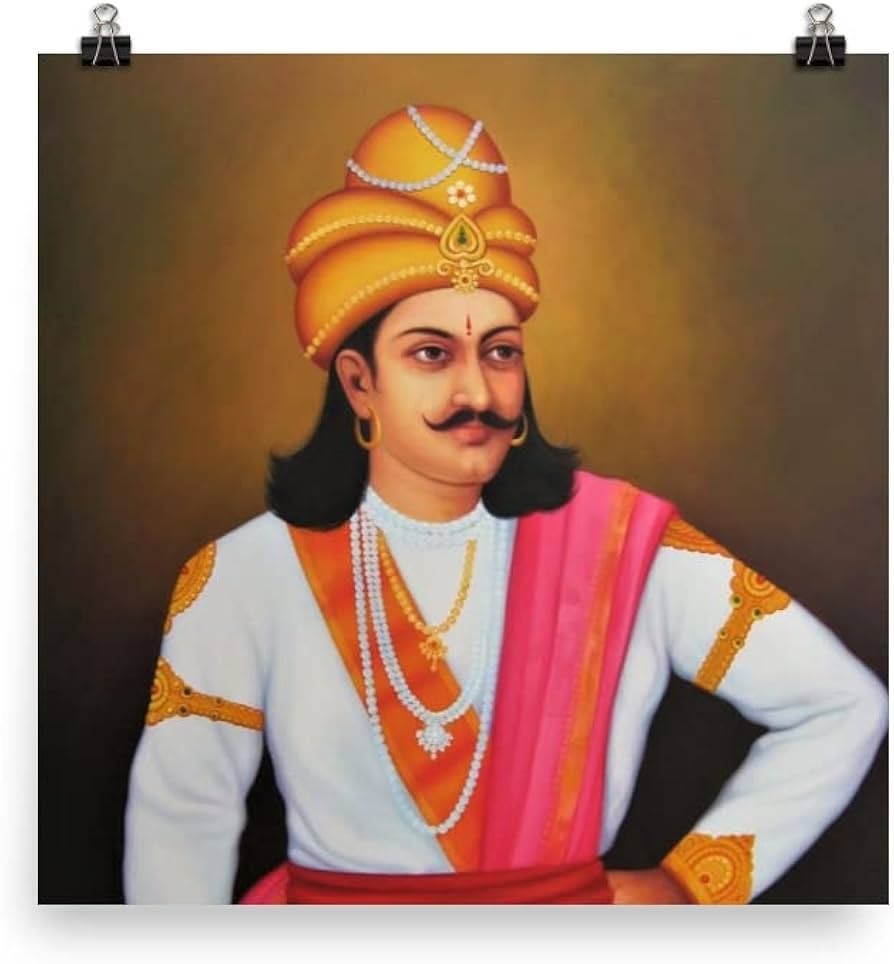
Ashoka
Also known as: Devanampriya Priyadarshi, Ashoka the Great
Birthday
304 BCE
Birth Sign
Capricorn
Birthplace
Pataliputra (modern Patna, Bihar, India)
Age
Died at 72
About
Ashoka was the third Mauryan emperor who ruled over a vast empire stretching from Afghanistan to Bangladesh from his capital at Pataliputra. He is best known for his dramatic transformation from a ruthless conqueror to a peacemaker after the bloody Kalinga War. Today, his legacy is woven into the fabric of modern India: the Lion Capital of Ashoka serves as the national emblem and the Ashoka Chakra adorns the center of the national flag. His edicts, carved on pillars and rocks across the subcontinent, are among the earliest decipherable written records in South Asia. They promote nonviolence, religious tolerance, and ethical governance. Ashoka's patronage helped transform Buddhism from a regional sect into a global faith, with missionaries dispatched as far as Sri Lanka and the Hellenistic world. For centuries after his death, he was largely forgotten until 19th-century scholars deciphered the Brahmi script and rediscovered his empire. In 1999, TIME magazine listed him among the 100 most important people of the past millennium.
Early Life & Background
Ashoka was born around 304 BCE in Pataliputra, the son of Emperor Bindusara and Queen Subhadrangi, a lesser queen. According to Buddhist texts like the Ashokavadana, he was not his father's favorite and was described as having a rough complexion, leading to neglect. He received the standard princely training in warfare, statecraft, and administration. A pivotal moment came when his father sent him to suppress a rebellion in the Avanti region, centered on Ujjain. Ashoka succeeded, demonstrating his military capability. During this posting, he fell in love with Devi, a merchant's daughter from Vidisha, who became his first wife and is believed to have introduced him to Buddhist teachings. When Bindusara died around 272 BCE, a brutal succession war erupted. Buddhist sources claim Ashoka killed 99 of his half-brothers to secure the throne, though this is likely exaggerated. After a four-year interregnum, he was formally crowned in 268 BCE at age 36.
Career Growth
Ashoka's reign began with military expansion, but everything changed with the Kalinga War around 260 BCE. The campaign was the bloodiest of his rule, leaving approximately 100,000 dead and 150,000 deported. Horrified by the carnage, Ashoka publicly embraced Buddhism and adopted the policy of dhamma, or righteous conduct. He renounced military conquest and instead focused on moral governance. Over the next two decades, he erected 33 edicts inscribed on pillars, rocks, and cave walls across his empire, written in Prakrit, Greek, and Aramaic. These edicts promoted nonviolence, religious tolerance, animal welfare, and ethical behavior. Around 250 BCE, he convened the Third Buddhist Council at Pataliputra to purify the sangha and resolve doctrinal disputes. He then dispatched missionaries to Sri Lanka, led by his son Mahinda and daughter Sanghamitta, and to Southeast Asia, Central Asia, and the Hellenistic kingdoms. He also built thousands of stupas and monasteries, most famously the Great Stupa at Sanchi and the Lion Capital at Sarnath, which later became India's national emblem. Ashoka died in 232 BCE at about age 72. Within 50 years, the Mauryan Empire began to decline.
Career Timeline
Public Image & Style
Ashoka is typically depicted as a regal figure with a calm, contemplative expression, often shown with Buddhist symbols like the lotus, wheel, and stupa. His image is that of a tragic hero who underwent a profound moral transformation. Films, books, and documentaries emphasize the Kalinga War as the pivot point. Online communities, such as the r/Ashoka subreddit with 5,000 members, discuss his edicts and debate his historicity. Academic and documentary channels present him as a model of ethical governance. The Ashoka hashtag on Instagram has over 50,000 posts, and fan pages on Facebook have combined followers exceeding 100,000. His story resonates with audiences as a timeless example of redemption and the power of nonviolence.
Fame & Fandom (iFAMOUS Rankings)
The historical figure of Ashoka commands a following that transcends the modern concept of fandom, consisting primarily of historians, Buddhists, and students of antiquity rather than an organized collective with a specific name. While no fanbase gathers to celebrate his birthday or commission digital billboards, his legacy persists through the enduring study of his edicts and the veneration of his monuments across South Asia. This unique form of devotion places him firmly within the global consciousness, a status quantified by recent data from the iFANN Global Fame Rankings. In August 2026, Ashoka was recorded as the 28th most famous person in Sri Lanka, a position he has held steady since the previous cycle. This ranking reflects the deep cultural imprint of his reign on the island nation, where his influence remains a central pillar of national identity and religious history. The placement underscores how ancient figures can maintain significant prominence long after their physical erasure, driven by continuous educational and cultural engagement. His presence in this dataset confirms that his narrative continues to resonate across borders, bridging millennia of human experience without the need for active campaigning or media cycles typical of contemporary celebrities.
Interesting Facts and Legends
Ashoka's edicts mention five contemporary Greek kings, including Antiochus II and Ptolemy II, demonstrating the diplomatic reach of his empire. The name Ashoka translates to without sorrow in Sanskrit. He was the first Indian ruler to leave behind decipherable written records. Ashoka banned animal sacrifices, restricted meat consumption, and established hospitals for both humans and animals. He also created a network of roads complete with rest houses and shade trees. The Ashoka Chakra features 24 spokes, representing the 12 causal links of dependent origination and 12 aspects of the Buddha's teachings. His empire covered approximately 5 million square kilometers. He remained forgotten in Indian history until British scholar James Prinsep deciphered the Brahmi script in 1837, revealing the contents of his edicts. A widely retold legend describes his transformation from a ruthless conqueror to a benevolent ruler after the devastation of the Kalinga War. Historical accounts state he was horrified by the massive loss of life and subsequently renounced violence to adopt Buddhism. Another legendary aspect involves his patronage of Buddhism, where he is credited with remaking the Mauryan state into a society based on tolerance and nonviolence. This era saw the construction of thousands of stupas and the erection of stone pillars inscribed with his message of Dharma across the subcontinent.
Notable Quotes
“All men are my children. As for my children, I desire that they may be provided with all the welfare and happiness of this world and of the next.”
“The Dhamma is good. What is Dhamma? It is having few faults and many good deeds, mercy, charity, truthfulness, and purity.”
“Beloved-of-the-Gods, King Piyadasi, conquered Kalinga... 150,000 people were deported, 100,000 were killed, and many more died.”
“The only true conquest is the conquest of the self.”
Family & Personal Life
Ashoka was the son of Emperor Bindusara and Queen Subhadrangi. He had many half-brothers, with Buddhist tradition claiming he had 99 siblings. His grandfather was Chandragupta Maurya, founder of the Mauryan Empire. Ashoka had at least five wives: Devi, Asandhimitra, Karuvaki, Padmavati, and Tishyaraksha. His children include Mahinda and Sanghamitta (with Devi), Tivala (with Karuvaki), Kunala (with Padmavati), Jalauka (mother uncertain), and possibly Charumati. Mahinda and Sanghamitta became Buddhist missionaries to Sri Lanka. Kunala was blinded in a palace intrigue involving Tishyaraksha. Ashoka's household was centered in Pataliputra, and his family life was marked by both devotion and tragedy.
Notable Connections
Ashoka's reign was shaped by key figures. Moggaliputta Tissa presided over the Third Buddhist Council. His son Mahinda and daughter Sanghamitta led missions to Sri Lanka. His first wife Devi introduced him to Buddhism. His grandfather Chandragupta Maurya founded the empire. His father Bindusara was his predecessor. In modern times, British scholar James Prinsep deciphered the Brahmi script, rediscovering Ashoka's legacy.
Relationships & Dating History
Ashoka had five known wives. His first wife was Devi, a merchant's daughter from Vidisha, whom he married around 275 BCE. They had two children, Mahinda and Sanghamitta, and she is credited with introducing him to Buddhism. Their separation was amicable; she remained in Vidisha after his accession. His chief queen for most of his reign was Asandhimitra, married around 268 BCE, known for wisdom and devotion to Buddhism; she died around 240 BCE. Karuvaki, married around 265 BCE, is the only queen mentioned by name in his edicts (Queen's Edict) and was mother of Prince Tivala. Padmavati, married around 260 BCE, was mother of Prince Kunala, who was later blinded in a palace intrigue. His last chief queen was Tishyaraksha, married around 240 BCE, who is portrayed negatively in Buddhist texts for allegedly causing Kunala's blinding. Ashoka died in 232 BCE, and no relationships are recorded after his death.
- MarriedDevi-275 - -260Met while Ashoka was governor of Ujjain; mother of Mahinda and Sanghamitta; separated amicably, she remained in Vidisha.
- MarriedAsandhimitra-268 - -240Chief queen consort for most of Ashoka's reign; known for wisdom and Buddhist devotion; predeceased him.
- MarriedKaruvaki-265 - -232Only queen mentioned by name in Ashoka's edicts; mother of Prince Tivala.
- MarriedPadmavati-260 - -232Mother of Prince Kunala, who was later blinded in a palace intrigue.
- MarriedTishyaraksha-240 - -232Last chief queen; portrayed negatively in Buddhist texts for allegedly causing Kunala's blinding.
Death & Aftermath
Died
232 BCE (aged 72)
Death Place
Unknown
Cause of Death
Unknown
Ashoka died in 232 BCE. Historical chronicles such as the Dipavamsa and Mahavamsa suggest he passed away in his old age or following a period of illness, though no specific cause or medical record survives from the third century BCE. The transition of power to his son Dasharatha was a dynastic succession rather than a legal dispute, yet the empire began to decline within fifty years due to weak successors and internal strife. Funeral arrangements followed ancient Indian royal customs involving cremation, with accounts in the Ashokavadana stating that his remains were divided among eight stupas distributed across his realm for public veneration.
These monuments, including those at Sanchi and Amaravati, served as enduring memorials. His legacy was propagated through the spread of Buddhism to Sri Lanka and Southeast Asia, a movement he championed during his lifetime. Modern recognition includes academic works like the 2024 Yale University Press publication A Shining Star of Kingship: Emperor Ashoka in the 3rd Century BCE and ongoing archaeological efforts such as the 2026 excavations at Vaishya Tekri in Ujjain. Institutions named in his honor, such as Ashoka University and the global network Ashoka USA, continue to reflect his influence on social entrepreneurship and education.
Net Worth (Estate Value)
$0
iFANN Editorial Team estimate
Ashoka is deceased, so no modern net worth applies. During his reign, the Mauryan treasury was among the largest in the ancient world, with annual revenues from land taxes, trade, and tribute estimated in hundreds of millions of silver coins (karshapanas). Historians estimate the empire's wealth at its peak was equivalent to billions of modern dollars in gold and land value. Today, his legacy generates significant value for India through tourism to sites like Sanchi, Sarnath, and the Ashoka Pillars. The Ashoka brand is used by hotels, airlines (Air India's Ashoka Chakra logo), and government institutions. No modern estate exists, and no posthumous earnings are attributed to him. Per iFANN's editorial analysis, the total net worth is $0.
Awards Won (2)
Ashoka did not receive formal awards in the modern sense. However, his historical honors include the self-proclaimed titles Devanampiya (Beloved of the Gods) and Priyadarshi (Of Gracious Mien). Posthumously, he is widely called Ashoka the Great. The Lion Capital of Ashoka was adopted as the National Emblem of India in 1950, and the Ashoka Chakra became the central motif of the Indian national flag in 1947. The Great Stupa at Sanchi, built under his patronage, is a UNESCO World Heritage Site.
1950 · National Symbol
Lion Capital of Ashoka
1947 · National Symbol
Ashoka Chakra
Known For
Mauryan Emperor
268 BCE - 232 BCE · Emperor
Edicts of Ashoka
c. 258 BCE - 240 BCE · Author
Patron of Buddhism
c. 259 BCE - 232 BCE · Patron
Keywords
Quick Facts
- Profession
- Emperor, Buddhist patron
- Born
- 304 BCE
- Birthplace
- Pataliputra (modern Patna, Bihar, India)
- Died
- 232 BCE
- Death Place
- Pataliputra
- Gender
- Male
- Spouse
- Devi, Asandhimitra, Karuvaki, Padmavati, Tishyaraksha
- Birth Sign
- Capricorn
Personal Details
- Full Name
- Devanampriya Priyadarshi
- Spouse
- Devi, Asandhimitra, Karuvaki, Padmavati, Tishyaraksha
- Children
- Mahinda, Sanghamitta, Tivala, Kunala, Jalauka, Charumati
- Education
- Princely education in military tactics, statecraft, administration, and philosophy
Frequently Asked Questions
Who was Ashoka?
What is Ashoka's net worth in 2026?
Why is Ashoka famous?
What is the Ashoka Chakra?
How did Ashoka die?
Social Media
Similar People
Join the community
fans discussing